 53:05
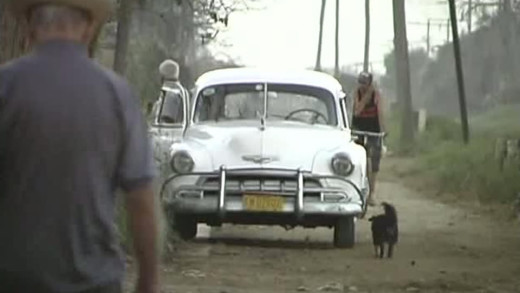
53:05With the fall of the Soviet Union in 1990, Cuba's economy collapsed. Imports of oil were cut by more than half and food by 80 percent. The Power Of Community tells of the hardships and struggles as well as the response during the collapse, explaining how the country transitioned from a highly mechanised, industrial agricultural system to one using organic methods of farming and local, urban gardens...
 1:34:22
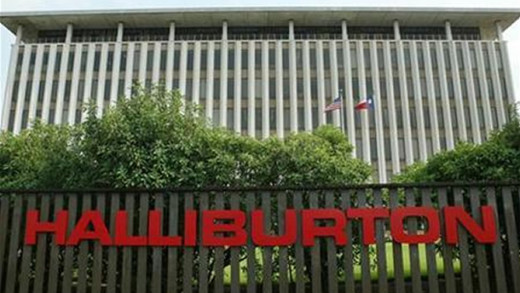
The untold history of The Project for the New American Century is no more. This film exposes how every major war in US history was based on a complete fraud with video of insiders themselves admitting it. This documentary shows how the first film theatres in the US were used over a hundred years ago to broadcast propaganda to rile the American people into the Spanish-American War; the white papers of the oil company Unocal which called for the creation of a pipeline through Afghanistan and how their exact needs were fulfilled through the US invasion of Afghanistan; how Halliburton under their "cost plus" exclusive contract with the US Government went on a mad dash spending spree akin to something out of the movie Brewster's Millions...
 1:30:02
Occupation 101: Voice of the Silenced Majority details life in the West Bank and Gaza Strip under Israeli military occupation. Examining events from the rise of Zionism to the Second Intifada and Israel's unilateral disengagement plan, as well as the role of the United States in the occuption, this film gives voice to many American and Israeli scholars, religious leaders, humanitarian workers, and NGO representatives—more than half of whom are Jewish—who are critical of the injustices and human rights abuses stemming from Israeli policy in the West Bank, East Jerusalem, and Gaza.
 1:32:58
The Battle Of Chernobyl recounts the most significant and catastrophic nuclear explosion in history -- an incident that was kept secret for twenty years by the Soviet Union and United States alike. More than 200 people died or were seriously injured by radiation exposure immediately after the explosion and many generations later, the impacts are still felt in cancers, birth defects and toxic ecology, with millions of people still suffering from radiation related health problems such as leukaemia and thyroid cancer...
 26:01
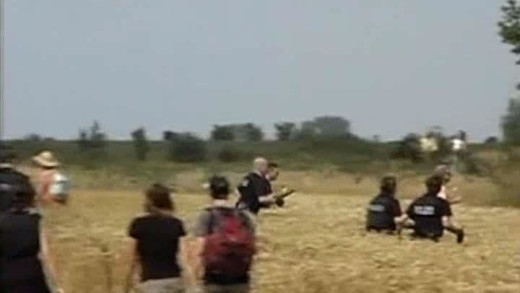
26:01Is genetic engineering really dangerous? The manufacturers claim that genetically modified food "produces higher yields, fights world hunger, and reduces the need for pesticides." But at what cost? Following the Trail questions whether any solid testing has been done to determine the safety and risks of genetically engineered foods and examines evidence to test the veracity of the claims made by genetic engineering corporations that the foods produce 'higher yields, fight world hunger' etc...
 50:15
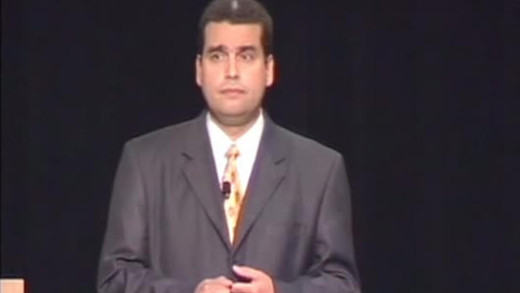
50:15On September 11, 2001 and for approximately nineteen years prior, William Rodriguez was employed as a maintenance worker at the World Trade Center. On the day of the attacks, Rodriguez initially rescued fifteen persons from the World Trade Center, and as the only person at the site with the master key to the North Tower stairwells, he led fire-fighters up the towers unlocking doors, aiding in the successful evacuation of unknown hundreds of those who survived. This is the account of his version of events...
 1:29:27
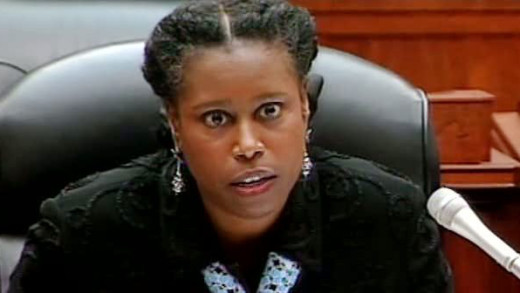
The American Blackout chronicles the 2002 defeat, and 2004 re-election, of Congresswoman Cynthia McKinney to the U.S. House of Representatives, focussing on issues surrounding voter disenfranchisement and the use of electronic voting machines in both the 2000 and 2004 presidential elections...
 46:42
46:42Big Bucks, Big Pharma looks at the varied insidious methods of the multi-billion dollar pharmaceutical industry to manipulate—and in some instances create—psychological conditions for profit. Focusing on the advertising for psychotropic drugs, the film demonstrates the ways in which pharmaceutical marketing glamorises and normalises the use of prescription medication, and how this works in tandem with promotion and delivery by doctors. These practices combine to shape how both patients and doctors understand and relate to mental and physical health, as well as treatment. Ultimately, Big Bucks, Big Pharma challenges the viewer to ask important questions about the consequences of a society relying on a for-profit industry for collective health and well-being.
 1:29:32
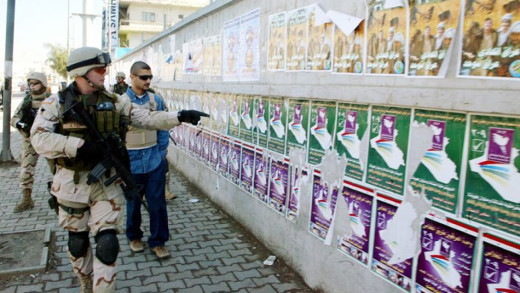
My Country, My Country documents the United States' invasion of Iraq from an insider's perspective, as told by Iraqi citizens themselves, and by the efforts of a devoted father and Sunni Muslim political candidate. Filmmaker Laura Poitras also spends time on the ground following the United States military 'Civil Affairs' team during the 2005 elections in Iraq. As the US government attempts to "bring democracy" to the country, Baghdad native Dr. Riyadh is faced with making the difficult decision of supporting the popular boycott of the elections, or fighting for a democracy that seems ever more unlikely with each passing day. With intimate footage of Dr. Riyadh's interactions with the public and candid interviews featuring the opinions of every-day citizens, My Country, My Country provides a rare look inside the struggle in Iraq in the context of an ongoing brutal occupation.
 1:37:56
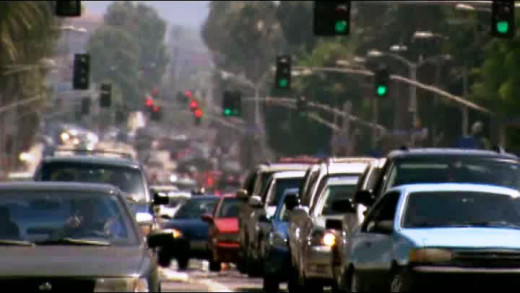
Crude Impact examines the interconnections of human economic activity, the use of fossil fuels and the effects that these have on the environment, the climate and humanity. What is peak oil? And what does this mean of the issue of global warming? The film also investigates the questionable practices of oil companies, to which there are plenty of examples...
 31:47
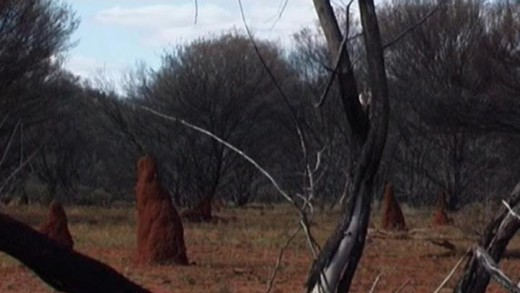
31:47In July 2005, the Australian government announced its plan to open a radioactive waste-dump facility in one of three Department of Defence sites in the Northern Territory of Australia. With widespread community resistance by the indigenous people of the territory, No Where Here in the Middle documents the ongoing story of resistance to the dump and the fight to be free of toxins, poison, and a brutal occupation.
 1:22:52
Supported by a mix of archival footage, NASA shots of burning oil fields and historical film excerpts, Crude Awakening examines peak oil. From Houston to Caracas, the Lake of Maracaibo, the Orinoco delta, Central Asia's secretive republic of Azerbaijan with its ancient capital Baku and the Caspian Sea, to London and Zürich. The film questions the future of oil with leading authorities such as oil investment banker Matthew Simmons, former OPEC chairman Fadhil Chalabhi, Caltec's head of physics, Professor David Goodstein, Stanford University political scientist, Terry Lynn Karl and peak oil expert, Matthew Savinar...
 1:10:18
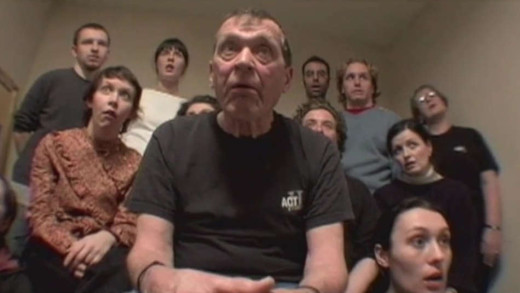
Stupidity sets out to determine whether our culture is hooked on deliberate ignorance as a strategy for success. From Adam Sandler to George W. Bush, from the IQ test to TV programming, to the origins of the word "moron," this film examines the celebration of dumbing-down in contemporary culture. Featuring opinions and comments from TV personalities to scholars, researchers, and the general public, Stupidity reveals that despite this culture's extensive access to information and education, it continues to choose and celebrate stupidity and ignorance.
 1:15:40
Produced while the invasion was in full swing, Iraq for Sale investigates some the many private contractors and consultants that were brought into to Iraq as part of the United States military machine. Four major contractors are profiled: Blackwater, K.B.R.-Halliburton, CACI and Titan, along with investigations of human rights violations, systemic misconduct, corruption, and profiteering. The film posits what damage is done to the 'average citizen' when corporations decide to wage war. For those in opposition to war and corporate power, the connection between the invasion of Iraq and the private corporations who profit from the fighting is plain to see. For those who still may not be so easily convinced, the film not only explores the questionable motivations of the corporate decision-makers whose wartime profiteering has affected the lives of countless soldiers and their families, not mention the lives of millions of civilians, but also the increasingly negative international reputation of the United States as a result.
 1:24:33
Jesus Camp follows several young children as they prepare to attend an event called 'Kids on Fire,' a Christian summer camp run by Becky Fischer. Through interviews with Fisher, the children, and others, Jesus Camp illustrates the unswerving belief of the faithful—a housewife and home-schooling mother tells her son that creationism has all the answers; footage from inside the camp shows young children weeping and wailing as they promise to stop their sinning; child after child is driven to tears. These scenes are contrasted with clips from another Christian radio host who is appalled by such happenings. Are these children being brainwashed?
 47:01
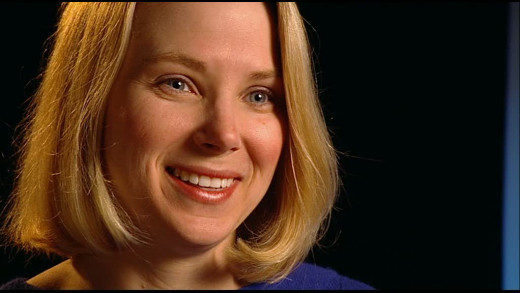
47:01With its motto "Don't be evil," Google claims it has the best intentions. But there are also claims that Google is slowly turning into Big Brother, keeping track of users and continuously making decisions about the information it provides. Will Google turn out to be the new Library of Alexandria, serving as the great collector that brings the world's information to supposedly everyone, as it claims? Or is it more like a monopolistic, Ministry-Of-Truth-type corporation that challenges the very freedom of information by its stronghold over internet data?
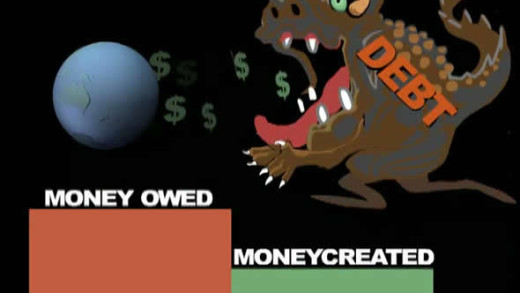
Money is a new form of slavery and is only distinguishable from the old slavery simply by the fact that it is impersonal--that there is no human relation between master and slave. Debt in government, corporate and household has reached astronomical proportions. Where does all this money come from? How could there be that much money to lend? The answer is that there isn’t...
 54:59
54:59The Virgin Trade investigates the growing phenomenon of Western sex tourism, with a focus on Thailand. The film travels through red light districts and the starry-eyed advertising propaganda that targets Western men to reveal the mechanics of the sex industry as it operates throughout Asia. What is revealed is a world entangled by money which leads to abuse, demand which perpetuates the culture, consumerism which drives demand, and poverty which drives the need. What happens when countries and cultures are ravished like this with Western sex tourism? Are parents selling their children into brothels to finance lavish Western lifestyles? Or do orphans fill the demand--smuggled into prostitution after disasters like the tsunami of 2004? The Virgin Trade dangles the questions of numbers while still affirming widespread exploitation and deceit. The interconnectedness, scale and depth of the problem, as well as what is still hidden or left unsaid, is left up to the viewer...
 44:54
44:54Abused
Abused--Battered Woman's Syndrome and Murder is a revelatory film showing how the legal system of this culture treats women who fight back against their abusers. 19 year-old Susan Greenberg pled guilty to killing the man who systematically abused her and was sentenced to twenty-five years to life for first degree murder. After serving 18 years in prison, Greenberg was one of the first women to test a new state law that allows women convicted of murder to ask a judge for release based on evidence of Battered Woman Syndrome. This story follows her struggle and the surprising dramatic results.
 1:09:08
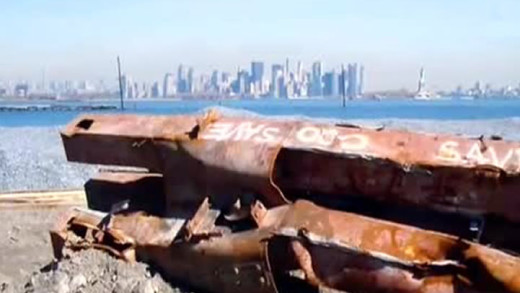
Improbable Collapse focuses on the events of September 11, 2001 from a scientific perspective--testing various hypotheses against gathered evidence such as traces of incendiary particles in dust found after the attacks; the presence of molten-metal being found in all 3 buildings (WTC 1, 2, and 7) and other physical evidence such as the collapse of all 3 buildings at free-fall speed that would suggest that they were destroyed using explosives in a controlled demolition--especially building 7 which was not hit by a plane and collapsed neatly in it's own footprint at 5:21pm. Using photographs, extensive video footage as well as thorough scientific analysis, the film comprehensively scrutinises official reports--showing the many flaws, inaccuracies and omissions, while presenting a more plausible hypothesis. All such findings are still consistently ignored by both government investigations and the mainstream media... Why?
 1:32:02
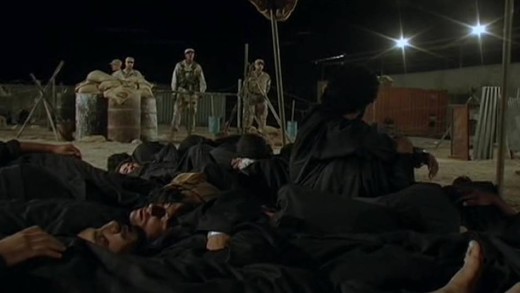
The Road to Guantánamo is a docu-drama about the incarceration of three British citizens--otherwise known as the Tipton Three--who were captured in Afghanistan in 2001 and detained for more than two years by the United States in Guantánamo Bay Naval Base, Cuba. The three were held in mostly solitary confinement and without legal representation for that time, after being released in 2004 without charge. Based on interviews, The Road to Guantánamo reenacts their experience in the camp, depicting the use of torture techniques such as stress positions, and attempts by the United States Army and CIA interrogators to extract forced confessions of involvement with al-Qaeda and the Taliban.
 1:27:33
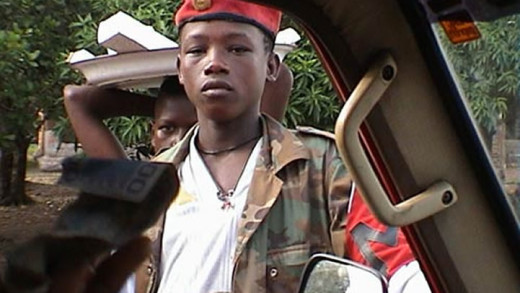
Located in Western Africa, Sierra Leone is a nation caught in a struggle between extreme poverty and extreme wealth. While diamond mining provides the bulk of the country's income, most of its people struggle to survive by raising their own crops. In 1991, a rebel group called the Revolutionary United Front formed to take on government and corporate interests in a bid for a more just economy and an end to hunger. At first, the RUF was popular with Sierra Leoneans, many of whom resented the elite seen as corrupt and looked forward to the promises of free education, health care and equitable sharing of diamond revenues. However, as civil broke out, the RUF was brutal and developed a reputation internationally for its terrible cruelty towards civilians, and its widespread use of child soldiers. What ensued was bloody mayhem. Around 70,000 people lost their lives in the nearly 15 years of fighting, while millions lost their homes and many thousands were maimed. The Empire In Africa tells the story behind the brutality, and shines a light on the terrible bloodshed, with the view that future horrors may then end.
 3:40:02
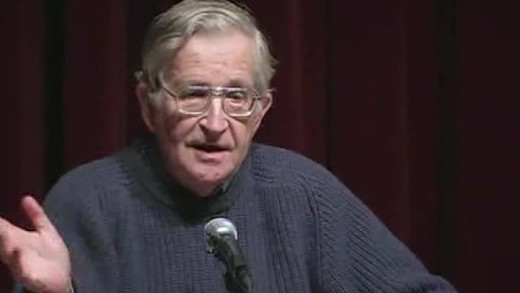
In Imperial Grand Strategy renowned linguist and philosopher Noam Chomsky focuses on the issue of the invasion of Iraq, and cuts through the ideological fog that surrounds the invasion and occupation, laying waste to the US government's justifications for them. In the process, Chomsky uncovers the real motivations behind US military aggression: a global imperial plan put in place long before Iraq and that will extend far into the future, unless we do something about it.
 42:46
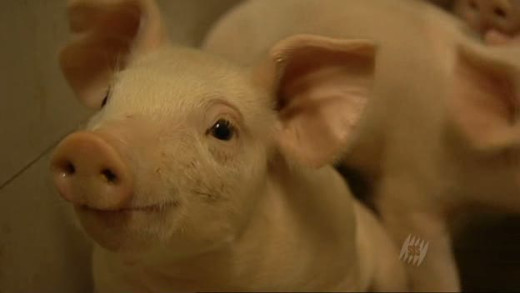
42:46Patent applications for the "Monsanto Pig" were published in February 2005 at the World Intellectual Property Organisation (WIPO) in Geneva. A researcher monitoring patent applications uncovered the fact that Monsanto is seeking patents not only on methods of breeding, but on actual breeding herds of pigs as well as the offspring that result. And as the seeds of the world are slowly being taken over by Monsanto, the company is aiming to extend its control to animals by patenting and thus privatising gene sequences--all of which are found and occur naturally and are not invented...
 58:13
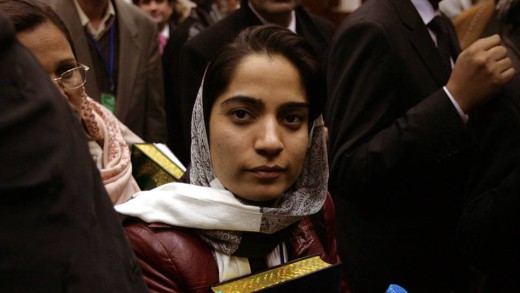
58:13In September 2005, Afghanistan held its first parliamentary elections in 35 years. Among the candidates was Malalai Joya, a courageous 27-year-old woman who had ignited outrage among hard-liners when she spoke out against corrupt warlords and criminals at the "Grand Council of tribal elders" in 2003. Enemies of Happiness is a revelatory portrait of this extraordinary freedom fighter and the way she connected with the people of Afghanistan. The film also serves as a snapshot of life and politics in war-torn Afghanistan from this time. As Joya rightly points out several Taliban warlords and wants them prosecuted for their crimes against the Afghan people, she is exposed to several death threats, and has been under constant protection. Can she overcome entrenched views and death threats to help bring democracy to Afghanistan?
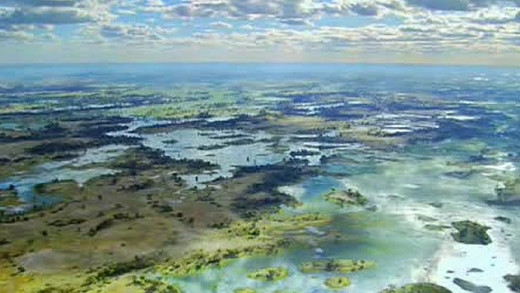
Following on from the series Planet Earth which looked at various forms of life across the globe, Planet Earth -- The Future highlights the issues of conservation and the future of the environments and species featured in the Planet Earth series. Using interviews with the film-makers and eminent figures from the fields of science, conservation, politics, and theology, the series poses questions around the effectiveness of the environmental movement, and the future of the planet. A lot needs to change in order to ward off catastrophe...
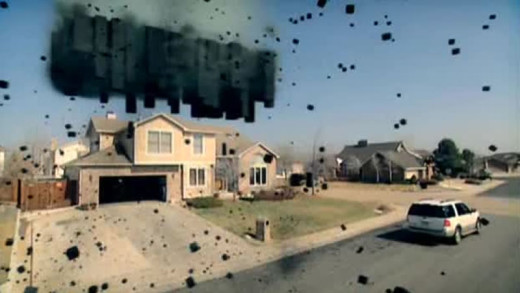
David Attenborough explores just how far climate change is altering our planet--from drought-stricken rainforest to declining polar bears, from flooded homes to bleached coral. Are We Changing Planet Earth? explores the evidence that it is industrial civilisation and the activities of humans which are radically changing the climate...
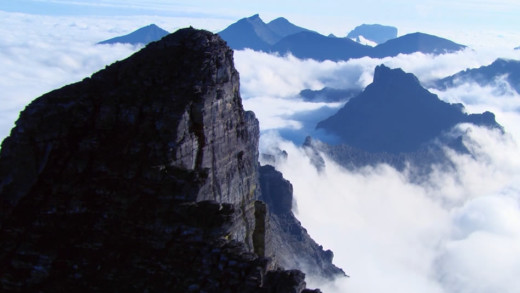
Planet Earth is a comprehensive series of eleven episodes that each feature a global overview of a different biome or habitat on Earth.