 45:06
45:06The human genome is being privatised. Another corporate takeover. The genetic sequences that make up you and me are being patented and one Australian company, a hot item on the stock market, is aggressively enforcing a suite of patents that affect an extraordinary 95 percent of every living creature's DNA. The company claims most laboratories around the world are infringing its patents -- nature itself included -- and the company is now trying to charge licence fees for this...
 23:03
23:03This short film, put together by activists, documents the extreme proliferation of e-waste throughout Asia. The effects of the waste is catastrophic, as computers and electronics contain some of the most hazardous materials—cadmium, barium, plastics, mercury, lead, Brominated Flame Retardants and dioxins. Working at the nexus of human rights and environment, this film confronts the issues of environmental justice at a macro level, by provoking the need to stop this trade and address the issues. With over 80% of e-waste coming from the United States alone being exported throughout Asia, the problem is only to increase unless things change, especially in the age of planned obsolescence and consumer 'upgrades.'
 1:19:36
The Trials of Henry Kissinger examines the evidence of war crimes by Henry Kissinger during his time as the United States "National Security Advisor" and later Secretary of State for President Nixon and President Ford. Acting in the role of the prosecution, journalist Christopher Hitchens presents solid evidence of Kissinger's complicity in a series of war crimes involving Indonesia, Bangladesh, Chile, Cyprus, East Timor and many other countries...

Ammo for the Info Warrior is a two part series of collections of short films by the Guerrilla News Network (GNN), an independent news organisation with a mission to expose young people to important global news and information free from corporate filters. Each part consists of a selection of 5 to 10 minute videos covering a range of stories, from the violent diamond trade in Sierra Leone; to the PR industry's manipulation of public opinion; to analysis of IBM and its role in the Holocaust; to CopWatch, a movement of people keeping police accountable; and short slam poetry clips about the business of hip-hop. Ammo for the Info Warrior experiments with format with the aim of being an innovative educational tool to tackle serious socio-political issues for a generation brought up on MTV. It can be a catalyst for discussion and debate, encouraging the viewer to develop skills in critical thinking and analysis.
 44:50
44:50While advertising is clearly a visible component of the corporate system, perhaps even more important and pervasive is the often-invisible partner—the public relations industry. Toxic Sludge Is Good For You illuminates this hidden sphere of the corporatocracy, examining the way in which the management of public discourse has become central to how society has been usurped and is controlled by political and economic elites. The film tracks the development of the PR industry from its early efforts to win popular support for World War I, to the role of crisis management in controlling damage to the corporate image, while analysing the tools PR people use to manipulate public perceptions.
 52:49
52:49John Pilger returns to the Occupied Territories of the West Bank and Gaza where, in 1974, he filmed a documentary with the same title -- Palestine Is Still The Issue -- a film about the same issues, a nation of people, the Palestinians, forced off their land and subjected to military occupation by Israel. Pilger hears extraordinary stories from Palestinians, though most of his interviews are with Israelis whose voices are seldom heard, including the remarkable witness of a man who lost his daughter in a suicide bombing. But for Palestinians, the overriding, routine terror, day after day, has been the ruthless control of almost every aspect of their lives, as if they live in an open prison. This film is about the Palestinians and a group of courageous Israelis united in the fight to be free...
 52:58
52:58American Porn is an investigation on the forces behind the explosion of pornography available throughout the United States. Through interviews with the pornographers themselves, actors, lawyers, federal and state prosecutors, activists, and a Wall Street analyst covering the industry, American Porn examines the business ties between respected corporations and porn companies, the rise of extreme hardcore porn, and a political battle of the times.
 47:59
47:59Raped
Between 1999 and 2000, nearly 8,000 women reported a rape to the police. Out of those women, 90 per cent identified their attacker, and DNA evidence helped place the accused at the scene of the crime. But the admission of a prior relationship with the perpetrator counted against the victim. In any case, the conviction rate for rape is unbelievably low—only nine convictions for every 100 cases reported. Film-maker Rachel Coughlan follows the heart-wrenching stories of five women to win their fight for justice, showing in the process the systematic failures of the legal system in why such cases—the ones that do even make it to court—often don't result in conviction.
 51:44
51:44The Disney Company's massive success in the 20th century is based on creating an image of innocence, magic and fun for kids. Its animated films in particular are almost universally lauded as wholesome family entertainment, enjoying massive popularity among children and endorsement from parents and teachers around the world. This film takes a close look at Disney, to analyse the world these films create for kids and the stories they tell and propagate; contextualised by the cultural pedagogy of Disney's conglomerate mass-media control and vast corporate power. Including interviews with social commentators, media scholars, child psychologists, kindergarten teachers, multicultural educators, college students and children, Mickey Mouse Monopoly provokes audiences to confront assumptions about an institution that is virtually synonymous with childhood pleasure.
 53:45
53:45More than 40 years after his death, the body of former CIA scientist Frank Olson has been exhumed. Olson's son Eric is convinced his father was murdered by agents of the government because he wanted to leave the CIA. Frank Olson was an expert for anthrax and other biological weapons and had top security clearance. Forensic pathologists at George Washington University performed an autopsy and concluded that Olson probably was the victim of a violent crime. Codename Artichoke documents these strange aspects of the CIA's quest for mind control drugs, with programs like MKULTRA, MKDELTA, Artichoke, Operation Midnight Climax and others...
 57:10
57:10Unprecedented looks at voting irregularities in the controversial presidential election in the United States from the year 2000. With a focus on the swing state of Florida, the recount, the ensuing supreme court decision in December, and future elections; the film also shows how fundamentally, many people--the majority being African-American--have outright been refused the ability to vote by a clever mix of legalese, electronic voting machines, political maneuvering and simple racism. A 1868 law prevented felons from voting--originally crafted to keep blacks from the polls in the wake of the Civil War--was resurrected in 2000, used to create a computerised list of people supposedly illegible to vote. The list had weird parameters and included as many as 57,000 to 91,000 non-felons; overwhelmingly targeting people of colour. On election day, these people were turned away at the polls. The role of electronic voting machines is also examined, as they are totally unaccountable and do not allow audits. The argument is made because of copyright over the software and trademarks. The machines also do not give paper receipts, so there is no physical evidence in case of the need for a recount. How does the United States--the so-called and self-proclaimed world-famous democracy--fair as one in light of this?
 1:11:29
In the aftermath of the events of September 11th, 2001; MIT linguist and political philosopher Noam Chomsky found himself called upon to provide much-needed analysis and historical perspective regarding this moment in American history. In the months following, Chomsky gave dozens of talks on four continents, conducted scores of media interviews, and published a book called '9-11.' In this film and in his book, Chomsky places the events of September 11 in the context of American foreign intervention throughout the postwar decades—in Vietnam, Central America, the Middle East, and elsewhere. Beginning with the fundamental principle that any exercise of violence against civilian populations is terrorism—regardless of whether the perpetrator is a well-organized band of Muslim extremists or the most powerful nation-state in the world—Chomsky challenges the United States to apply the moral standards it demands of others to its own actions.
 19:13
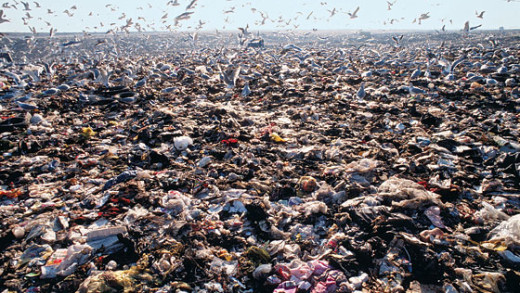
19:13Eat a takeaway meal, buy a pair of shoes, or read a newspaper and you're soon faced with a bewildering amount of rubbish. Over the past 30 years worldwide garbage output has exploded, doubling in the United States alone. So how did there come to be this much waste, and where does it all go? By excavating the history of rubbish handling from the 1800s -- an era of garbage-grazing urban hogs and dump-dwelling rag pickers -- to the present, with mass consumer culture, modern industrial production and the disposable American lifestyle, The Hidden Life Of Garbage documents the politics of recycling, greenwashing and the export of trash to the third world as part exposé, part social commentary...

The Life of Mammals is a ten part series that follows the evolution and habits of various mammal species around the world. Each episode looks at one or several closely related mammal groups and discusses the different facets of their day-to-day existence and evolutionary origins.
 1:14:02
The film is a video essay by Professor Albert Bartlett essentially serving as an introduction to the concept of steady growth and doubling time, by taking us through the impacts and consequences of exponential growth on a finite planet. By making good observations of this impossible growth as applied to fossil-fuel consumption, population and the endless growth of which the global economy requires, this presentation gives us the basic tools to fundamentally understand that we've got a real problem on our hands.
 57:53
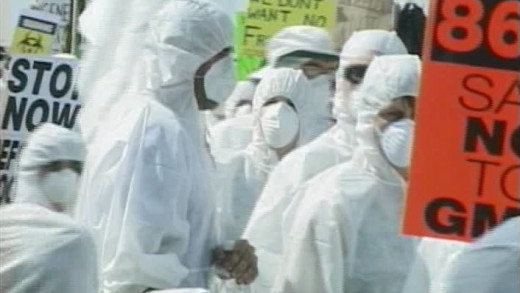
57:53As the biotechnology industry spends more than $50 million a year to convince us that 'genetic technology' is our only hope for feeding the world and saving the environment, toxic agricultural chemicals continue to poison the air, food and water and put farm workers in serious danger. So what's the real problem? Using archive footage and interviews with farmers, scientists, government officials and activists, Fed Up With Genetic Engineering presents an overview of the current food production system, exploring the impacts of pesticides, the resistance of biotechnology companies to food labelling and the links between government officials and major biotechnology and chemical companies...
 55:46
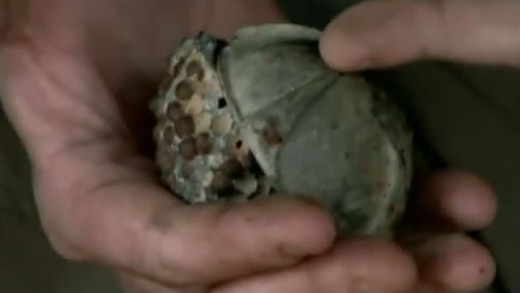
55:46Between 1964 and 1973 the United States conducted a secret war in Laos -- dropping over 2 million tons of bombs, making it the most heavily bombed country in history. Millions of 'cluster bombs' did not explode when dropped, leaving the country massively contaminated with "bombies" which are as dangerous now from when they fell over 30 years ago. Bombies documents unexploded cluster bombs through the personal experiences of a group of Laotians and foreigners who go about dismantling the bombs. These weapons are still a standard part of the United States military arsenal and were recently dropped in Kosovo, Afghanistan and Iraq...
 28:59
28:59It has been 30 years since Title IX legislation granted women equal playing time, but the male-dominated world of sports journalism has yet to catch up with the law. Coverage of women's sport lags far behind men's, and focuses on female athletes femininity and sexuality over their achievements on the court and field. While female athleticism challenges the narrative of gender roles, women athletes continue to be depicted in traditional roles that reaffirm their femininity as wives and mothers or sex objects. By comparison, male athletes are framed according to heroic masculine ideals that honour courage, strength, and endurance. Playing Unfair is the first video to critically examine the post-Title IX media landscape in terms of the representation of female athletes, using numerous media examples to catalyse debate among women and men, athletes and non-athletes, about the meaning of images in a world transformed by the presence of women in sport.

To many in both business and government, the triumph of the self is the ultimate expression of democracy, where power is truly moved into the hands of the people. Certainly the people may feel they are in charge, but are they really? The Century of the Self tells the untold and controversial story of the growth of the mass-consumer society. How is the all-consuming self created, by whom, and in whose interest?
 1:30:25
In the 1960s and 70s, the polarisation of the political situation in the United States was becoming acute with the Vietnam War abroad and civil rights at home being but the most obvious issues. For the youth political movement, the futile methods of peaceful protest led to the rise of an idealistic faction that undertook a more extreme approach to resistance. This faction, called the Weather Underground, attempted to team up with the Black Panthers to overthrow the US government—starting with street riots, escalating to bombing government targets. Thorough archival footage and interviews of the veterans of both sides, this film covers the movement, until changing times and disillusionment brought it to an end, alongside the FBI employing an illegal series of projects called COINTELPRO to hasten it...
 1:02:17
Hardcore
Felicity, a 25-year-old single mother living in England, is desperate to make money to improve her daughter's opportunities. She is invited by a porn agent to travel to Los Angeles, the centre of the porn industry, to make a career as a pornstar. Hardcore follows Felicity over three weeks, as she ends up immersed in the deeply disturbing and degrading world of pornography production. Her agent introduces her to Max Hardcore, a notorious abuser, known for humiliating and abusing women for films. Aware of his reputation for choking women--and that he often asks women to dress as underage girls--Felicity does not want to meet him, let alone work with him, yet she is pressured by her agent until she agrees. When Max Hardcore chokes her, and she breaks down in tears, he attempts to manipulate her into continuing, and is almost persuaded until the documentary crew steps in for fear of being complicit in rape. The documentary is extremely difficult viewing, but depicts a true face of the porn industry, and the toxic culture it is embedded in.
 31:01
31:01Mainstream media regularly uses public opinion polls in the reporting of news and political analytics. But how do media outlets report polls and to what end? In this interview, author and academic Justin Lewis demonstrates the way in which polling data is used by the media to not just reflect what populations supposedly think, but instead to construct public opinion itself.
 49:53
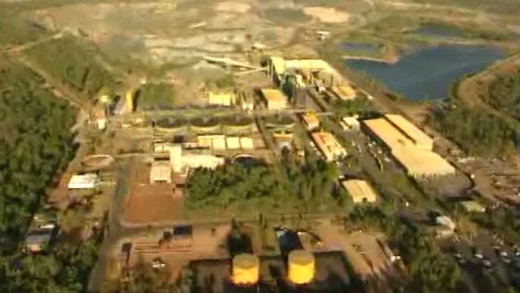
49:53Fight For Country tells the story of one of Australia's largest ever land rights and environmental campaigns, to stop the building of a second uranium mine within the World Heritage listed Kakadu National Park in the Northern Territory, Australia. In 1998 the issue came to a head when Indigenous elders and activists called on people to come from around Australia and the world to blockade the construction of the mine and proposed 'uranium deposits', collectively called Jabiluka. The film follows activists and speaks with Aboriginal people about the impacts of the mine, following the community response and protest actions against the mines development, where over 500 people were arrested in the course of the eight-month blockade.
 52:45
52:45They spend their days sifting through reams of market research data. They conduct endless surveys and focus groups. They comb the streets, the schools and the malls, hot on the trail of the "next big thing" that will snare the attention of their prey -- a market segment worth an estimated $150 billion a year. They are the merchants of cool: creators and sellers of 'popular culture' who have made teenagers the hottest consumer demographic...
 48:42
48:42Ever since February 1997, when genetic scientists first unveiled 'Dolly' the cloned sheep, has genetic engineering pushed towards the desire to clone and genetically modify human beings. Since then, cloned cattle, pigs, goats and mice have been produced amongst other things, fuelling the belief that humans can be next. But what are the problems with this manipulation? Cloning The First Human follows the latest research, which not only shows complications from an ethical position, but much more dangerous ones too...
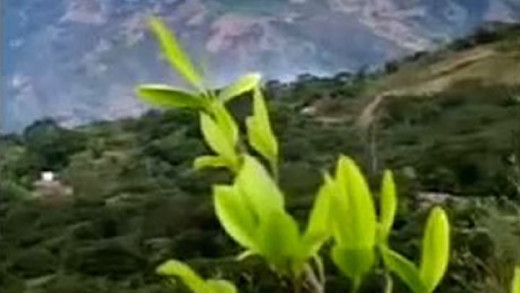 23:46
23:46Coca Or Death delves into Bolivia -- a country torn apart by the demands of the western world for coca. This film investigates why bloody battles have broken out between farmers and armed troops on the streets of La Paz, and what the impact of privatisation is having through the country. Coca has become a symbol of national resistance in Bolivia...
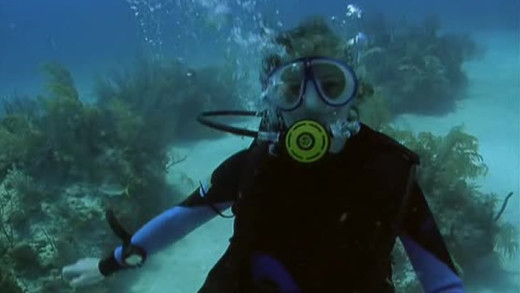 48:56
48:56Deep Trouble covers the concerns of commercial fishing from a global perspective. Many species of fish that are eaten every day all around the world are now seriously threatened or are critically endangered. The Southern Bluefin Tuna for one. Mainstream awareness of where market fish come from let alone how endangered they might be is minimal. As fish stocks dry up, supermarkets are now offering new and strange species from the deep sea. Bizarre-looking creatures are being dragged up in vast fishing nets from depths of 1,000 metres or more, and the methods used to catch them are horrifying. How sustainable is this?
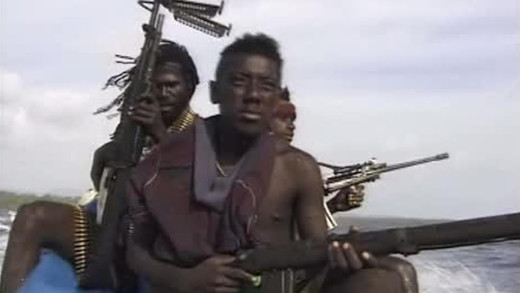 52:53
52:53The Coconut Revolution documents the struggle of the indigenous peoples in the Bougainville Island. The movement is described as the world's first successful eco-revolution, in that the successful uprising of the indigenous peoples of Bougainville Island against the Papua New Guinea army stopped the mining plans of the RTZ company to exploit their land for resources...