 1:26:58
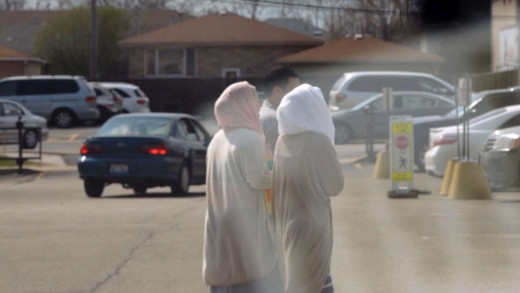
In the Arab-American neighbourhood outside of Chicago where director Assia Boundaoui grew up, most of her neighbours think they have been under surveillance for over a decade. While investigating their experiences, Assia uncovers hundreds of pages of Operation Vulgar Betrayal, FBI documents that prove her hometown was the subject of one of the largest counter-terrorism investigations ever conducted in the United States before September 2001. No arrests or links to terrorist activity were ever made from the operation. The Feeling of Being Watched follows the examination of why a community fell under blanket government surveillance, the government secrecy shrouding what happened, and why her community feels like they’re still being watched today.
 1:03:59
Tracing the Internet's history as a publicly-funded government project in the 1960s, to its full-scale commercialisation today, Digital Disconnect shows how the Internet's so-called "democratising potential" has been radically compromised by the logic of capitalism, and the unaccountable power of a handful of telecom and tech monopolies. Based on the acclaimed book by media scholar Robert McChesney, the film examines the ongoing attack on the concept of net neutrality by telecom monopolies such as Comcast and Verizon, explores how internet giants like Facebook and Google have amassed huge profits by surreptitiously collecting our personal data and selling it to advertisers, and shows how these monopolies have routinely colluded with the national security state to advance covert mass surveillance programs. We also see how the rise of social media as a leading information source is working to isolate people into ideological information bubbles and elevate propaganda at the expense of real journalism. But while most debates about the Internet focus on issues like the personal impact of Internet-addiction or the rampant data-mining practices of companies like Facebook, Digital Disconnect digs deeper to show how capitalism itself turns the Internet against democracy. The result is an indispensable resource for helping viewers make sense of a technological revolution that has radically transformed virtually aspect of human communication.
 1:16:59
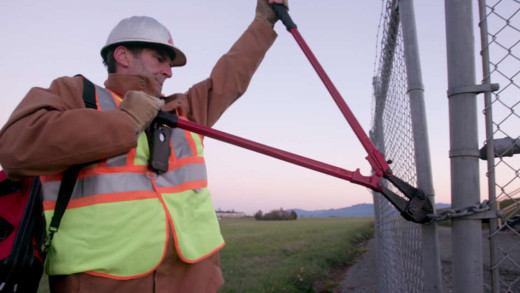
If a crime is committed in order to prevent a greater crime, is it excusable? Is it, in fact, necessary? The Reluctant Radical follows Ken Ward as he confronts his fears and acts on these questions to stop climate change. After twenty years leading some of the most renowned mainstream environmental organisations, Ken witnesses first-hand how ineffective and unthreatening they are. As their efforts fail, and environmental collapse increases in scope and speed, Ken comes to see how direct action civil disobedience is the most effective political tool to deal with catastrophic circumstances. Ken breaks the law, to fulfil his obligation to future generations, to stop the oil economy. By following Ken for a year and a half through a series of direct actions, this film culminates with his participation in the coordinated action that shut down all the tar-sands oil pipelines in the United States on October 11, 2016. The film reveals the personal costs but also the true fulfilment that comes from following one's moral calling, even if that means breaking the law and its consequences. Ken has no regrets.
 41:53
41:53Fuelled by popular personalities on Instagram, YouTube and Snapchat, cosmetic surgery is pushing further into the mainstream. Huge numbers of people, predominantly young women, are choosing to alter their appearance forever as though it's as simple as buying a new set of clothes. Social-media "influencers" get free procedures in exchange for promoting certain doctors or agencies or products to their audiences. Going on the numbers alone, audiences seem to respond to this blatantly cacophonous advertising, following their social media stars closely, and taking out huge personal loans to get surgery and "keep up with the Kardashians." Doctors offering the surgery are even becoming media stars themselves, and it's redefining the meaning of doctor/patient relations. Underpinning this entire industry, is a business model of targeting women who can barely afford procedures by selling the dream of a "new you." Social-media laps it up, and the cycle repeats. But as this investigation shows, when things go wrong, the physical and financial costs are devastating. Real doctors who are left to pick up the pieces, are warning that the booming industry is creating a dangerous legacy, and not just to the concept of beauty.
 1:37:43
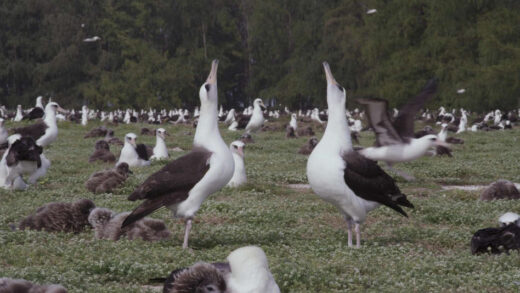
Albatross is a collaborative film project with artist Chris Jordan and photographer Manuel Maqueda. The film is the culmination of many years of research and study of the issue of ocean plastic pollution, with a paricular focus on how it effects species of Albatross on a tiny atoll in the centre of the vast North Pacific Ocean. The resulting film is an experience that is devastating, not only for the plight of suffering birds, but also for what this crisis reflects back about the destructive power of the culture of mass consumption, and its damaged relationship with the living world.
 29:05
29:05There are billions of people increasingly glued to 'smartphones' and consumed by the seemingly endless spectacle of 'social media.' But why? Reporter Hilary Andersson seeks to answer this question by tracking down insiders who reveal how social-media companies have deliberately developed habit-forming technology to get people addicted. Former Facebook manager, Sandy Parakilas, tells us the "goal is to addict you and then sell your time." Likewise, Leah Pearlman, the co-creator of the renowned 'Like' button, warns of the dangers of social-media addiction. Through these voices, and many others, Andersson shows how behavioural science is profoundly used by tech companies to keep people endlessly checking their phones, to the end of huge profits.
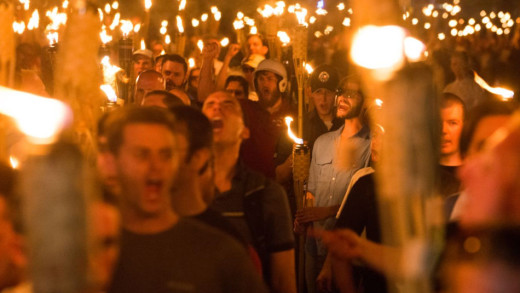
Investigate journalist A.C. Thompson reports on the background of the white supremacists and neo-Nazis involved in the "Unite the Right" rally in Charlottesville, 2017. The event itself was chaotic and violent, amidst a backdrop of general passivity by the police and supine intelligence agencies, peaking on the day with a self-identified white supremacist ramming his car into a crowd of protesters, killing a young woman, Heather Heyer, and injuring 19 other people. Documenting Hate contextualises the events of that day by looking at the renewed trajectory of fascism in the United States, and the kinds of people attracted to its place in modern times, while profiling some of the characters from Charlottesville that lurked in the background. The second part of the investigation deals with the wake of the deadly anti-Semitic attack at the Tree of Life synagogue in Pittsburgh, showing how a neo-Nazi group, Atomwaffen Division, has actively recruited inside the United States military.
 45:25
45:25This culture runs on algorithms on a scale never before realised. Whether you get a job or a mortgage or insurance or healthcare, how you get from A to B, how huge fortunes are made or whom is driven into poverty, decisions on whom is sent to or released from prison, whom is voted for in manipulated elections--the reach of algorithms has captured so much of the major decisions of our lives, all in complete obscurity, inscrutable. So what are the implications of this? What sort of 'decisions' do machines make, to which we've come to regard as infallible and impartial, accurate and precise? Algorithms Rule Us All speaks to data scientists and programmers themselves to answer the question of what they think is unfolding with the so-called Big-Data society and how we're continuing to hand over our lives and societies to the whim of machines that are driven by rapacious profit-driven companies, for the goal of commodification of everything. What are the implications for human autonomy, society, democracy?
 1:49:56
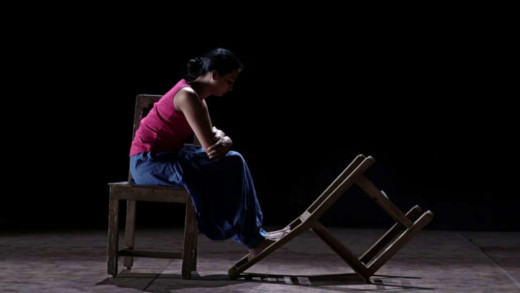
In 1992, Bhanwari Devi, an Indian social worker hailing from the Kumhar caste in rural Rajasthan, was gang-raped by upper caste men for having the temerity to intervene and stop the child-marriage of an infant. The subsequent acquittal of the accused in connivance with the State machinery outraged India and galvanized women’s activism that led to the Vishaka Guidelines, and subsequently, the Sexual Harassment of Women at Workplace Act in 2013. In this feature-length documentary shot by an all-women crew, Director Vaishnavi Sundar juxtaposes the law on paper with the ground realities, through this first-of-its-kind log of stories and experiences of over two dozen Indian women; tales of sexual violence that they face--from opulent corporate offices, to construction sites, to manual scavenging--and their fight for justice against an obstinate patriarchal State. But What Was She Wearing? attempts to portray the impotence of this law and the impossible odds Indian women are up against in pursuit of justice.
 1:45:00
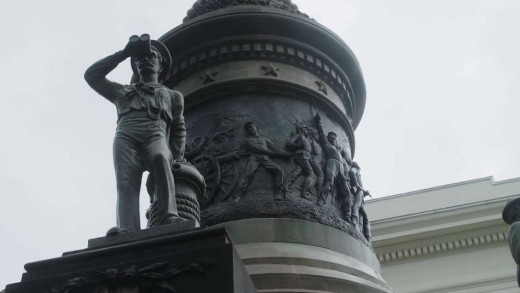
In the United States, during the first year of Donald Trump's presidency, the rise of a white supremacist movement has returned, as political energy is injected into neo-confederate, neo-fascist, neo-Nazi, Klansmen, and various right-wing militia groups. More broadly, civil rights organisations such as Antifa (Anti-Fascist) and social justice groups are fighting back. Alt-Right: Age of Rage follows the development the Alt-Right, by following social justice activist Daryle Lamont Jenkins, and renowned Alt-Right leader Richard Spencer. Each movement is juxtaposed, as tensions boil over to the horrific events in Charlottesville where a young woman is killed, and 30 others injured by a self-identified neo-Nazi. Through these narratives and events, the film surveys the workings of Free Speech, deplatforming by the Left, the role of the Internet, and the consequences of fractured politics playing out in the real physical world.
 1:31:37
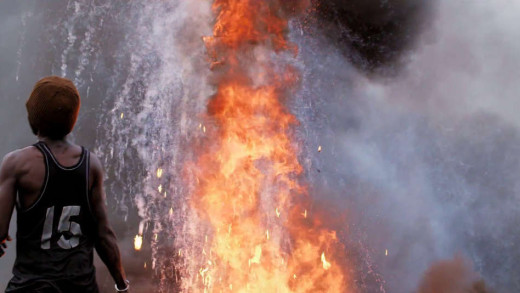
Hundreds of thousands of mobile phones, LCD screens, TVs, notebooks, tablets, and computers become useless or quickly "out-of-date" and end up in Ghana every year, where children and adolescents dismantle them for "recycling." Welcome to Sodom profiles the life of those who work in the brutal conditions, handling the world's electronic waste, and what they endure to barely make enough money to survive. Many years before the wasteland, Ghana was a beautiful savanna with greenery and animals, now it's a hell of fire, toxins, acrid smoke, plastic, and pollution, at the behest of the global economy and the technoculture that drives it.
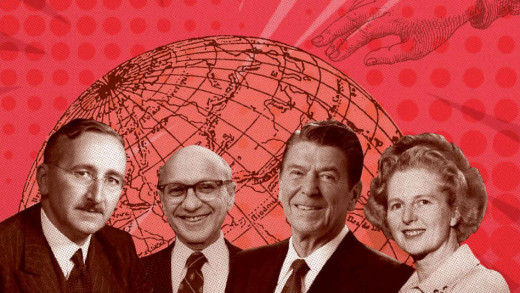
This Is Neoliberalism is a series of video essays that explore the origins and makings of neoliberalism--the dominant ideology of capitalism. The series explains what neoliberalism is and where it came from. Economic liberalisation, privatisation of the public sphere, deregulation of corporations, tax cuts for the rich, "free trade," "austerity," and reductions in government spending in order to increase the role of the private sector in society are just some of the many themes of neoliberalism, which as an ideology, fundamentally seeks to increase the power of corporations and ensure wealth remains shifted to the upper class. The series begins in 1918, and takes us up to modern politics, through globalisation, and to the modern ruling economy.
 1:37:20
Dark Money tracks the influence of corporate money in contemporary politics in the United States. Using Montana as a case study, the film engages with the complex history that Montana state politics has with corporate influence. Starting with the Anaconda Copper Mining Company, Dark Money shows how the influence of mining corporations caused state legislators to relax mining regulations, which resulted in an environmental catastrophe in Butte, with problems that persist today. John S. Adams of the Montana Free Press plays a central role in the film as an investigative journalist who has been tracking state politics and following the money for several years. Adams has reported on everything from the role of the American Tradition Partnership (formerly known as Western Tradition Partnership) funds in the shaping of state election laws, to the illegal political activities of a "right to work" PAC in Montana. The film follows Adams's work as a reporter, but it also includes interviews from other prominent figures in Montana state politics and those involved in the movement to examine and limit the influence of dark money in politics.
 1:14:46
Over 18
Over 18: The Question is Not Enough is a broad examination of modern pornography. For just a generation ago, porn was on the fringe in glossy magazines. Today, porn is mainstream and even celebrated. But as softcore imagery migrated into popular culture through advertising and became normalised, today's mainstream porn is hardcore and explicit in order to distinguish itself. Now too, with the pervasiveness of the Internet, graphic video is also increasingly exposed to young people. Over 18 tells the story of Joseph, a 13-year-old boy who is recovering from a porn addiction that he fell into when he was just 9 years old--a case that is not unexceptional. By exploring what today's mainstream porn is and how it captures people through candid interviews with porn producers and ex-porn stars themselves, Over 18 also provides research from academics, and life experience from recovering addicts, to take aim at the content of modern pornography and its existence as an industry.
 49:38
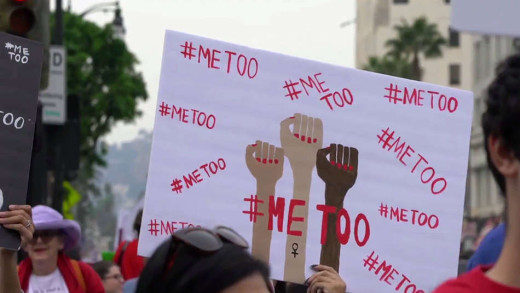
49:38The 'MeToo' movement has brought the pervasiveness of sexual abuse and harassment in this culture to the mainstream, creating an unprecedented demand for sexual violence prevention models that actually work. The Bystander Moment tells the story of one of the most prominent and proven of these models developed by activist and writer Jackson Katz and his colleagues. Illustrated through archival footage and clips from news, sports, and entertainment media, Katz explores the role of bystanders--especially friends, teammates, classmates, and co-workers--in perpetuating sexual harassment and sexual assault. Katz also gives attention to peer culture dynamics--in particular the male peer culture dynamics across race and ethnicity--that help normalise sexism and misogyny while silencing other men in the face of abuse. The Bystander Moment qualifies the crucial importance of appealing to people not as potential perpetrators or passive spectators, but as active bystanders and allies who have a positive role to play in challenging and changing sexist cultural norms, to stopping abuse and violence.
 1:28:04
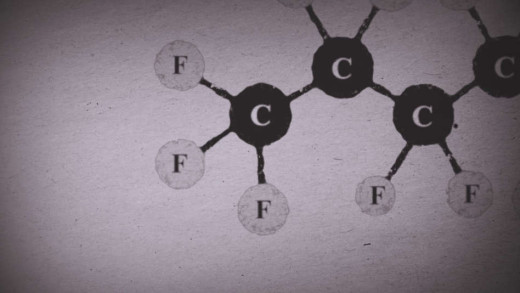
The Devil We Know investigates the toxicity of perfluorooctanoic acid--PFOA/PFA, also known as C8--the key ingredient found in non-stick cookware, stain resistant furniture and carpets, wrinkle free and water repellent clothing, cosmetics, lubricants, paint, pizza boxes, popcorn bags, and many other everyday products. The film centres on Parkersburg, West Virginia, in the United States, at the DuPont facility that manufactured Teflon, and dumped at least 1.7 million pounds of PFOA into rivers and streams between 1951 and 2003, knowing that it was a carcinogen. The film follows the personal stories of several people who worked at the facility that experienced cancers and birth defects, and also reveals the detection of PFOA in the blood of more than 98% of the general US population in the low and sub-parts per billion (ppb) range, with levels much higher in chemical plant employees and surrounding subpopulations.
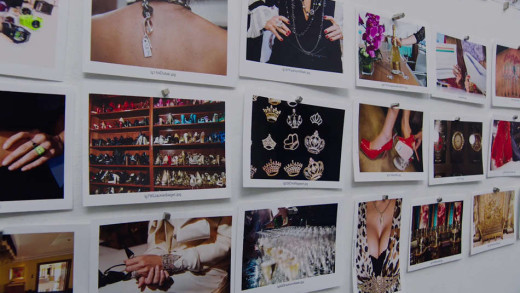 1:45:45
Generation Wealth is a visual history of the materialistic, image, and celebrity-obsessed culture, explored through the work of photographer and filmmaker Lauren Greenfield. Part historical essay, part autobiographical, Greenfield puts the pieces of her life's work together to reveal the pathologies that have created the richest and most unequal society the world has ever seen. Spanning consumerism, beauty, gender, body commodification, aging, and sex, Generation Wealth unpacks the global boom-bust economy, the corrupt American Dream and the human costs of capitalism, narcissism and greed.
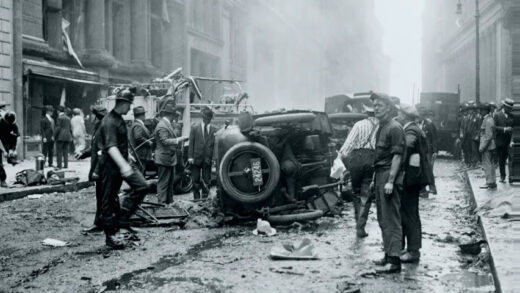 51:58
51:58The Wall Street bombing occurred on September 16, 1920, when a horse-drawn wagon filled with dynamite exploded in front of J.P. Morgan & Co., killing 38 people and injuring hundreds. The attack was never solved, but it is believed to have been carried out by anarchists as a form of political violence against capitalism. The bombing helped launch the career of a young J. Edgar Hoover and sparked a bitter national debate about how far the government should go to protect the nation from acts of political violence.
 44:57
44:57YouTube, owned by Google, has become one of the most powerful online media platforms in the world, fast to be replacing the viewership of television with over 30 billion hours watched per month in 2017. Young people flock to the platform in the hopes of fame and fortune, which comes for a select few, but not all, hence the allure to 'make it.' YouTube celebrities are now mainstream celebrities. The result is troves competing to live their lives as monetised open-wounds for the corporate platform, constantly pleading for subscribers, attention and engagement, all at the hands of Google, its secret algorithms, and the screen culture of spectacle, pornography, and targeted advertising. On both sides of the screen, the treadmill is all about keeping the ad dollars constantly rolling. YouTube, YouTubers and You offers a glimpse into this new media and advertising world, pondering how this culture may continue to undermine our future media and informational landscape. What sort of people and world is this culture creating and perpetuating?
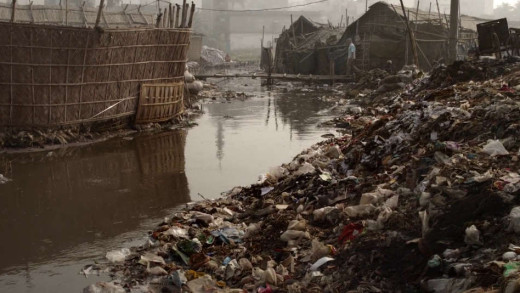 1:34:57
RiverBlue shows the toxic effects of textile production and jeans manufacturing on some of the world's largest rivers. Travelling from tanneries along rivers in India, to some of the largest jeans manufacturing factories in China, renowned river advocate Mark Angelo guides the viewer through the declining health of waterways around the world.
 2:08:21
We live in a world of screens. The average adult spends the majority of their waking hours in front of some sort of screen or device. We're enthralled, we're addicted to these machines. How did we get here? Who benefits? What are the cumulative impacts on people, society and the environment? What may come next if this culture is left unchecked, to its end trajectory, and is that what we want? Stare Into The Lights My Pretties investigates these questions with an urge to return to the real physical world, to form a critical view of technological escalation driven rapacious and pervasive corporate interest. Covering themes of addiction, privacy, surveillance, information manipulation, behaviour modification and social control, the film lays the foundations as to why we may feel like we're sleeprunning into some dystopian nightmare with the machines at the helm. Because we are, if we don't seriously avert our eyes to stop this culture from destroying what is left of the real world.
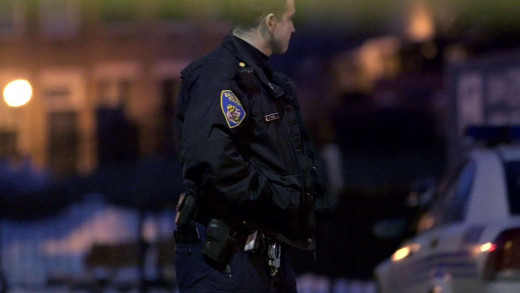 1:31:50
In 2015, peaceful protests and destructive riots erupted when Freddie Gray, a 25-year-old African American, died in police custody in Baltimore, United States. While the city waited to see the fate of the six police officers involved in the incident, who were all ultimately not punished, Baltimore Rising shows activists, police officers, community leaders, and gang affiliates, who struggled to hold the city together, as the homicide rate hit record levels. The death of Gray by police catalysed the longstanding fault lines in a distraught community, damaged by corruption and inequality. Baltimore Rising chronicles the determined efforts of people on all sides who are working to make their community better, sometimes coming together in unexpected ways.
 57:45
57:45How can we make political change if peaceful demonstration is not effective and violence only brings more violence? War/Peace posits this question by reintroducing two surviving figures from the Weather Underground movement of the late 1960s, Bernardine Dohrn and Bill Ayers. Coming from the hippy counterculture, the Weather Underground was a radical militant organisation, with revolutionary positions characterised by the Black Power and civil rights movements, as well as opposition to the Vietnam War. In 1970, the group issued a "Declaration of a State of War" against the United States government, with the goal to overthrow the government and end United States' imperialism, culminating in a bombing campaign targeting government buildings along with several banks. War/Peace rewinds to the past to draw out the complexity of these political struggles, and what went wrong, while drawing parallels to the struggles of today, where a lot has changed, but a lot has also remained the same.
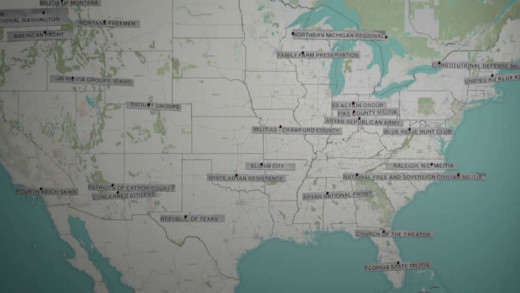
On April 19, 1995, Timothy McVeigh, a former soldier deeply influenced by the literature and ideas of the radical right, parked a truck with a five-ton fertiliser bomb in front of the Alfred P. Murrah Federal building in Oklahoma City. Moments later, 168 people were killed and 675 were injured in the blast. Oklahoma City traces the events that led McVeigh to that day from the perspective of the survivors, first-responders, investigators, and journalists who covered the events. The film provides an exploration of the convergence of various conservative religious movements and white supremacist militias that rose to prominence in the early 1990s, and were catalysed by the actions of government during that time.
 1:11:57
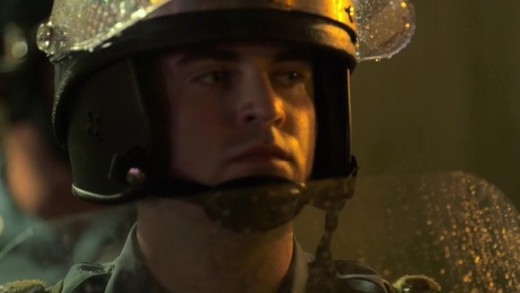
Do Not Resist documents, from the perspective of the police, their view of the social unrest following the shooting and killing of Michael Brown by police in Ferguson, 2014, against a backdrop of the routine and escalating use of military tactics and high-powered weaponry by local police forces throughout the United States in the past two decades. Military equipment deployed throughout the Middle East returns home to be used against the citizenry. Local police recruitment and training is awash in military commandments backed by views of escalating 'righteous' violence and sadism. Meanwhile curfews are imposed, along with frivolous drug raids and incessant racial profiling. The voices of concerned citizens ignored. What is the cultural and technological trajectory here?
 41:57
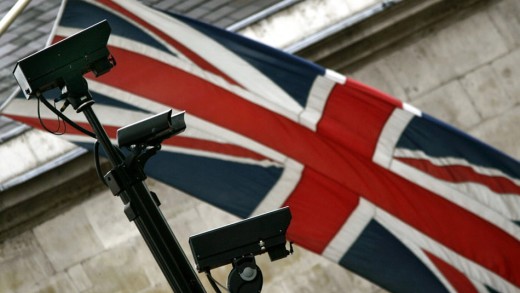
41:57Governments all around the world are using high-tech mass surveillance tools to monitor their citizens. Western corporations, including Britain's largest weapons manufacturer, BAE, are among those which are creating and selling mass surveillance infrastructures all across the globe, but especially to particularly repressive regimes. Weapons of Mass Surveillance makes example of what is happening throughout the Middle East where journalists, human rights advocates and activists are being targeted with surveillance tools developed by western corporations with extreme real-world consequences. Political opponents to tyrannical power are targeted, jailed, and in some cases, tortured or "disappeared." This shows the power of mass surveillance tools for great harm, and how the west is culpable in perpetuating systemic repression both at home and abroad.
 1:12:47
The Great White Hoax contextualises the current day politicking in the United States, with a primary focus on Donald Trump's race-baiting 2016 campaign for president. The film also widens scope however to show how Trump’s charged rhetoric fits into a long-standing historical pattern in politics in the United States, offering a stunning survey of how racism and racial scapegoating have shaped American politics for centuries. The film becomes a solid resource for a basis on race relations, white privilege, the intersectionality of race, class, and gender identities, presidential politics, and political propaganda in the age of "social media."
 1:18:01
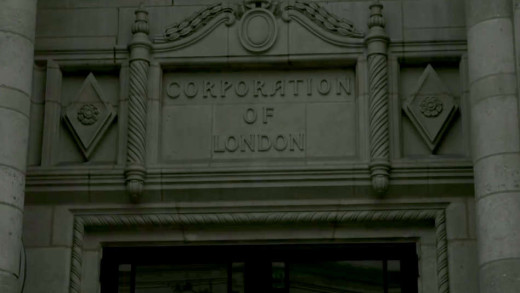
The Spider's Web: Britain's Second Empire shows how Britain transformed from a colonial power into a global financial power. At the demise of empire, the City of London's financial interests created a web of offshore secrecy jurisdictions that captured wealth from across the globe and hid it behind obscure financial structures, and webs of offshore islands. Today, up to half of global offshore wealth may be hidden in British offshore jurisdictions, and these are now the largest players in the world of international finance. Based in part on the book Treasure Islands by expert Nicholas Shaxson, and through contributions from former-insiders, academics, and campaigners for justice, The Spider's Web reveals how, in the world of international finance, corruption and secrecy have prevailed over regulation and transparency, and how the United Kingdom is a pioneer of the modern corrupt global economy.