 24:41
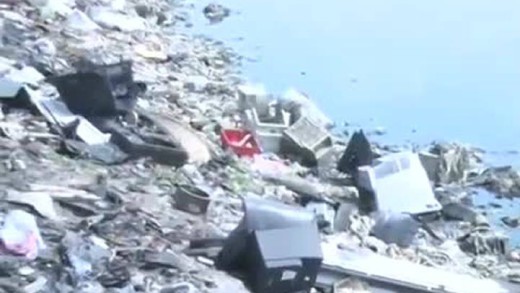
24:41e-Waste is a short film that investigates the grave effects that technological waste has on the environment in Ghana, and the impact it has on the lives of those who are forced to work with such hazardous materials in order to survive.
 16:03
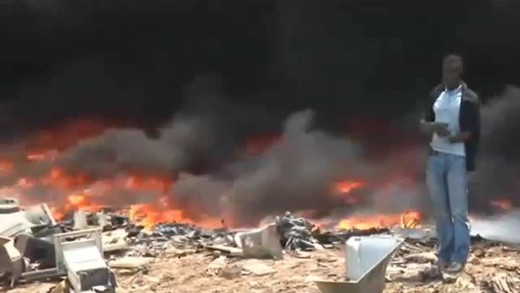
16:03For years now, the global economy has been exporting most of its wastes and dirty industries to the so-called third world. With this era of proliferation of technology and planned obsolescence, it's no surprise that e-waste has taken over in these places too. Though while corporations claim that used TVs and computers are being safely recycled in Australia, the reality on the ground throughout Africa shows a very different story. This film travels to Ghana to see that a staggering amount of the world's e-waste is ending up being burnt in open dumps with severe consequences. The waste creates an escalating and accumulating environmental and health nightmare. But not only this, the arrival of the waste in the first place breaks a myriad of laws and conventions that are supposed to be in place. e-Waste Hell documents this stark reality...
 20:00
20:00e-Wasteland
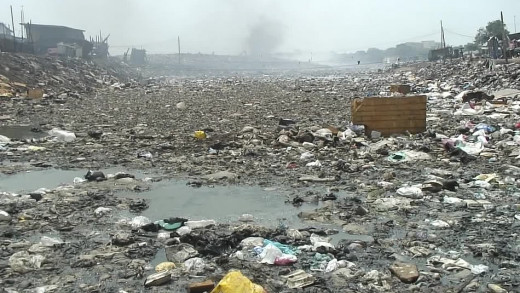
Almost 50 million tonnes of electronic waste is generated worldwide, every year. A large volume of it is shipped off to Ghana, in West Africa, as "second-hand goods" where electronics are not seen for what they once where, but rather for what they've become. Without dialogue or narration, e-Wasteland presents a visual portrait of vast landscapes polluted by electronic waste, shining a light on the endless consumerism of the 1st world; and the real, pervasive, ecological impact of electronic waste worldwide.
Earth at Risk documents the first conference of the same name convened in 2011 by featured thinkers and activists who are willing to ask the hardest questions about the seriousness of the situation facing life on the planet today. Each speaker presents an impassioned critique of the dominant culture, together building an unassailable case that we need to deprive the rich of their ability to steal from the poor, and the powerful of their ability to destroy the planet. Each offers their ideas on what can be done to build a real resistance movement—one that can actually match the scale of the problem. To fight back and win. Literally, the whole world is at stake.
 1:35:25
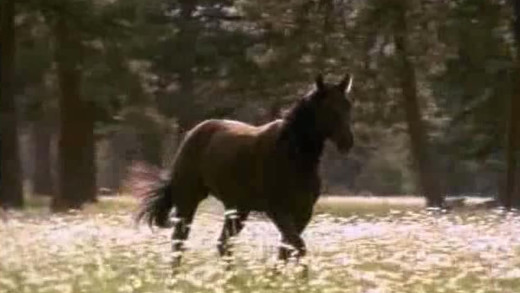
Humanity is absolutely dependent on animals as part of life. In industrial society however, this has extended to animals as pets, 'entertainment' and for expendable use in scientific research -- animals are tortured for 'scientific tests', locked in cages as pets and at the zoo and are bred on mass for cheap meat. What does this say about industrial civilisation? Earthlings conducts an in-depth study into pet stores, puppy mills and animals shelters, as well as factory farms, the leather and fur trades, sports and entertainment industries, and the medical and scientific profession, using hidden cameras to directly show the day-to-day practices of some of the largest industries in the world...
 57:14
57:14Ecocide
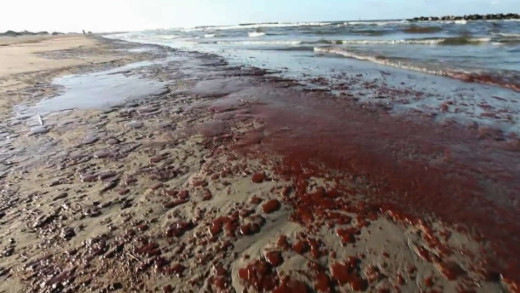
On April 20th 2010, a massive oil rig exploded in the Gulf of Mexico. It was called the Deepwater Horizon rig, operated by the BP corporation. The resulting fire claimed the lives of eleven workers, while the exploding oil well spewed over 4.2 million barrels of oil into the sea over 82 straight days, killing the ocean and millions of animals. The disaster is considered the worst environmental catastrophe in the history of the United States. Ecocide profiles the disaster through the residents of Grand Isle, the last inhabited barrier island off the coast of Louisiana, United States, who thought they were living in paradise until the BP oil explosion hit their shores. Through the lived experiences of this island community, we see the devastating repercussions of the explosion, several years later, that continue to this day.
 1:41:29
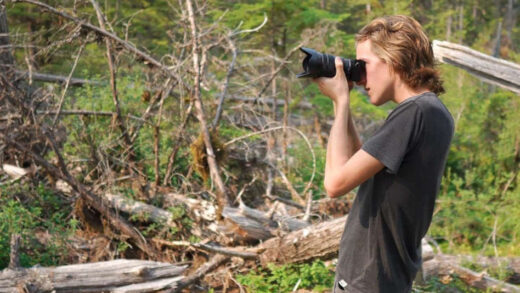
Filmmaker Joshua Wright's debut, Eden's Last Chance, records his journey into the mainstream environmental movement. As a young person, he is concerned that the culture is not taking climate change as seriously as it should, so he interviews many voices, including climate scientists and other frontline activists, all of whom are seeking a way out of the environmental catastrophe we've been born into.
 45:11
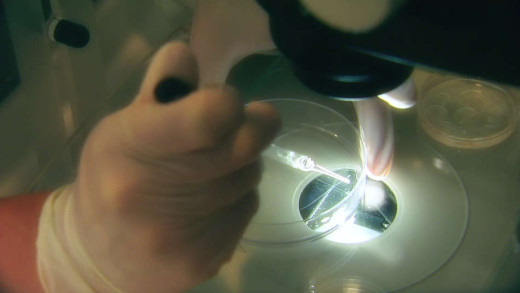
45:11The infertility industry in the United States has grown to a multi-billion dollar business, and its main commodity is human eggs. Young women all over the world are bombarded by advertising--on college campus bulletin boards, social media, online classifieds--offering up to $100,000 for their donated eggs, to "help make someone's dream come true." But who is this egg donor? Is she treated justly? What are the implications to her health? Eggsploitation spotlights the booming business of human-egg extraction told through the stories of women who became involved and whose lives have changed forever after undergoing the procedure. Their accounts provide a cautionary tale to all women who are considering egg donation for the purpose of in-vitro fertilisation or embryonic stem cell research.
 53:17
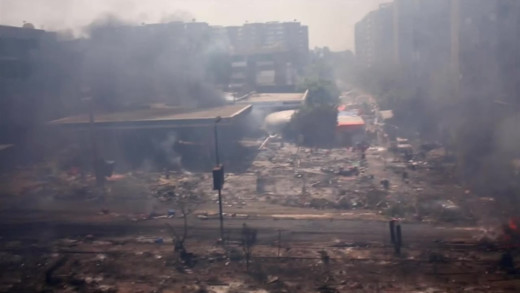
53:17Less than three years after a popular uprising that led to President Hosni Mubarak's ousting, and just one year after Egypt's first elections, the elected government has been overthrown and the Egyptian military is running the state. And the Muslim Brotherhood—the secretive, long-outlawed Islamist group that came out of the shadows to win the presidency in June 2012—is once again being 'driven underground.' Were the Brothers ever really in charge? Or was the Egyptian deep state—the embedded remnants of Mubarak's police force, Supreme Court and, most of all, military—in control all along? In Egypt in Crisis, we go inside the Egyptian revolution, tracing how what began as a youth movement to topple a dictator evolved into an opportunity for the Muslim Brotherhood to seemingly find the political foothold it had sought for decades—and then why it all fell apart. With Egypt's hopes for democracy in tatters, and the military-led government violently cracking down, what will happen next?
 46:12
46:12Some political leaders have labelled climate change the next big issue facing the coming millennium, while others staunchly deny that such a problem even exists. Emission Impossible sets out to view the landscape of rhetoric against the urgent need for action. What is Australia's role in the symptoms of a warming climate, and what needs to be done to change?
 1:17:32
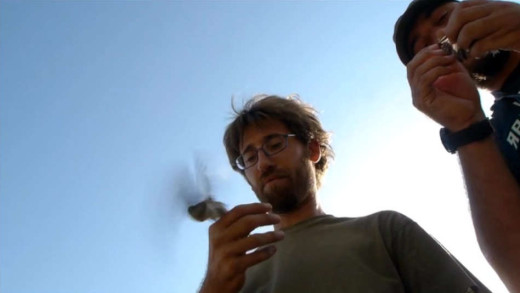
Migratory Songbird populations are drastically collapsing. Many species have already been driven extinct. But yet, as an endangered species, the birds are still targeted by poachers. Millions of birds are unlawfully slaughtered each year for large sums on the black market. Emptying the Skies explores the wonder of these marvelously tiny globe-flying birds, along with the story of the Committee Against Bird Slaughter, an action group of citizens who have dedicated their lives to directly stop and confront the poachers. They disrupt and destroy trapping, freeing as many birds as possible, changing the world one bird at a time.
 1:15:50
END:CIV
By examining the modern culture of industrial civilisation and the persistent widespread violence and environmental exploitation it requires, END:CIV details the resulting epidemic of poisoned landscapes and shell-shocked nations, while further delving into the history of resistance and the prospect of fighting back against such abuse. Detailed is an overview of the environmental movement analogous with the historical whitewashings of the supposedly 'pacifist' social struggles in India with Gandhi and Martin Luther King in the United States; the rise of greenwashing and the fallacy that all can be repaired by personal consumer choices. Based in part on 'Endgame,' the best-selling book by Derrick Jensen, END:CIV asks: If your homeland was invaded by aliens who cut down the trees, poisoned the water, the air, contaminated the food supply and occupied the land by force, would you fight back?
 46:43
46:43Endurance
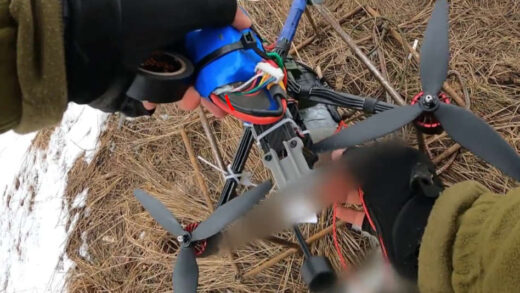
Mark Willacy travels to the front line of the war in the Ukraine to investigate if peace is even possible. With extraordinary access just a kilometre from Russian positions, Willacy watches from an underground bunker as an elite Ukrainian drone unit hunts and kills enemy soldiers in real-time. Willacy also speaks with Ukraine's political leaders about whether the United States can broker a "just peace" with the man who started it all, Vladimir Putin. As the war's third anniversary looms, Endurance takes viewers to the battlefield, where Russia is throwing everything it has at Ukraine in relentless, suicidal waves.
 58:13
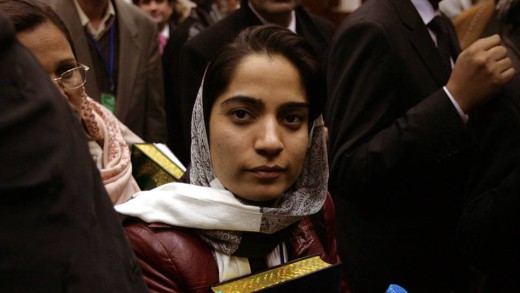
58:13In September 2005, Afghanistan held its first parliamentary elections in 35 years. Among the candidates was Malalai Joya, a courageous 27-year-old woman who had ignited outrage among hard-liners when she spoke out against corrupt warlords and criminals at the "Grand Council of tribal elders" in 2003. Enemies of Happiness is a revelatory portrait of this extraordinary freedom fighter and the way she connected with the people of Afghanistan. The film also serves as a snapshot of life and politics in war-torn Afghanistan from this time. As Joya rightly points out several Taliban warlords and wants them prosecuted for their crimes against the Afghan people, she is exposed to several death threats, and has been under constant protection. Can she overcome entrenched views and death threats to help bring democracy to Afghanistan?
 1:23:46
Enemy Image
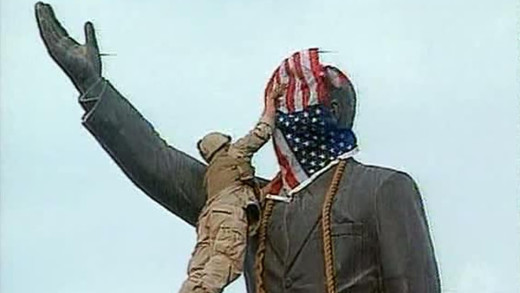
Enemy Image overviews the history of the portrayal of war in television news from the perspective of the United States. The film starts with the coverage of Vietnam where reports happened with little supervision, control or interference. Following this, The Pentagon takes action to control access by journalists to battle areas in subsequent invasions--such as the Invasion of Grenada, where journalists were excluded completely--to the first Gulf War, where 'news packages' were provided directly from the military; to the embedded churnalism of the invasion of Iraq. Shown is the progressive tightening of control by the US military on the contact journalists have with soldiers and civilians in the war zone, in order that "never again will television raise the moral and political questions that face a people during war."
 1:18:28
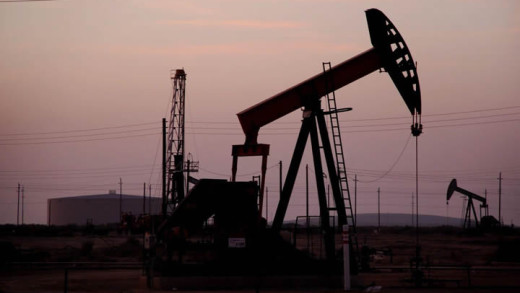
Energy War considers the continuing geopolitical consequences of the dependency on fossil fuels into the future. In the struggle for the last of the resources, countries all over the world are forced to further strategise and make strange alliances. Using the gas conflict between Georgia and Russia and the position of Saudi Arabia, Energy War travels through international markets for energy and asks: If oil and gas are scarce and expensive, where will countries turn to keep their economy going and their population warm and happy?
 1:48:41
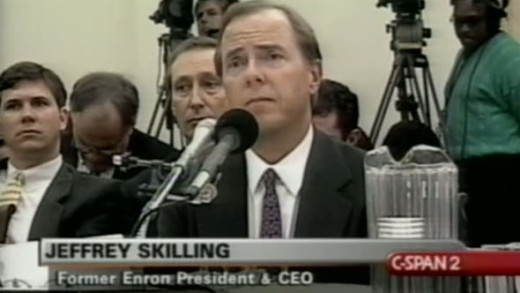
In 2001, the collapse of the Enron Corporation was of one of the largest business scandals in American history. The collapse resulted in criminal trials for several of the company's top executives, bringing the facts of exposure to Enron's involvement in the California electricity "crisis," where the company had rigged the market in order to generate huge speculative profits during the power shortages and blackouts of the time that effected millions of people.
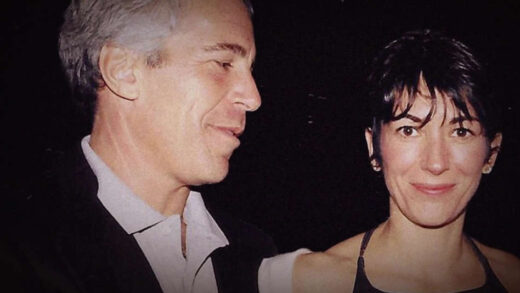
Epstein's Shadow is a short series that investigates the powerful, connected, and mysterious Ghislaine Maxwell, who was once the heiress to the media proprietor Robert Maxwell's fortune, but whose life takes a sordid turn after when her father dies and she meets Jeffrey Epstein, the serial sex offender. The series reveal a complicated story of power, sex, money, and corruption, which leads to Ghislaine Maxwell's arrest, and mounds of destruction in her wake, and that of Epstein and his co-conspirators.
 1:19:45
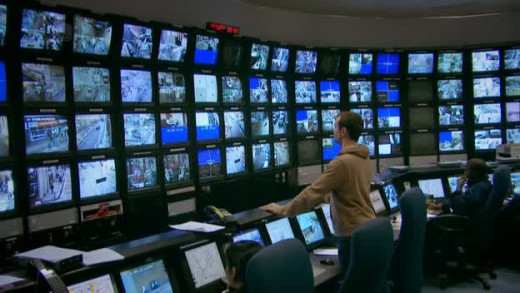
Film maker David Bond lives in one of the most intrusive surveillance states in the world -- Britain. When David receives a letter stating that both he and his daughter are amongst the 25 million residents whose details have been lost by the government in a massive data breach, David sets out to investigate some potential impacts of such data being lost in a society of mass surveillance. Erasing David documents the test where David hires two private detectives to track him down as he chooses to 'disappear' for 30 days to see if he can avoid being caught amongst the vast data trails generated by modern society...

Esc & Ctrl
Esc & Ctrl is an online series of short documentary films where journalist and filmmaker Jon Ronson explores some aspects of screen culture and the Internet. By exemplifying the concepts of control of information and the screen culture's reactions to publishing, censorship, viral videos, media attention and manipulation; a small set of stories weave together to pose bigger questions around democracy and open communication in the age of the computers and a corporately mediated virtual world.
 1:34:41
Following up from The End Of Suburbia, this film examines the rich interplay on the subtle relationships between the energy crisis, neighbourhood gardens and the collapse of the 'American dream'. Escape From Suburbia outlines potential solutions with interviews from individuals across the world who are brave enough to challenge their communities toward change...
 1:22:27
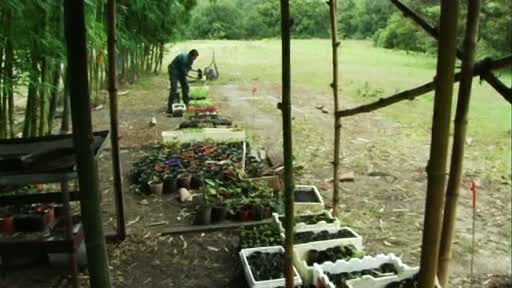
Going from classroom to real world, Establishing A Food Forest The Permaculture Way explains the patterns of a Food Forest and the essential principles of building a self-sufficient, sustainable way to eat. The film ends up at Tagari Farm which was abandoned years ago, but planted according to permaculture design principles. Did the Food Forest survive on its own?
 1:26:10
In the race to make money in the explosion of 'Artificial Intelligence', several start-up companies have created digital avatars of dead people for use by their loved ones, so that they can 'talk with them' after their deaths. Eternal You explores the consequences of turning the mortality of life into a simulation and a product. Joshua chats day and night with a digital 'clone' of his deceased first girlfriend, sharing his daily life with the computer. Christi just wants confirmation that her deceased best friend is doing well in heaven, but has a harrowing experience with the AI counterpart. Jang Ji-Sung meets the Virtual Reality 'clone' of her deceased seven-year-old daughter, with mixed results. Like the other major technology companies of our time, the inventors of these services reject any responsibility for the profound psychological consequences of these experiences.
 1:12:30
Ethos
From conflicts of interests in politics and collusion with corporate power, to a global mainstream media that serves the interests of a powerful few, Ethos explores aspects of the machinations of today's global systems that work against democracy, the natural environment and lead populations into consumerism and warfare...
 44:47
44:47As we wait to see whether Rupert Murdoch will fall from power and lose control of News International, Every Day is Like Sunday tells the forgotten story of the dramatic downfall of Cecil King—the newspaper mogul who used to dominate British media in the 1960s, before Rupert Murdoch arrived.
 1:33:01
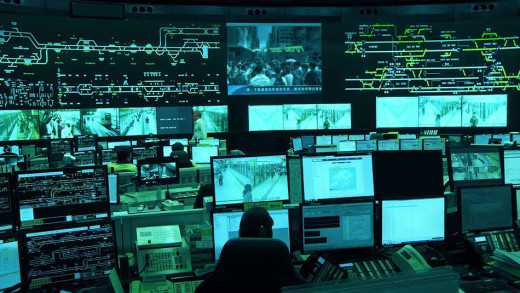
Filmmaker Werner Boote travels across the globe to investigate the era of so-called Big Data, where huge amounts of detail about our lives are gleaned for use in decision making, automation, and consumerism, but ultimately, to generate huge profits for corporations that harvest and control our data. Everything's Under Control investigates these modern times through many lenses: People who have studied surveillance culture, to democracy activists in Hong Kong; from educators, advertisers, and traders, to privacy advocates, and security experts; from digital IDs, fingerprinting, iris scans and online profiling, to hacking, data leaks, and invigorating recent historical memory of atrocities based on data and personal information. We hear distorted perspectives on privacy from many voices, challenging the viewer to reflect on what it means to live through the largest social experiment with data ever before conducted on a global scale.
 23:03
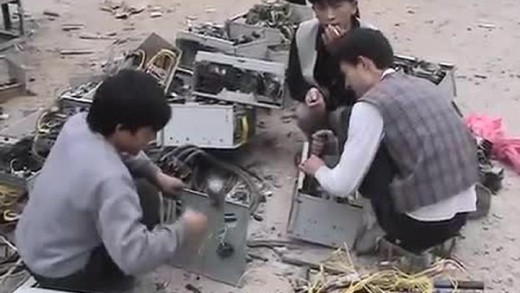
23:03This short film, put together by activists, documents the extreme proliferation of e-waste throughout Asia. The effects of the waste is catastrophic, as computers and electronics contain some of the most hazardous materials—cadmium, barium, plastics, mercury, lead, Brominated Flame Retardants and dioxins. Working at the nexus of human rights and environment, this film confronts the issues of environmental justice at a macro level, by provoking the need to stop this trade and address the issues. With over 80% of e-waste coming from the United States alone being exported throughout Asia, the problem is only to increase unless things change, especially in the age of planned obsolescence and consumer 'upgrades.'

Eyes on the Prize tells the story of the civil rights era from the point of view of the women and men whose extraordinary actions launched a movement that changed the fabric of American society, and embodied a struggle whose reverberations continue to be felt today. It is the story of the people--young and old, male and female, northern and southern--who, compelled by a meeting of conscience and circumstance, worked hard to eradicate a world where whites and blacks could not go to the same school, ride the same bus, vote in the same election, or participate equally in society. It was a world in which peaceful demonstrators were met with resistance and brutality--a reality that is now nearly incomprehensible to many young Americans. Through contemporary interviews and historical footage, Eyes on the Prize traces the civil rights movement from the Montgomery bus boycott to the Voting Rights Act; from early acts of individual courage through the flowering of a mass movement and its eventual split into factions.