 1:23:40
Fascism Inc. examines a series of historical events to compile a view of the past, the present and the future of fascism and its relation to the economic interests of each era—including the current era. The film travels from Mussolini's Italy, to Greece under the Nazi occupation; the civil war and the dictatorship; and from Hitler's Germany to the modern European and Greek fascism. Following on from the foundations of earlier films such as Debtocracy and Catastroika which described the causes of the debt crisis, the impact of the austerity measures, the erosion of democracy and the sell-out of the country’s assets; Fascism Inc. aspires to continue to motivate anti-fascist resistance movements across Europe, and the world.
 53:45
53:45Red Moon
With humour and refreshing candour, Red Moon provides a fascinating, often ironic, take on the absurd and frequently dangerous cultural stigmas and superstitions surrounding women's menstruation. As educational as it is liberating, the film functions as both a myth-busting overview of the realities of menstruation, and a piercing cultural analysis of the ways in which struggles over meaning and power have played out through history on the terrain of women's bodies.
 46:18
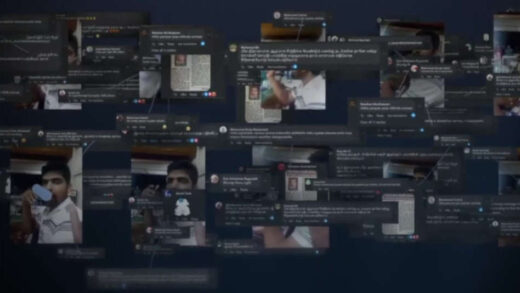
46:18Inside The Rage Machine highlights new whistleblowers, engineers, and managers from inside tech corporations to show how algorithms that spread disinformation, social harms, and contribute to violence erupting in the real world are knowingly deployed by the companies to have these harms and incentives built-in. Through the lived experience and documents obtained from employees such as Matt Motyl from Facebook, Ruofan Ding from TikTok, and Lisa Jennings Young from Twitter, Inside The Rage Machine exposes the system itself that thrives on outrage and division as part of its business model, with radicalisation, real-world violence and fractured societies as just some of the consequences of the system that has been built to manipulate how users think, feel and perceive the world.
 11:22
11:22Would any sane person think dumpster diving would have stopped Hitler, or that composting would have ended slavery or brought about the eight-hour workday; or that chopping wood and carrying water would have gotten people out of Tsarist prisons; or that dancing around a fire would have helped put in place the Voting Rights Act of 1957 or the Civil Rights Act of 1964? Then why now, with all the world at stake, do so many people retreat into these entirely personal "solutions"? Why are these "solutions" not sufficient? But most importantly, what can be done instead to actually stop the murder of the planet?
 11:03
11:03Adrift
Adrift is a short film that explores the phenomenon of space junk, where human-made objects launched into space and are now defunct orbit the Earth literally as garbage. The film makes visible some of the immediate impacts and dangers of the technological escalation of this culture, where old satellites, spent rocket stages, and other items orbit the Earth, only to collide with one another at high velocities, generating smaller fragments that collide with other items, and so on. The end point is a cascading complex of junk that engulfs the entire space around the Earth. Adrift aims to make this phenomenon visible, putting a big question mark against the claims made by many futurists and technologists that future space colonisation would even be possible, if only it were a tenable or sensible idea in the first place...
 1:22:09
The dominant culture measures itself by the speed of "progress." But what if this so-called progress is actually driving the physical world towards full-force collapse? Surviving Progress shows how past civilisations were destroyed by progress traps—alluring technologies and belief systems that serve immediate needs, but ransom the future. As the total destruction of the environment accelerates and those in power cling to their power ever more tightly in denial, can this globally-entwined civilisation escape a final, catastrophic progress trap?
 59:40
59:40Generation M looks at misogyny and sexism in mainstream media, exploring how negative definitions of femininity and hateful attitudes toward women get constructed and perpetuated throughout popular culture. The film tracks this across a broad and disturbing range of media phenomena: from the hyper-sexualization of commercial products aimed at girls, to the explosion of violence against women in video games aimed at boys; from the hysterical sexist rants of popular hip-hop artists and talk-radio shock-jocks, to the continually harsh, patronizing caricature of women found in virtually every area of media. Generation M posits the consequences of misogyny in all of its forms, showing that when we devalue more than half the population based on gender, we harm everyone—boys and men, women and girls alike.
 58:29
58:29In a quarter of a century, the Amazon corporation has propelled Jeff Bezos from 'online bookseller' to technology behemoth. He is the richest man on the planet, and the company he founded is one of the most powerful in the world. This documentary investigates Amazon's rise to corporate rein, revealing the problematic inside-operations that have the public tethered to its services. Former high-level insiders describe Amazon's obsessive data-gathering operations, that enable the company to use what it knows about us to shape not only the future of retail, but the workplace and technology in synergy. On both sides of the world, politicians and regulators are tardily beginning to question Amazon's power. But can the public rein in this corporate empire and break its addiction before even more damage is done to the structure of society and the environment?
 51:44
51:44The Disney Company's massive success in the 20th century is based on creating an image of innocence, magic and fun for kids. Its animated films in particular are almost universally lauded as wholesome family entertainment, enjoying massive popularity among children and endorsement from parents and teachers around the world. This film takes a close look at Disney, to analyse the world these films create for kids and the stories they tell and propagate; contextualised by the cultural pedagogy of Disney's conglomerate mass-media control and vast corporate power. Including interviews with social commentators, media scholars, child psychologists, kindergarten teachers, multicultural educators, college students and children, Mickey Mouse Monopoly provokes audiences to confront assumptions about an institution that is virtually synonymous with childhood pleasure.
 44:30
44:30How does the military train the solider of tomorrow? Video games. The most popular games are those that replicate as close as possible the war events as seen on the news. Such games now far outpace the biggest Hollywood blockbuster movies, popular music, and best-selling books, combined. What does this complete immersion in high-tech war mean for our political culture? As well as those directly affected by state violence? What does it mean when the technological sophistication of modern militarism become forms of mass entertainment? Returning Fire profiles three artists and activists that decided these questions needed to be answered. We see how Anne-Marie Schleiner, Wafaa Bilal, and Joseph Delappe moved dissent from the streets to the screens, infiltrating war games in an attempt to break their hypnotic spell. The results ask all of us--gamers and non-gamers alike--to think critically about what it means when drones and remote warfare become computer games and visa versa. Can we reflect on our capacity to empathise with people directly affected by the trauma of real war?
 1:41:29
Filmmaker Joshua Wright's debut, Eden's Last Chance, records his journey into the mainstream environmental movement. As a young person, he is concerned that the culture is not taking climate change as seriously as it should, so he interviews many voices, including climate scientists and other frontline activists, all of whom are seeking a way out of the environmental catastrophe we've been born into.
 2:24:01
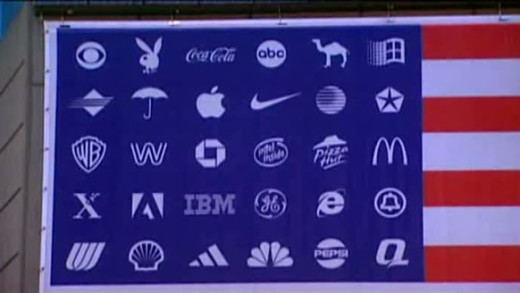
Did you know that the legal system recognises a corporation as a person? What kind of 'person' is it then? What would happen if it sat down with a psychologist to discuss its behaviour and attitude towards society and the environment? Explored through specific examples, this film shows how and why the modern-day corporation has rapaciously pressed itself into the dominant institution of our time, posing big questions about what must be done if we want a equitable and sustainable world. What must we do when corporations are psychopaths?
 1:48:32
For the past 40 years, the war on drugs has resulted in more than 45 million arrests, one trillion dollars in government spending, and the arrival of the United States as the world's largest jailer with almost 2.3 million individuals incarcerated. Yet for all that, drugs are cheaper, purer, and more available than ever. Filmed across the country, The House I Live In provides the experience firsthand of those on the front lines—from the dealer to the grieving mother, the narcotics officer to the senator, the inmate to the federal judge—and offers a penetrating look at the profound human rights implications of the so-called war on drugs.
 44:57
44:57YouTube, owned by Google, has become one of the most powerful online media platforms in the world, fast to be replacing the viewership of television with over 30 billion hours watched per month in 2017. Young people flock to the platform in the hopes of fame and fortune, which comes for a select few, but not all, hence the allure to 'make it.' YouTube celebrities are now mainstream celebrities. The result is troves competing to live their lives as monetised open-wounds for the corporate platform, constantly pleading for subscribers, attention and engagement, all at the hands of Google, its secret algorithms, and the screen culture of spectacle, pornography, and targeted advertising. On both sides of the screen, the treadmill is all about keeping the ad dollars constantly rolling. YouTube, YouTubers and You offers a glimpse into this new media and advertising world, pondering how this culture may continue to undermine our future media and informational landscape. What sort of people and world is this culture creating and perpetuating?
 1:13:33
The myth that humans are superior to all other life forms is a fundamental and unquestioned premise of dominant culture. It is an old historical idea, rooted in colonialism, and is deeply embedded in religion and science. It is one of the root causes for the destruction of the natural world, animal cruelty, war, the extinction of species and other immense problems. The Superior Human? challenges this arrogant and self-destructive ideology; unwinds the myths, using examples and common sense.
 26:41
26:41Moving Beyond Myth focuses on the sexual dilemmas and difficult life choices young girls face as they come of age in contemporary American culture. Challenging long-held myths about girlhood, the film draws on the insights of girls themselves to explore and shed light on their actual lived experience as they navigate an increasingly hyper-sexualized society. The voices of a diverse range of girls are supplemented with accessible analysis from leading experts on sexuality and society.

Race: The Power of an Illusion is a three-part series that investigates the idea of race in society, science and history. It navigates through myths and misconceptions, and scrutinises some of the assumptions that are taken for granted. The division of people into distinct categories--"white," "black," "yellow," "red," and so on--has become so widely espoused and so deeply rooted, that most people do not think to question its veracity. This series challenges the myth of race as biology, and traces its notions to the 19th century, demonstrating how race has a continuing negative impact through institutions and social policies.
 53:04
53:04Social media networks purport the ability to interact with culture—talking directly to artists, celebrities, movies, brands, and even one another—in ways never before possible. But is this real empowerment? Or do marketing companies still hold the upper hand, as before? Generation Like explores how the perennial quest for identity and connection is usurped in the pervasive game of cat-and-mouse by vast corporate power in the extensive machine for consumerism that is now the online environment. The audience becomes the marketer; buzz is subtly controlled and manipulated by and from real-time behavioural insights; and the content generated is sold back to the audience in the name of participation. But does the audience even think they're being used? Do they care? Or does the perceived chance to be the 'next big star' make it all worth it?
 43:51
43:51Spin the Bottle critiques the role that popular culture plays in glamorising excessive drinking and high-risk behaviour, in contrast to the ways alcohol affects the lives of real young men and women in reality. This film decodes the power and influence of seductive media images to show how they shape personal identity when linked to the use of alcohol. Nowhere is this link more apparent than on America's college campuses. By exploring the party scene, Spin the Bottle also shows the difficulties young people have in navigating a cultural environment saturated with messages about gender and alcohol. Interviews with health professionals provide a clear picture of how drinking impacts student health and academic performance, but it is the students' own experiences and reflections that tell the real story behind alcohol's alluring public and cultural image.

To many in both business and government, the triumph of the self is the ultimate expression of democracy, where power is truly moved into the hands of the people. Certainly the people may feel they are in charge, but are they really? The Century of the Self tells the untold and controversial story of the growth of the mass-consumer society. How is the all-consuming self created, by whom, and in whose interest?
 1:19:51
By examining the people and practices of the media and entertainment industries, The Fourth Estate illuminates not only specific incidences of corruption by press groups, but how the wider model of mainstream journalism itself as a for-profit entity has a huge amount to answer for in terms of democracy and the state of politics throughout the world. Filmed over two years throughout the UK on no budget, the filmmakers profile journalists, organisers and critics of industrial media practices, stemming from the Leveson Inquiry in 2011 which was set up to examine the culture, practices and ethics of the British press following the News International phone hacking scandals of the Murdoch media empire. While the phone hacking scandal illuminated the depth and breadth of the culture of British journalism, the media's focus at the time quickly diverted from a brief period of self-examination, back to business as usual. This film instead continues the analysis by looking at the larger implications of a for-profit media model and its connections to ideology, entertainment, and hence the resulting political framework that's in crisis.
 1:00:58
Ten years on from his previous film, Advertising & the End of the World, renowned media scholar Sut Jhally follows up by exploring the since-escalating devastating personal and environmental fallouts of advertising and the near-totalising commercial culture. The film tracks the emergence of the advertising industry in the early 20th century to the full-scale commercialisation of the culture today, identifying the myth running throughout all of advertising: the idea that corporate brands and consumer goods are the keys to human happiness and fulfilment. We see how this powerful narrative, backed by billions of dollars a year and propagated by clever manipulative minds, has blinded us to the catastrophic costs of ever-accelerating rates of consumption. The result is a powerful film that unpacks fundamental issues surrounding commercialism, media culture, social well-being, environmental degradation, and the dichotomy between capitalism and democracy.
 31:41
31:41Television has colonised human storytelling--not only has creating and passing on culture been usurped by television and corporate media, today dominant culture is television and corporate media. The Electronic Storyteller outlines these changes and shows the cumulative impacts that television and mass media has on the way we think about ourselves and how we construct views of the world around us. With a focus on the stories of gender, class, and race, The Electronic Storyteller delivers an analytical framework to understand the pervasive forces behind what is at stake in the new world of saturated media and controlled imagery...
 45:40
45:40The Purity Myth takes a look at the resurgence of a movement of abstinence, brought about by a powerful alliance of religious ideologues, right-wing politicians, conservative media pundits and policy intellectuals who have been exploiting irrational fears about women's sexuality. From daddy-daughter "purity balls," taxpayer-funded abstinence-only curricula, and political attacks on 'Planned Parenthood,' to recent attempts by legislators to de-fund women's reproductive healthcare and narrow the legal definition of rape, The Purity Myth identifies the single false assumption underlying this huge push: that the worth of a woman depends on what she does—or does not do—sexually. This film also argues that the health and well-being of women is too important to be left to figureheads bent on vilifying feminism and undermining women's autonomy.
 1:27:32
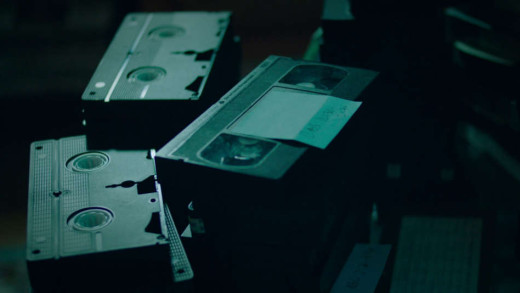
Marion Stokes was secretly recording television twenty-four hours a day for thirty years. It started in 1979 with the Iranian Hostage Crisis at the dawn of the twenty-four hour news cycle, and ended in 2012 while the Sandy Hook massacre played on television as Marion passed away. In between, Marion recorded on 70,000 VHS tapes, capturing revolutions, lies, wars, triumphs, catastrophes, bloopers, talk shows, advertising--all of which deeply show how television has shaped the world of today. Remarkably prescient, Marion knew this, and saved it as a form of activism, knowing that archiving everything that was said and shown on television was part of the fight for the truth and historical memory, keeping those in power accountable. At the time, the public didn’t know it, but TV networks themselves were not keeping archives of their material, with huge swathes of recorded history lost. If it wasn't for Marion, and the Internet Archive that will soon digitise her tapes for prosperity and free public access, these records would be lost forever. This film is about a radical Communist activist, who became a fabulously wealthy recluse archivist, and whose work was unorthodox, but also genius, even though she would pay a profound price for dedicating her life to such a visionary project.
 1:48:02
Poisoned Waters investigates some of the root causes of what we see worldwide with ecological collapse, dead-zones and pollution effecting oceans, rivers and watersheds. With a focus on major waterways in the United States such as the Chesapeake Bay and Puget Sound, the film follows the culmination of decades of evidence that today's systemic and growing environmental collapse comes not only from the toxic activities of industry, agriculture and massive suburban development; but also from the permeated satiety of chemicals in prolific consumer products such as face-creams, deodorants, prescription medicines and household cleaners. This is a startling reminder of the compounding threat facing our world and the need to act imperatively.
 39:40
39:40This film examines the forces of culture influencing young people's decisions about sex: media, family, religion, alcohol, and so on. By examining the cultural environment in this way, this film becomes a tool for facilitating informed discussions about the myriad influences facing young people. Filmmaker Dan Habib features the stories of eight young people, ages 16-24, and weaves them with observations about the messages young people get from popular culture.
 45:44
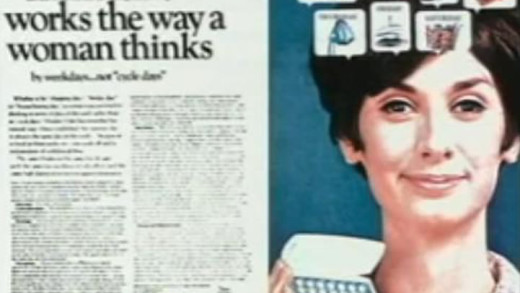
45:44Author and activist Jean Kilbourne analyses the depiction of women in advertising and media by decoding a large array of print and television ads. What is revealed is a torrent of stereotypes; sexist and misogynistic images and messages; laying bare a world of frighteningly thin women in positions of subservience; collectively, the restrictive code of femininity that works to undermine girls and women in the real world. By examining these messages, Killing Us Softly asks us to take advertising seriously, and to think critically about its relationship to sexism, eating disorders, violence against women, popular culture, and contemporary politics.