 1:20:24
Made from the same elements as stars, plants, food and human beings, dirt is very much alive and very much just as complex. One teaspoon of dirt contains a billion organisms working in balance to sustain a series of thriving communities that have become pretty much totally invisible to our daily lives. Dirt -- The Movie tells the story of Earth's most valuable and underappreciated source of fertility, from its miraculous beginning to its tragic degradation...
 28:39
28:39For years, regulatory agencies and environmental groups have insisted that the increase in whale deaths off the East Coast of the United States has nothing to do with the rapidly-expanding wind industry's high-decibel pile driving, sonar mapping, and boat activities, to install wind-harvesting facilities for electricity generation. Thrown To The Wind travels to parts of the ocean where these activities are underway, to investigate these claims, showing that indeed these industrial activities are impacting critically endangered species in profound ways--which are being systematically ignored, while the climate and ecological crisis rages.
The Life of Birds follows the evolution and habits of bird species all across the globe, showing how a huge variety of birds each deal with a different aspect of life.
 1:32:29
Is the human population going to outstrip the Earth's food supply? The effects of modern agriculture not only lead to a short term food surplus which quickly slipped as population boomed, but agriculture itself causes huge environmental problems such as soil erosion, salinity and chemical pollution—all further illustrating an impossible system in perpetuity. Food or Famine looks at projects in North America, Chile, Indonesia, Africa and India which are participating in a worldwide movement to return to local food growing methods based on the land and healthy ecological principles. The film also examines the worldwide imbalance between food consumption and production, stoking the need to confront the mounting challenges ahead...
 1:55:18
What if you live in the most destructive culture ever to exist? What if that culture refuses to change? What do you do about it? Derrick Jensen, the author of Endgame responds to these imperative questions and details how industrial civilisation and the persistent and widespread violence it requires is ultimately unsustainable—and what to do about it. Jensen weaves together history, philosophy, environmentalism, economics, literature and psychology to produce a powerful argument that demands attention...
 1:37:43
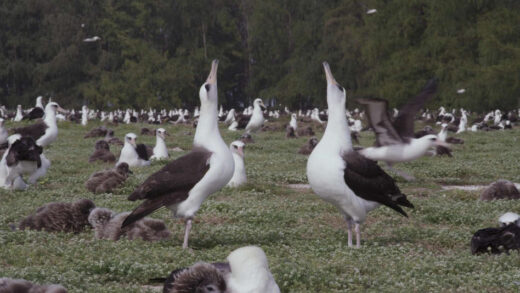
Albatross is a collaborative film project with artist Chris Jordan and photographer Manuel Maqueda. The film is the culmination of many years of research and study of the issue of ocean plastic pollution, with a paricular focus on how it effects species of Albatross on a tiny atoll in the centre of the vast North Pacific Ocean. The resulting film is an experience that is devastating, not only for the plight of suffering birds, but also for what this crisis reflects back about the destructive power of the culture of mass consumption, and its damaged relationship with the living world.
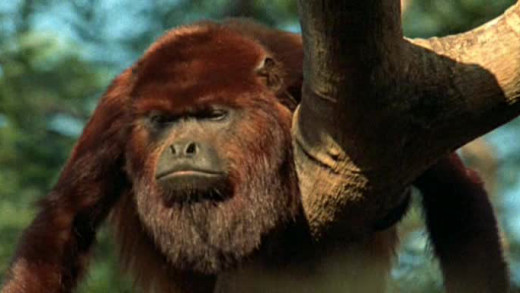
The Life of Mammals is a ten part series that follows the evolution and habits of various mammal species around the world. Each episode looks at one or several closely related mammal groups and discusses the different facets of their day-to-day existence and evolutionary origins.