 44:47
44:47As we wait to see whether Rupert Murdoch will fall from power and lose control of News International, Every Day is Like Sunday tells the forgotten story of the dramatic downfall of Cecil King—the newspaper mogul who used to dominate British media in the 1960s, before Rupert Murdoch arrived.
 1:33:01
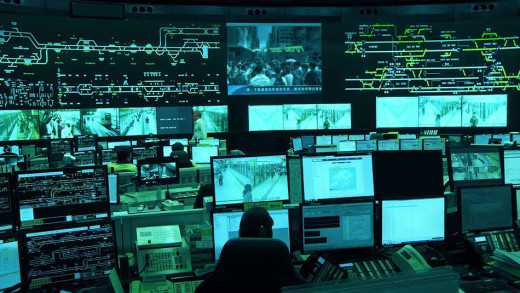
Filmmaker Werner Boote travels across the globe to investigate the era of so-called Big Data, where huge amounts of detail about our lives are gleaned for use in decision making, automation, and consumerism, but ultimately, to generate huge profits for corporations that harvest and control our data. Everything's Under Control investigates these modern times through many lenses: People who have studied surveillance culture, to democracy activists in Hong Kong; from educators, advertisers, and traders, to privacy advocates, and security experts; from digital IDs, fingerprinting, iris scans and online profiling, to hacking, data leaks, and invigorating recent historical memory of atrocities based on data and personal information. We hear distorted perspectives on privacy from many voices, challenging the viewer to reflect on what it means to live through the largest social experiment with data ever before conducted on a global scale.
 23:03
23:03This short film, put together by activists, documents the extreme proliferation of e-waste throughout Asia. The effects of the waste is catastrophic, as computers and electronics contain some of the most hazardous materials—cadmium, barium, plastics, mercury, lead, Brominated Flame Retardants and dioxins. Working at the nexus of human rights and environment, this film confronts the issues of environmental justice at a macro level, by provoking the need to stop this trade and address the issues. With over 80% of e-waste coming from the United States alone being exported throughout Asia, the problem is only to increase unless things change, especially in the age of planned obsolescence and consumer 'upgrades.'

An extensive group of journalists and technologists investigate the powerful Israeli company NSO Group, and its surveillance spyware Pegasus, which has been sold to governments around the world and used on journalists, lawyers, human rights activists, politicians, and members of the public around the world as part of extensive, routine, and complex surveillance operations and assassinations.

Eyes on the Prize tells the story of the civil rights era from the point of view of the women and men whose extraordinary actions launched a movement that changed the fabric of American society, and embodied a struggle whose reverberations continue to be felt today. It is the story of the people--young and old, male and female, northern and southern--who, compelled by a meeting of conscience and circumstance, worked hard to eradicate a world where whites and blacks could not go to the same school, ride the same bus, vote in the same election, or participate equally in society. It was a world in which peaceful demonstrators were met with resistance and brutality--a reality that is now nearly incomprehensible to many young Americans. Through contemporary interviews and historical footage, Eyes on the Prize traces the civil rights movement from the Montgomery bus boycott to the Voting Rights Act; from early acts of individual courage through the flowering of a mass movement and its eventual split into factions.
 1:42:17
Fabled Enemies examines the US government's intelligence apparatus and its involvement in the events of September 11, 2001. Many questions surround the proceedings of that day. What were the precise actions of a shadow government operating in an underground bunker with Dick Cheney? Why did the FBI have their investigations into Bin Laden obstructed and shut down by George Bush before the attacks? Were the alledged hijackers trained at US military bases? Why was the military running exactly the same situation as 'war games' at exactly the same time of the attack?
 41:30
41:30Facebook is an enormously powerful corporation, harnessing both the self-disclosed and gleaned personal data of over 2 billion people. Its user-base is larger than the population of any country. The company is all pervasive online, tracking and profiling users and non-users alike. Cracking the Code looks at the insides of this giant machine and how Facebook turns your thoughts and behaviours into profits--whether you like it or not. And it's not just a one-way transaction either. Cracking the Code also explains how Facebook uses vast troves of web data to manipulate the way you think and feel, as well as act--all in the sole interests of Facebook, masquerading as "community." What are the social implications of this--when one company basically controls the insights and experiences of the entire online world, with extremely personalised and targeted social and behavioural engineering on a scale never before seen?
 44:41
44:41Facing Beauty
Facing Beauty examines the explosive growth of the plastic surgery industry, by looking through China's beauty obsession and the social media influencers that are driving its mindset. A mobile app has captured the population by promoting an "ideal ratio in human facial features," where users' faces are assessed and given a score. The app then draws up plans for surgeries to lower that score, referring users to endorsed clinics, driving both non-invasive and invasive surgeries and procedures. Now, demand for those procedures is so widespread among the country's youth population, it's estimated the industry will be worth US$200 billion by 2030. This growth in the industry has led to an expansion of 'beauty' institutions that employ staff without adequate medical qualifications or protections, and even though some procedures have been banned and the negative health impacts shown, demand continues to increase at fever pitch.
 28:02
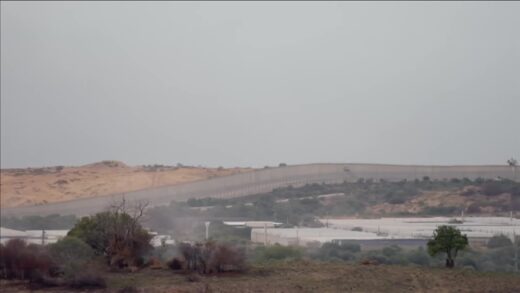
28:02A visual investigation, in collaboration with The Washington Post, about how the Islamic Resistance Movement Hamas and several other Palestinian militant groups were able to breach Israel's vaunted security barrier on 7th October 2023, and carry out a series of attacks during the Jewish holiday of Simchat Torah. 1,195 Israelis and foreign nationals were killed in the attack, and 251 were taken hostage. The events were the first large-scale Palestinian invasions into the land Israel occupies since 1948. In response, Israel launched a large-scale military retaliation on Gaza, and since that time, over 72,000 Palestinians in Gaza have been killed in response.
 27:12
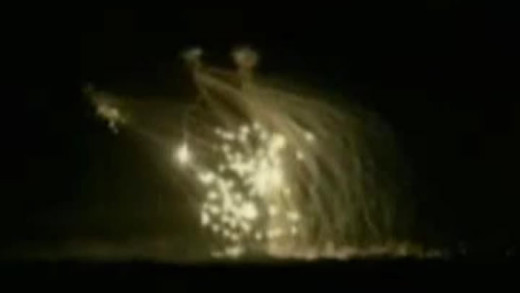
27:12This film comprehensively documents the use of chemical weapons--particularly the use of incendiary bombs--along with hordes of other horrific indiscriminate violence against civilians and children by the United States military in the city of Fallujah during the invasion of Iraq in November 2004. The cases portrayed involve the use of white phosphorus and other substances similar to napalm, such as Mark-77, which constitute clearly defined war crimes involving chemical weapons. Interviews with ex-military personnel involved in the Fallujah offensive back up the case for the use of such weapons by the United States, while reporters stationed in Iraq discuss the government's attempts to suppress the news by covert means.
 1:23:40
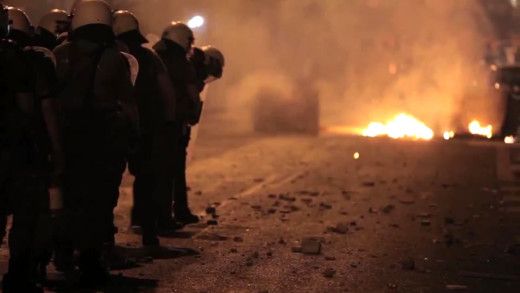
Fascism Inc. examines a series of historical events to compile a view of the past, the present and the future of fascism and its relation to the economic interests of each era—including the current era. The film travels from Mussolini's Italy, to Greece under the Nazi occupation; the civil war and the dictatorship; and from Hitler's Germany to the modern European and Greek fascism. Following on from the foundations of earlier films such as Debtocracy and Catastroika which described the causes of the debt crisis, the impact of the austerity measures, the erosion of democracy and the sell-out of the country’s assets; Fascism Inc. aspires to continue to motivate anti-fascist resistance movements across Europe, and the world.
 42:25
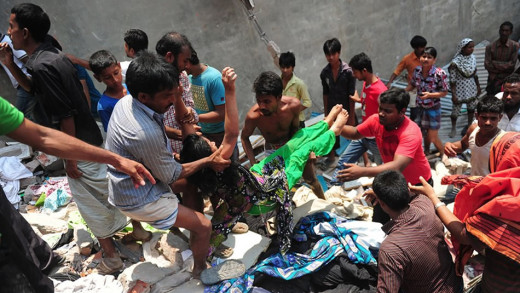
42:25Fashion Victims looks at the real cost of cheap clothes from the conditions of sweat shops in Bangladesh. On 24th April, 2013 more than a thousand people were killed when an eight storey building collapsed in the heart of Bangladesh's capital, Dhaka. The collapse of Rana Plaza turned the world's attention to the shocking conditions workers in the country's clothing industry are forced to endure. In recent years, Australian companies have flooded into Bangladesh to take advantage of lax labour laws and the lowest wages in the world, paid to the predominantly young, female workers in the factories.
 57:53
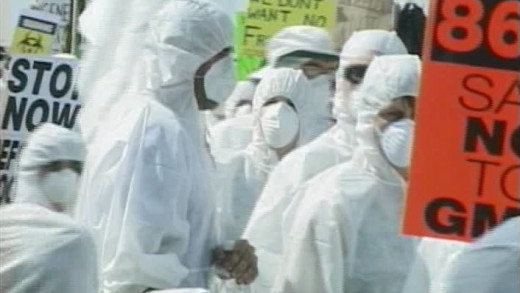
57:53As the biotechnology industry spends more than $50 million a year to convince us that 'genetic technology' is our only hope for feeding the world and saving the environment, toxic agricultural chemicals continue to poison the air, food and water and put farm workers in serious danger. So what's the real problem? Using archive footage and interviews with farmers, scientists, government officials and activists, Fed Up With Genetic Engineering presents an overview of the current food production system, exploring the impacts of pesticides, the resistance of biotechnology companies to food labelling and the links between government officials and major biotechnology and chemical companies...
 1:03:16
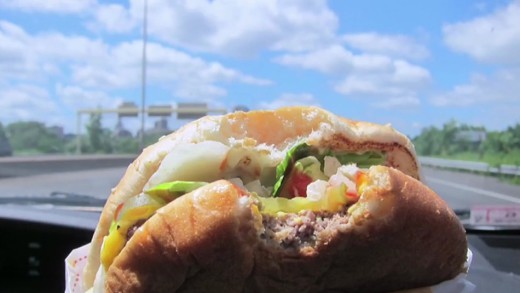
Over the past three decades, obesity rates in the United States have more than doubled for children and tripled for adolescents, and a startling 70% of adults are now obese or overweight. The result has been a widening epidemic of obesity-related health problems. But while discussions about this crisis tend to focus solely on the need for individual responsibility and more exercise, Feeding Frenzy turns its focus squarely on the responsibility of the processed food industry and the outmoded government policies it benefits from. It lays bare how government subsidies designed to feed the hungry during the Great Depression have enabled the food industry to flood the market with a rising tide of cheap, addictive, high calorie food products, and offers an engrossing look at the tactics of the multi billion-dollar advertising industry that makes sure that everyone keeps consuming.
 49:53
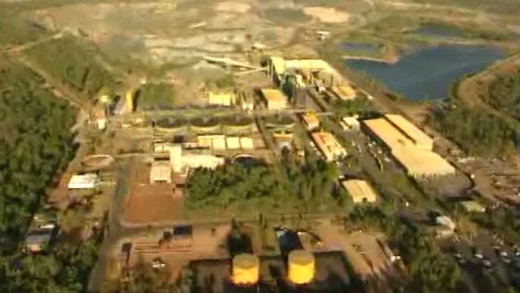
49:53Fight For Country tells the story of one of Australia's largest ever land rights and environmental campaigns, to stop the building of a second uranium mine within the World Heritage listed Kakadu National Park in the Northern Territory, Australia. In 1998 the issue came to a head when Indigenous elders and activists called on people to come from around Australia and the world to blockade the construction of the mine and proposed 'uranium deposits', collectively called Jabiluka. The film follows activists and speaks with Aboriginal people about the impacts of the mine, following the community response and protest actions against the mines development, where over 500 people were arrested in the course of the eight-month blockade.
 54:27
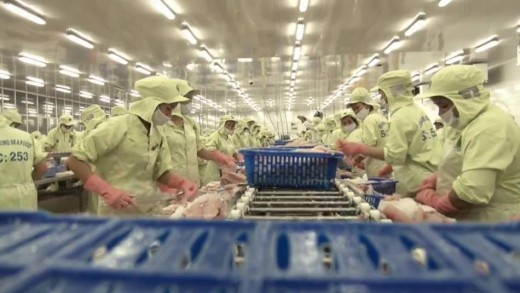
54:27In the past 40 years, global consumption of fish has doubled. Having decimated natural fish populations globally, the industrial food system has turned to mass-scale farming practices in order to sustain the unsustainable, supplying huge supermarket chains and commercial food outlets with cheap processed fish products. What do we know about this and these processes? And what of the lives of the fish? What about their health and the health of the waters in which they're taken? Fillet-Oh!-Fish is the result of yet another indictment of the industrial food system, agriculture and factory farming—all of which have egregious implications to the health and well-being of species, and the planet as a whole. We see myriad mixes of pesticides and other chemicals, leading to toxic rivers and streams, the pervasiveness of the industrial food system, with glimpses into working conditions and processing methods, as well as the perniciousness of globalisation, with the world-wide reach of this crazy system that has hijacked a fundamental life-giver: food.
 28:46
28:46Fire and Water
In 1983, the Australian Government approved the construction of Olympic Dam uranium mine at Roxby Downs in central South Australia, despite overwhelming opposition by the traditional indigenous land owners—the Kokotha and Arabunna people—and other Australian's in the community. With an approval for expansion of the mine 14 years later, this film documents one of the many events organised in protest of the mine, as well as other actions to raise awareness of the many impacts of uranium mining in Australia.
 52:43
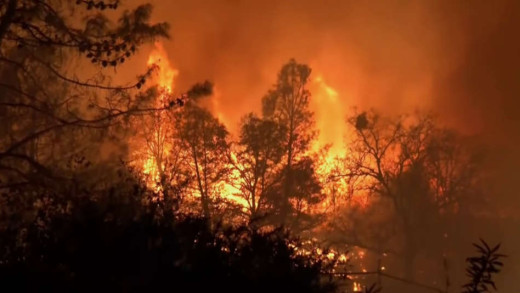
52:43In 2018, an electrical fault ignited a fire that spread to become the worst wildfire in the history of California, United States. A year after the devastation, Fire in Paradise sets out to examine how the fire was so catastrophic due to a combination of converging factors such as dry season and high winds, as well as criminal negligence at the hands of the electrical company--Pacific Gas and Electric--that caused the ignition. With accounts from survivors, first responders, and footage taken during the disaster, the film tells the inside story of how the most destructive fire in California's history engulfed more than an entire town.
 1:23:16
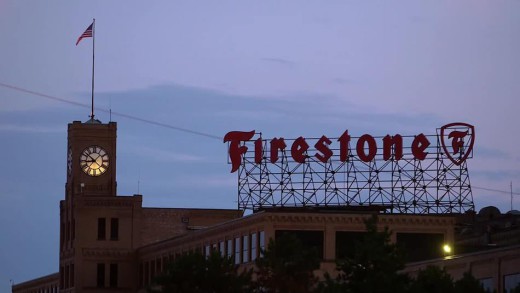
This film makes use of court documents, diplomatic cables and testimony by business figures themselves, as one case of many, in which corporations and indeed governments side with warlords, as good for business, in the endless pursuit of profit. The story revolves around the civil war of Liberia in the 1990s, with the seeds for exploitation and destruction having been planted a century before by the United States, when formally enslaved peoples in Liberia in-turn set up a society of racism, greed and exploitation, exacerbated by western economic powers. Years later, with the presence of Firestone corporation coming to Liberia to exploit vast plantations of rubber for control over the 'market,' the company unfolds as a considerable catalyst for systemic terror, being the forefront for pushing for profits at all costs amongst a brutal civil war; colluding with warlords and corrupt governments in pursuit of this ruthless end. Unfurling as a case study in these methods, this film documents the case that is not so unique but a story amongst many—particularly throughout the so-called third-world—where corporate might and globalisation have extreme consequences...

First Life follows David Attenborough on a journey to unconver some of the origins of life on Earth. He investigates the evidence from the earliest fossils, which suggest that complex animals first appeared in the oceans around 500 million years ago, an event known as the Cambrian Explosion. Trace fossils of multicellular organisms from an even earlier period, the Ediacaran biota, are also examined. Attenborough then travels to Canada, Morocco and Australia, using some of the latest fossil discoveries and their nearest equivalents amongst living species to reveal what life may have been like at that time.
 1:11:52
American philosopher Elbert Hubbard was fond of quoting his father on friendship. "When you die," his father would tell him, "if you've got five real friends, you've had a great life." Five Friends is the story of how one man sought to live that life. Shot from the mountains of Southern California to the New England coastline, the film follows 65-year-old Hank Mandel and his five closest friends as they navigate and reflect on success, conflict, marriage, divorce, fatherhood, children, and dying. From touching moments and humour, to horrific tragedy and darkness, Five Friends provides an exploration of the emotional lives of men and what they're capable of when they dare to open up with one another.
 51:27
51:27Based on interviews conducted with hundreds of young women, Flirting With Danger examines how the wider culture's frequently contradictory messages about pleasure, danger, agency, and victimisation enter into women's most intimate relationships. The result is a candid and nuanced look at how women are forced to grapple with deeply ambivalent cultural attitudes about sexuality and relationships. These interviews are essential viewing for tackling the problematic issues surrounding consent, coercion and sexual violence throughout the culture.
 1:23:32
Flow—For The Love Of Water builds a case against the growing privatisation of the world's dwindling fresh water supply with a specific focus on human rights, pollution, the politic of corporate influence in the emergence of a domineering global water cartel. The film names and clearly documents many of the culprits, while asking the question—can anyone really 'own' water?
 50:02
50:02John Pilger and David Munro look behind political rhetoric to discover the hidden world of international arms dealing...
 1:32:29
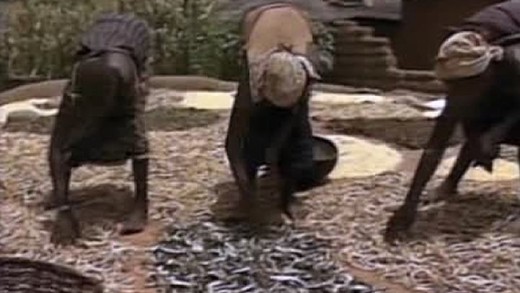
Is the human population going to outstrip the Earth's food supply? The effects of modern agriculture not only lead to a short term food surplus which quickly slipped as population boomed, but agriculture itself causes huge environmental problems such as soil erosion, salinity and chemical pollution—all further illustrating an impossible system in perpetuity. Food or Famine looks at projects in North America, Chile, Indonesia, Africa and India which are participating in a worldwide movement to return to local food growing methods based on the land and healthy ecological principles. The film also examines the worldwide imbalance between food consumption and production, stoking the need to confront the mounting challenges ahead...
 1:33:34
Food, Inc.
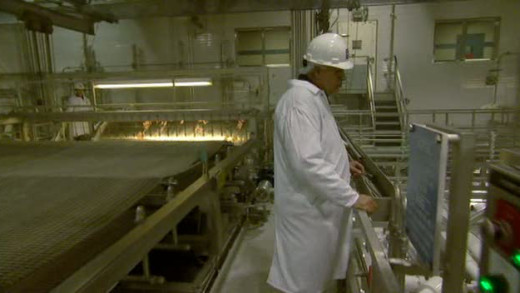
What does the corporate-controlled food industry look like? Film-maker Robert Kenner lifts the veil on today's food industry, exposing the underbelly that has been hidden from view of the consumer with the cooperation of government regulatory agencies such as the USDA and FDA. The food supply is now controlled by a handful of corporations that put profit ahead of consumer health, the livelihood of the farmer, the safety of workers and of course, the environment. We have bigger-breasted chickens, the perfect pork chop, herbicide-resistant soybean seeds, even tomatoes that won't go bad. But we also have new strains of E. coli—the harmful bacteria that causes illness for an estimated 73,000 Americans annually; are riddled with widespread obesity, particularly among children; and an epidemic level of diabetes among adults. And the whole mess is exacerbated by opportunistic politics—the tools of Big Agriculture running the very regulatory agencies that are supposed to protect the public—and consumers who have become accustomed to eating whatever they want whenever they want, in quantities they don't need...
 1:33:58
Robert Kenner and Melissa Robledo team up with authors Michael Pollan and Eric Schlosser to examine the modern food industry's efficiency and vulnerabilities as a follow-up to the first documentary of the same title. This film focuses on corporate consolidation in the food and agriculture business in the United States, while raising questions about the future of the industrial food system.
 1:57:53
Fool Me Twice
Fool Me Twice documents the Australian government's lies about the East Timor massacres, the cover-up of the Bali bombings (including the 1993 World Trade Centre attack) and subsequent anti-terror legislation forced through parliament by the Howard government. Laws that are still in effect today...