 24:41
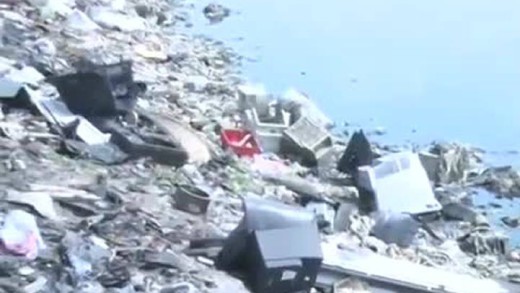
24:41e-Waste is a short film that investigates the grave effects that technological waste has on the environment in Ghana, and the impact it has on the lives of those who are forced to work with such hazardous materials in order to survive.
 16:03
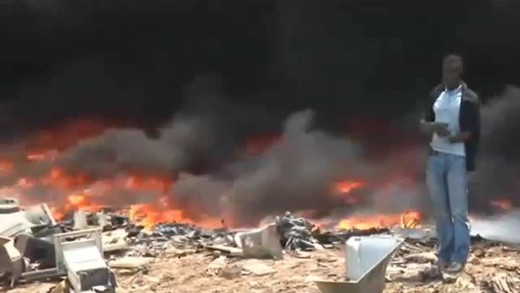
16:03For years now, the global economy has been exporting most of its wastes and dirty industries to the so-called third world. With this era of proliferation of technology and planned obsolescence, it's no surprise that e-waste has taken over in these places too. Though while corporations claim that used TVs and computers are being safely recycled in Australia, the reality on the ground throughout Africa shows a very different story. This film travels to Ghana to see that a staggering amount of the world's e-waste is ending up being burnt in open dumps with severe consequences. The waste creates an escalating and accumulating environmental and health nightmare. But not only this, the arrival of the waste in the first place breaks a myriad of laws and conventions that are supposed to be in place. e-Waste Hell documents this stark reality...
 1:25:07
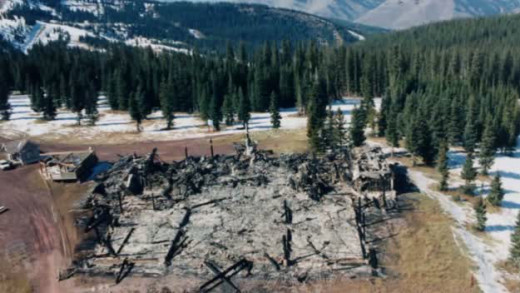
For years, the Earth Liberation Front--autonomous individuals operating in separate anonymous cells without any central leadership--carried out spectacular direct-actions against businesses that destroy the environment. Some of the targets were logging corporations, SUV dealerships, ranger stations, a slaughterhouse and a multi-million dollar ski-lodge at Vail, Colorado that was expanding into national forest. As authorities were not able to crack the case and disbanded many years later, the FBI got lucky when they were led to a former activist who agreed to co-operate with them and become an informant. If A Tree Falls provokes hard questions about environmentalism, activism, and the way 'terrorism' is defined by following the story of the activists who were turned over to the FBI, and their fate...
 24:55
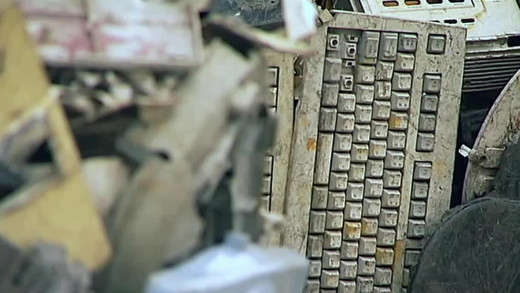
24:55China's factories provide low cost products such as computers and cars to the rest of the world, but the real cost is high with heavy air pollution, contaminated waterways, decimated land, terrible working conditions, widespread cancer and incidences of deaths. China's Dirty Secrets travels across the country to follow workers at factories that assemble computers, then to e-waste dumps, and finally an industrial incinerator burning medical waste, all showing first-hand the extensive environmental impacts of so-called "economic growth."
 58:33
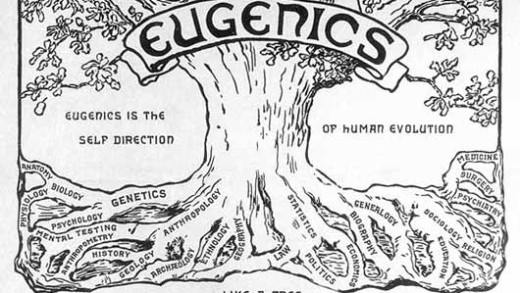
58:33Transhumanists claim a beautiful and apparently now-not-so-distant utopian future made possible by artificial intelligence, life extension and cybernetic technologies. But upon examining the convergence of these technologies and the history behind them, Age Of Transitions details how this movement of "transcending human limits" was born out of pseudo-science eugenics, and what the implications are for a world divided by the have's and have-not's.
 45:49
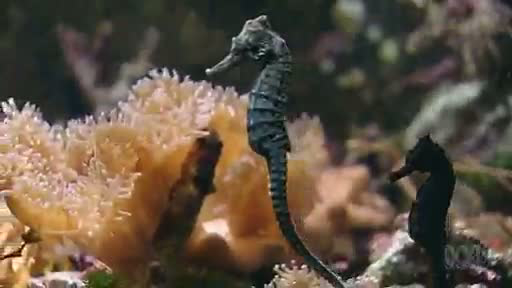
45:49The Great Barrier Reef is one of the great natural wonders of the world. But now the area faces threats not only by changes to the climate, but by direct assaults from industry going to any lengths to extract Coal Seam Gas. This report travels to Queensland to show how at least six major port developments -- either being planned or currently underway -- are directly putting The Great Barrier Reef in jeopardy...
 48:00
48:00American Call-Girl is an undercover investigation into the escort industry in Las Vegas, where prostitution is illegal on paper but alive and well in practice, with the industry making use of clever ways for the John to "read between the lines" while everyone else turns a blind eye. With the Internet the backbone of the 21st century sex industry, thousands of escort websites are carefully worded, but if you look closely, many appear to clearly sell sex in a fiercely competitive 'market.' American Call-Girl goes behind the scenes to meet escorts and see what life is really like for them. What is exposed along the way, is the rampant and abusive underworld where supposedly independent girls are actually made beholden to pimps by way of violence, extortion and trafficking. Others fight for the freedom to simply work, being on top of their own marketing and advertising. The escort industry thrives in cities throughout the United States, but Las Vegas is a ground zero, a thriving black market.

Trafficked
Trafficked is a set of two films that follow a former-police officer's quest to find the man who enslaved a young Thai girl in a Sydney brothel. The series explores the trafficking of women and children for prostitution as a global problem. The United Nations estimates that more than one million children are forced into sexual slavery each year. Some of them are trafficked into Australia.
 45:40
45:40The Purity Myth takes a look at the resurgence of a movement of abstinence, brought about by a powerful alliance of religious ideologues, right-wing politicians, conservative media pundits and policy intellectuals who have been exploiting irrational fears about women's sexuality. From daddy-daughter "purity balls," taxpayer-funded abstinence-only curricula, and political attacks on 'Planned Parenthood,' to recent attempts by legislators to de-fund women's reproductive healthcare and narrow the legal definition of rape, The Purity Myth identifies the single false assumption underlying this huge push: that the worth of a woman depends on what she does—or does not do—sexually. This film also argues that the health and well-being of women is too important to be left to figureheads bent on vilifying feminism and undermining women's autonomy.
 1:31:05
Page One
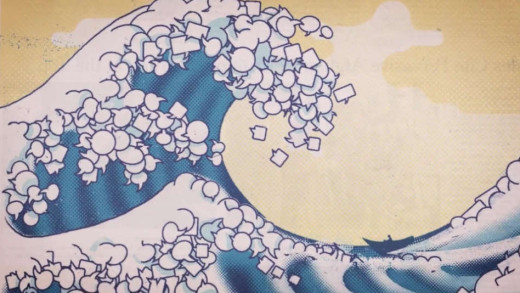
With the Internet surpassing print as the main news source, and newspapers going bankrupt, Page One chronicles the mainstream-media industry's transformation, while commenting on what it views as the high stakes for democracy and informedness as told from inside the newsroom at The New York Times. For a year, this film follows journalists at the paper's Media Desk, a department created to cover the transformation of the media industry. Through this prism-within-a-prism, a complex view emerges of a media landscape fraught with both decline and opportunity, as writers like David Carr track print journalism's metamorphosis even as their own paper struggles to stay vital and solvent, publishing material from WikiLeaks and encouraging writers to connect more directly with their audience. Meanwhile, rigorous journalism is still alive, but is facing perhaps the most tumultuous time in generations.
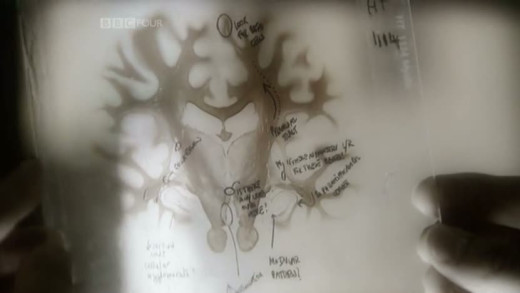
The Brain -- A Secret History is a series about how various theories and experiments on the human mind over decades have led to profound insights into how the human brain works, but also have involved great cruelty and pose terrible ethical dilemmas. Historical experiments such as severe maternal deprivation, brainwashing and other experiments in mind control such as MKULTRA are covered, along with physical interventions such as the history of electric shock 'treatment', behaviour modification, experimental psychology, and the Milgram experiment.
 1:17:19
Girl Model offers a glimpse into the hall of mirrors that is the modelling world as it interfaces with other industries and other countries. The film follows Ashley—a deeply ambivalent former-model who is now a scout and scours the Siberian countryside looking for 'fresh faces' to send to the Japanese market; and one of her 'discoveries,' Nadya, a thirteen year-old plucked from the Siberian countryside and dropped into the centre of Tokyo with promises of a profitable career. What entails is the opening of a can of worms that isn't easily solved in one sitting—a thriving and curiously sinister modelling industry that spans the globe, luring everywhere with pretences of wonder, success and riches. But the realities are harsh. The fashion industry can look glamorous from the outside, but its insides are, at the very least, deceptive and sinister; and the myths run deeply entrenched in the culture, constantly promulgating new, young recruits. This 'meat market,' a prelude to sex trafficking, is creepy, ugly, and preys on the young and vulnerable. Can the spell be broken?
 44:10
44:10Spoil
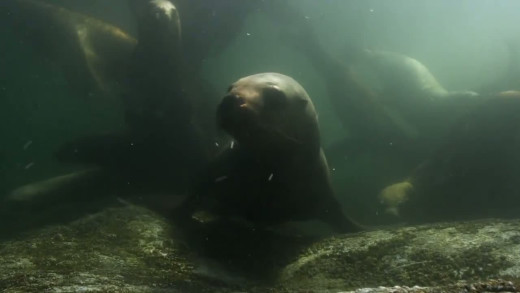
A group of conservation photographers travel to British Columbia, Canada, to capture the region in response to plans by several oil companies who want to build a pipeline for export from the Alberta tar sands, across British Columbia to the coast of the Great Bear Rainforest. The tar sands in northern Alberta are the largest, most destructive industrial projects in human history. The proposed pipeline not only threatens this area, but many others across Canada and indeed the world. Spoil follows several renowned photographers and videographers who show the Great Bear Rainforest's landscapes, wildlife, and indigenous culture; calling to act before it's too late...
 44:30
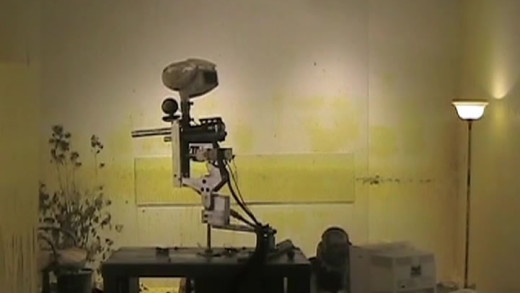
44:30How does the military train the solider of tomorrow? Video games. The most popular games are those that replicate as close as possible the war events as seen on the news. Such games now far outpace the biggest Hollywood blockbuster movies, popular music, and best-selling books, combined. What does this complete immersion in high-tech war mean for our political culture? As well as those directly affected by state violence? What does it mean when the technological sophistication of modern militarism become forms of mass entertainment? Returning Fire profiles three artists and activists that decided these questions needed to be answered. We see how Anne-Marie Schleiner, Wafaa Bilal, and Joseph Delappe moved dissent from the streets to the screens, infiltrating war games in an attempt to break their hypnotic spell. The results ask all of us--gamers and non-gamers alike--to think critically about what it means when drones and remote warfare become computer games and visa versa. Can we reflect on our capacity to empathise with people directly affected by the trauma of real war?
 1:35:09
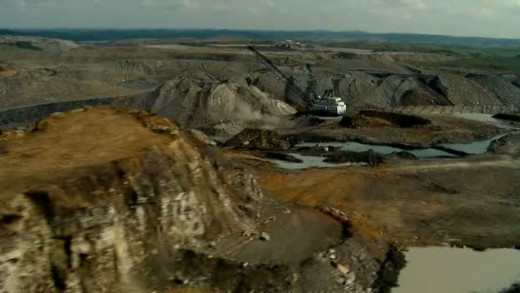
The Last Mountain follows the fight for the last great mountain in North America's Appalachian heartland where mining giants that want to deforest and explode it to extract the coal inside are faced with a community fighting to preserve the mountain. The film considers the health consequences and environmental impacts of mining, burning coal for electricity, also looking at the wider context and history of environmental laws in the United States.
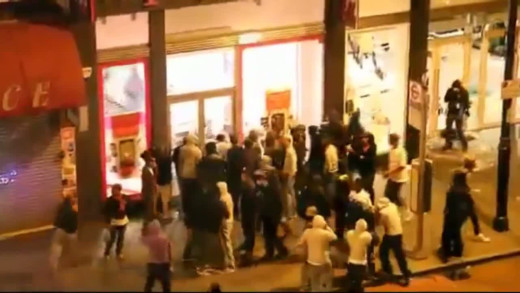 29:12
29:12Perfect Storm offers an initial analysis of the underlying causes and wider context surrounding the riots throughout England in 2011. Contrary to the portrayals presented by mainstream media and trite political rhetoric around law and order, the riots were sparked by poverty, inequality and frustration over police killing a young man in Tottenham. How does the damage weigh up to the criminal conduct of banks and corporate tax avoiders when the costs of the riots are over four thousand times less than the recent financial crisis? Whose priorities are at play here?
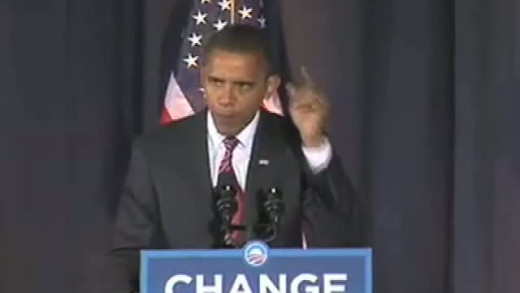 1:53:35
Lifting The Veil explores the historical role of political parties in the United States as the graveyard of social movements, the massive influence of corporate financing in elections, the absurd disparities of wealth, the continuity and escalation of neoconservative policies with the Obama administration, the insufficiency of mere voting as a path to reform, and differing conceptions of democracy itself. Lifting The Veil exposes the vast hypocrisy of the United States government, with a sense of urgency to bring about real systemic social and political change...
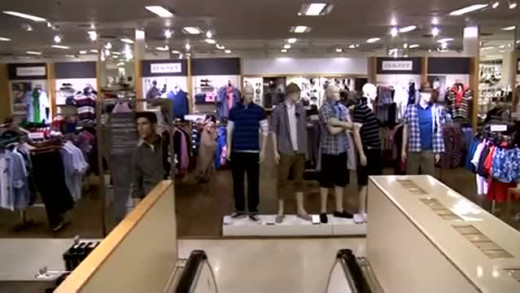 52:09
52:09Consumed -- The Human Experience explores the impacts of consumerism across the globe. The film visits consumed landscapes, looking at the personal, social and community implications of consumption along the way...
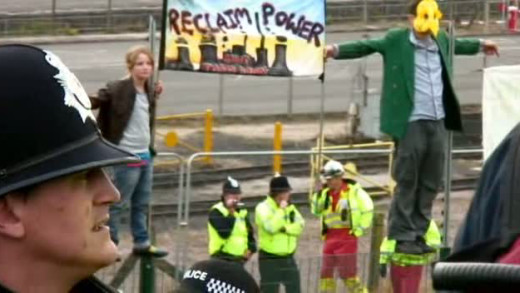 1:30:17
Just Do It -- A Tale of Modern-Day Outlaws follows a group of activists in the UK to document their protests and actions over one year dealing with issues around climate change. Demonstrations at Copenhagen’s 2009 G20 summit and at the Drax coal power station in North Yorkshire, England, are just some of the events documented.
 55:59
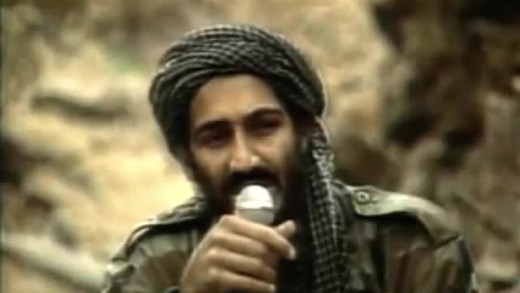
55:599/11 -- Ten Years Later takes a retrospective view of the United States to contextualise current global military and economic events. We see how the United States backed, funded and trained the Mujahideen in the 1980s at the direction of then-National-Security-Advisor, Zbigniew Brzezinski; and how this gives rise to Osama bin Laden and the group known as 'al-Qaeda' as assets of the United States military-intelligence-complex, amid the context of the Cold War. Also examined is the sprawling establishment of weapons trafficking and the "opum trade," facilitated by the United States and Britain; along with a vast clandestine financial network funding such operations—with banks such as the BCCI at the core. We see how the events of September 11 are used as a "catastrophic and catalyzing event—like a new Pearl Harbor" amongst the context of neoconservative imperialism at home and abroad, which still continues today.
 1:12:30
Ethos
From conflicts of interests in politics and collusion with corporate power, to a global mainstream media that serves the interests of a powerful few, Ethos explores aspects of the machinations of today's global systems that work against democracy, the natural environment and lead populations into consumerism and warfare...
 21:55
21:55To this day, questions remain about what really happened in New York and Washington DC on 11th September 2001. All over the world and over a decade later, people still question the official story and the veracity of the explanations given for the events that took place that day. The Sensible Doubt meets with 6 Danes who talk about their doubt and scepticism of the official story espoused by the United States government and global mainstream media, and how they've come to their conclusions...
 15:27
15:27Fracking Hell -- The Untold Story looks at the risks of natural gas development in the Marcellus Shale throughout the United States. From toxic chemicals in drinking water to interstate dumping of radioactive waste that cataclysmically contaminates water supplies, to fracking plans in major population centres including New York City -- are the health consequences worth the supposed economic gains?
Earth at Risk documents the first conference of the same name convened in 2011 by featured thinkers and activists who are willing to ask the hardest questions about the seriousness of the situation facing life on the planet today. Each speaker presents an impassioned critique of the dominant culture, together building an unassailable case that we need to deprive the rich of their ability to steal from the poor, and the powerful of their ability to destroy the planet. Each offers their ideas on what can be done to build a real resistance movement—one that can actually match the scale of the problem. To fight back and win. Literally, the whole world is at stake.
 1:22:09
The dominant culture measures itself by the speed of "progress." But what if this so-called progress is actually driving the physical world towards full-force collapse? Surviving Progress shows how past civilisations were destroyed by progress traps—alluring technologies and belief systems that serve immediate needs, but ransom the future. As the total destruction of the environment accelerates and those in power cling to their power ever more tightly in denial, can this globally-entwined civilisation escape a final, catastrophic progress trap?
 1:12:54
"Permaculture is a practical approach to the problems facing modern society, based on a philosophy of 'think global, act local'. This video documents the transformation of a bare suburban house in Perth, showing practical examples from start to finish of how to grow organic food sustainably, how to reduce and incorporate household waste, evaluate energy consumption, and recreate habitat for other life."
 49:43
49:43Permaculture In Practice shows how the design of ecologically sustainable ways of living can be practised in four very different settings around the UK: A Hampshire back garden including fruit trees, vegetables, bees, chickens and ducks; in the city at Bradford close to a housing estate with 10,000 residents; a community co-op in Devon, which involves a café, allotments and local composting scheme; and a small farm in the Forest of Dean where local distribution schemes ensure a close link between grower and eater, including meat production, a vegetable box scheme and locally produced charcoal.
 52:50
52:50In the weeks after the September 11th attacks in the United States in 2001, envelopes carrying Anthrax were delivered to government offices, network news divisions, and a tabloid newspaper throughout the country. Five people were killed, many more infected, and the nation was fearful. Seven years later, after mistakenly pursuing one suspect, the most expensive and complex investigation ever undertaken by the FBI ended when they identified army scientist Dr. Bruce Ivins as the sole perpetrator of the attacks--after Ivins had taken his own life. Now, new questions are being raised about the FBI’s investigative methods and whether Ivins really did it.