 1:59:25
In a visual exploration of institutionalised prostitution, Whores' Glory travels the globe to show how these people really live and work today, across three economically divergent countries. In Bangkok, Thailand, women punch a clock and wait for clients inside a brightly-lit glass box. In the red-light district of Faridpur, Bangladesh, a madam trafficker haggles over the price of a teenage girl. On the border town of Reynosa, Mexico, crack-addictions run high while women pray to 'Lady Death.' Whores' Glory is a unobscured look at the realities of sex-trafficking today and the industry that continues to spawns it and keep it alive.
 1:30:19
On April 22, 2010 the Deepwater Horizon offshore drilling rig, run by oil giant BP, sunk into the Gulf of Mexico--creating the world's biggest and most catastrophic environmental crime in history. After over 750 million litres of crude oil and millions of litres of the chemical dispersant Corexit dumped into the sea, the disaster was deemed over and all damage repaired. This is bullshit however. Film-makers Josh and Rebecca Tickell travel to the Gulf of Mexico to document first-hand the extent of environmental and community damage, continuing many years after the explosion. Beginning by tracing BP’s origins and fingerprints across decades of US manipulation in Iran, The Big Fix assembles an indictment of this monumental disaster by unpacking the workings of the complex oligarchies that put pursuit of profit over all other ends...
 28:57
28:57Subconscious War is a video essay exploring the influences of media and the culture of violence on reality, and the cultivation of collective values in society. The film contrasts the writings of Aldous Huxley and Neil Postman's grim assessments; relating the concepts of works such as 'Brave New World' and 'Amusing Ourselves to Death' to the current cultural influences that foster today--corporate media and indeed media saturation, video games, television, and a pervasive technoculture, for example. What is being created? And what sort of people are being cultivated by this culture? Who benefits?
 1:39:56
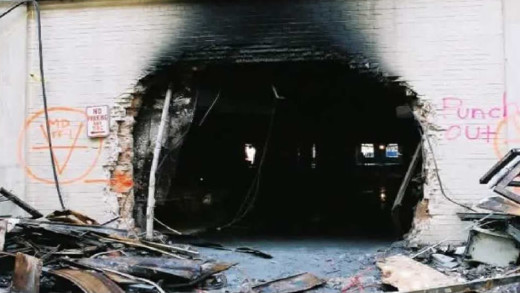
9/11 -- Beyond A Reasonable Doubt provides a summary of evidence from various sources against the official account of what happened on September 11, 2001. The film is assembled using clips from several other documentaries, news reels and archive footage to provide an example of the overwhelming evidence that contradicts statements made by official sources.
 1:20:32
One generation from now, most people in the United States will have spent more time in the virtual world than in the natural world. New media technologies have changed lives in countless ways. Streams of information now appears in a click. Overseas friends are contactable in an instant. Engulfing video games and streams of endless entertainment to stimulate the senses, dazzle the mind and pander to the acculturated desire to be in control. Even grandma loves Wii. But what are people missing when they're behind screens? How is it already impacting our children, our society, and the planet? At a time when people are at screens more than they are outside, Play Again explores the challenge in dealing with the addiction and returning to the real world...
 1:19:59
All over the world, species are going extinct at an extraordinary rate--currently around 250 per day--a scale never before seen. Call of Life investigates the growing threat to Earth’s life support systems from this unprecedented loss of biodiversity by exploring the causes, scope, and potential effects of this mass extinction. The film also looks beyond the immediate causes of the crisis to consider how our cultural and economic systems, along with deep-seated psychological and behavioral patterns, have allowed this situation to develop and be reinforced, and even determine our response to it. Call of Life tells the story of a crisis not only of nature, but also of human nature; a crisis more threatening than anything human beings have ever faced...
 57:25
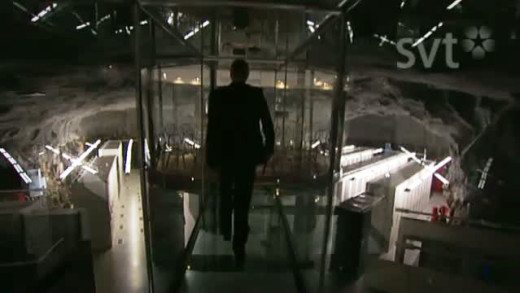
57:25Reporters Jesper Huor and Bosse Lindquist travel to key countries where parts of the Wikileaks website operate to investigate some of the very few public faces behind the global Wikileaks network. Featuring interviews with co-founder Jullian Assange, spokesperson Kristinn Hrafnsson and others, WikiRebels asks: where is Wikileaks heading? Is it stronger than ever or being broken by the US or even on the inside? And who is Assange? A champion of freedom, a spy or a rapist? What are his objectives? And what are the consequences?
 1:15:01
Filmed over three years in the war-zone of northern Uganda, Children of War follows a group of former child soldiers as they escape the battlefield, enter a rehabilitation centre, and undergo a process of trauma recovery and emotional healing. Having been abducted from their homes and schools, and forced to become fighters by the Lord's Resistance Army--a militia led by self-proclaimed prophet and warlord Joseph Kony--the children struggle to confront and break through years of captivity, extreme religious indoctrination, and participation in war crimes with the help of a team of trauma counsellors. As fearless allies guide the children into new lives, Children of War illuminates a powerful and cathartic story of forgiveness and hope in the aftermath of horrific war.
 54:58
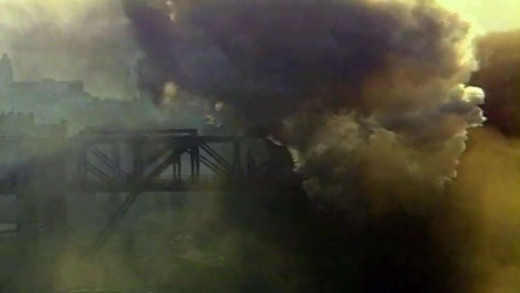
54:58Burning Question looks at the public debate surrounding global warming and explores the striking disconnect between a body of evidence from the world's most prominent scientists, and the maze of speculation, rhetorical posturing, and outright misinformation from politicians, PR specialists, and political pundits. Mixing a local focus on Ireland with insights from scientists and leaders from around the world, Burning Question serves as both a primer on climate science, and a penetrating analysis of media framing and perception management.
 52:52
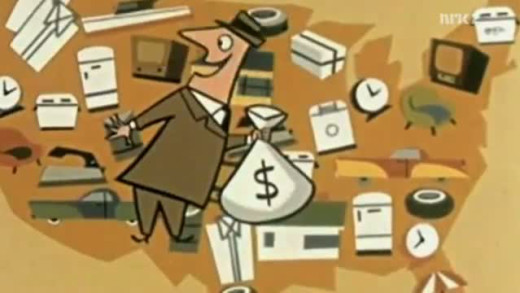
52:52The Light Bulb Conspiracy investigates the history of Planned Obsolescence--the deliberate shortening of product life span to guarantee consumer demand--by charting its beginnings in the 1920s with a cartel set up expressly to limit the life span of light bulbs, right up to present-day products involving cutting edge electronics such as the iPod. The film travels to France, Germany, Spain and the US to find witnesses of a business practice which has become the basis of the modern economy, and brings back graphic pictures from Ghana where discarded electronics are piling up in huge cemeteries for electronic waste, causing intense environmental destruction and health problems.
 1:42:41
America's largest domestic natural gas drilling boom is in full swing and the Halliburton corporation claims it has refined a technique called 'hydraulic fracturing' that extracts natural gas in a "safe and environmentally friendly way". But upon examination, film-maker Josh Fox uncovers a trail of secrets, lies and first-hand evidence of intense water contamination and devastating environmental destruction...
 31:46
31:46Raging Grannies is a short film that tells the story of The Action League of the San Francisco Bay Area Peninsula. They are women over 50, some as old as 90, who are enraged by the conditions under which some people are forced to live, by threats to our environment, by war, and by injustice wherever they find it. The Action League have been spied on by the California National Guard, and they've been written about in Time magazine, the San Francisco Chronicle, and the San Jose Mercury News. They've appeared on Fox News with Bill O'Reilly, Jon Stewart's Comedy Central, and are regulars in Bay Area evening news stories. In public, they've been both booed and cheered, but they continue to protest with a sense of outrage, a sense of humor, and a commitment to non-violence. How do these older women keep doing what they do? As we travel with the Grannies to their many gigs, we see that life isn't over at 50 or 60 or even 90.
 48:15
48:15Initially, the Americans claimed that they were not recording casualty figures. George Bush stated that America would do its "utmost to avoid civilian casualties". But now, details of the US Military themselves recording over 109,000 deaths have been released by Wikileaks -- over 66,000 civilian deaths; 176,000 civilians and others wounded. Iraq's Secret War Files reveals the true scale of civilian casualties, and examines evidence that after the "scandal" of Abu Ghraib, American soldiers continued to torture prisoners; and that US forces did not intervene in the torture and murder of detainees by Iraqi security services...
 1:52:05
Freedom Riders follows the story of hundreds of civil rights activists who rode interstate buses into the segregated southern United States during the 1960s to challenge local laws enforcing segregation in seating. The Freedom Rides, and the violent reactions they provoked, bolstered the credibility of the American Civil Rights Movement. They called national attention to the disregard for the federal law and the local violence used to enforce segregation in the southern United States. This is the story of the numerous waves of people who challenged the mores of a racially segregated society by performing a disarmingly simple act.
 1:59:23
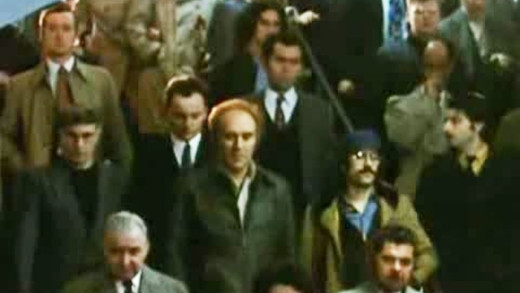
Human Resources -- Social Engineering in the 20th Century is about the rise of mechanistic philosophy and the exploitation of human beings under modern hierarchical systems. The film captures how humans are regarded as a resource by corporations--something to be exploited for pecuniary gain--by following the history of psychological experiments in behaviour modification, conditioning and mind control; applying the outcomes to modern day establishment experiments such as institutionalised education, and social engineering by way of things like television...
 1:25:15
Truth in Numbers? Everything, According to Wikipedia explores the cultural implications and background of one of the most visited and referenced sites on the Internet. What is the role and impact of Wikipedia in the archiving of information and the preservation of culture? What will it leave behind? This film examines the unfolding legacy by weaving multiple perspectives about the impact of Wikipedia and provoking a deeper conversation on how knowledge is formed and what future generations will learn about history and the world...
 45:11
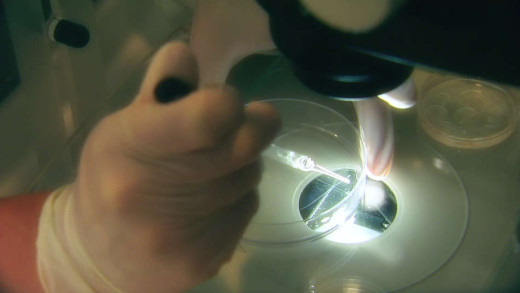
45:11The infertility industry in the United States has grown to a multi-billion dollar business, and its main commodity is human eggs. Young women all over the world are bombarded by advertising--on college campus bulletin boards, social media, online classifieds--offering up to $100,000 for their donated eggs, to "help make someone's dream come true." But who is this egg donor? Is she treated justly? What are the implications to her health? Eggsploitation spotlights the booming business of human-egg extraction told through the stories of women who became involved and whose lives have changed forever after undergoing the procedure. Their accounts provide a cautionary tale to all women who are considering egg donation for the purpose of in-vitro fertilisation or embryonic stem cell research.
 56:33
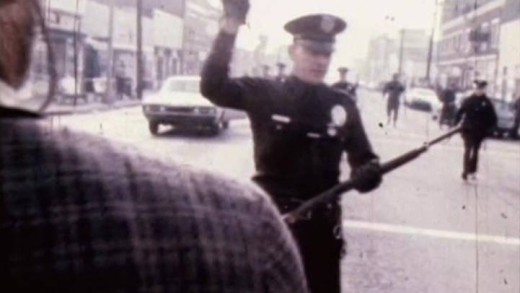
56:33A secret illegal project from the 1950s, 60s and 70s called COINTELPRO, represents the state's strategy to prevent resistance movements and communities from achieving their ends of racial justice, social equality and human rights. The program was mandated by the United States' FBI, formally inscribing a conspiracy to destroy social movements, as well as mount institutionalised attacks against allies of such movements and other key organisations. Some of the goals were to disrupt, divide, and destroy movements, as well as instilling paranoia, manipulation by surveillance, imprisonment, and even outright murder of key figures of movements and other people. Many of the government's crimes are still unknown. Through interviews with activists who experienced these abuses first-hand, COINTELPRO 101 opens the door to understanding this history, with the intended audience being the generations that did not experience the social justice movements of the 60s and 70s; where illegal surveillance, disruption, and outright murder committed by the government was rampant and rapacious. This film stands to provide an educational introduction to a period of intense repression, to draw many relevant and important lessons for the present and the future of social justice.
 1:13:42
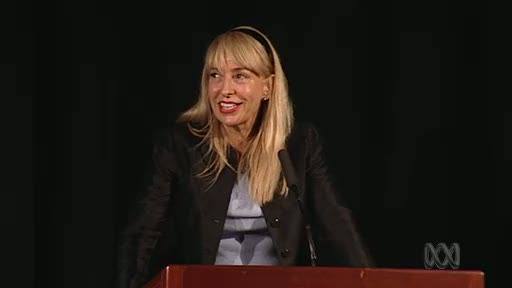
Neuroscientist Professor Susan Greenfield says today's developing brain is being worryingly reshaped by excessive visual stimulation -- the effect of a culture driven by screens. Biotechnology, nanotechnology, even the internet are all impacting on our brains and could be heralding future generations with different abilities, agendas and even ways of thinking. Her prediction is that we might be standing on the brink of a cataclysmic mind-makeover never before seen...
 1:04:18
With economic collapse besieging the United States, domestic violence statistics show a sharp increase in violence against women. States are closing shelters and cutting support programs, and the culture ignores domestic violence, except when celebrities are involved on TV. In the meantime, more spouses have been killed by their partners in the past several years than soldiers have been killed in Iraq. Power and Control addresses this life and death issue during a time of urgent crisis, a timely and comprehensive exploration of physical and emotional abuse in dominant culture, as refracted through the story of Kim Mosher, a mother of three who has recently left her abusive husband. As Kim and her fragile daughters take up residence in a domestic violence shelter, the film follows the harrowing struggles in a single-parenting survivor's quest to find work, housing and peace of mind. We also meet Kim's husband, Josh, himself a survivor of abuse. His attempts to explain his behaviour are troubling--shocking in the context of the story's final twist. The multi-level narrative also examines the root causes of domestic violence and the solutions that have evolved to stop it, celebrating the battered women's movement activists who demanded revolutionary change in the 1980s, and examining alternative approaches now being advocated.
 1:39:41
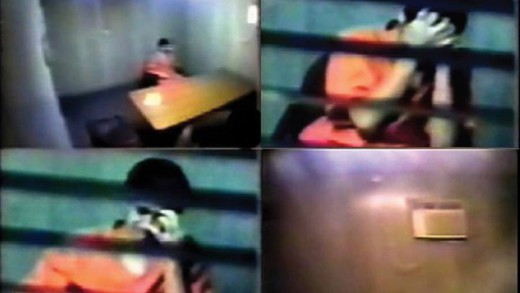
This film provides some insights into the plight of Omar Ahmed Khadr, a Canadian citizen, who was fifteen years old when he was taken by United States forces in Afghanistan in 2002 to be interrogated, tortured, and sent to Guantánamo Bay. Based on seven hours of CCTV footage recently conceded and declassified by Canadian courts, You Don't Like The Truth offers a dark, yet officially-sanctioned view into the sadistic world of today's intelligence agencies and the secret operations in the War-of-Terror.
 43:50
43:50It's been described as the boom that keeps on giving -- an export bonanza that will help Australia ride through a world-wide economic downturn. All across Australia, workers have left their jobs to make big money in the mining industry. In the rush to exploit vast natural resources, employers have all but set aside the idea of building and supporting communities, instead they pay big wages to fly-in, fly-out; drive-in, drive-out workers, encouraging them to work long shifts, leaving them with little reason to become part of a local community...
 6:30
6:30This short film uses the story of Richard Nixon's paranoia to explore how a similar outlook has been perpetuated on the larger social scale by the new media age. Skimming through the evolution of the mainstream media via television and newspapers, this short film comments on how politics has been paralysed by a media that has taken serious threats and sensationalised them, resulting in political cynicism and disengagement, which in-turn feeds a viscous cycle of nihilism and further sensationalist politics and media.
 46:31
46:31The Dark Side Of Chocolate follows a team of investigative reporters into Africa where human trafficking and child labour fuel the chocolate industry worldwide. The film travels to Mali where hidden footage reveals the trafficking of small children to the cocoa fields in the neighbouring Ivory Coast and elsewhere. What is happening behind the sweet imagery of the chocolate industry?
 1:01:15
We've been told again and again that sports and politics don't mix, that games are just games and athletes should just "shut up and play." But Not Just a Game argues that far from providing merely escapist entertainment, American sports have long been at the centre of some of the major political debates and struggles of our time. By tracing the good, the bad, and the ugly of American sports culture, Not Just a Game shows how American sports have glamorised militarism, racism, sexism, and homophobia; but also traces a largely forgotten history of rebel athletes who stood up to power and fought for social justice beyond the field of play.
 47:18
47:18"Quants" are the mathematicians, software developers and computer programmers at the centre of the global economy. These are the people who designed the "complex financial products" that caused the financial crisis of 2008. Here they speak openly about their game of huge profits, and how the global economy has become increasingly dependent on mathematical models that quantify commodified human behaviours to the point of insanity. But things don't stop there. Through the convergence of economy and technology, the Quants have now brought this model into the world of the machines, where trades are done at the speed of light, far from the realm of human experience. The machines are in charge. Some Quants are even now worried. What are the risks of this complex machine? Will the Quants be able to keep control of this financial system, or have they created a monster?
 58:37
58:37The Quantum Revolution spouts claims of turning many ideas of science fiction into science fact—from materials with mind-boggling properties like invisibility through to so-called "limitless quantum energy" and room temperature superconductors, to a space elevator for tourism. Are such developments worthwhile, sustainable, equitable or even necessary? Scientists forecast that in the latter half of the century everybody will have a personal matter fabricator that "re-arranges molecules to produce everything from almost anything." Yet how will those in power ultimately use the domination of matter and life on Earth? How is science already doing this and to what ends? What are the unasked questions about science itself and the desire to control the very fabric of the universe? What insanity are we up against?
 51:35
51:35Are we willfully trashing the planet in the pursuit of endless things? What's the source of the frenetic consumer energy and desire? In a fast-paced tour of the ecological and psychological terrain of consumer culture, Shop 'Til You Drop challenges the viewer to confront these questions head-on. Taking aim at the high-stress, high-octane pace of materialism, the film moves beneath the seductive surfaces of the commercial world to show how the other side of consumerism is depletion--the slow, steady erosion of not only the natural world, but basic human and community values. Shop 'Til You Drop contextualises the turbulence of this moment, providing an unflinching critique of the limits of consumerism and the so-called "pursuit of happiness."