 1:21:34
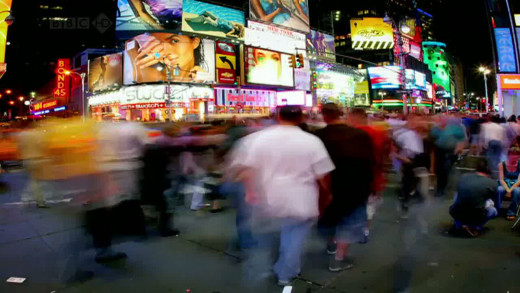
Within a single generation, digital media, the Internet and the World Wide Web have transformed virtually every aspect of modern culture, from the way we learn and work to the ways in which we socialise and even conduct war. But is technology moving faster than we can adapt to it? Is our constantly-wired-world causing us to lose as much as we’ve apparently gained? In Digital Nation, Douglas Rushkoff and Rachel Dretzin explore what it means to be human in a 21st-century digital world...
 1:33:08
Freakonomics is a segmented adaptation of the book by the same name, by Steven Levitt and Stephen Dubner about incentives-based thinking. The film presents segments to examine the theories of human behaviour and data mining presented in the book through case studies. Subjects include: the influence a person's name has on their personal and social development; corruption in an honor-bound sport such as sumo wrestling; what alleged factors lead to a statistical reduction in crime rates in the United States during the 1990s; and a school experiment to see if cash payments could incentivise students to get good grades. Through these examples and others, the film exposes the problems with data-driven economic incentive models, and the society obsessed with quantitative measuring and data, rather than a focus on quality of outcomes or even what the outcomes are.
 1:18:32
Every day, the world over, large amounts of high-level radioactive waste is placed in interim storages which are vulnerable to natural disasters, human-caused disasters, and societal changes. In Finland, the world's first 'permanent' repository is being hewn out of solid rock--a huge system of underground tunnels that must last hundreds of thousands of years. Once the waste has been dumped and the ground is full of this waste, the land is to be sealed off with concrete and "never be opened again." Or so the builders of this dump can hope. But can they ensure that? How is it possible to warn future generations of the deadly waste that's left behind by this culture? How do we prevent future generations from thinking they have found the 'pyramids' of our time, mystical burial grounds, or hidden treasures? Into Eternity is a film about the insanity of nuclear power and the consequences that have impacts for hundreds of thousands of years.
 1:11:19
By charting the history of the anti-war movement against the political backdrop of the atomic age, Beating The Bomb examines the current state of 'nuclear deterrence' brought about by the nuclear age stemming from the end of World War II, when the United States nuked Hiroshima and Nagasaki. Specifically, the anti-nuclear movement and the founding of the Campaign for Nuclear Disarmament in 1958 amongst others, fight for and end to the British Nuclear Weapons program, which from its inception, was closely tied to The Manhattan Project and still is to this day...
 44:03
44:03Dirty Money
In the late 1990s, the Reserve Bank of Australia thought it was on a winner. The bank had developed the technology to create polymer bank notes that it claimed rivalled paper money. So the Reserve Bank decided to set up a subsidiary company called Securency to sell the technology to the world. It had just one problem though—getting legitimate access to other central bank officials to pitch the idea. So instead, Securency decided to employ a shadow network of local "fixer agents" to make "connections" with relevant officials, lavishing them with prostitutes, cash, and bribing them into deals. Dirty Money is the story of this institutional corruption at the highest level of finance in Australia.
 58:12
58:12Is the world heading for a population crisis? Since 1950, the human population has more than doubled. What is the effect of this rapid growth on the environment? While much of the projected growth in human population is likely to come from the so-called "developing world," it is the lifestyle enjoyed by the West that has the most impact--in the UK consumers use as much as two and a half times their fair share of Earth's resources. This film examines whether it is the duty of individuals to commit not only to smaller families, but to change the way they live for the sake of humanity and planet Earth.
 48:21
48:21One year after BP's Deepwater Horizon rig exploded spewed a massive 170 million gallons of oil into the Gulf of Mexico, BP claims victory -- that most of the oil is gone. Investigative journalist Greg Palast sets off to test this claim in person and digs into the history of BP and similar incidents. Revealed is the corporations collusion with government, its strong political influence worldwide, along with the massive ecological impact of the BP explosion, set to last for decades...
 1:21:57
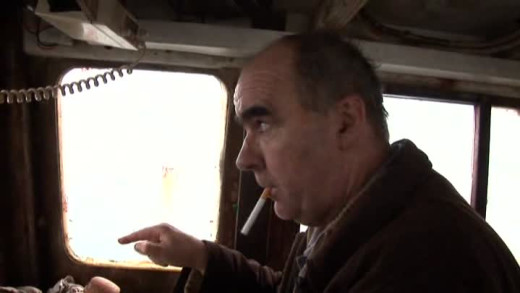
The Pipe tells the story of the people in Rossport, Ireland which have taken on the might of Shell Oil building a pipeline through their community. But when these people look to the government to protect their rights, they find that the government protects Shell instead. The question then becomes: what do people do, when the law prevents them from protecting themselves?
 46:42
46:42Hypothesis
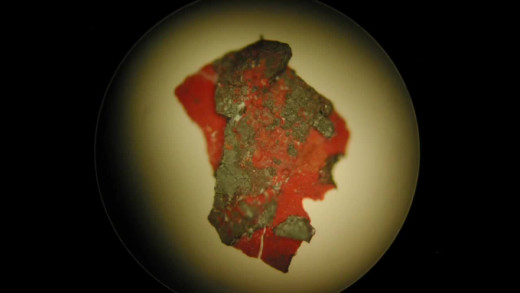
In 2005, a physics professor named Steven Jones published a paper of a scientific hypothesis regarding the free-fall speed collapse of 3 buildings on September 11, 2001—the twin towers, and the collapse of World Trade Center building 7 which was not hit by a plane. He proposed based on obvious observations of the collapse, alongside direct evidence of the use of incendiaries, that the only way for all buildings to have collapsed the way they did was in a controlled demolition of some kind. Faced with scientific evidence challenging official reports, what ensued was a firestorm—Jones received hate mail, threats, muddled media attention, and even offers of bribes to stop his research. Why was this information so thoroughly reviled? And why such scientific evidence ignored and further inquiry suppressed?
 59:46
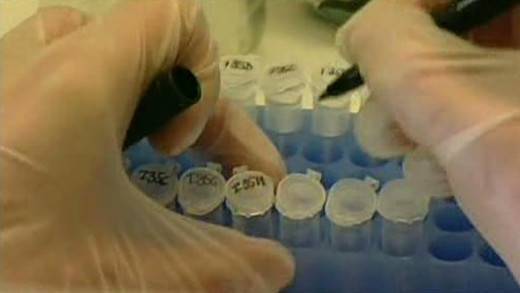
59:46A failed GM cotton crop prompts farmer suicides in India. Windborne GM canola contaminates organic and conventional farms in Canada. One farmer fights Monsanto in the Supreme Court. A company seeks approval for giant GM salmon that may threaten the survival of the natural species. GM pigs are born with ghastly mutations. And experts reveal how inadequate testing and regulations put us at risk. Featuring interviews with Vandana Shiva, Andrew Kimbrell, Percy Schmeiser and others, this documentary reveals several harsh consequences of genetic engineering worldwide...

First Life follows David Attenborough on a journey to unconver some of the origins of life on Earth. He investigates the evidence from the earliest fossils, which suggest that complex animals first appeared in the oceans around 500 million years ago, an event known as the Cambrian Explosion. Trace fossils of multicellular organisms from an even earlier period, the Ediacaran biota, are also examined. Attenborough then travels to Canada, Morocco and Australia, using some of the latest fossil discoveries and their nearest equivalents amongst living species to reveal what life may have been like at that time.
 46:48
46:48For more than three decades, transnational corporations have been busy buying up what used to be thought of and known as unbuyable--forests, oceans, public broadcast airwaves, important intellectual and cultural works. Before their commodification, these commons were recognised as things in common to all people, for the benefit of all people. In This Land is Our Land, author David Bollier confronts the free-market extremism of our age to show how commercial interests have been undermining the public interest for years, and how it's become so normalised that we don't even notice it anymore. By revealing the commons within the tradition of community engagement and the free exchange of ideas and information, This Land is Our Land shows how a bold new international movement is trying to reclaim the commons for the public good by modelling practical alternatives to the restrictive monopoly powers of corporate elites.
 45:44
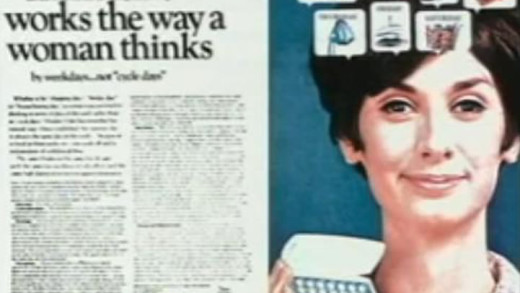
45:44Author and activist Jean Kilbourne analyses the depiction of women in advertising and media by decoding a large array of print and television ads. What is revealed is a torrent of stereotypes; sexist and misogynistic images and messages; laying bare a world of frighteningly thin women in positions of subservience; collectively, the restrictive code of femininity that works to undermine girls and women in the real world. By examining these messages, Killing Us Softly asks us to take advertising seriously, and to think critically about its relationship to sexism, eating disorders, violence against women, popular culture, and contemporary politics.
 1:13:25
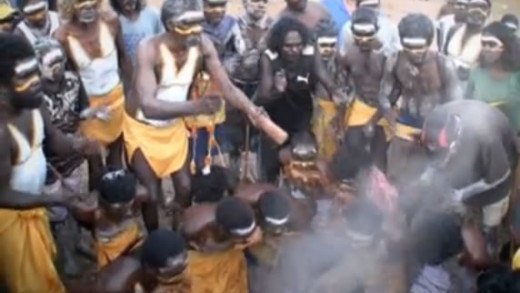
In the name of "protecting children," the Australian Government's so-called "emergency intervention" into Aboriginal communities in the remote Northern Territory, has taken away all existing Aboriginal land rights, suspended racial discrimination laws and placed over 70 communities under compulsory government control with subsequent measures of course having very little to do with "protecting children." Instead, the outcome has been the disempowerment of traditional land owners, the further theft of Aboriginal land, the theft of resources, with the intent being to forcibly assimilate Aboriginal culture.
 1:22:22
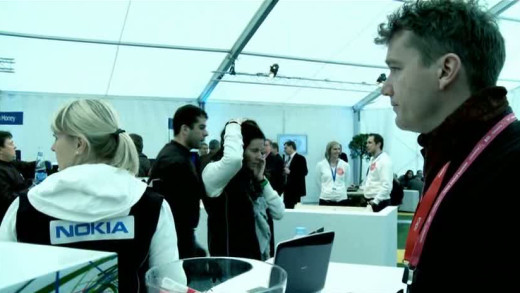
Modern society loves mobile phones -- the selection between different models and gadgets has never been bigger. But the production of this technology has a hidden, dark, bloody side. The main minerals used to produce mobile phones are coming from the mines in the Eastern DR Congo. The Western World is buying these minerals up at a furious rate, financing a bloody civil war which, during the last 15 years, has cost the lives of more than 5 million people. Blood In The Mobile explains the connections between mobile phones and the civil war in the Congo, while technology corporations whitewash the issue to "supply and demand" and claim ignorance...
 46:57
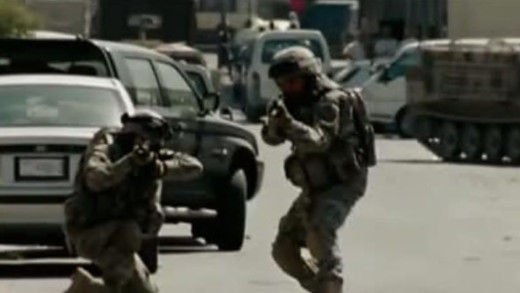
46:57War is hell, but for Hollywood it has been a god-send, providing the perfect dramatic setting against which courageous heroes win the hearts and minds of the movie going public. The Pentagon recognises the power of these celluloid dreams and encourages Hollywood to create heroic myths; to rewrite history to suit its own strategy and as a recruiting tool to provide a steady flow of willing young patriots for its wars...
 1:41:12
Kevin Warwick is a renowned researcher in the precarious field of cybernetics, the study of 'artificial intelligence,' human-control functions, robotics and so-called "cybernetic organisms." His work, as self presented here, shows how implant and electrode technology can be used to control human brain functions, to create biological brains for robots, to enable so-called "human enhancement" and treatment for neurological illnesses. The end goal is transcending human "limitations" or transhumanism, according to Warwick, which inevitably stirs up many social, ethical and practical questions. What are the implications of this work, and this world view?
 1:21:49
In 2006, newspapers around the United States began to publicise a unnerving phenomenon. Honeybees were a mysteriously disappearing from beehives all around the nation. Queen of the Sun: What Are the Bees Telling Us? investigates the multiple angles of this epidemic. It also explores the historical and contemporary relationship between bees and humans, showing alternative and inspiring beekeepers from all around the globe as they keep bees in natural and holistic ways. From Gunther Hauk in the United States to Massimo Carpinteri in Italy, each has unique philosophical and spiritual insights into their bees and are striving to keep their bees safe from pesticides, and the other causes behind colony collapse.
 1:12:24
In 2003, on the eve of the Iraq war, director Iara Lee embarks on a journey to better understand a world increasingly embroiled in conflict. Several years later, after travelling to five continents, Lee encounters growing numbers of people who have committed their lives to change. From Iran to Burma to Palestine and Lebanon, Cultures Of Resistance explores how art and creativity can mould with the greater culture of resistance, a part of the battle for peace and justice...
 1:33:45
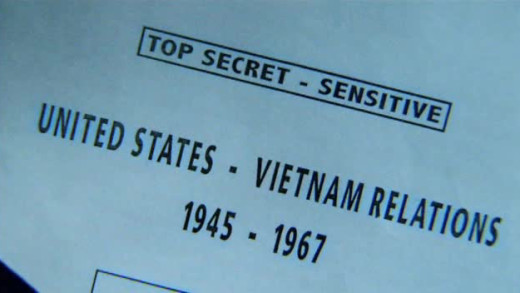
In 1971, Daniel Ellsberg shook the United States to its foundations when he leaked top-secret Pentagon documents to the New York Times that showed how five Presidents consistently lied about the Vietnam War. Consequently, National Security Advisor Henry Kissinger called Ellsberg "the most dangerous man in America," who "had to be stopped at all costs." But Ellsberg wasn't stopped. Facing 115 years in prison on espionage and conspiracy charges, he fought back...
 46:21
46:21With the recent global financial crisis, governments across the world promised decisive action -- the biggest financial stimulus packages in history, along with gargantuan bail-outs of corporations and floods of money into private banks and investment firms. But what crazed logic is this: propping up bad debt with…more bad debt? Overdose reviews the happenings of the bail-outs over these years, showing how dangerous the situation continues as a burst bubble is re-inflated globally. What happens next?
 24:09
24:09A young woman is raped when a one-night stand far from home goes terribly wrong. In the aftermath, as she struggles to make sense of what happened, she decides to make a film about the relationship between her own experience and the tangle of political, legal, and cultural questions that surround issues of sex and consent. Using a hidden camera, filmmaker Nancy Schwartzman goes head-to-head with the man who assaulted her, recording their conversation in an attempt to move through the trauma of her experience and achieve a better understanding of the sometimes ambiguous line between free will and coercion. The result is a powerful documentary about the terrible reality of rape and sexual violence, and the more complicated and ambivalent ways sexual assault is often framed and understood in the wider culture, examining issues too often deemed embarrassing, shameful, or taboo.
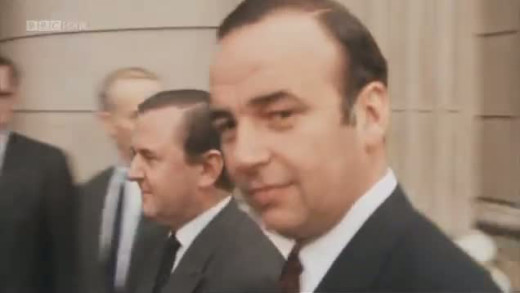 4:59
4:59This short film uses the history and figure of the Murdoch media empire as a vast invasive machine, to draw parallels to new media machines such as Google that are not only more invasive, but more pervasive than anything the Murdoch media empire has managed. Why are we not more concerned about this?
 50:57
50:57Based on the comprehensive work of media scholar George Gerbner, The Mean World Syndrome takes aim at the for-profit media system that thrives on violence, stereotypes, and the cultivation of anxiety. The film takes us through how the more television people watch, the more likely they are to tend to think of the world as an intimidating and unforgiving place, while being insecure and afraid of others. We see how these media-induced fears and anxieties provide fertile ground for intolerance, extremism, and a paranoid style of politics that threatens basic social values. The result is an accessible introduction to debates about media violence and more broadly, the effects of the media system. This film is a powerful tool for helping to make sense of the increasingly intense and fractious political climate of today.
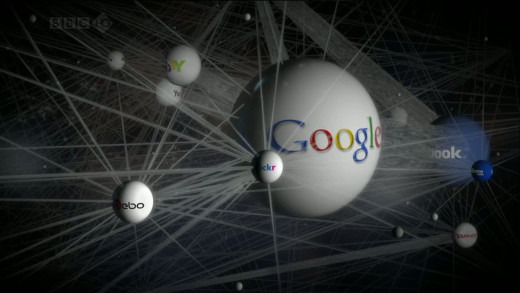
20 years on from the invention of the World Wide Web, The Virtual Revolution explores how the Internet is reshaping almost every aspect of our lives. But what is really going on behind this reshaping? The inventor of the Web, Tim Berners-Lee, believed his invention would remain an open frontier that nobody could own, and that it would take power from the few and give it to the many. So how do these utopian claims stand up to today?
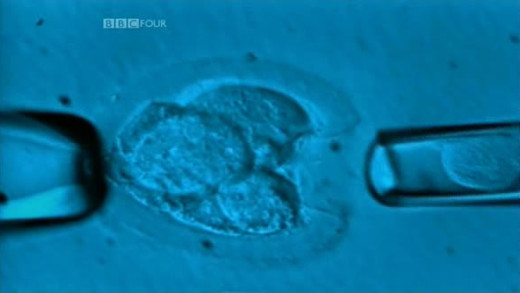 58:38
58:38The Biotech Revolution is largely an exploration by scientists working in genetics and biotechnology that repeatedly promise "unprecedented health benefits and longevity for all," amongst other things, to rationalise their work in the so-called "biotechnology revolution." But in reality, isn't this "revolution" simply just more of the same control imperative of science and this culture's technology, essentially ending in the prospect of a monoculture of genetically modified people? Will such control foster into globalisation a history of inclusion and harmony? Or, will we simply end up in an extension of the current order, albeit one that is further divided, this time by genetic apartheid?
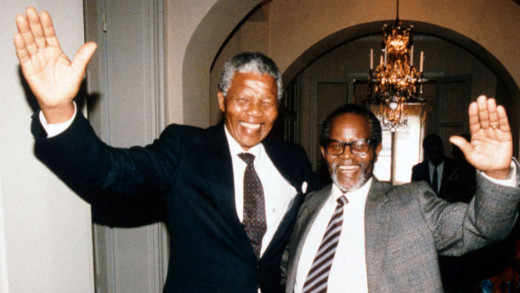
Have You Heard From Johannesburg? is series chronicling a history of the global anti-apartheid movement that opposed South Africa's entrenched apartheid regime. The movement encompassed many methods, including mass action, underground organising, armed struggle, and international mobilisation. This series focuses on the last category: the movement to mobilise worldwide citizen action to isolate the apartheid regime. Inspired by the courage and suffering of South Africa's people as they fought back against the violence and oppression of racism, foreign solidarity groups, in cooperation with exiled South Africans, took up the anti-apartheid cause. Working against the odds, in a climate of apathy or even support for the governments of Verwoerd, Vorster and Botha, campaigners challenged their governments and powerful corporations in the West to face up to the immorality of their collaboration with apartheid, revealing that the battle was more than just political. It was economic, cultural, moral, and spiritual. The combined stories have a scope that is epic in both space and time, spanning most of the globe over half a century. Beginning with the very first session of the United Nations, and ending in 1990--when, after 27 years in prison, Nelson Mandela, the best known leader of the African National Congress, toured the world, a free man.
 45:43
45:43My Sex Robot
Meet Roxxxy, the world's first "sex" robot, and the strange men who've been yearning for "her" as an obedient android "sex partner." Roxxxy's inventor, Doug, is working on finely tuning the robot to be the perfect android sexual "companion" and has a queue of men eagerly awaiting a one night stand with it to test the technology of their fantasies. But how did this come about? My Sex Robot follows the lives of three men in attempt to find out. Delosian remembers from the age of 13 watching Bionic Woman and Six Million Dollar Man and it blew his mind. What he saw triggered his view of an ideal woman. Kaiso speaks of a similar experience sexualising mannequins from department stores. But for Edward, robot sex as already arrived. He has found it by converting his real-life girlfriend into a robot simulation. All these men speak about the power, control, predictability, and obedience that sex robots bring, as opposed to relationships with real human beings. As a result, My Sex Robot presents a startling reality of emerging technologies with already-existing myriad sociological and psychological implications.