 52:34
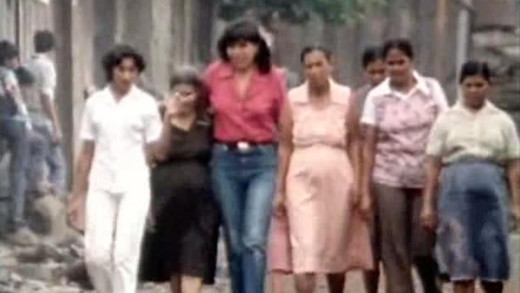
52:34In 1979, the people of Nicaragua successfully put an end to decades of the corrupt Somoza dictatorship whose family had been in power for more than 40 years, put there by the United States marines. Four years later, this film travels to Nicaragua to question: How can a country survive when its jungle borders hold 4000 hostile troops?
 41:47
41:47No Logo
In the age of the brand, logos are everywhere. But why do some of the world's best-known brands find themselves at the end of spray paint cans and the targets of anti-corporate campaigns? No Logo, based on the best-selling book by Canadian journalist and activist Naomi Klein, reveals the reasons behind the backlash against the increasing economic and cultural reach of multinational companies. Analysing how brands like Nike, The Gap, and Tommy Hilfiger became revered symbols worldwide, Klein argues that globalisation is a process whereby corporations discovered that profits lay not in making products (outsourced to low-wage workers in developing countries), but in creating branded identities people adopt in their lifestyles. Using hundreds of media examples, No Logo shows how the commercial takeover of public space, the restriction of 'choice', and replacement of real jobs with temporary work -- the dynamics of corporate globalisation -- impact everyone, everywhere...
 11:23
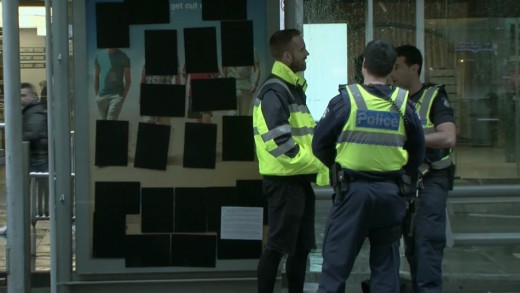
11:23No Measure of Health profiles Kyle Magee, an anti-advertising activist from Melbourne, Australia, who for the past 10 years has been going out into public spaces and covering over for-profit advertising in various ways. The film is a snapshot of his latest approach, which is to black-out advertising panels in protest of the way the media system, which is funded by advertising, is dominated by for-profit interests that have taken over public spaces and discourse. Kyle's view is that real democracy requires a democratic media system, not one funded and controlled by the rich. As this film follows Kyle on a regular day of action, he reflects on fatherhood, democracy, what drives the protest, and his struggle with depression, as we learn that "it is no measure of health to be well adjusted to a profoundly sick society."
 31:47
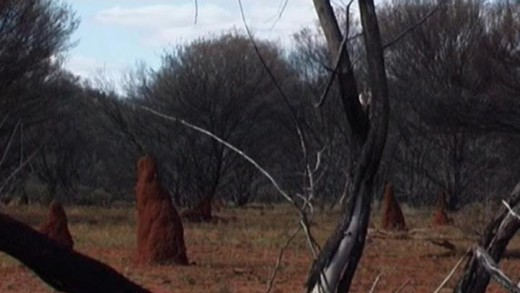
31:47In July 2005, the Australian government announced its plan to open a radioactive waste-dump facility in one of three Department of Defence sites in the Northern Territory of Australia. With widespread community resistance by the indigenous people of the territory, No Where Here in the Middle documents the ongoing story of resistance to the dump and the fight to be free of toxins, poison, and a brutal occupation.
 14:29
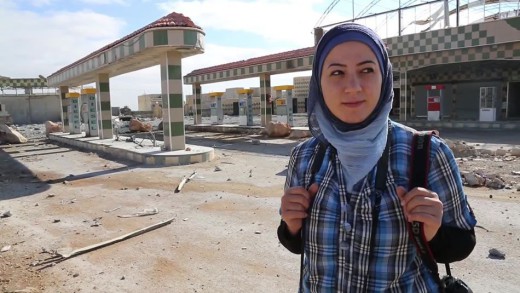
14:29Not Anymore: A Story of Revolution is a short film about the Syrian struggle for freedom as experienced by a 32 year old rebel commander, Mowya; and a 24 year old female journalist, Nour; in Aleppo, Syria. The film shows why Syrians are fighting for their freedom, told through the emotional words of two powerful characters whose lives have been torn apart by war.
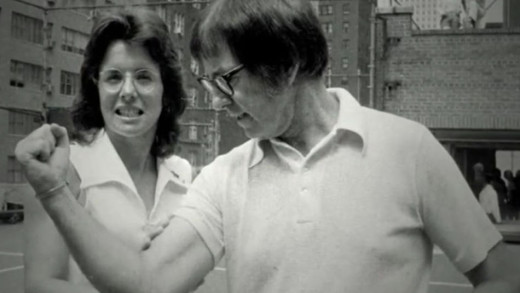 1:01:15
We've been told again and again that sports and politics don't mix, that games are just games and athletes should just "shut up and play." But Not Just a Game argues that far from providing merely escapist entertainment, American sports have long been at the centre of some of the major political debates and struggles of our time. By tracing the good, the bad, and the ugly of American sports culture, Not Just a Game shows how American sports have glamorised militarism, racism, sexism, and homophobia; but also traces a largely forgotten history of rebel athletes who stood up to power and fought for social justice beyond the field of play.
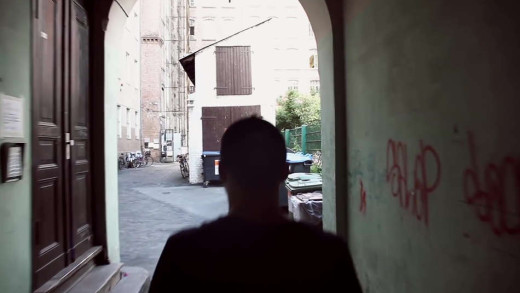 1:25:49
Nothing to Hide questions the growing surveillance state and its acceptance by the general public through the thought-terminating cliché, "If you've got nothing to hide, you've got nothing to fear" argument. What is shown is that this logic is incredibly complacent and dangerous, even just from a historical perspective, considering authoritarian regimes, past and present. Nothing to Hide sets out to turn this acquiescence around, by weaving together expert commentary through real-life examples. A person agrees to be tracked as part of a small experiment, to show a small insight into the sorts of data trails that are revealed throughout our every-day lives. What is extrapolated from there is the incredible power and insight into our lives that these technologies provide. Insights which corporations and governments alike use for social control and profiling. What kind of society is being perpetuated for ourselves and future generations?
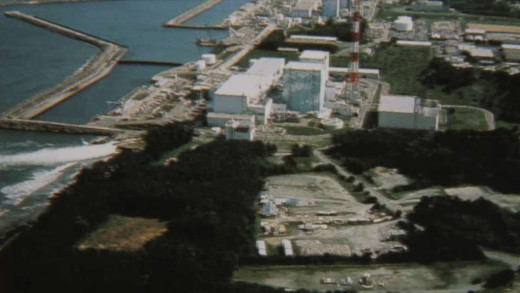 1:36:21
On 11th March 2011, a huge tsunami, triggered by an 8.9 magnitude earthquake, hits Japan. It cripples the Fukushima Daiichi nuclear power plant, releasing radiation, and turning the residents of Futaba into nuclear refugees. The devastation experienced by the town--dead livestock, crops abandoned, homes destroyed--was infinitely worse than anything reported by the newspapers. A year later, many refugees are still unable to return to homes that will be contaminated for many hundreds of years. The irony of this disaster occurring in a nation that experienced two nuclear bombs is not lost on the victims who poignantly question their responsibility for striking a Faustian bargain with nuclear power. Nuclear Nation examines the tragedy of Fukushima, and also whether it could one day be replicated on a grand scale.
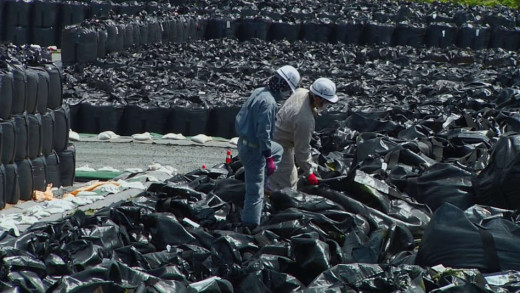 1:29:40
Nuclear Nation II is Atsushi Funahashi's sequel, documenting the consequences of the March 2011 nuclear disaster at the Fukushima Daiichi Nuclear Power Plant in Ōkuma, Japan. In this follow-up, we learn that the former mayor--previously a fervent advocate of nuclear energy and now a passionate fighter for the victims of the catastrophe--has now been replaced by someone younger. The single-minded cattle breeder also makes another appearance, originally having resisted the government's orders to evacuate the disaster zone and kill his livestock. Today, a look at his animals lays bare the consequences of radioactive contamination: they all have ulcers and open wounds. It wasn't until late 2014 that the final people left the school building, but they're unlikely ever to be able to return to their homes. The epicentre of the catastrophe has been declared a toxic waste disposal site. The inhabitants of Futaba, to whom nuclear energy once brought affluence, are now paying the high price for it.
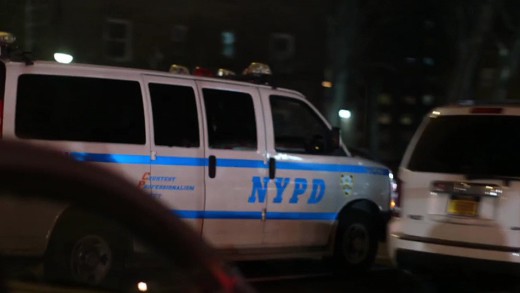 43:03
43:03The setting is in the current and ongoing troubling police culture of violence, profiling and racism. Even a former NYPD officer now breaks ranks to say that the force aggressively targets poor and minority communities in order to meet secret and illegal arrest quotas. The result is a level of systemic harassment and brutality that could be hard to demonstrate, if not for growing groups of Cop Watchers—everyday citizens wielding cameras, that routinely record and publish troves of evidence documenting all kinds of patterns of police brutality and misconduct. This film follows some of the people who are doing this work, and clearly the police don't like it. They push back hard. Cop Watchers hence face long prison sentences and trumped up charges for simply recording the police—something that is not itself a crime. In an age of intense corruption of public institutions, this film lays out abuses of power on a frightening scale, showing just how urgent serious action is required if a free society is said to continue to exist.
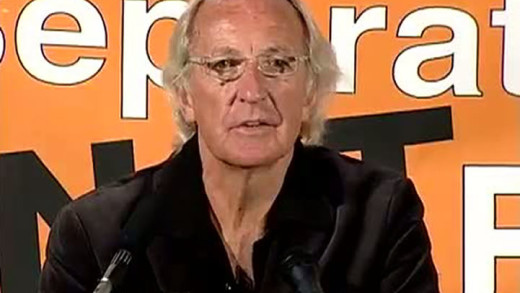 31:19
31:19Since 1945, by deed and by example, the US has overthrown 50 governments, including democracies, crushed some 30 liberation movements and supported tyrannies from Egypt to Guatemala. Bombing and war is as American as apple pie. Obama, having stacked his government with warmongers, Wall Street cronies and polluters from the Bush and Clinton eras, the 45th president is merely upholding tradition...
 51:47
51:47Obey
Obey is a video essay based on the book "Death of the Liberal Class" by author and journalist Chris Hedges. The film charts the rise of corporatocracy and examines the trending possible futures of obedience in a world of unfettered capitalism, globalisation, staggering inequality and environmental crisis -- posing the question, do we resist or obey?
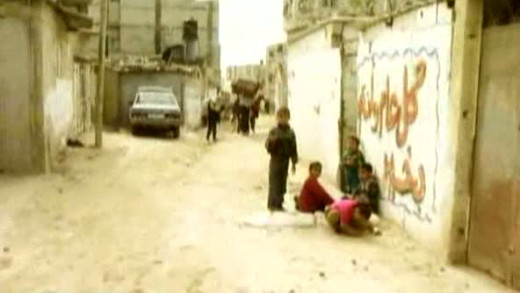 1:30:02
Occupation 101: Voice of the Silenced Majority details life in the West Bank and Gaza Strip under Israeli military occupation. Examining events from the rise of Zionism to the Second Intifada and Israel's unilateral disengagement plan, as well as the role of the United States in the occuption, this film gives voice to many American and Israeli scholars, religious leaders, humanitarian workers, and NGO representatives—more than half of whom are Jewish—who are critical of the injustices and human rights abuses stemming from Israeli policy in the West Bank, East Jerusalem, and Gaza.
 6:16
6:16Oh Dearism
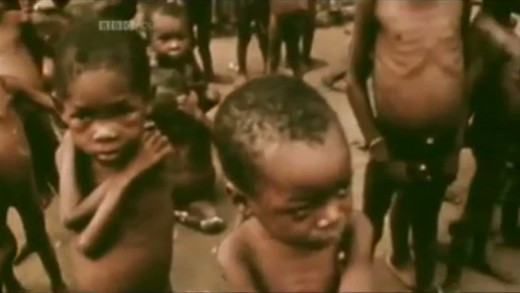
As the mainstream media attempts to create a simple narrative from hugely complex events, much is obviously lost in the translation—most often purposefully. This short film attempts to contrast the character of this narrative in the 1990s, where events were almost universally portrayed as 'the little guy versus the big guy' to the post Rwanda narrative of 'scattered terrible things happening everywhere, Oh Dear.' It is not that we can't actually do anything about these events, it is only that mainstream media presents these events within a framework that makes it seem that way and that in itself is a very powerful way to control society.
 5:08
5:08Oh Dearism II
A look back on the news events from 2014 reveals a confusing, muddled mess. Things are increasingly chaotic, along with the reporting of the events in the culture of 24-7 rolling news, sound-byte feeds and the Internet. The result, as we see, is not a coherent public understanding of these complex events, but more a profound mass-confusion, with discourse destroyed, which in-turn broods disengagement from the world and further atomises an already divided-and-conquered public. It is this response that is a powerful form of social control, and is by design...
 51:47
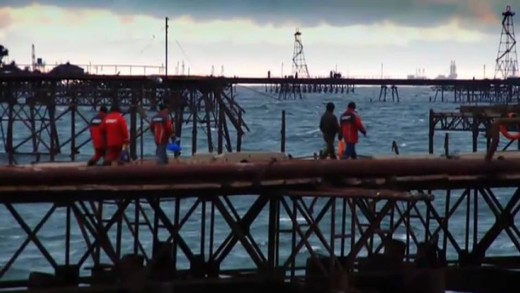
51:47Oil Rocks--otherwise known as Neft Daşları--is one of the first and largest offshore oil-platforms ever built. The location is a vast industrial city in the middle of the Caspian Sea, ordered by the Stalin regime in 1949. 60 years on, Oil Rocks is still operational and the first western film crew in its history receives access. The result is this film which documents 200 kilometers of bridges, thousands of oil workers, hundreds of platforms, up to nine-story buildings, a park and a sports field--nothing less then an oil-rig 'Atlantis.' By combining archive footage from the Soviet era and interviews with workers, this film tells the story of the oil fields and the extremely hard work by those involved to this day.
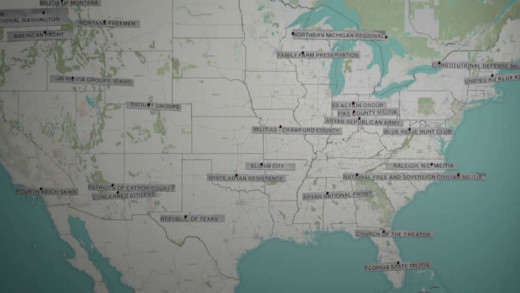
On April 19, 1995, Timothy McVeigh, a former soldier deeply influenced by the literature and ideas of the radical right, parked a truck with a five-ton fertiliser bomb in front of the Alfred P. Murrah Federal building in Oklahoma City. Moments later, 168 people were killed and 675 were injured in the blast. Oklahoma City traces the events that led McVeigh to that day from the perspective of the survivors, first-responders, investigators, and journalists who covered the events. The film provides an exploration of the convergence of various conservative religious movements and white supremacist militias that rose to prominence in the early 1990s, and were catalysed by the actions of government during that time.
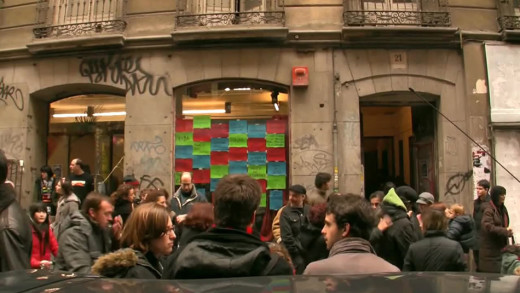 1:18:31
In the wake of giant speculative property bubbles and high unemployment, ordinary people are occupying empty buildings in urban areas and turning them into free, open and public space. Communities thrive alongside music and art collectives, concerts, food co-operatives and community gardens. One also finds construction workshops, child care, language classes, political talks and even legal advice on social and economic rights. Okupación focuses in on such community spaces in Madrid, Spain; and follows the fight to keep such spaces alive and open.
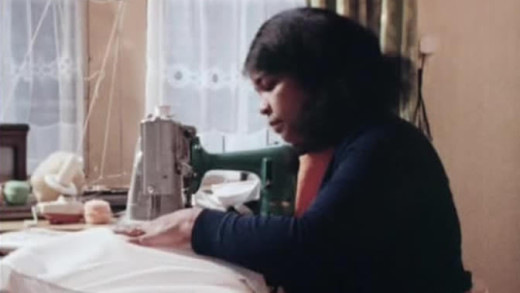 27:02
27:02One British Family portrays the racial minefield of British society through the eyes of a black family. The film is set in Newcastle during 1974, revealing the multifaceted aspects of internalised racism that still exists today...
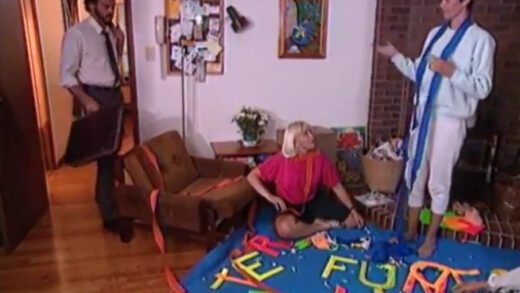 14:47
14:47The combination of detailed descriptions by abused women and great dramatisations helps both male and female viewers to understand the realities of spousal abuse, what motivates this kind of activity, and reveals the myths that surround it. Low self-esteem, rather than straight anger, is the central causal issue and the ability to quit habitual spousal abuse is as problematic as recovery from any other addiction.
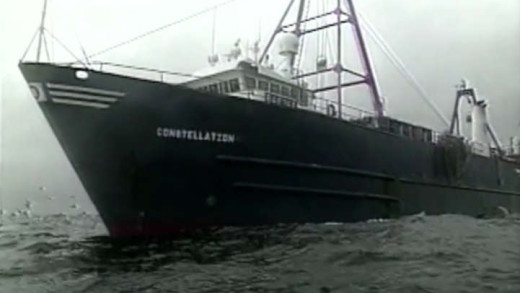 56:41
56:41One More Dead Fish reveals how destructive industrial fishing practices have decimated the Grand Banks of the North Atlantic Ocean, once an abundant area of food. The film also tells the dramatic story of how local hook-and-line fishermen are battling huge commercial fishing practices in order to survive in a globalised fishing industry. In interviews with local fishermen, government officials, biologists, and industry CEO's, the film explores regulatory, legislative, and environmental issues. The film grounds the viewer in a clear historical context as it explains one of the world's great environmental disasters. In examining the twisted language of the multinational fishing industry, One More Dead Fish questions why we don't hear more about the true environmental costs of industrial fishing practices, partly the result of globalisation.
 42:26
42:26Mega-corporations like Apple, Amazon, Google and Facebook are incredibly powerful, and their growth shows no signs of slowing down. The pandemic has only them more influential. Experts have long watched as they breach antitrust laws, while also receiving special treatment when it comes to paying low wages, avoiding taxes, flouting laws, and even making their own laws through extensive lobbying and buying elections. The line between the state and mega-corporations is growing even foggier. Some states believe there is simply no way around these giants. Corporate power would have us believe that it is here to stay. Market driven surveillance undermines our sovereignty and thus the very foundation of Western democracies. There is a storm brewing both in the United States and Europe. But the corporations are ready for it. Will they continue on this dangerous trajectory, or is there some chance we can still rein them in?
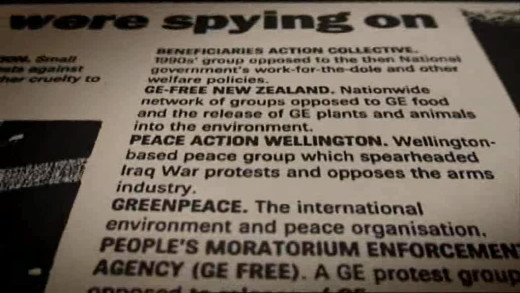 1:50:34
On October 15th 2007, a series of intense police raids occurred around the small village of Ruatoki in New Zealand. Operation 8, as it was called, was the result of 18 months of invasive surveillance of Maori sovereignty and peace activists accused of attending 'terrorist training camps' in the Urewera ranges—the homeland of the indigenous Tūhoe people. This film examines why and how the raids took place. Did the "War on Terror" become a global witch-hunt of political dissenters reaching even to the South Pacific?
 57:27
57:27The Pentagon has a long tradition of cooperation with Hollywood. Movie studios can save millions of dollars and achieve spectacular success by securing use of military stock footage, military equipment, weapons and manpower. But the catch is that Hollywood must alter scripts, whitewash history, censor and present their films to display war and the military in a favourable way. As a consequence, mainstream commercial films become the best and most powerful, widespread propaganda...
 50:53
50:53How does one sell a war? This was a question that weighed heavy on the minds of those in the United States government long before the invasion even started. Operation Saddam: America’s Propaganda Battle takes a look at the marketing of war -– a cocktail of distortion, lies and forgeries -– as shown by former secret service agent Ray McGovern, American investigative journalist Seymour Hersh and best-selling author John MacArthur, presenting the individual stages of the propaganda battle, by which American, British and other governments sought to justify the second invasion of Iraq...
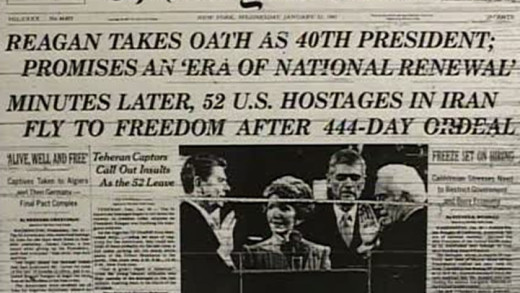 1:43:40
Could a media system, controlled by a few global corporations with the ability to overwhelm all competing voices, be able to turn lies into truth? This documentary examines the relationship between the media, corporations, and government. In a country where the top 1% control 90% of the wealth, the film argues that the media system is nothing but a subsidiary of the corporate world. Have we entered an Orwellian world of doublespeak where outright lies can pass for the truth?
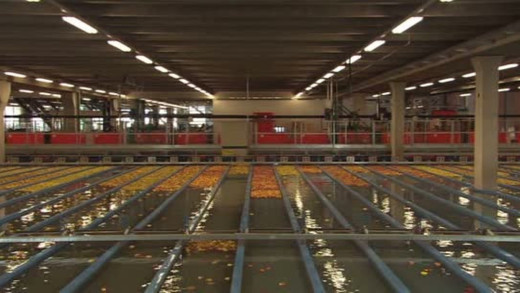 1:31:58
Welcome to the world of industrial food production and high-tech factory farming. Set to the pace of conveyor belts, immense machines, surreal landscapes and bizarre sounds, Our Daily Bread takes an inside look at the industrial environment that mass-produces today's food. Made entirely of visuals, without commentary, this film provides a raw view of the strange realities of industrial food production, which isn't always easy to digest...
 1:13:25
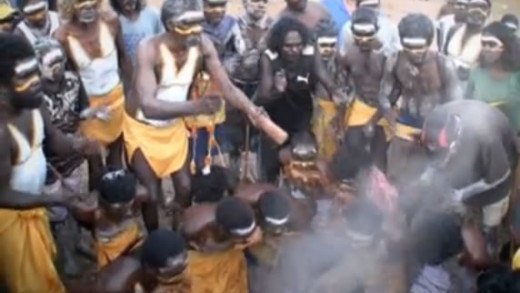
In the name of "protecting children," the Australian Government's so-called "emergency intervention" into Aboriginal communities in the remote Northern Territory, has taken away all existing Aboriginal land rights, suspended racial discrimination laws and placed over 70 communities under compulsory government control with subsequent measures of course having very little to do with "protecting children." Instead, the outcome has been the disempowerment of traditional land owners, the further theft of Aboriginal land, the theft of resources, with the intent being to forcibly assimilate Aboriginal culture.