 53:13
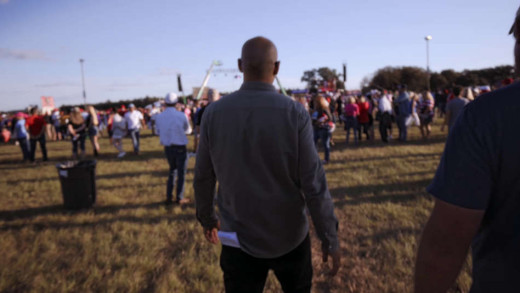
53:13In the United States, a year after Joe Biden's inauguration, around two-thirds of Republican voters believe his election was illegitimate, and the idea that the 2020 election was stolen from Donald Trump is now a defining issue of the Republican Party. Yet the story of how lies about election fraud made their way to the center of American politics has not been fully told. Plot to Overturn the Election traces the hidden sources of misinformation about the 2020 election, demonstrating how a handful of people have had an outsized impact on the current crisis of democratic legitimacy.
 44:12
44:12Split Screen tells the story of January 6, 2021, where an estimated 2,000 people stormed the United States Capitol building, attempting to stop the certification of votes from the 2020 election. What started as a protest became violent chaos, killing several people and injuring over 140. The event was the culmination of years of angst, anger, violence, and confusion, that began stirring years or even decades earlier in the thick of growing polarisation in the United States. Certain media outlets and social media influencers spread content fuelling division and angst in the months leading up to and following the election. Allegations of voter fraud--rejected by state and federal officials in both parties, as well then-Attorney General William Barr--were amplified and emboldened by conservative media, ultimately igniting the rage and frustration of an undeniable portion of people in the United States who get their news and information through big tech, and the slurry of social media echo-chambers.
 1:31:38
Skandal!
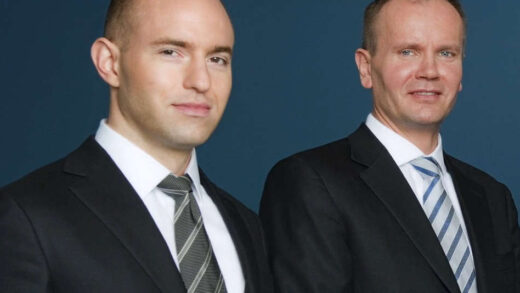
Skandal! Bringing Down Wirecard is a thriller documentary of one of the largest world-wide financial crimes. It follows journalist Dan McCrum, who reveals the inside story of a 6-year investigation into the German corporation Wirecard and the dirty tricks that were deployed against him and the Financial Times, as they battle to expose a multi-billion euro fraud at the centre of one of Germany's most successful online payment corporations of the time. The film traverses the colourful characters of the scam, such as the mafia, porn barons, gambling outfits, Libyan and Russian intelligence agencies, corporate spies, private investigators, hired thugs and surveillance operatives, demanding answers of the chief executive officer, Markus Braun, awaiting trial in Munich, and its mysterious chief operating officer, Jan Marsalek, who vanishes.
 42:26
42:26Mega-corporations like Apple, Amazon, Google and Facebook are incredibly powerful, and their growth shows no signs of slowing down. The pandemic has only them more influential. Experts have long watched as they breach antitrust laws, while also receiving special treatment when it comes to paying low wages, avoiding taxes, flouting laws, and even making their own laws through extensive lobbying and buying elections. The line between the state and mega-corporations is growing even foggier. Some states believe there is simply no way around these giants. Corporate power would have us believe that it is here to stay. Market driven surveillance undermines our sovereignty and thus the very foundation of Western democracies. There is a storm brewing both in the United States and Europe. But the corporations are ready for it. Will they continue on this dangerous trajectory, or is there some chance we can still rein them in?
 1:21:54
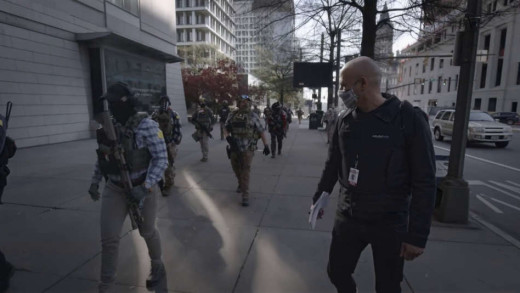
For several years, PBS Frontline has collaborated with ProPublica to investigate the rise of extremism in the United States. In the aftermath of the January 6th riot at the Capitol building, Frontline, ProPublica and Berkeley Journalism's Investigative Reporting Program teamed up to examine how far-right extremist groups had evolved in the wake of the deadly 2017 Charlottesville rally. American Insurrection is a report that draws on this extensive background to examine the latest developments and pose questions about where these extremist movements may be headed.
 54:31
54:31The Power of the Fed investigates how the United States central bank's actions have played out over the years on Wall Street versus Main Street, since the last financial crash of 2008. The film traces how the experiment the Fed began in 2008 has been dramatically ratcheting up, peaking with the COVID-19 crisis in 2020. But, of course, rather than help correct from the huge corruption and financial abstractions that caused the 2008 crash, the fed has doubled down on its policies of "quantitative easing" which have gone on to help widen the greatest inequality of wealth in history, pushing financial products even further removed from the economy, driving inflation, automation, and worsening the impending cycles of boom and bust. The rise of speculative cryptocurrencies and non-fungible tokens (NFTs) has only fueled the mania, as economic volatility increases.
 52:34
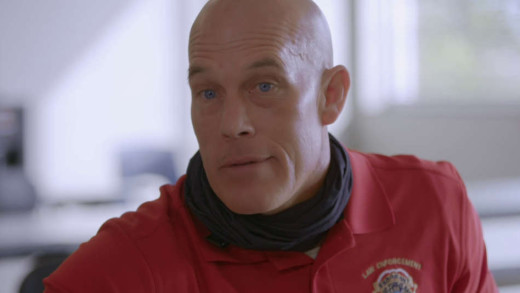
52:34Shots Fired
Following the police shootings of Bernardo Palacios Carbajal and George Floyd in the United States, Shots Fired investigates the use of deadly force by police in Utah, with local journalism partner The Salt Lake Tribune. The filmmakers are given rare behind the scenes access to police training, and in the police's bid to smooth public perceptions, access to discuss tactics and accountability, as well as racial disparities in the way force is used. The film pieces together data and videos from police 'use of force' cases, and asks the hard questions about police culture in the United States in general.
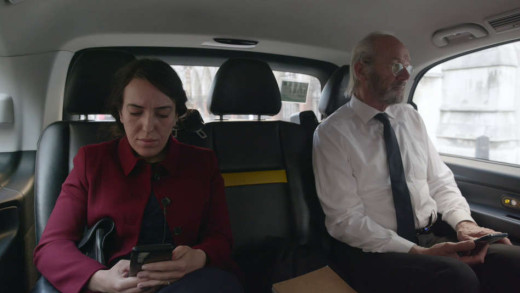
Ithaka
Ithaka depicts the incarceration of WikiLeaks founder Julian Assange through the experience of his wife Stella Assange and his father John Shipton. Julian Assange faces a 175-year sentence if extradited to the United States. His family members are confronting the prospect of losing Julian forever to the abyss of the justice system. This David-and-Goliath struggle is personal, and, with Julian's health declining in a British maximum-security prison, the clock is ticking. Through this behind-the-scenes view of the extradition hearing, the films grasp the personal cost paid by Julian and the true cost of truth.
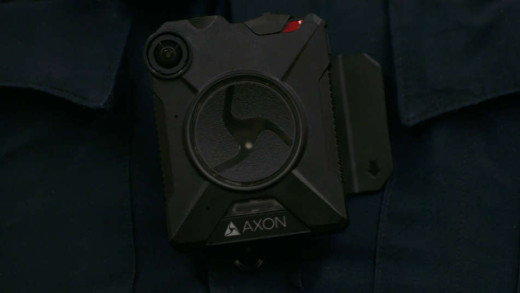 1:48:34
All Light, Everywhere is an arthouse film that traverses the biases of how we see things, told through the use of police body-worn cameras from the Axon corporation. As such surveillance technologies become a fixture in everyday life, the film interrogates the myth of an objective point of view, probing the biases inherent in both human perception, the lens, and the culture driving the surveillance machines--asking what it means to look and see, but also what is not viewed, and the power imbalance of whom watches whom. Through provocative vignettes, the film provides space to dismantle the perpetual insistence that if everything was recorded and processed by purportedly "neutral" sources, then both criminal activity and authoritarian malfeasance would be reduced.
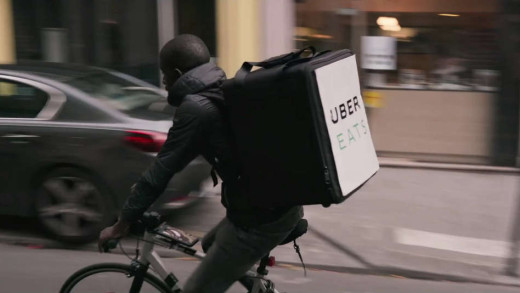 1:28:02
Millions of people around the world are finding work by-the-job online. The "gig economy" is worth more than $5 trillion worldwide, and seemingly growing. But who are these workers? Seduced by the promise of independence, and control over their working hours and income, people around the world that are lured into the gig economy now face the harsh reality of it algorithmically-driven market place: dangerous working conditions, instability, and the precariousness of their work that can stop overnight in the case of deactivation or a bad review. Through committed characters, The Gig is Up shows that the so-called 'freedom' that is espoused by this technological economy is only an illusion.
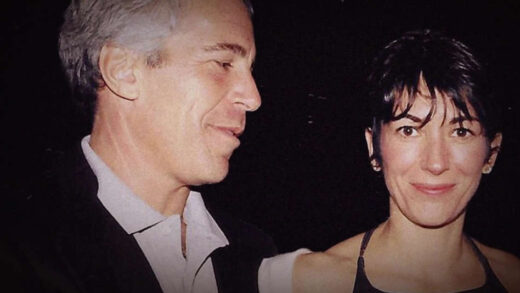
Epstein's Shadow is a short series that investigates the powerful, connected, and mysterious Ghislaine Maxwell, who was once the heiress to the media proprietor Robert Maxwell's fortune, but whose life takes a sordid turn after when her father dies and she meets Jeffrey Epstein, the serial sex offender. The series reveal a complicated story of power, sex, money, and corruption, which leads to Ghislaine Maxwell's arrest, and mounds of destruction in her wake, and that of Epstein and his co-conspirators.

The Long War provides a historical context to how the United States and Israel have escalated a long conflict in the Middle East, through targeted assassinations, bombings, covert operations, propaganda campaigns, and arming and funding various terrorist organisations that have switched allegiances since the Cold War, or have transformed into other political alliances throughout the United States' so-called War on Terror.
 1:50:38
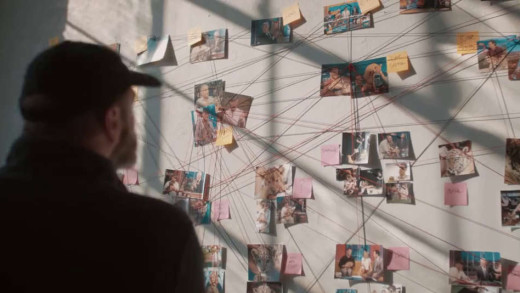
The Conservation Game follows the story of Tim Harrison, an Ohio cop who stumbles upon a bombshell discovery while undercover at an exotic animal auction. He starts to suspect that America's top television celebrity conservationists may be secretly connected to the exotic pet trade. As his investigation leads deeper into the secret world of the big cat trade, Tim and his team take their fight to the halls of Congress, pressing lawmakers to pass federal legislation that would end the private breeding and exploitation of these endangered animals. But when opposition comes from an unexpected source, Tim is forced to face the demons of his own past, while wrestling with the consequences of exposing his childhood hero.
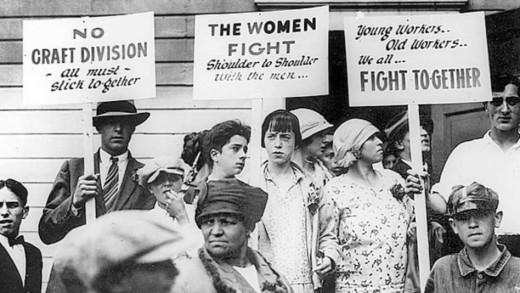
The War at Home: The Untold History of Class War in the United States is a series that traverses the history of the labour movement and state repression in the United States. The series looks at history through the lens of the working class, from the Haymarket massacre in Chicago in 1886 to the Jim Crow spread in Louisiana, to the Triangle Shirtwaist tragedy of 1911, to the violent strikes and police raids of the Great Depression, and beyond. The series makes the connection between the purging of radicals from unions and the decline of union power in the 1920s, towards the 1960s and beyond.

Misogyny is rampant in this culture, and corporations capitalise on making women hate their bodies. Indeed all aspects of womanhood are commodified, hypersexualised, and squeezed into gender stereotypes. Being female comes at a cost. So it's no wonder that young people growing up can feel horrible about themselves and their bodies, and further feel confused about what it means to be a woman in today's world. Into this perfect storm steps queer theory, an ideology born in the 1990s, that tells people that all the confusing feelings they may experience about the world they live in can be fixed not by changing the world, but by changing themselves. The past decade has seen a steep rise in the number of young girls seeking to alter their bodies by undergoing life threatening, irreversible procedures. Dysphoric is a series that explores this concept of gender transition, told through the voices of clinicians, psychiatrists, sociologists, feminists, academics, detransitioners, and concerned citizens and parents. The series also discusses the permanent medical side-effects of hormones and surgeries, the propaganda of corporations that glorify thousands of stereotypical gender presentations coalesced as fashion, the surge in pronoun policing, censorship and the curtailment of speech, language hijacking that calls women "menstruators," and the many other hurdles women face while trying to question this modern-day misogyny.
 1:16:48
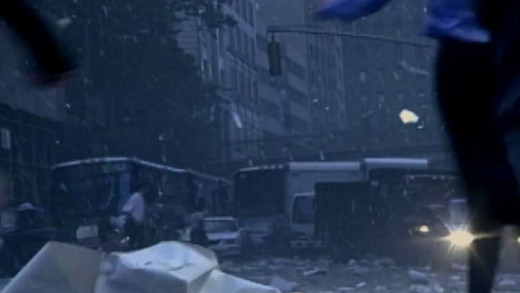
9/11: I Was There presents an portrayal of the attack on New York on 11th September 2001, from the perspective of several ordinary people who chose to pick up their video cameras and descend into the chaos that was happening around them on that day. The film is a collage of their personal video diaries, that document the attacks as they unfold, and the aftermath.
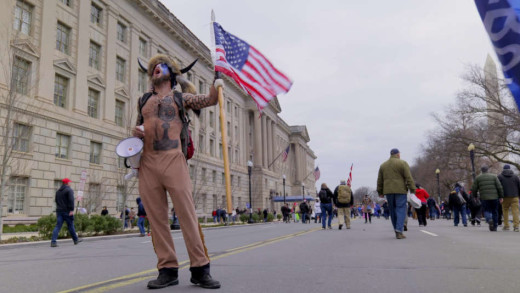
Q: Into the Storm is a series that examines the far-right conspiracy theory QAnon that alleges there is a secret cabal of satan-worshipping, cannibalistic paedophiles running a global child sex-trafficking ring and plotting against former United States president Donald Trump. Spanning three years and traversing the globe, the series investigates the movement as it grows in scope and political significance, chronicling its evolution in real time, revealing how “Q” used information warfare to game the internet, hijack politics, and manipulate people's thinking. Filmmaker Cullen Hoback gains unprecedented access to key players in the spectacle, including Jim and Ron Watkins, the father/son team behind the 8chan website that “Q” calls home, and explores their rivalry with Fredrick Brennan, the original creator of the website. The series profiles “Q-tubers,” Q debunkers, political operatives, and journalists who have been closely following the movement since it began in 2017, showing connections between QAnon, President Trump, and political and ex-military operatives, as well as other various right-wing movements associated with 8chan, including "Gamergate" and "Pizzagate" that contextualises QAnon’s influence on culture and politics in the United States.
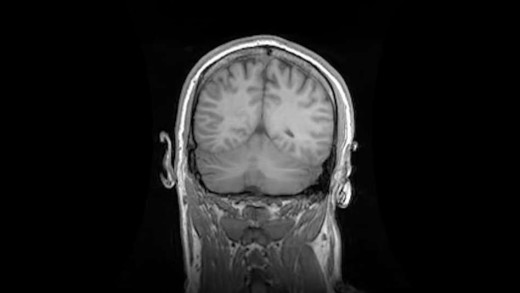
Can't Get You Out of My Head: An Emotional History of the Modern World is a six-part series that explores how modern society has arrived to the strange place it is today. The series traverses themes of love, power, money, corruption, the ghosts of empire, the history of China, opium and opioids, the strange roots of modern conspiracy theories, and the history of Artificial Intelligence and surveillance. The series deals with the rise of individualism and populism throughout history, and the failures of a wide range of resistance movements throughout time and various countries, pointing to how revolution has been subsumed in various ways by spectacle and culture, because of the way power has been forgotten or given away.
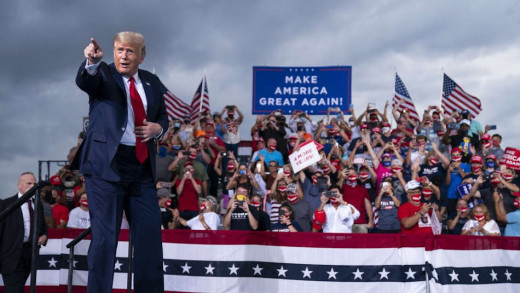
In the United States and elsewhere, both sides of politics have revelled in spectacle and image for many decades. But when Donald Trump, the billionaire reality-television host became president, a new escalation of image and spectacle engulfed dominant culture. The Trump Show is a series that explores the beguiling spectacle of the Trump years, through interviews with former White House staffers, media managers, campaign directors, and other personalities that were close to Trump during his presidency. The series documents how image has now replaced substance in politics in a totalising way, and how false constructions seek to pave over reality through a culture that is deeply rooted in hyper-individualism, fierce and corrupt competition, ideological dogmatism, and post-modern delusions.
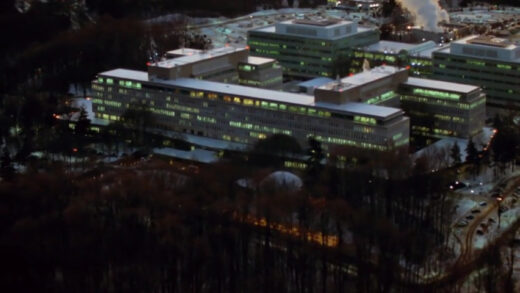 1:28:22
Follows former top officials and elite operatives inside the CIA as they share accounts of their efforts to stop Osama bin Laden and the catastrophic attack they knew was coming which ended up being September 11th 2001.
 52:49
52:49The Codebreaker charts the story of the ground-breaking cryptoanalyst Elizebeth Smith Friedman, whose work in decoding the messages of organised crime in the United States, bringing down Al Capone and breaking up a Nazi spy ring in South America, lays the foundation for the National Security Agency (NSA). Her work also during World War II was instrumental to ending the war and was classified work and completely unknown until recently.
 1:28:38
Brazen Hussies documents how a daring and diverse group of women joined forces in Australia to create profound social change, contributing to one of the greatest social movements of the 20th Century. The film weaves archival footage, personal photographs, memorabilia, and lively accounts from the women who reignited the feminist movement in Australia, at times at great personal cost, to show how women began organising around issues such as equal pay, reproductive rights, affordable childcare, and the prevention of family violence and rape. As the story unfolds, these issues go from being dismissed as the outrageous demands of a few "brazen hussies" to becoming crucial elements of mainstream politics. The film documents how ASIO spied on the movement, the pushback from male-dominated media, and the impact of internal struggles, such as the inclusion of lesbians and the relevance of the movement to Aboriginal women. 50 years on, the work of this movement paved the way for where feminism finds itself today. And while the landscape, breadth and diversity of feminism is vastly different, without this movement and the changes it achieved, we wouldn’t be where we are now. Recording and celebrating this important history, offers a valuable opportunity to reassess and discuss where we are now as a society, what gains have been made, what is at risk, and where we are headed.
 1:29:27
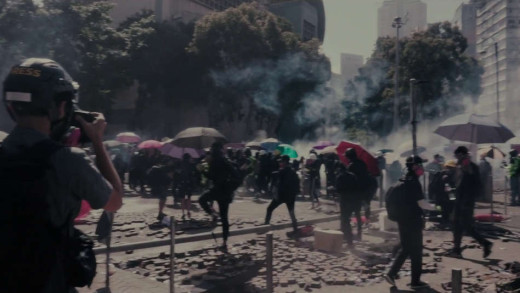
During the 2019–2020 Hong Kong protests, after 6 months of ongoing actions, and with protesters facing escalating stakes from police shootings and other violent repression, students began to fortify a number of the city's major universities and occupy vital roads nearby. This lead to a peak moment in the protest movement--the siege of the Hong Kong Polytechnic University. Protesters gathered at the university to defend their roadblocks, while the police shot tear gas and used water cannons to shower the protesters with water containing blue colouring and chemical irritants. 1,458 canisters of tear gas were fired at protesters, as well as 1,391 rubber bullets, 325 bean bag rounds, and 256 sponge grenades. The city's hospitals were overwhelmed by the number of protesters needing urgent medical attention. Burn with Us documents a first-hand view of the conflict, and its results, in a fly-on-the-wall style.
 53:12
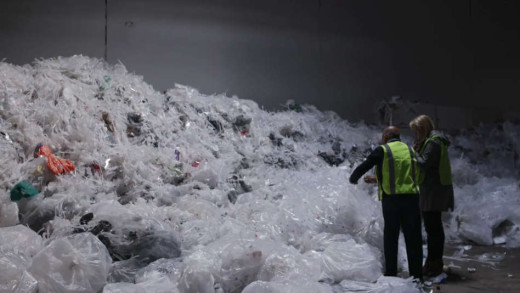
53:12Despite decades of environmental impacts and campaigning for bans and other regulations, the plastic industry continues to expand. From 1990 to 2010 alone, production of plastics more than doubled. Fracking has provided cheap natural gas which is also driving down the cost of making plastic. The United States is now one of the world's largest plastic producers, and industry is investing tens of billions of dollars in new plastic plants. By 2050, it's estimated that global production of plastic will triple. Alongside, the industry has pushed a greenwashing image of recycling to fend off negative public opinion, and sell more plastic. Plastic Wars examines how this has come to be, using industry documents and former insiders, and presents the urgency of the need for change, now more than ever.
 1:34:33
After Truth
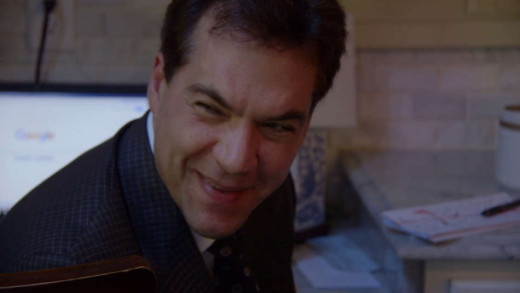
After Truth is about the growing proliferation of modern disinformation, where almost anybody with a computer and social media access can have a powerful platform without oversight, influencing the information experiences of billions of people. The melting pot is catalysed by Facebook, Twitter, Reddit, 4chan, and other websites that spread disinformation to huge audiences with a profit incentive, competing to capture everyone's attention. After Truth asks the question about where all this is heading, by exemplifying events such as Jade Helm, Seth Rich, and Pizzagate, but also profiling some major and minor personalities involved in spreading disinformation, conspiracy theories, fear, and uncertainty. With an empire in collapse, and physical reality being increasingly replaced by popular postmodern theories of "there is only subjective truth," this film not only presents the challenge of returning to what is real, but the task of stopping disinformation from continuing to divide, confuse, distract, and destroy.
 1:25:32
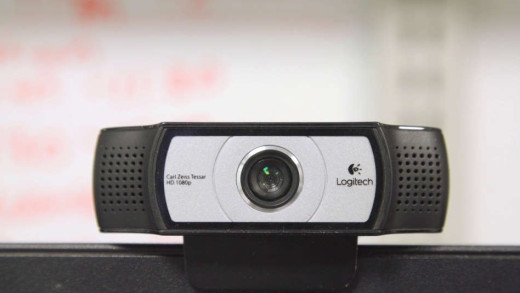
What does it mean when so-called Artificial Intelligence systems increasingly govern all of our civil rights and social interactions? What are the consequences for the people AI systems are biased against? When MIT Media Lab researcher Joy Buolamwini discovers that many facial recognition technologies do not accurately detect dark-skinned faces nor properly detect the faces of women, she delves into an investigation which reveals widespread bias in the algorithms that already drive much of the modern world. As she uncovers, these systems are not neutral, and are already having severe social and political impacts. Coded Bias documents this investigation, and the women who are leading the charge to ensure civil rights are protected from the relentless inertia of technology.
 1:35:29
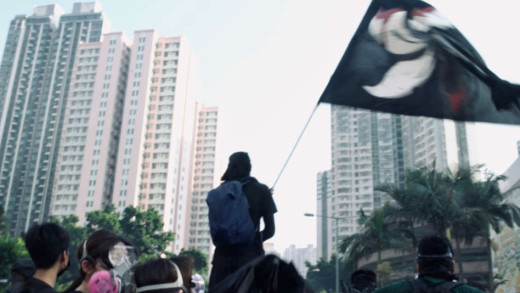
When Hong Kongers took to the streets to protest a controversial extradition bill proposed by China in 2019, it exposed the tensions long brewing in the city. Over two days of conflict, Hong Kong Moments follows a pro-democracy protester, a tea-shop owner, a paramedic, a cab driver, a police officer, and two politicians with conflicting politics as the demonstrations shoehorn the political into the personal. On September 21, 2019, protestors from three districts join forces, resulting in unprecedented violence. Just 10 days later on October 1, the National Day of the People’s Republic of China, previously undecided onlookers show their stripes. Thoughts transform into action in this demonstration of how mercurial and personal Hong Kong's politics have become.
 1:33:21
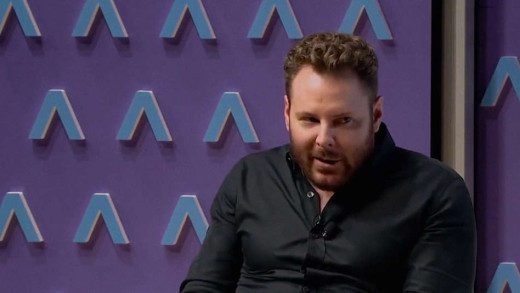
The Social Dilemma brings together former product directors and designers of Facebook, Google, Instagram, Pintrest, Twitter, and so on, to reflect on their creations and face questions about the age of addiction, information manipulation, and algorithmic social control they've ushered in. The creators speak openly about how they themselves took part in this co-optation of society, either naively or with malignant indifference, by designing websites in such a way to influence and manipulate billions of people for corporate interests by using deep psychological and addictive triggers in the human mind. Detailed explanations about how this can play out in the real world are illustrated through dramatisations, which are also expanded upon by experts in psychology, technology, and social studies. The result is a sobering call for emergency damage control, to undo the massive harm that technology companies have unleashed on society unrestrained for the past several decades, at a time of rapid social unravelling.