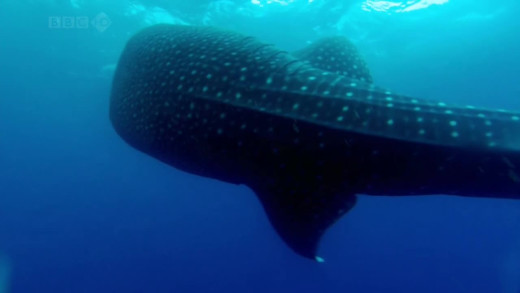
Life
Life is a ten part series that takes a global view of the specialised strategies and behaviour that living things have developed in order to survive. The series illustrates the common features that have contributed to the success of each species, focusing in on specific groups as the series progresses.
 1:44:33
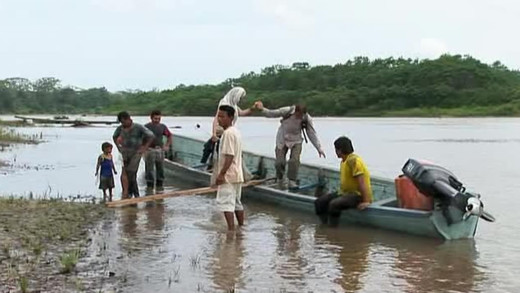
Crude
As one of the largest and most controversial legal cases on the planet, Crude takes a look inside the $27 billion "Amazon Chernobyl" case, viewing the real-life high stakes legal drama set against a backdrop of the environmental movement, globalisation, hackneyed celebrity 'activism', human rights, multinational corporate power and rapidly-disappearing indigenous cultures...
 58:25
58:25Child Sex Trade USA travels through the United States to reveal the workings of a pervasive child sex trade, discovering that it is just as easy to 'buy a child' in the US as it is in Asia. 300,000 American children have been forced in to the sex industry, as of 2009, in the United States alone. This film presents a much needed analysis of the shocking cultural values that surround child abuse, paedophilia, human trafficking and prostitution; asking big questions of how, why, and what to do about it...
 1:18:26
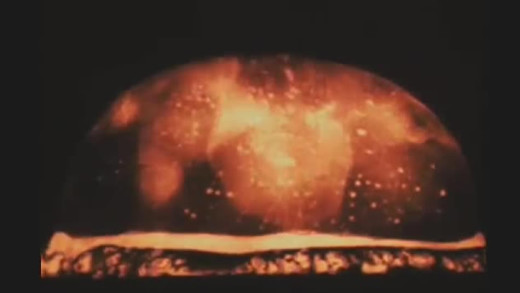
Golden Rule presents a picture of today's political economy interpreted through the framework of the "Investment Theory of political Parties". The theory, first articulated in 1983 by Thomas Ferguson, is largely based on quantitative analysis of activity in the stock market and its relationship to politics--that is to say that "elections are moments when groups of investors coalesce and invest to control the state." The film takes this theory and tests it against developments in the political and social spheres of recent decades, right up to the election of Barack Obama in the United States in 2008...
 1:25:55
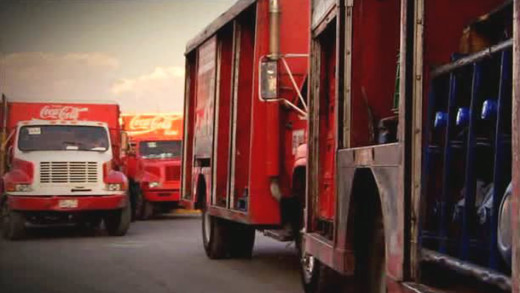
Coca Cola is one of the most visible brands in the world, but there's one part of the operations the corporation doesn't want you to see. Colombia is the trade-union-murder-capital of the world. Since 2002, more than 470 workers' leaders have been brutally killed, usually by paramilitaries hired by private companies intent on crushing the unions. Amongst the top unscrupulous corporate brands is Coca Cola...
 53:45
53:45Red Moon
With humour and refreshing candour, Red Moon provides a fascinating, often ironic, take on the absurd and frequently dangerous cultural stigmas and superstitions surrounding women's menstruation. As educational as it is liberating, the film functions as both a myth-busting overview of the realities of menstruation, and a piercing cultural analysis of the ways in which struggles over meaning and power have played out through history on the terrain of women's bodies.
 13:08
13:08Welcome to the wartime contracting bazaar in Afghanistan. It is a virtual carnival of characters with shady connections—former CIA officials and ex-military officers joining hands with former Taliban and mujahedeen to collect US government funds in the name of the war effort. US military's contractors pay suspected insurgents to protect American supply routes. It is an accepted fact of the military logistics in Afghanistan that the US government funds the very forces American troops are fighting—a deadly irony...
 1:27:51
Bees have been mysteriously disappearing, literally vanishing from their hives. Known as 'Colony Collapse', the phenomenon has brought the commercial food industry to crisis. Commercial honeybee operations pollinate monocrops that make up one out of every three bites of food in the western world. Vanishing Of The Bees follows beekeepers David Hackenberg and Dave Mendes as they strive to keep their bees healthy and fulfil pollination contracts across the United States; examining the alarming disappearance of honeybees and the greater meaning it holds about the relationship between industrial culture and ecology...
 58:32
58:32Over six desperate days in October 1929, the New York Stock Exchange crashed leading to the collapse of three thousand banks, taking people's savings with them. In a matter of days, the United States economy was obliterated. The crash was followed by a devastating worldwide depression that lasted until the Second World War. Finances did not regain their pre-crash values until 1954. This film recounts the story of a financial disaster that we hoped could never happen again, revealing the familiar tune of cheap credit, consumerism, greed, corruption and cronyism in the current-day financial crisis...
Corporations On Trial is a five-part series following just some of the many lawsuits being brought against multinational corporations for war crimes, conspiracy, corruption, assassinations, environmental devastation and payments to terrorists. Such serious charges have forced some of the world's largest companies to hire high-profile defence lawyers to protect public relations in cases often brought by plaintiffs who are barely literate. These five films reveal a growing anxiety about the power and influence of big business, as many multinational corporations have annual revenues greater than some countries' national budgets and indeed increasingly hold governments to ransom by their economic power. Around the world, ordinary people are fighting back and asking how many more times their interests should be sacrificed for corporate greed and shareholder profit...
 1:28:52
American Radical is a film about the life of academic Norman Finkelstein, a son of Holocaust survivors and ardent critic of Israel. Called a lunatic and self-hating Jew by some, and an inspirational figure by others, American Radical also serves to explore the issues at the centre of Palestine and Israel as Finkelstein travels around the world negotiating a voice of realism among impassioned critics and Israeli supporters. Uncompromising, even in the face of a denial of tenure at DePaul University, Finkelstein is revealed as a rare academic figure who puts the pursuit of justice above the security of his career, to expose the brutal reality of the occupation of Palestine.
 1:15:49
Dirty Oil
Dirty Oil looks into the strip-mined regions of Alberta, Canada, where the vast and toxic Tar Sands currently supply the United States with the majority of its oil. Through the eyes of corporate officials, politicians, scientists, doctors, environmentalists and communities directly impacted by the largest industrial project on the planet today, Dirty Oil travels to both sides of Canada to document the irreversible toll the tar sands take, further fuelled by the western world's addiction to oil...
 49:05
49:05The Chicago Sessions explores the ethical implications of the financial crisis during three sessions with a group of law and philosophy students. The grounds of the University of Chicago provide a compelling arena, since it is here that both economist Milton Friedman—staunch promoter of free market capitalism—and Barack Obama, lectured. Examples of crisis related issues discussed during the sessions are: mortgage lending practices, foreclosures, bail outs and CEO pay. The students will test their ideas both on eminent professors and on field experts. The discussion is fueled and illustrated by case stories that the students themselves provide. The cases show how the financial crisis really affects the people of Chicago and in one example shows the consequences of the foreclosures in a neighborhood not far from the university and Barack Obama's home.

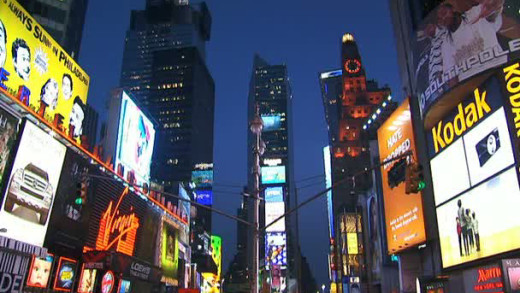
In the 1970s, acid rain and other ecological concerns were at the fore and it was at this time that climate change first became a pressing political issue. But the concern wasn't global warming -- it was the threat of a new ice age. So how did the scientific community manage to get it so very wrong? Uncovered 30 years later, the secret government organisation known as "Jason", produces the first official report on global warming in 1979. Fast forward to the mid 1980s and global warming had already become a serious political issue. However, it is not until the 1990s that the issue turns out to become one of the biggest scientific controversies of the age...
 1:25:48
Blind Spot investigates the convergence of causes behind the current crisis of global industrial civilisation. By establishing the links between fossil fuels and the falsehood of perpetual exponential economic growth, Blind Spot explains the draw down of the natural environment, and how this globalised culture is systematically killing the world in its path. The energy depletion scenario known as Peak Oil—which came to pass around 2006—requires this culture to change drastically, with dire consequences either way. By whatever measure of greed, wishful thinking, neglect or ignorance, this current way of life cannot continue and the clock is ticking fast for change.
 1:09:45
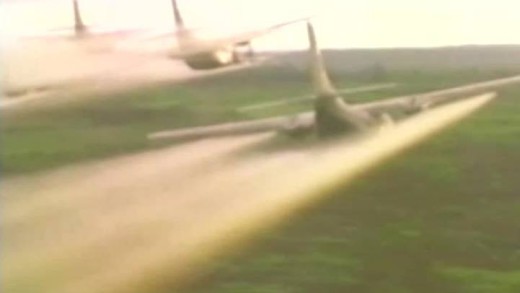
More than three million Vietnamese people still suffer the gruelling effects of chemical weapons used by the United States during the Vietnam War. American militaries doused forests, lands and waterways of Vietnam with the deadly chemicals Agent Orange, White, Blue, Pink, Green and Purple. Agent Orange in particular, which contains dioxin—the most toxic chemical ever known—has disabled countless people and generations of their offspring. This film weaves personal stories together with the stories of American GIs to lead to a great unravelling of the first-hand devastating and lethal effects of Agent Orange and war, generations later.
 1:45:01
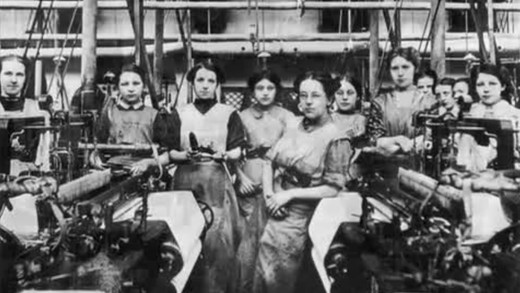
The End of Poverty? traces the growth of global poverty back to colonisation in the 15th century to reveal why it's not an accident or simple bad luck that there is a growing underclass around the world. Featuring interviews with a number of economists, sociologists, and historians, the film details how poverty is the clear consequence of free-market economic policy which has allowed powerful nations to exploit poorer ones for their assets, turning the money back to the hands of the concentrated few. This also follows on to how wealthy nations--especially the United States--thereby exert massive debts, seize a much disproportionate exploit of the natural world, and how this deep imbalance has dire consequences on the environment and on people...
 59:40
59:40Generation M looks at misogyny and sexism in mainstream media, exploring how negative definitions of femininity and hateful attitudes toward women get constructed and perpetuated throughout popular culture. The film tracks this across a broad and disturbing range of media phenomena: from the hyper-sexualization of commercial products aimed at girls, to the explosion of violence against women in video games aimed at boys; from the hysterical sexist rants of popular hip-hop artists and talk-radio shock-jocks, to the continually harsh, patronizing caricature of women found in virtually every area of media. Generation M posits the consequences of misogyny in all of its forms, showing that when we devalue more than half the population based on gender, we harm everyone—boys and men, women and girls alike.
 55:08
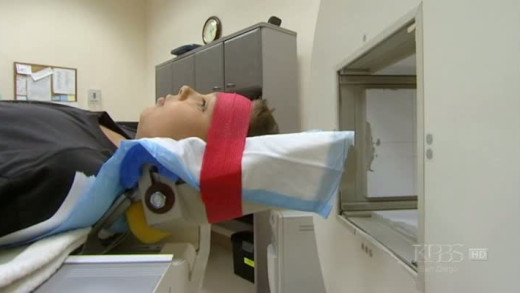
55:08The Medicated Child confronts psychiatrists, researchers and government regulators about the risks, benefits and many questions surrounding psychotropic drugs for children. The biggest current controversy surrounds the diagnosis of bipolar disorder. Formerly called manic depression, bipolar disorder was long believed to only 'apply to adults', but in the mid-1990s 'bipolar disorder in children' began to be diagnosed at much higher rates, sometimes in children as young as 4 years old...
 56:53
56:53Once relegated to the margins of society, pornography is now the most pervasive and visible aspect of popular culture, assuming an unprecedented role in media as its content becomes more harsh and extreme, racist and abusive. This eye-opening and disturbing film moves beyond frivolous "liberal versus conservative" debate and tackles the real issues surrounding pornography by placing the voices of performers themselves, producers and critics directly alongside the observations of women and men as they candidly discuss the role porn has played in shaping their sexual imaginations and relationships. The Price Of Pleasure reveals a nuanced portrait of how pleasure and pain, commerce and power, freedom and responsibility have become extremely twisted by popular culture, usurping the most intimate area of our lives.
 1:18:28
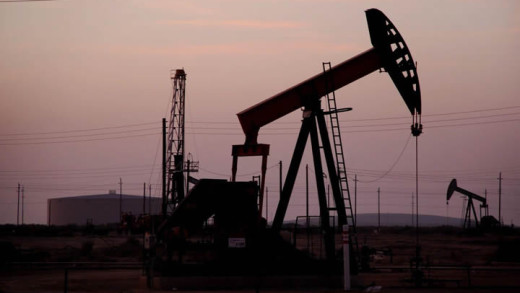
Energy War considers the continuing geopolitical consequences of the dependency on fossil fuels into the future. In the struggle for the last of the resources, countries all over the world are forced to further strategise and make strange alliances. Using the gas conflict between Georgia and Russia and the position of Saudi Arabia, Energy War travels through international markets for energy and asks: If oil and gas are scarce and expensive, where will countries turn to keep their economy going and their population warm and happy?
 51:15
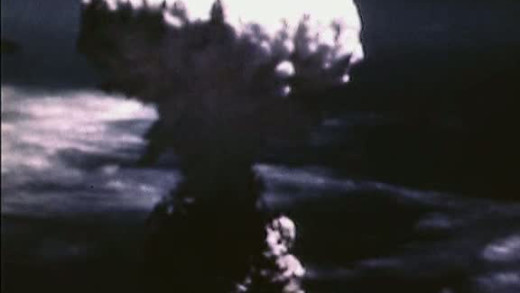
51:15On 8th August 1945, the United States dropped its second atomic bomb on Nagasaki, Japan, three days after the bombing of Hiroshima. The city was a veritable apocalyptic vision, devastated by this new type of weapon. Nagasaki -- The Horror Of Fat Man documents the memories of survivors, both Japanese civilians and Western Prisoners Of War, as they relate the morbid aftermath of the bombings, the United States occupation, and the segregation that still effects fallout victims to this day.
 41:45
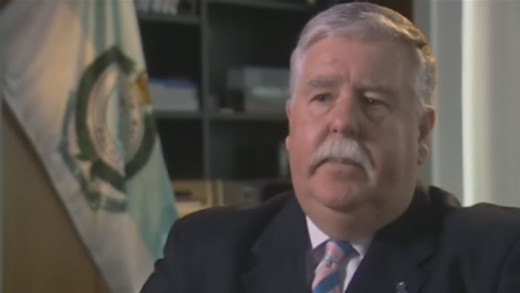
41:45For 20 years the NSW Crime Commission went about its business with drugs quietly. When it scored a bust, it stood back and let politicians and the police bask in credit. But all that changed with the sensational arrest of the commission's assistant director, Mark Standen, on charges of trafficking drugs. His spectacular downfall threw a spotlight onto the Crime Commission's remarkable array of powers and how it abuses them. Secret hearings, witnesses compelled to answer questions, broad powers of search and surveillance, no independent review process...
 1:57:53
Fool Me Twice
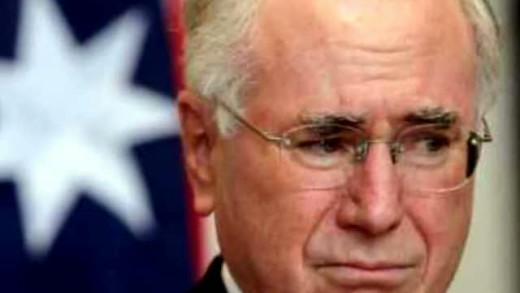
Fool Me Twice documents the Australian government's lies about the East Timor massacres, the cover-up of the Bali bombings (including the 1993 World Trade Centre attack) and subsequent anti-terror legislation forced through parliament by the Howard government. Laws that are still in effect today...
 1:42:17
Fabled Enemies examines the US government's intelligence apparatus and its involvement in the events of September 11, 2001. Many questions surround the proceedings of that day. What were the precise actions of a shadow government operating in an underground bunker with Dick Cheney? Why did the FBI have their investigations into Bin Laden obstructed and shut down by George Bush before the attacks? Were the alledged hijackers trained at US military bases? Why was the military running exactly the same situation as 'war games' at exactly the same time of the attack?
 1:20:13
Uncounted documents how the election fraud that altered the outcome of the 2004 election led to even greater fraud in 2006 and now looms as an unbridled threat to the outcome of the 2008 and future elections. The film shows how easy it is to change election outcomes and undermine election integrity across the United States using electronic voting machines and even other simple methods of manipulation...
 44:51
44:51"Supermarkets have bulked up. These days they’re retail superpowers who make money not just when we eat or drink but increasingly when we fill the petrol tank, play pokies or buy a hammer from the local hardware – and they’re quietly stalking pharmacies, newsagents and florists. Coles and Woolworth’s sell 70 percent of the dry groceries and half the fresh food that Australians consume – among the highest concentrations of market power in the developed world"...
 1:26:24
A new gold rush is sweeping through the Amazon rainforest where scores of people are bustling in to hunt for the last nuggets and specks of gold. This insatiable rush is perpetuating the further destruction of one of the largest remaining tropical forests in the world; bringing with it weapons, mercury, crime and alcoholism, and turning once pristine creeks and rivers into dumping grounds for mining. In the forest also lies the story of the Wayanas, a Native American tribe from Guiana, who are being poisoned by the mercury releases from the mining. Their communities are enduring one of the world's worst globalisation disasters, fighting back against all odds.