 57:27
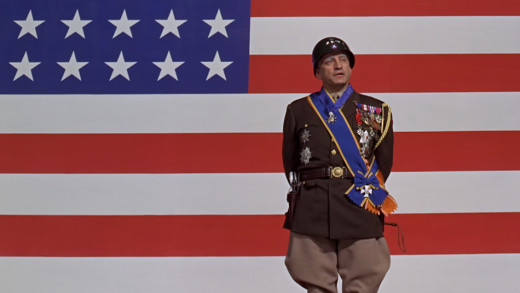
57:27The Pentagon has a long tradition of cooperation with Hollywood. Movie studios can save millions of dollars and achieve spectacular success by securing use of military stock footage, military equipment, weapons and manpower. But the catch is that Hollywood must alter scripts, whitewash history, censor and present their films to display war and the military in a favourable way. As a consequence, mainstream commercial films become the best and most powerful, widespread propaganda...
 56:40
56:40In the 1960s and 70s, British governments conspiring with American officials, secretly tricked into leaving and then expelled, the entire population of the Chagos islands in the Indian Ocean as to make way for a major American military base. Indeed from Diego Garcia, American military planes have since bombed Afghanistan and Iraq. Stealing A Nation documents the story of the islanders who were dumped in the slums of Mauritius and in the words of the British officials who left a 'paper trail' of what the International Criminal Court now describes as 'a crime against humanity'...

Diamond Empire is a two-part series that investigates how an advertising slogan invented by Madison Avenue executives in 1948 has come to define some of the most intimate and romantic rituals and ideals of this culture. The films take apart the myth that "diamonds are forever," exposing how one white South African family, through a process of monopoly and fantasy, managed to exert control over the global flow of diamonds and change the very way this culture projects the notion of courtship, marriage, and love--an achievement all the more stunning given that diamonds are in fact neither scarce nor imperishable. Zeroing in on how the diamond empire managed to convert something valueless into one of the most coveted commodities in history, these films provide a vigorous investigation into how marketing and consumer culture shape not only global trade and economics, but also our very identities.
 1:26:41
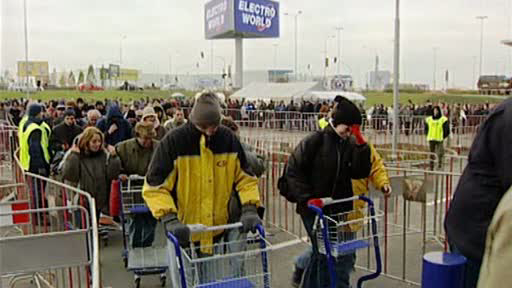
Two film students set out to explore the psychological and manipulative powers of consumerism by creating an extensive and pervasive advertising campaign for a fake hypermarket. The ads appear on radio, television, billboards; there is a promotional song, an internet site, ads in newspapers, magazines, and flyers with photos of fake Czech Dream products are distributed. Will people believe it and show up for the grand opening?
 38:38
38:38On April 26, 1986, the worst nuclear accident in history occurred when a reactor exploded at the Chernobyl nuclear power plant in Ukraine, releasing 90 times the radioactivity of the atomic bombs dropped on Hiroshima and Nagasaki. Sixteen years later, Chernobyl Heart travels to ground zero, following the devastating trail radiation leaves behind in hospitals, orphanages, mental asylums and evacuated villages. The film reveals those hardest hit by radiation, including thyroid cancer patients and children suffering from unfathomable congenital birth and heart defects, still decades later...
 59:50
59:50The controversies of corporations owning DNA, enforcing patents on living species, and pushing Genetically Modified seeds and crops across the globe, come together in Life Running Out Of Control. The battle between corporations and farmers is central to the film, with rapacious corporations such as Monsanto making claims that they are "improving upon nature," only to be met with fierce opposition from farmers, activists and local communities that show this is not the case. The film also explores the issues of the loss of biodiversity, to health concerns about Genetically Modified food, to the effects of GMOs in the environment.
 55:54
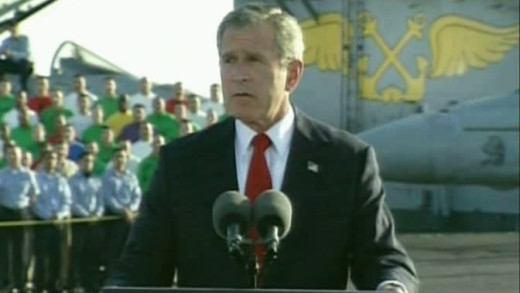
55:54Why have a real election when you can just buy the result? In Bush Family Fortunes, Greg Palast examines various aspects of the Presidency of George W. Bush, including the very controversial 2000 US Presidential 'election' and of course, the invasion of Iraq. What are the Bush family connections?
 1:10:38
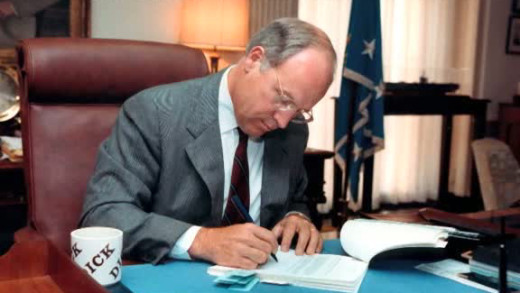
Hijacking Catastrophe examines the evidence that neoconservatives used the September 11, 2001 attacks to usher in a new doctrine of expanding American power through military force under the guise of a "war on terror" and that the doctrine -- known as the Project for the New American Century -- had been laid out prior to 9/11 by its authors, which include Dick Cheney, Paul Wolfowitz, Donald Rumsfeld, Jeb Bush and Dan Quayle...
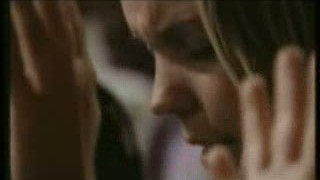 41:30
41:30Benny Hinn may be the most popular personality in the Christian world today. Thousands pack arenas to see him 'heal' the sick and the afflicted. Tens of thousands more watch his daily television program. Millions of dollars are donated every year to his ministry, none of which he says goes to him personally. But, what about those miracles? And where does all that money go?
 1:17:02
The suburbs are an unsustainable way of living. Developed in the post-war era of cheap oil and the car, the lifestyle was spruiked as the 'escape' from the industrial city to a more pastoral and rural way of life. However, they quickly evolved into a place that had neither of these qualities. Now, part of the problem of getting out of the suburban mentality is that a generation has grown up believing it to be a 'normal way of life' and even a life of entitlement, something which they will not give up without a fight...
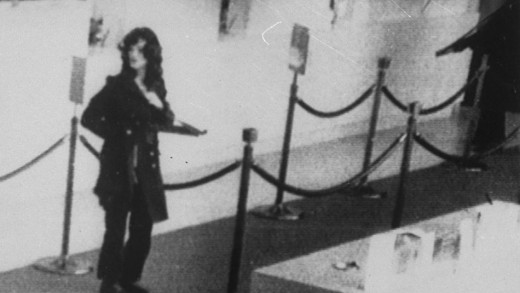 1:25:32
Guerrilla
In 1974, a young Patty Hearst became a media icon after she was kidnapped from her apartment by a group calling itself the Symbionese (taken from the word 'symbiosis') Liberation Army (SLA). At the time, Patty was an impressionable college student who happened to be the granddaughter of the infamous newspaper tycoon William Randolph Hearst. Hoping to spark a class war in America, for ransom, the SLA instructed the Hearsts to make a multi-million dollar donation of food to the poor. Two months later, Patty appeared to have joined forces with the SLA. As the spectacle unfolds, journalists camp outside the Hearst's home and become consumed by the story, some even questioning the role of the media in the saga. Guerrilla serves to document some of what happened to Patty Hearst during this time, the effects of Stockholm Syndrome, how and why the SLA was formed, and what ultimately went awry.
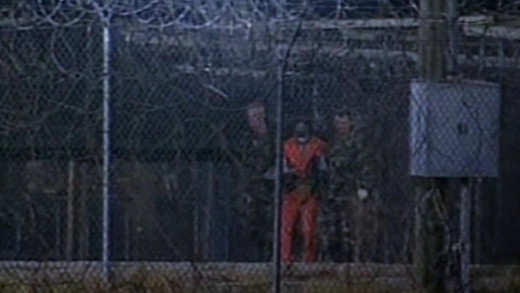 1:21:14
In December 2001, David Hicks, an Australian citizen, was captured in Afghanistan and handed over to the United States military, where he was moved to Guantanamo Bay for "interrogation." He has been held there ever since, not charged with any crime. Despite this, the United States labelled him an "unlawful combatant," a legal fiction concocted by the United States in order for them to torture Hicks and many other people like him, in the name of fighting the so-called "War on Terror." Many people, including Hicks, were kept in detention without charge for many years, denied a fair trial, and denied access to the United States' legal system. So how did a 26 year old former-stockman from Adelaide end up in the United States' torture chamber? Terry Hicks, David's father, sets out to answer this question, as he traces his son's journey from Adelaide to Japan to Kosovo, through Pakistan and Afghanistan, where he is captured in Taliban country.
 53:29
53:29The Secret History of the Credit Card uncovers the deceptive techniques and tactics used by banks and financial corporations to get citizens to take on ever more debt, while earning record profits. Penalty fees, defaulting, changing contracts, increasing rates retrospectively---these are some of the ways credit card companies gouge their users, and increase influence. The film shows how such profitability of credit cards began in the 1980s, when the banking industry successfully eliminated the limit on the interest rate a lender can charge a borrower. This deregulation, coupled with real-time tracking of personal financial information, facilitated the widening availability of credit cards. Despite a growing number of consumer complaints, the ability of state and local governments to investigate the credit card companies has virtually been eliminated, due to companies incessant lobbying and litigation that has created a jurisdictional "turf battle."
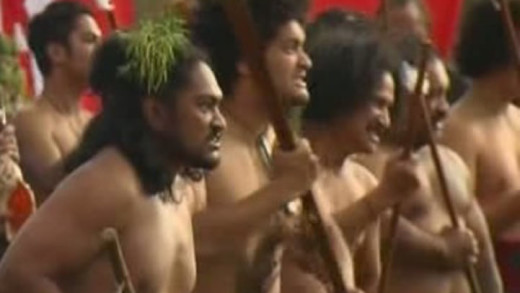 1:01:19
Tūhoe -- History Of Resistance documents the fight for justice of the Tūhoe people of Te Urewera, Aotearoa (New Zealand). Set on contested land in the Urewera ranges of the middle North Island, the film presents the ways of Māori--the indigenous peoples of the land.
 1:27:01
The Take
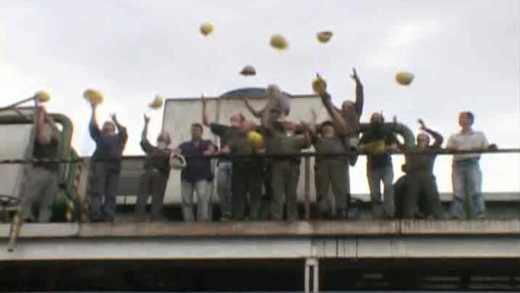
The Take documents the story of workers in Buenos Aires, Argentina who reclaim control of a closed auto-plant where they once worked and turn it into a worker cooperative. The factory closed as a result of the economic policies of the government under the watchful eye of the IMF. While in bankruptcy protection, the company appeared to be selling off property and inventory to pay creditors -- a move which further reduced the chances of the facility returning to production. Though as the movement gains strength, having started with a garment factory several years earlier, the factory workers wade through courts and the legislative system, finally establishing their own control and winning the right to operate it themselves, as a cooperative...
 1:17:28
This film profiles Howard Zinn, historian, political scientist and author, who tells us the personal stories about more than thirty years of fighting for social change, from teaching through to recent protests against war. A former bombardier in World War II, Zinn emerged in the civil rights movement in the United States as a powerful voice for justice. Although a fierce critic, Zinn gives the viewer inspiration in that by learning from history and engaging politically, we can each do our part to make a difference in the world.
 1:26:31
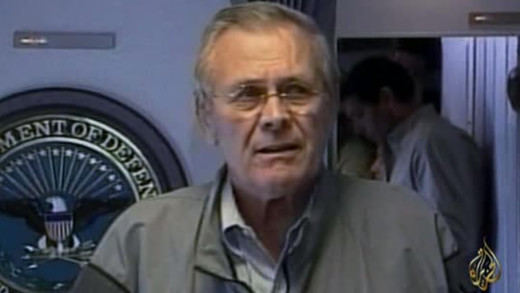
Control Room presents a rare window into the US invasion of Iraq from the perspective of Al Jazeera, the Arab world's most popular news outlet. Widely criticized and condemned by military figureheads, government officials and the mainstream media in the west for reporting with a "pro-Iraqi bias", airing civilian causalities, as well as showing footage of American POWs, Control Room reveals the situation in Iraq that the US government does not want you to see...
 31:44
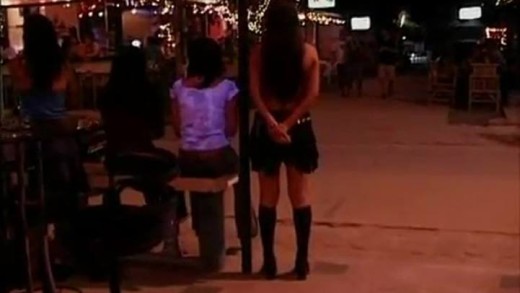
31:44With its tropical beaches and buzzing nightlife, the island of Koh Samui in the Gulf of Thailand attracts many hundreds of thousands of tourists each year. The island is renowned in the West for sex tourism, and every year many male tourists form relationships with women working in the bars of Koh Samui. But how does this work? And what dynamics are at play? Love Me Long Time is a film that speaks to the men that travel back and forth to Thailand for these holiday romances that are for sale in a country ravaged by the oppression of the west, human trafficking and prostitution driven by poverty. Do these men know what they're doing?
 1:39:05
Several lawsuits have been brought against McDonald's corporation in that they are knowingly selling food that is unhealthy. Some of the court decisions have stated that consumers would have a claim if they could prove that eating the food every day for every meal is dangerous. So with that, Super Size Me follows film-maker Morgan Spurlock conducting the experiment -- he eats only McDonald's for thirty days, three meals a day, and if asked to super size a meal, he has to say yes. By the end of the thirty days, he will have eaten every single menu item at least once. The film documents the drastic effect on Spurlock's health, while exploring the fast food industry's corporate influence, advertising and how it encourages poor nutrition for its own profit...
 1:59:02
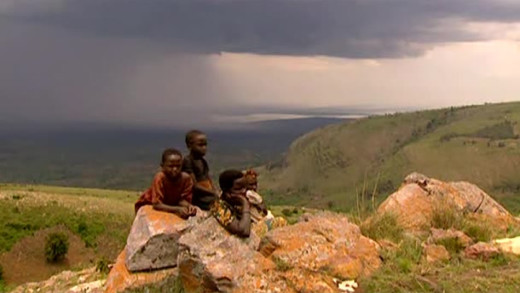
Ghosts of Rwanda marks the 10th anniversary of the genocide in Rwanda—a state-sponsored massacre in which some 800,000 Rwandans were methodically hunted down and murdered, as the United Nations and other states refused to intervene. The film examines the social, political, and diplomatic failures that converged to enable the genocide to occur. Through interviews with key government officials, diplomats, soldiers, and survivors of the slaughter, Ghosts of Rwanda presents first-hand accounts of the genocide from those who lived it—the diplomats on the scene who thought they were building peace only to see their colleagues murdered; the Tutsi survivors who recount the horror of seeing their friends and family slaughtered by Hutu friends and co-workers; and the UN peacekeepers in Rwanda who were ordered not to intervene in the massacre happening all around them.
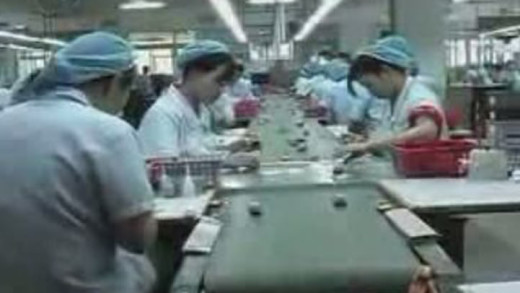 32:44
32:44Santa's Workshop -- Inside China's Slave Labour Toy Factories shows the long working hours, low wages, and the dangerous work and conditions inside these toy factories. Workers who protest or try to organise unions risk imprisonment. Low labour costs and government protections for multinational corporations attract more and more companies to China. Figureheads blame the Chinese suppliers, but they say in the same sentence that increasing competition gives them no option. What and whom to believe?
 31:54
31:54Based on the book of the same title by Juliet Schor, The Overspent American scrutinises the form of consumerism ever-pervasive in this current era that is driven by upscale spending and debt; shaped and reinforced by a media system driven by commercial interests. We're encouraged from all angles to spend money we don't have, working longer hours than ever before. Illustrated with hundreds of examples, The Overspent American draws attention to both the financial and social costs of this giant consumption machine, where the frivolous and relentless search for "happiness" and identity is espoused by advertising.
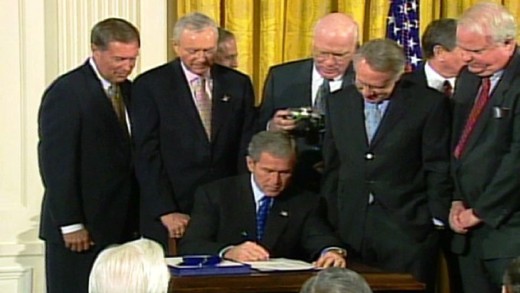 1:08:32
A few weeks after the September 11 attacks in 2001, the United States congress quickly passed the USA PATRIOT Act--a complicated and controversial law which was purportedly required to help with tracking future terrorist threats. Unconstitutional sets out to explain this law and examine its true impact. Citing a trove of examples from people whose lives have been directly effected, what we see is how law enforcement has rounded up Muslims and people with Arabic names to detain them for wild unspecified lengths of time without due process or even charges; the massive curtailment of civil liberties; erosion of enshrined privacy rights, increases in surveillance; and the abuses of Guantanamo Bay and Abu Ghraib.
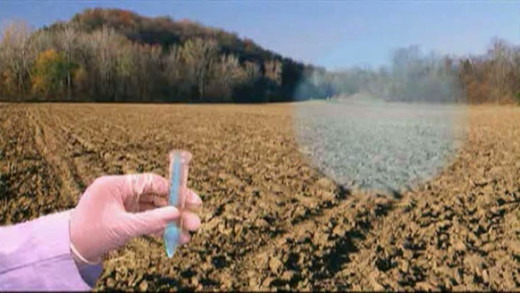 1:28:50
The Future of Food brings together the many complex issues surrounding the troubling changes that have occurred in the industrial food system during the past decades—genetically modified food, seed patenting, pesticides; and the corporate takeover of the entire food chain, from soil to seed to fork. The issues raised in The Future of Food are more pressing than ever, as the collusion between governments and large multi-national corporations is more visibly on display than ever before—the use and abuse of the legal system, politicking, and privatisation drive this rapacious strangle hold on much of the world's food. The film focuses on unlabelled, patented, genetically engineered foods that have been sold in supermarkets in the United States, unbeknownst to the public, for the past decade. In addition, there is a focus on Canada and Mexico. Also described is the concern about 'terminator' GMO seeds that pose a huge threat to diversity and local food systems. Genetically modified food is as controversial today as ever, and The Future of Food presents a vital educational tool for activists and educators worldwide.
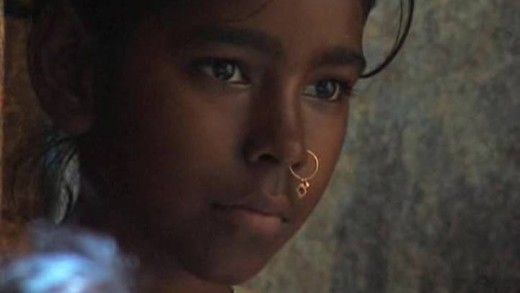 1:23:21
Amidst the supposed growing prosperity of India, there remains a dark underbelly of poverty. Born Into Brothels chronicles this through the lens of Kolkata's red light district where film-maker Zana Briski inspires a group of children of the prostitutes of the area to photograph the most reluctant subjects of it. As the kids excel in their new found art, will this help them have a chance for a better life away from the miserable poverty that threatens to crush their dreams?
Crazy Rulers of the World is a series that investigates what happens when chiefs of the United States intelligence agencies and the army began believing in very strange things. With first-hand access to the leading characters in the story, filmmaker Jon Ronson examines the extraordinary and bizarre national secrets at the core of the war on terror.
 43:51
43:51Spin the Bottle critiques the role that popular culture plays in glamorising excessive drinking and high-risk behaviour, in contrast to the ways alcohol affects the lives of real young men and women in reality. This film decodes the power and influence of seductive media images to show how they shape personal identity when linked to the use of alcohol. Nowhere is this link more apparent than on America's college campuses. By exploring the party scene, Spin the Bottle also shows the difficulties young people have in navigating a cultural environment saturated with messages about gender and alcohol. Interviews with health professionals provide a clear picture of how drinking impacts student health and academic performance, but it is the students' own experiences and reflections that tell the real story behind alcohol's alluring public and cultural image.
 1:10:16
There is an staunch connection between medical science, the pharmaceutical industry and the structures of modern society. Drug manufacturers today fund aggressive marketing campaigns designed to create public awareness of "previously unknown diseases," or conditions known by less dramatic names in order to sell pharmaceutical drugs and other psychotropic interventions. Shyness is thus marketed as "Social Anxiety Disorder," worry becomes "Generalised Anxiety," and premenstrual tension as "Premenstrual Dysphoric Disorder" which must be treated by drugs made popular through advertising, such as Paxil, Zoloft and Prozac. These drugs have become household names, not to mention a 20 billion dollar a year racket. How? Why?