 1:23:46
Enemy Image
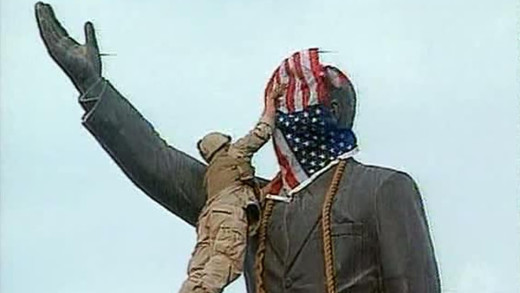
Enemy Image overviews the history of the portrayal of war in television news from the perspective of the United States. The film starts with the coverage of Vietnam where reports happened with little supervision, control or interference. Following this, The Pentagon takes action to control access by journalists to battle areas in subsequent invasions--such as the Invasion of Grenada, where journalists were excluded completely--to the first Gulf War, where 'news packages' were provided directly from the military; to the embedded churnalism of the invasion of Iraq. Shown is the progressive tightening of control by the US military on the contact journalists have with soldiers and civilians in the war zone, in order that "never again will television raise the moral and political questions that face a people during war."
 1:28:53
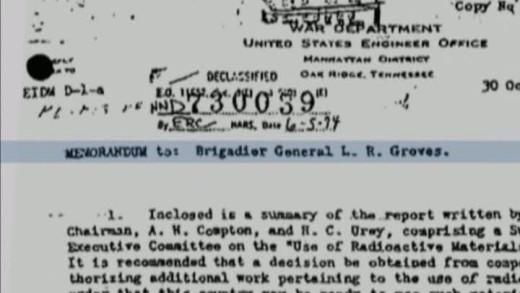
Department of Defense documents obtained through the Freedom of Information Act expose horrific government funded experimentation upon citizens conducted without their knowledge or consent. Is the United States knowingly using a dangerous battlefield weapon banned by the United Nations because of its long-term effects on the local inhabitants and the environment? Beyond Treason explores the illegal worldwide sale and use of one of the deadliest weapons ever invented. Was "Gulf War Illness" actually known by the military before hand?
 1:17:54
What drives a young Westerner to volunteer as a peace activist in the Middle East? Visit Palestine follows Caiomhe Butterly—a young woman from Dublin, Ireland; who is one of a growing number of volunteers who risk their own lives to intervene in the long-running and bloody conflict of the occupation of Palestine. Activists such as Butterly are usually stereotyped as lunatics, meddlers or saints. This film offers a first-hand insight into a brave, honest, determined yet self-critical woman who takes direct action to the limit, with no quest for glory. The film also serves as a real conduit into the everyday lives of Palestinians, fighting for their lives...
 54:33
54:33China Blue
Shot clandestinely at a blue jeans factory in southern China where a young girl and her friends work around the clock for pennies a day, China Blue reveals what international retail companies don't want us to see: how the clothes are actually made...
 46:47
46:47In the "race to feed the planet", scientists have discovered how to manipulate DNA and produce what they claim are stronger, more disease-resistant crops. However, fears that Genetically Modified Food may not be safe for humans or the environment has sparked intense protest. Are we participating in a dangerous global nutritional experiment? This film asks is the question -- is the production of genetically modified food a panacea for world hunger or a mass poisoning of the worlds food supply?
 1:12:12
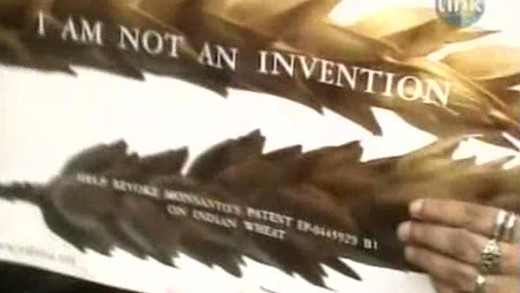
Bullshit follows environmental activist Vandana Shiva as she travels around the world to in her quest to eliminate the use of genetically modified foods and seeds in her home country of India and other developing countries. Shiva argues that the “ownership of life” through the patenting of natural products, namely grains altered through genetic modification (GMOs), is not in our best interests, and is in fact harmful to agriculture in developing countries...
 1:35:25
Humanity is absolutely dependent on animals as part of life. In industrial society however, this has extended to animals as pets, 'entertainment' and for expendable use in scientific research -- animals are tortured for 'scientific tests', locked in cages as pets and at the zoo and are bred on mass for cheap meat. What does this say about industrial civilisation? Earthlings conducts an in-depth study into pet stores, puppy mills and animals shelters, as well as factory farms, the leather and fur trades, sports and entertainment industries, and the medical and scientific profession, using hidden cameras to directly show the day-to-day practices of some of the largest industries in the world...
 1:22:13
McLibel
McDonald's loved using the UK libel laws to suppress criticism. Major media organisations like the BBC and The Guardian crumbled and apologised. But then they sued environmental activists Helen Steel and Dave Morris. In what then became the longest trial in English legal history, McLibel documents the two activists who represent themselves against McDonald's £10 million legal team with the marathon battle finally concluding at the European Court of Human Rights. The result takes everyone by surprise -- especially the British Government...

Life In The Undergrowth specifically focuses on the life, evolution and habits of invertebrates from all over the world.
 1:22:28
For close to a century, a great tale played out in the tiny town of Caledonia, Illinois. The Real Dirt On Farmer John tells this story of John Peterson, his farm and his family -- a story that parallels the history of American farming. But Farmer John is no laconic, Grant Wood-type with a scowl and a pitchfork. With the help of friends, John transformed his farm into an organic commune flooded with art and music, all in the centre of conformist Midwestern America...
 1:24:58
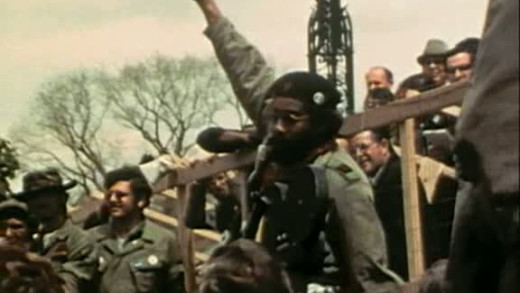
Sir! NO Sir!
Sir! NO Sir! tells the story of how--from the very start of the war, such as with the Green Berets--there was resentment within the ranks over the difference between the war in Vietnam and (as persons state in the film) the "good wars" that their fathers had fought. In the beginning some simply left the military as individuals, though over time, it became apparent that so many were opposed to the war that they could speak of a movement -- which over time eventually made the military almost inoperable...
 1:04:21
Class Dismissed examines the role of television in the ways in which race, gender, and sexuality intersect with class, offering a more complex reading of television's often one-dimensional representations. The patterns inherent in the depictions of working class people are as either clowns or social deviants, stereotypical portrayals that reinforce the myth of meritocracy and have systemic social implications. By citing plenty of examples from today's sitcoms, reality shows, police dramas, and daytime talk shows, Class Dismissed links television's portrayals to negative cultural attitudes and public policies that directly affect the lives of working class people. A new media must be envisioned and created.
 47:16
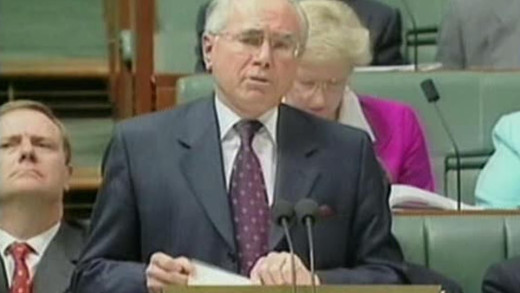
47:16In March 2003 thousands of Australian troops and others were sent to fight a 'war' as part of a pre-emptive strike on the sovereign nation of Iraq, a country from whom there was no threat. Two years on, in the wake of hundreds of thousands of Iraqi casualties, the Australian military reports its first casualty in the conflict while the American death toll stands at nearly two thousand. This being the a result of an invasion which has all but destroyed a foreign nation and seen millions made homeless, families destroyed, hundreds of thousands of deaths, leaving a legacy of destruction and religious division instilled in its wake. How did the Australian government come to play a part in this terror?
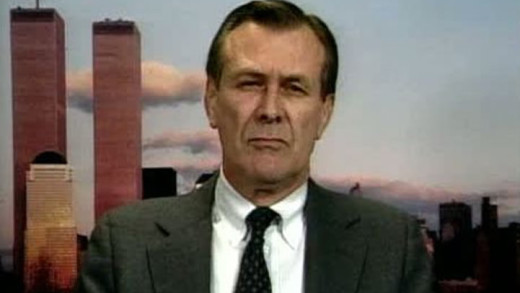
Is the threat of radical Islamism as a massive, sinister organised force of destruction—specifically in the form of al-Qaeda—a myth perpetrated by politicians across the globe, but particularly the American neo-conservatives, in order to unite and justify empire? This series of films charts the rise of both groups and movements, drawing comparisons between them and their origins, to provide much-needed and missing context to the War of Terror.
 26:41
26:41Moving Beyond Myth focuses on the sexual dilemmas and difficult life choices young girls face as they come of age in contemporary American culture. Challenging long-held myths about girlhood, the film draws on the insights of girls themselves to explore and shed light on their actual lived experience as they navigate an increasingly hyper-sexualized society. The voices of a diverse range of girls are supplemented with accessible analysis from leading experts on sexuality and society.
 57:27
57:27The Pentagon has a long tradition of cooperation with Hollywood. Movie studios can save millions of dollars and achieve spectacular success by securing use of military stock footage, military equipment, weapons and manpower. But the catch is that Hollywood must alter scripts, whitewash history, censor and present their films to display war and the military in a favourable way. As a consequence, mainstream commercial films become the best and most powerful, widespread propaganda...
 56:40
56:40In the 1960s and 70s, British governments conspiring with American officials, secretly tricked into leaving and then expelled, the entire population of the Chagos islands in the Indian Ocean as to make way for a major American military base. Indeed from Diego Garcia, American military planes have since bombed Afghanistan and Iraq. Stealing A Nation documents the story of the islanders who were dumped in the slums of Mauritius and in the words of the British officials who left a 'paper trail' of what the International Criminal Court now describes as 'a crime against humanity'...

Diamond Empire is a two-part series that investigates how an advertising slogan invented by Madison Avenue executives in 1948 has come to define some of the most intimate and romantic rituals and ideals of this culture. The films take apart the myth that "diamonds are forever," exposing how one white South African family, through a process of monopoly and fantasy, managed to exert control over the global flow of diamonds and change the very way this culture projects the notion of courtship, marriage, and love--an achievement all the more stunning given that diamonds are in fact neither scarce nor imperishable. Zeroing in on how the diamond empire managed to convert something valueless into one of the most coveted commodities in history, these films provide a vigorous investigation into how marketing and consumer culture shape not only global trade and economics, but also our very identities.
 1:26:41
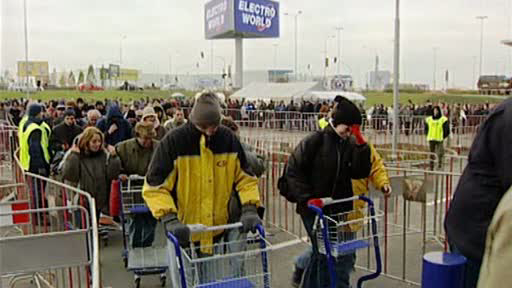
Two film students set out to explore the psychological and manipulative powers of consumerism by creating an extensive and pervasive advertising campaign for a fake hypermarket. The ads appear on radio, television, billboards; there is a promotional song, an internet site, ads in newspapers, magazines, and flyers with photos of fake Czech Dream products are distributed. Will people believe it and show up for the grand opening?
 38:36
38:36On April 26, 1986, the worst nuclear accident in history occurred when a reactor exploded at the Chernobyl nuclear power plant in Ukraine, releasing 90 times the radioactivity of the atomic bombs dropped on Hiroshima and Nagasaki. Sixteen years later, Chernobyl Heart travels to ground zero, following the devastating trail radiation leaves behind in hospitals, orphanages, mental asylums and evacuated villages. The film reveals those hardest hit by radiation, including thyroid cancer patients and children suffering from unfathomable congenital birth and heart defects, still decades later...
 59:50
59:50The controversies of corporations owning DNA, enforcing patents on living species, and pushing Genetically Modified seeds and crops across the globe, come together in Life Running Out Of Control. The battle between corporations and farmers is central to the film, with rapacious corporations such as Monsanto making claims that they are "improving upon nature," only to be met with fierce opposition from farmers, activists and local communities that show this is not the case. The film also explores the issues of the loss of biodiversity, to health concerns about Genetically Modified food, to the effects of GMOs in the environment.
 55:54
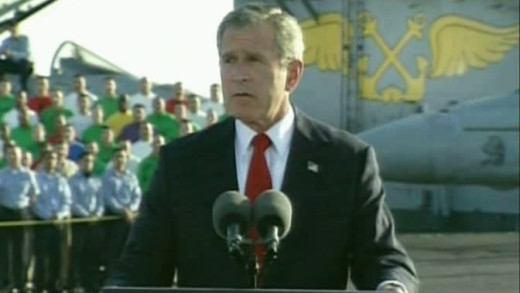
55:54Why have a real election when you can just buy the result? In Bush Family Fortunes, Greg Palast examines various aspects of the Presidency of George W. Bush, including the very controversial 2000 US Presidential 'election' and of course, the invasion of Iraq. What are the Bush family connections?
 1:10:38
Hijacking Catastrophe examines the evidence that neoconservatives used the September 11, 2001 attacks to usher in a new doctrine of expanding American power through military force under the guise of a "war on terror" and that the doctrine -- known as the Project for the New American Century -- had been laid out prior to 9/11 by its authors, which include Dick Cheney, Paul Wolfowitz, Donald Rumsfeld, Jeb Bush and Dan Quayle...
 41:30
41:30Benny Hinn may be the most popular personality in the Christian world today. Thousands pack arenas to see him 'heal' the sick and the afflicted. Tens of thousands more watch his daily television program. Millions of dollars are donated every year to his ministry, none of which he says goes to him personally. But, what about those miracles? And where does all that money go?
 1:17:02
The suburbs are an unsustainable way of living. Developed in the post-war era of cheap oil and the car, the lifestyle was spruiked as the 'escape' from the industrial city to a more pastoral and rural way of life. However, they quickly evolved into a place that had neither of these qualities. Now, part of the problem of getting out of the suburban mentality is that a generation has grown up believing it to be a 'normal way of life' and even a life of entitlement, something which they will not give up without a fight...
 1:25:32
Guerrilla
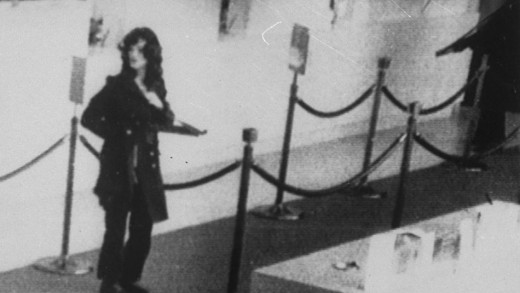
In 1974, a young Patty Hearst became a media icon after she was kidnapped from her apartment by a group calling itself the Symbionese (taken from the word 'symbiosis') Liberation Army (SLA). At the time, Patty was an impressionable college student who happened to be the granddaughter of the infamous newspaper tycoon William Randolph Hearst. Hoping to spark a class war in America, for ransom, the SLA instructed the Hearsts to make a multi-million dollar donation of food to the poor. Two months later, Patty appeared to have joined forces with the SLA. As the spectacle unfolds, journalists camp outside the Hearst's home and become consumed by the story, some even questioning the role of the media in the saga. Guerrilla serves to document some of what happened to Patty Hearst during this time, the effects of Stockholm Syndrome, how and why the SLA was formed, and what ultimately went awry.
 1:21:14
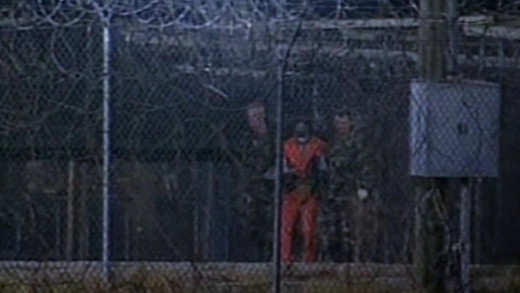
In December 2001, David Hicks, an Australian citizen, was captured in Afghanistan and handed over to the United States military, where he was moved to Guantanamo Bay for "interrogation." He has been held there ever since, not charged with any crime. Despite this, the United States labelled him an "unlawful combatant," a legal fiction concocted by the United States in order for them to torture Hicks and many other people like him, in the name of fighting the so-called "War on Terror." Many people, including Hicks, were kept in detention without charge for many years, denied a fair trial, and denied access to the United States' legal system. So how did a 26 year old former-stockman from Adelaide end up in the United States' torture chamber? Terry Hicks, David's father, sets out to answer this question, as he traces his son's journey from Adelaide to Japan to Kosovo, through Pakistan and Afghanistan, where he is captured in Taliban country.
 53:29
53:29The Secret History of the Credit Card uncovers the deceptive techniques and tactics used by banks and financial corporations to get citizens to take on ever more debt, while earning record profits. Penalty fees, defaulting, changing contracts, increasing rates retrospectively---these are some of the ways credit card companies gouge their users, and increase influence. The film shows how such profitability of credit cards began in the 1980s, when the banking industry successfully eliminated the limit on the interest rate a lender can charge a borrower. This deregulation, coupled with real-time tracking of personal financial information, facilitated the widening availability of credit cards. Despite a growing number of consumer complaints, the ability of state and local governments to investigate the credit card companies has virtually been eliminated, due to companies incessant lobbying and litigation that has created a jurisdictional "turf battle."