 1:43:40
Could a media system, controlled by a few global corporations with the ability to overwhelm all competing voices, be able to turn lies into truth? This documentary examines the relationship between the media, corporations, and government. In a country where the top 1% control 90% of the wealth, the film argues that the media system is nothing but a subsidiary of the corporate world. Have we entered an Orwellian world of doublespeak where outright lies can pass for the truth?
 1:16:07
From the front-lines of conflicts in Mexico, Argentina, South Africa, Palestine, Korea, and the North; from Seattle to Genova and the "War on Terror" in New York, Afghanistan, and Iraq, The Fourth World War documents the stories of women and men all around the world who resist being annihilated in this war. Centred around economics and systems such as NAFTA, GATT, the G20, APEC and others, this is a war which plays along with the spread of rapacious globalisation, a feat that has pervasive consequences in the real world...
 29:46
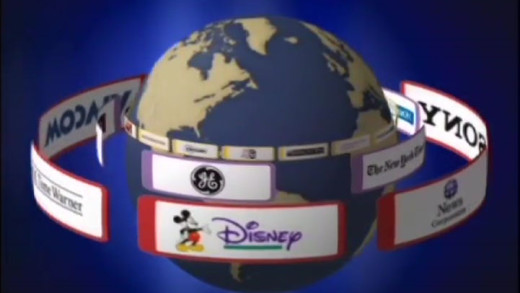
29:46If a key indicator of the health of a democracy is the state of its media, the United States is in deep trouble. In Rich Media, Poor Democracy, renowned media experts Robert McChesney and Mark Crispin Miller explore how the façade of a diverse mainstream media is in fact a system characterised by a handful of powerful corporations which leads to homogenisation and centralisation. Through numerous examples, we see how journalism has been compromised by business power and how conglomerates such as Disney, Sony, Viacom, News Corp, and AOL Time Warner produce a system of news that is high on sensationalism and low on information. This film suggests that unless citizen activism can reclaim the commons, this corporate system will be characterised by a rich media spectacle and an ever impoverished democracy.
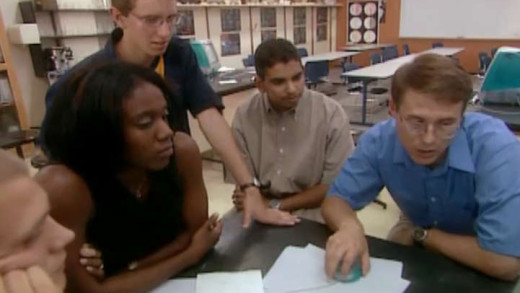
Race: The Power of an Illusion is a three-part series that investigates the idea of race in society, science and history. It navigates through myths and misconceptions, and scrutinises some of the assumptions that are taken for granted. The division of people into distinct categories--"white," "black," "yellow," "red," and so on--has become so widely espoused and so deeply rooted, that most people do not think to question its veracity. This series challenges the myth of race as biology, and traces its notions to the 19th century, demonstrating how race has a continuing negative impact through institutions and social policies.
 1:15:11
The Revolution Will Not Be Televised documents first-hand the events in Venezuela leading up to and during the April 2002 coup d'état attempt which briefly deposed President Hugo Chávez. A television crew from Ireland's national broadcaster, RTÉ happened to be recording a documentary about Chávez during the events. Shifting focus, the crew followed events as they occurred and captured images that they say contradict explanations given by Chávez's opposition, the private media, the US State Department, and then White House Press Secretary Ari Fleischer. The Revolution Will Not Be Televised details how the coup was the result of a conspiracy between various old guard and anti-Chávez factions within Venezuela and the United States...
 1:54:49
The Net explores the back-story of Ted Kaczynski (the infamous 'Unabomber') as a prism to the often unexamined side of the history of the Internet. The film combines travelogue and investigative journalism to trace contrasting counter-cultural responses to the so-called 'cybernetic' revolution of the 1970s. For some whom resist the pervasive systems of digital technology, the Unabomber can come to symbolise an ultimate figure of refusal. But for those that embrace the technologies, as did and do the champions of so-called 'media art', such as Marshall McLuhan, Nam June Paik and Stewart Brand, the promises of worldwide networking and instantaneous communication outweigh any and all of the concerns. The Net links these multiple nodes of cultural and political history, analogous to the Internet itself. Circling through themes of utopianism, anarchism, terrorism, the CIA, LSD, MKULTRA, Timothy Leary, Ken Kesey and the Merry Pranksters, The Net exposes the conspiracies and upheavals, secrets and cover-ups as part of the forgotten subversive history of the Internet.
 54:52
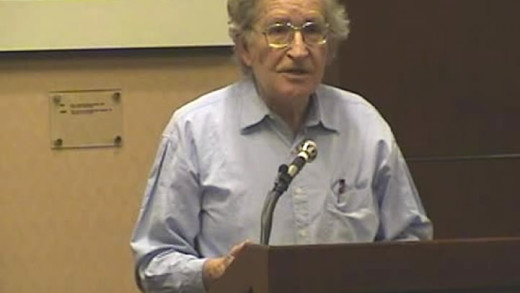
54:52The hypocrisy of the United States government is scrutinized in Distorted Morality—a scathing thesis against war and the invasion of Iraq, presented by renowned scholar Noam Chomsky in 2002. Chomsky sets fair and logical parameters to test his ideas, before outlining the reasons why the United States post-9/11 "war on terror" is a logical absurdity. This, according to Chomsky's carefully supported analysis, is because the US government has been, and continues to be, a major supporter of state-supported terrorism; favoring retaliatory or preemptive aggression over mediation in the world court, and avoiding accountability by excluding itself from the globally accepted definition of terrorism. Explored also are numerous historical examples to support.
 51:18
51:18Featuring George Bush's famous "go-shopping-speech" calling for a war against terrorism that deters the nation from the fear of consumption; Castro responding with hymns to the anti-consumerist, advertising-free island of Cuba; Bill Gates and Steve Ballmer preaching that the computer will give us peace on earth, and "bring people together rather than isolate them"; while Adbuster Kalle Lasn warns that advertising pollutes us mentally, that over-consumption is unsustainable, that we are running out of oil and this will cause a global economic collapse...
 26:48
26:48The United States proudly self-identifies as the major purveyor of peace and democracy across the world. But does this perception of self match up to the actual policies and history of military actions throughout recent decades? Are the United States' seemingly constant wars of aggression befitting to achieving peace? These are some of the central dichotomies addressed in this short film In Whose Interest? We see internal documentation of the US involvement in countries like Vietnam or Guatemala which indicate that the main factors motivating American foreign policy are clearly economic concerns. In Guatemala, the United States overthrows a democratically elected government to install a military-backed dictatorship that is suitable to the American United Fruit corporation. A similar pattern emerges in Vietnam, El Salvador and East Timor. Perhaps most oppressive yet is US policy in the Middle East, where the US provides Israel with more than $3 billion per year in military assistance—more aid than they give to the entire continent of Africa. We see how American policy is determined by the corporate sector, tightly linked to the state, which makes decisions in their own self-interest—in stark opposition to the rhetoric of democracy...
 51:57
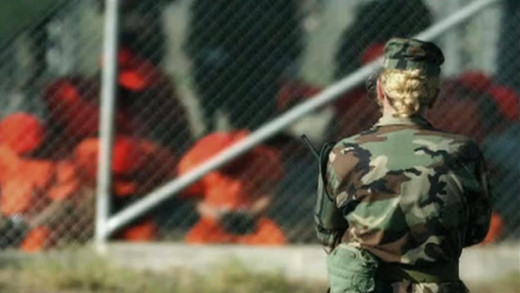
51:57The discrepancies between the "War on Terror" and the facts on the ground in Afghanistan and Iraq are many. In 2001, as the bombs began to drop, George W. Bush promised Afghanistan, "the generosity of America and its allies." Now, the familiar old warlords are retaining their power, religious fundamentalism is expanding its grip and military 'skirmishes' continue routinely. In "liberated" Afghanistan, America has its military base and pipeline access, while the people have the warlords who are, as one woman says in the film, "in many ways worse than the Taliban."
 51:46
51:46In Deadly Persuasion: The Advertising of Alcohol & Tobacco, Jean Kilbourne exposes the manipulative marketing strategies and tactics used by the tobacco and alcohol industries to keep people hooked on their dangerous products. Illustrating her analysis with hundreds of current advertising examples from mainstream and trade sources, Kilbourne presents a compelling argument that these cynical industries have a clear and deep understanding of the psychology of addiction and an understanding they exploit to create and feed a life-threatening dependency on their products. Deadly Persuasion casts a critical eye on the corporate interests that lie behind the industries whose products kill more than 450,000 people each year in the United States.
 1:31:20
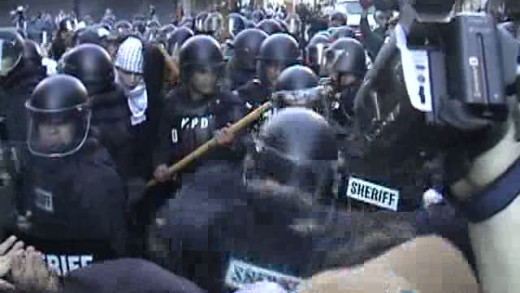
The Miami Model
The Miami model was the name given to a set of tactics employed by police during protests in Miami, Florida relating to the Free Trade Area of the Americas (FTAA) trade agreement meetings in November 2003. State Attorney Kathy Fernandez Rundle responded to allegations of police brutality by saying, "The police were very professional, very controlled... I think we have a model here for the rest of the world to emulate in the future when these sort of events take place." This film documents these tactics from the perspective of the protesters, to show what really happened to them and to document their work opposing the FTAA, countering the mainstream media narratives of the event and the tropes espoused by those in power.
 2:24:01
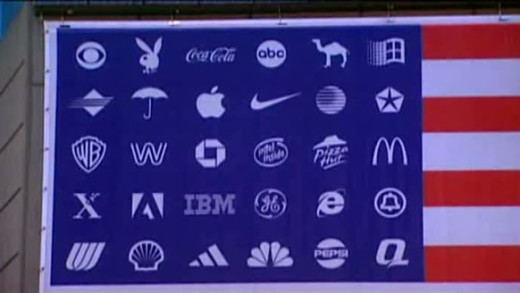
Did you know that the legal system recognises a corporation as a person? What kind of 'person' is it then? What would happen if it sat down with a psychologist to discuss its behaviour and attitude towards society and the environment? Explored through specific examples, this film shows how and why the modern-day corporation has rapaciously pressed itself into the dominant institution of our time, posing big questions about what must be done if we want a equitable and sustainable world. What must we do when corporations are psychopaths?
 39:03
39:03The belief that good triumphs over evil resonates deeply through the religious and political discourses of dominant culture. It is also a common theme in the entertainment media where the struggle between good and evil is frequently resolved through violence. The negative impacts of media violence on children has long been a public concern, but it is even more troubling when military violence, both in the news and in entertainment, is often glorified as heroic and noble. Beyond Good & Evil: Children, Media & Violent Times is a look at how mass communication distorts and manipulates language and visual imagery. It shows viewers how the media's overriding objective of satisfying an audience converts real issues surrounding race, war, and violence into nothing more than spectacle.
 59:09
59:09To its backers, Woomera detention centre played a so-called "humane yet crucial role in housing the growing numbers of 'boat people' landing on Australia's shores." To its critics, this prison, as a heavily guarded cluster of buildings ringed by red desert and razor wire, represented the "dead-heart of asylum-seeker policy" and Australia's lacklustre regard for human rights. Woomera opened for business less than four years ago. Built for 400 people, it soon housed more than 1,400. It became notorious for riots, protests and breakouts by desperate detainees. There were reports that mental illness and self-harm were rife and as the reports mounted, TV cameras captured the protests at the perimeter fence. Certain press warned of detainees' declining health and morale. Yet when Woomera was quietly placed in mothballs last month, its full story remained to be told...
 45:06
45:06The human genome is being privatised. Another corporate takeover. The genetic sequences that make up you and me are being patented and one Australian company, a hot item on the stock market, is aggressively enforcing a suite of patents that affect an extraordinary 95 percent of every living creature's DNA. The company claims most laboratories around the world are infringing its patents -- nature itself included -- and the company is now trying to charge licence fees for this...
 23:03
23:03This short film, put together by activists, documents the extreme proliferation of e-waste throughout Asia. The effects of the waste is catastrophic, as computers and electronics contain some of the most hazardous materials—cadmium, barium, plastics, mercury, lead, Brominated Flame Retardants and dioxins. Working at the nexus of human rights and environment, this film confronts the issues of environmental justice at a macro level, by provoking the need to stop this trade and address the issues. With over 80% of e-waste coming from the United States alone being exported throughout Asia, the problem is only to increase unless things change, especially in the age of planned obsolescence and consumer 'upgrades.'
 1:19:36
The Trials of Henry Kissinger examines the evidence of war crimes by Henry Kissinger during his time as the United States "National Security Advisor" and later Secretary of State for President Nixon and President Ford. Acting in the role of the prosecution, journalist Christopher Hitchens presents solid evidence of Kissinger's complicity in a series of war crimes involving Indonesia, Bangladesh, Chile, Cyprus, East Timor and many other countries...

Ammo for the Info Warrior is a two part series of collections of short films by the Guerrilla News Network (GNN), an independent news organisation with a mission to expose young people to important global news and information free from corporate filters. Each part consists of a selection of 5 to 10 minute videos covering a range of stories, from the violent diamond trade in Sierra Leone; to the PR industry's manipulation of public opinion; to analysis of IBM and its role in the Holocaust; to CopWatch, a movement of people keeping police accountable; and short slam poetry clips about the business of hip-hop. Ammo for the Info Warrior experiments with format with the aim of being an innovative educational tool to tackle serious socio-political issues for a generation brought up on MTV. It can be a catalyst for discussion and debate, encouraging the viewer to develop skills in critical thinking and analysis.
 44:50
44:50While advertising is clearly a visible component of the corporate system, perhaps even more important and pervasive is the often-invisible partner—the public relations industry. Toxic Sludge Is Good For You illuminates this hidden sphere of the corporatocracy, examining the way in which the management of public discourse has become central to how society has been usurped and is controlled by political and economic elites. The film tracks the development of the PR industry from its early efforts to win popular support for World War I, to the role of crisis management in controlling damage to the corporate image, while analysing the tools PR people use to manipulate public perceptions.
 52:49
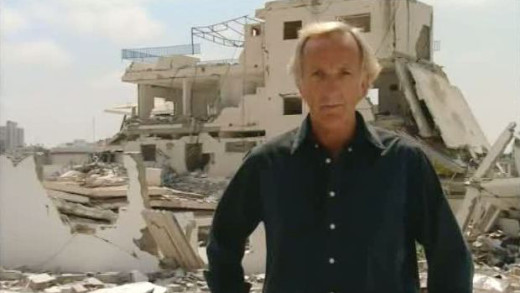
52:49John Pilger returns to the Occupied Territories of the West Bank and Gaza where, in 1974, he filmed a documentary with the same title -- Palestine Is Still The Issue -- a film about the same issues, a nation of people, the Palestinians, forced off their land and subjected to military occupation by Israel. Pilger hears extraordinary stories from Palestinians, though most of his interviews are with Israelis whose voices are seldom heard, including the remarkable witness of a man who lost his daughter in a suicide bombing. But for Palestinians, the overriding, routine terror, day after day, has been the ruthless control of almost every aspect of their lives, as if they live in an open prison. This film is about the Palestinians and a group of courageous Israelis united in the fight to be free...
 52:58
52:58American Porn is an investigation on the forces behind the explosion of pornography available throughout the United States. Through interviews with the pornographers themselves, actors, lawyers, federal and state prosecutors, activists, and a Wall Street analyst covering the industry, American Porn examines the business ties between respected corporations and porn companies, the rise of extreme hardcore porn, and a political battle of the times.
 47:59
47:59Raped
Between 1999 and 2000, nearly 8,000 women reported a rape to the police. Out of those women, 90 per cent identified their attacker, and DNA evidence helped place the accused at the scene of the crime. But the admission of a prior relationship with the perpetrator counted against the victim. In any case, the conviction rate for rape is unbelievably low—only nine convictions for every 100 cases reported. Film-maker Rachel Coughlan follows the heart-wrenching stories of five women to win their fight for justice, showing in the process the systematic failures of the legal system in why such cases—the ones that do even make it to court—often don't result in conviction.
 51:44
51:44The Disney Company's massive success in the 20th century is based on creating an image of innocence, magic and fun for kids. Its animated films in particular are almost universally lauded as wholesome family entertainment, enjoying massive popularity among children and endorsement from parents and teachers around the world. This film takes a close look at Disney, to analyse the world these films create for kids and the stories they tell and propagate; contextualised by the cultural pedagogy of Disney's conglomerate mass-media control and vast corporate power. Including interviews with social commentators, media scholars, child psychologists, kindergarten teachers, multicultural educators, college students and children, Mickey Mouse Monopoly provokes audiences to confront assumptions about an institution that is virtually synonymous with childhood pleasure.
 53:45
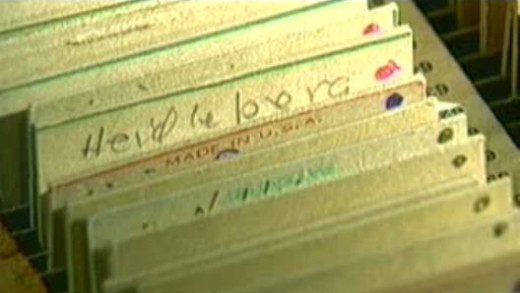
53:45More than 40 years after his death, the body of former CIA scientist Frank Olson has been exhumed. Olson's son Eric is convinced his father was murdered by agents of the government because he wanted to leave the CIA. Frank Olson was an expert for anthrax and other biological weapons and had top security clearance. Forensic pathologists at George Washington University performed an autopsy and concluded that Olson probably was the victim of a violent crime. Codename Artichoke documents these strange aspects of the CIA's quest for mind control drugs, with programs like MKULTRA, MKDELTA, Artichoke, Operation Midnight Climax and others...
 57:10
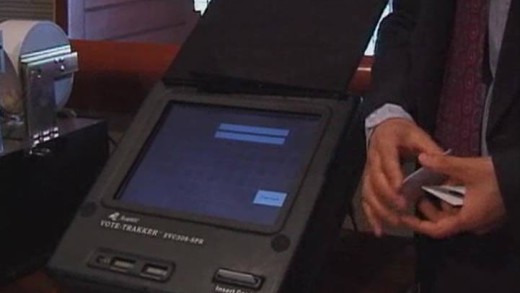
57:10Unprecedented looks at voting irregularities in the controversial presidential election in the United States from the year 2000. With a focus on the swing state of Florida, the recount, the ensuing supreme court decision in December, and future elections; the film also shows how fundamentally, many people--the majority being African-American--have outright been refused the ability to vote by a clever mix of legalese, electronic voting machines, political maneuvering and simple racism. A 1868 law prevented felons from voting--originally crafted to keep blacks from the polls in the wake of the Civil War--was resurrected in 2000, used to create a computerised list of people supposedly illegible to vote. The list had weird parameters and included as many as 57,000 to 91,000 non-felons; overwhelmingly targeting people of colour. On election day, these people were turned away at the polls. The role of electronic voting machines is also examined, as they are totally unaccountable and do not allow audits. The argument is made because of copyright over the software and trademarks. The machines also do not give paper receipts, so there is no physical evidence in case of the need for a recount. How does the United States--the so-called and self-proclaimed world-famous democracy--fair as one in light of this?
 1:11:29
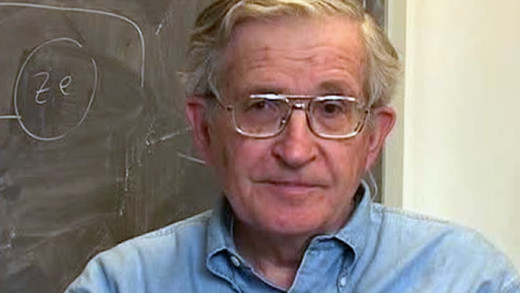
In the aftermath of the events of September 11th, 2001; MIT linguist and political philosopher Noam Chomsky found himself called upon to provide much-needed analysis and historical perspective regarding this moment in American history. In the months following, Chomsky gave dozens of talks on four continents, conducted scores of media interviews, and published a book called '9-11.' In this film and in his book, Chomsky places the events of September 11 in the context of American foreign intervention throughout the postwar decades—in Vietnam, Central America, the Middle East, and elsewhere. Beginning with the fundamental principle that any exercise of violence against civilian populations is terrorism—regardless of whether the perpetrator is a well-organized band of Muslim extremists or the most powerful nation-state in the world—Chomsky challenges the United States to apply the moral standards it demands of others to its own actions.
 19:13
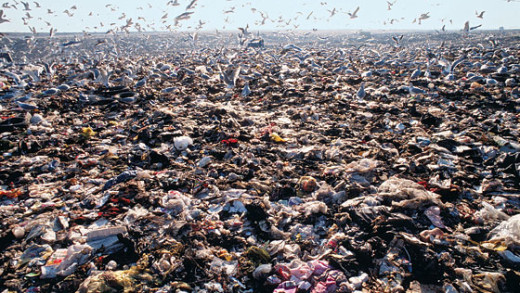
19:13Eat a takeaway meal, buy a pair of shoes, or read a newspaper and you're soon faced with a bewildering amount of rubbish. Over the past 30 years worldwide garbage output has exploded, doubling in the United States alone. So how did there come to be this much waste, and where does it all go? By excavating the history of rubbish handling from the 1800s -- an era of garbage-grazing urban hogs and dump-dwelling rag pickers -- to the present, with mass consumer culture, modern industrial production and the disposable American lifestyle, The Hidden Life Of Garbage documents the politics of recycling, greenwashing and the export of trash to the third world as part exposé, part social commentary...