
The Life of Birds follows the evolution and habits of bird species all across the globe, showing how a huge variety of birds each deal with a different aspect of life.
 51:13
51:13Apartheid based on race is 'outlawed now', but the system always went far deeper than that. The cruelty and injustice were underwritten by an economic apartheid, which regarded people as no more than cheap expendable labour. It was backed by great business corporations in South Africa, Britain, the rest of Europe, and the United States and it was this apartheid based on money and profit that allowed a small minority to control most of the land, most of the industrial wealth, and most of the economic power. Today, the same system is called--without a trace of irony--the free market.
 1:28:37
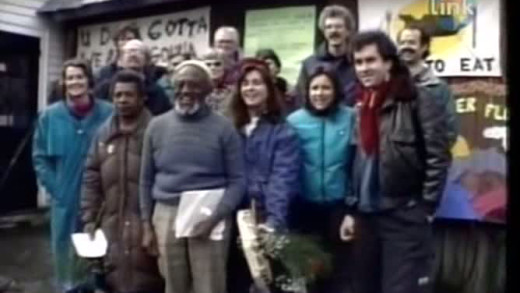
An Act of Conscience documents the story of two couples Randy Kehler and Betsy Corner who refused to pay income tax throughout the 1980s in an act of defiance against military spending and war. The film captures the support community that formed in response to the seizure of their home by the IRS, and the conflict with the young couple with a newborn who bought the home at a government auction. Was this an effective protest?
 51:50
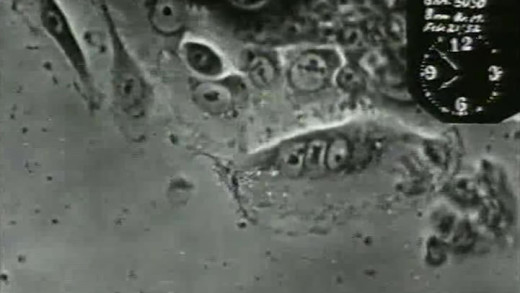
51:50The Way of All Flesh traces the story of Henriettta Lacks as she dies of cancer in 1951. Before she died cells were removed from her body and cultivated in a laboratory by scientists in the hope that they could find a cure for cancer. The cells known as the HeLa line have been growing ever since, and the scientists found that they were growing in ways they could not control. The cells transformed modern medicine, the Polio vaccine, but they also became caught up in the politics of our age, shaping the policies of countries and of presidents, and even becoming involved in the cold war, as scientists were convinced that in her cells lay the secret in how to conquer death.
 25:12
25:12Through exploring deep questions about the way mainstream media is organised and perpetuated in concert with technological development, media expert George Gerbner delivers a solid indictment of the way the so-called "information superhighway" is now being constructed. Following on from his solid work looking at the impacts of television on society, Gerbner turns to examining emerging technologies like V-chip and the way they interface with globalisation. This film urges the viewer to struggle for democratic principles in this emerging technoculture.
 1:07:43
This experimental film recounts the histories of plane hijackings and bombings throughout the 60s, 70s and 80s, and pits them against the media reporting of such events and the real-politick of the time to show the interplay between terrorism, political narratives and control of society. We see how aspects of the interplay have changed over time, and how the media culture has turned acts of terror into apolitical carnage-seeking voyeurism. Also presented by taking this view, is a commentary on how this culture has a hyperactive focus on terrorism while other much more deathly tragedies are ignored merely because they are mundane and non-threatening to political power. For example, more people die painful deaths every year by slipping in bathtubs than by any terrorist attack. This reveals the priorities of those in power, with the cultural focus on fearmomgering as a means for social control, and a disillusionment of the public in the age of decline.
 47:35
47:35Focusing directly on the world of commercial images, Advertising and the End of The World asks some basic questions about the cultural messages emanating from advertising: Do these messages deliver what they claim—happiness and satisfaction? Can we think about our collective as well as our private interests? And, can we think long-term as well as short-term?
 51:32
51:32The Daily Mirror used to be a peoples' paper that respected its readers and earned trust and affection. But that changed out of all recognition when the British public were told that the new information technology, heralded by The Sun's move to Wapping, would bring a greater variety of newspapers and a more diverse media. Instead, what happened was rapid moves toward contracted press controlled by ever fewer proprietors. John Pilger describes the downfall of his old paper and the all-pervasive influence of Rupert Murdoch...
 31:41
31:41Television has colonised human storytelling--not only has creating and passing on culture been usurped by television and corporate media, today dominant culture is television and corporate media. The Electronic Storyteller outlines these changes and shows the cumulative impacts that television and mass media has on the way we think about ourselves and how we construct views of the world around us. With a focus on the stories of gender, class, and race, The Electronic Storyteller delivers an analytical framework to understand the pervasive forces behind what is at stake in the new world of saturated media and controlled imagery...
 1:33:51
The insane and horrific history of the development of nuclear weapons is examined first-hand in Trinity and Beyond. The film makes use of extensive archive footage from declassified military sources, where the sources themselves speak about the development of nuclear weapons, revealing the calamitous results of use. From the United States's Trinity test of 1945, to the bombing of Hiroshima and Nagasaki; to the rapid increase in testing and proliferation by states across the globe, culminating to the first Chinese atomic bomb test in 1964, Trinity and Beyond is a stark reminder of this culture's insanity and death urge, and how—unless it is stopped—the expanding threat it continues to pose draws in, literally, the prospect of life on this planet for generations to come.
 51:06
51:06Inside Burma -- The Land Of Fear exposes the history and brutality of one of the world's most repressive regimes. Nearly the size of Texas, with a population of more than 40 million, Burma has rich natural resources. Yet Burma is also a secret country. Isolated for the past 40 years, since a brutal military dictatorship seized power in Rangoon, Burma has been relegated to one of the world's poorest countries, with the assault on its people all but forgotten by the rest of the world. Award winning film-makers John Pilger and David Munro go undercover to expose how the former British colony is ruled by a harsh, bloody and uncompromising military regime...
 1:09:06
During a town hall meeting in central Los Angeles 1996, then CIA Director John Deutch made an appearance on a panel of government representatives to refute documented allegations that the CIA had sold drugs in Los Angeles in order to finance covert operations in Central America. Questions are put forward by many people, including author and investigative journalist Michael Ruppert who explains of documented evidence of direct CIA involvement in drug trafficking, making mention of covert operations...
 56:24
56:24Taken for a Ride details the conspiracy led by General Motors to buy up and dismantle public transport lines throughout the United States in the 1930s. Across the nation, tram and train tracks were torn up--sometimes overnight--and diesel buses placed on city streets. The highway lobby then pushed out a vast network of urban freeways that fuelled suburban development, increased auto dependence and elicited passionate opposition...
 52:24
52:2425 Million Pounds details the collapse of Barings Bank in the mid 1990s primarily by a broker called Nick Leeson, who lost £827 million ($1.3 billion) by speculating on futures contracts. The film contextualises the downfall as the history of Barings Bank was one of the oldest and most prestigious merchant banks in Britain, run by the same family for decades with extensive ties to Britain's elites. But in the late 19th century Barings almost went bankrupt after investing heavily in South American bonds, including backing the construction of a sewer system in Buenos Aires. The bank was saved by The Bank of England, but Edward Baring, the head of the bank, was financially ruined and never recovered. This film explores the culture of Barings and of the financial markets during the 1990s, and how Nick Leeson was able to cause another huge loss of money to the bank, this time bankrupting the company. He did this by claiming fictitious profits on the Singapore International Monetary Exchange and using money requested from London as margin payments on fictitious trades to finance his loss-making positions. It's also the profile of a stereotypical corporate psychopath, as Leeson himself explains how he was able to manipulate those around him to achieve his ends and rationalise his actions.
Drawing on unpublished diaries, memoirs and letters, The Great War documentary series tells the rich and complex story of World War I through the voices of nurses, journalists, aviators and troops who came to be known as “doughboys.” The series explores the experiences of African-American and Latino soldiers, suffragists, Native American “code talkers” and others whose participation in the war has been largely forgotten. The series explores how a brilliant PR man bolstered support for the war in a country hesitant to put lives on the line for a foreign conflict, and how the ardent patriotism and determination to support America’s crusade led to one of the most oppressive crackdowns on civil liberties at home in US history.
 1:13:43
Bones of the Forest traverses the topic of deforestation through the lens of colonisation. Told through the eyes of both native and non-native elders, current and former loggers, environmentalists and protesters, the film shows the experience of the sights and sounds of threatened forest, alongside the plight of loggers and their families. The voices at times coalesce--loggers made redundant due to over-foresting, align with environmental activists who wish to save the forest from the destruction of this culture.
 1:32:29
Is the human population going to outstrip the Earth's food supply? The effects of modern agriculture not only lead to a short term food surplus which quickly slipped as population boomed, but agriculture itself causes huge environmental problems such as soil erosion, salinity and chemical pollution—all further illustrating an impossible system in perpetuity. Food or Famine looks at projects in North America, Chile, Indonesia, Africa and India which are participating in a worldwide movement to return to local food growing methods based on the land and healthy ecological principles. The film also examines the worldwide imbalance between food consumption and production, stoking the need to confront the mounting challenges ahead...
 51:00
51:00In 1975, John Pilger reported the end of the Vietnam War from the American Embassy in Saigon, where the last American troops fled from the roof-top helicopter pad. Twenty years later, he returns to Vietnam to revive the Vietnamese past and present from the plethora of fake Hollywood images which pity the invader, and overshadow one of the most epic struggles of the 20th century.

The Living Dead: Three Films About the Power of the Past is a series of films that investigate the way that history and memory (both national and individual) have been manipulated and distorted by politicians and others for various means of control...
The Private Life of Plants studies the growth, movement, reproduction and survival of plants. The series looks at various aspects of a plant's life-cycle, using examples of species from all around the world.
 45:44
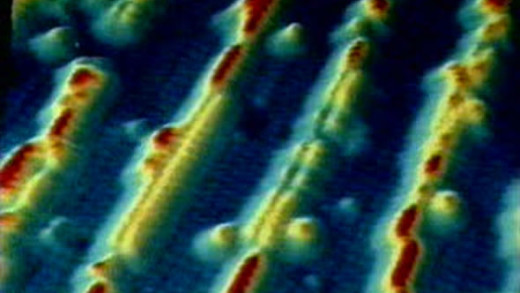
45:44Nanotechnology has the potential to create many new materials and devices with a vast range of applications -- such as in medicine, electronics or energy production for example. On the other hand, nanotechnology raises many of the same issues as with any introduction of new technology, including concerns about toxicity and the impact on the environment. The difference in this case being that nanomaterials are in use in products and industry right now and these concerns are seemingly going unaddressed...
 31:06
31:06Slim Hopes
Slim Hopes shows how the stories advertising tells us about food, femininity, and the female body directly contribute to anorexia, bulimia, and other life-threatening eating disorders. From ads that glamorise emotional eating with catch-phrases like "you can never have too much," to ads that promote thinness and tell women to watch what they eat, Slim Hopes takes the advertising industry to task for sending young women in particular, a set of deeply contradictory and unhealthy messages about food and body image.
 57:26
57:26Spin
Using the 1992 presidential election as his springboard, film-maker Brian Springer captures the behind-the-scenes manoeuvrings of politicians and newscasters in the early 1990s. Pat Robertson banters about "homos," Al Gore learns how to avoid abortion questions, George Bush talks to Larry King about halcyon and other drugs—all presuming they're off-air. Composed of 100% unauthorised satellite footage, Spin is a surreal expose of media-constructed reality, posing larger questions about the functioning of not only corporate media, but the political systems in which they support and how this in-turn plays to the media-constructed reality and so on.
 58:37
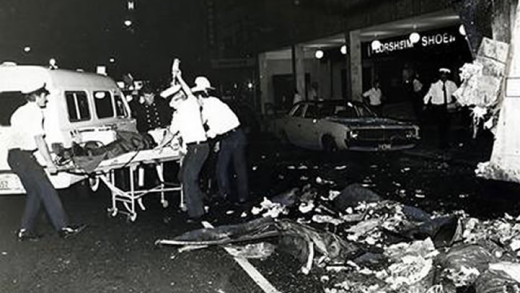
58:37In 1978, Australia was shocked by the explosion of a massive bomb placed in a rubbish bin outside the Sydney Hilton Hotel in NSW. The perpetrators were never found. However, evidence that the Australian security and intelligence forces may have been responsible resulted in the NSW State Parliament unanimously calling for an inquiry in 1991 and then again in 1995. The Federal Government vetoed any inquiry. No investigation was held. The government then set-up the Australian Federal Police and increased support for "anti-terrorist measures"...
 50:02
50:02John Pilger and David Munro look behind political rhetoric to discover the hidden world of international arms dealing...
 40:37
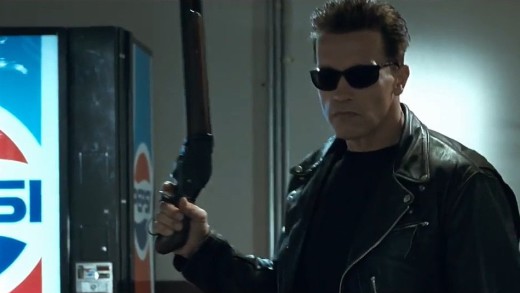
40:37By addressing the question of violence and the media from a number of different angles, The Killing Screens presents a comprehensive view on how to think about the effects of the media environment in new and complex ways. In contrast to the relatively simplistic behaviourist model, that "media violence causes real-world violence," renowned media scholar and researcher George Gerbner shows us how to think about the psychological, political, social, and developmental impacts of growing up and living within a cultural environment of pervasive violent imagery and narratives. What are some of the impacts of this culture and what can be done about it?
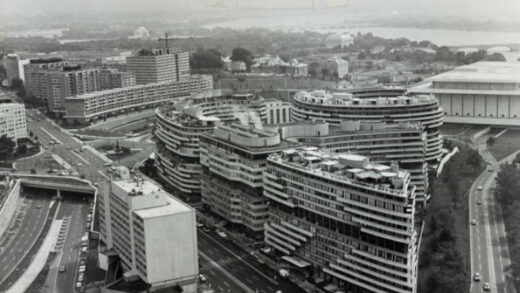
Watergate is a mini-series that provides insight on the presidential corruption scandal in the United States involving Richard M. Nixon through the early 1970s. The scandal eventually led to his resignation as America's president. The series is based on the book Watergate: The Corruption and Fall of Richard Nixon, by Fred Emery.
 57:22
57:22By the early 1990s, solid research and overwhelming evidence had prompted a growing awareness of the epidemic nature of date rape, especially on college campuses. But, starting in 1993, the media used the anecdotal comments of one young woman, Katie Roiphe, to undermine efforts to stop this continuing crime against women. How did this happen?