 53:09
53:095th June 1989, Tiananmen Square, Beijing. After weeks of mass killing, oppression and violence by the Chinese government against it's own people, the image of a lone man standing defiant with his shopping to a line of tanks still lives on...
 47:49
47:49The United States heralded many grandiose promises of freedom and equal rights as they invaded Iraq. But still years on from the invasion, the reality of everyday life for women inside Iraq is of course a different story. To make this film, two Iraqi women risk their lives to spend three months travelling all over the country with a camera to record the lives and experiences of women they meet. Iraq -- The Women's Story provides a compelling account of a life inside Iraq that is never seen on news bulletins...
Technocalyps
The latest findings in genetics, robotics, artificial intelligence, bionics and nanotechnology appear in the media frequently, but almost no analysis is found of their common aim which is to "exceed human 'limitations' and capability"—literally to 'transcend' humanity: transhumanism. This three part series covers the notion of transhumanism, the desire of technologists to become physical machines in totality, prompting serious physical, ethical, philosophical and practical questions. Will the transhumanists achieve their sacred so-called singularity? And what will that mean in the real world?
 48:55
48:55Nina Hobson, an officer in the Leicestershire police force, leaves the force disillusioned at the rampant culture of sexism, apathy and neglect that is rife amongst the institution. Five years later, Nina returns to the police force, but this time as an undercover journalist to document the culture behind the scenes, blowing the whistle. Filmed over four months, gaining unprecedented access to officers, Nina secretly captures footage first-hand showing the various ways the culture perpetuates itself. Reports of sexual assault and rape are not taken seriously, to the extent that in one scene, a female police officer says that if she was ever raped, she would not report it to the police. We see multiple cases where officers turn away from domestic violence incidents because they do not want to turn up, or do not want to answer emergency calls because they are out to get a meal instead. In another scene, officers are playing poker and indoor cricket rather than attending to others who are working with prisoners or doing patrol work. In another scene, a police officer boasts about how he pretended not to see someone injured and bleeding because he had a football match to watch while on duty. The examples continue. The result is that Undercover Copper not only exposes the brutality of these specific incidents, but posits fundamental questions about the police as an institution itself, embedded in a larger culture that is apathetic, misogynist, and self-interested. It shows just how much needs to be done to turn this around.
 50:11
50:11Reel Bad Arabs: How Hollywood Vilifies a People analyses how the storytelling of the West has crafted and perpetuated a false stereotypical image of Arabs and Arab culture since the early days of American silent cinema, up to the present with the biggest Hollywood blockbusters. The film shows how the persistence of these stories over time has served to powerfully naturalise and perpetuate prejudice toward Arabs, Arab culture and the Middle East in general, and how this in turn also serves to reinforce the harmful narratives of dominant culture which dehumanise Arabs as a people and negate the visceral political acts carried out against them by the West for decades. By inspiring critical thinking about the social, political, and basic human consequences of leaving these caricatures unexamined, Reel Bad Arabs challenges viewers to recognise the urgent need for counter-narratives to do justice to the diversity and humanity of Arab people, to share the truth about the stories of their lives and their history.
 1:21:45
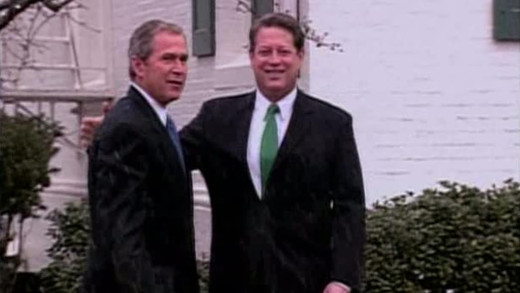
Filmed over three years, Hacking Democracy documents a group of American citizens investigating anomalies and irregularities with the electronic voting systems used during the 2000 and 2004 US Presidential elections. The investigation revolves around the flawed integrity and security of the machines, particularly those made by the Diebold corporation. Could the elections have been rigged?
 1:32:27
Why was the the electric vehicle made by General Motors destroyed in the late 1990s? Why did it receive only limited commercialisation despite being hugely popular? It was among the fastest, most efficient production cars ever built. It ran on electricity, produced no exhaust and catapulted American technology to the forefront of the automotive industry. The lucky few who drove it never wanted to give it up. So why did General Motors suddenly crush its fleet of EV-1 electric vehicles in the Arizona desert? Was it because of a lack of consumer confidence or conspiracy?
 1:17:35
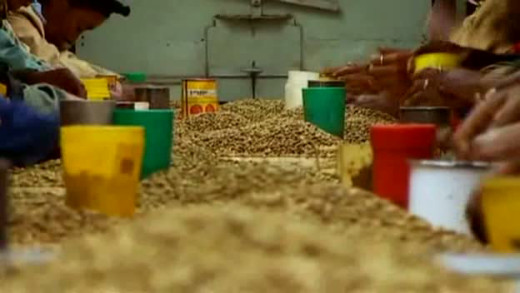
As westerners revel in designer lattes and cappuccinos, impoverished Ethiopian coffee growers still suffer the bitter taste of injustice. Black Gold follows the multi-billion dollar coffee industry down to the ground with the story of one man's fight for a fair-trade...
 1:16:15
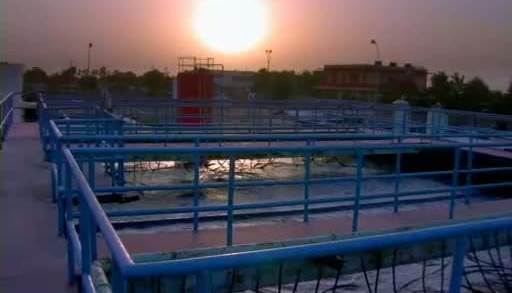
A World Without Water investigates the future of the world's water supply as it currently stands and travels to Bolivia to show just one example in many of the privatisation of the water supply and the turning over of water to corporations such as Coca Cola...
 1:27:44
Every day, escalating technologies are being used to monitor all of us as populations with unprecedented scrutiny—from driving habits to workplace surveillance, as shoppers, as consumers, as citizens. We are all increasingly being observed and analysed. Internet searches are monitored and used as evidence in court, the police track our movements on the road, governments collect our DNA, fingerprints and iris scans, corporations assemble huge databases for profiling and selling data, while governments collude with such lucrative businesses—for example, Acxiom, Lexis Nexis and ChoicePoint—to gain access to vast volumes of information about people and the machinations of modern society. What will it take for us to stop this system before it boils over into a full-blown technocratic authoritarian regime?
 22:51
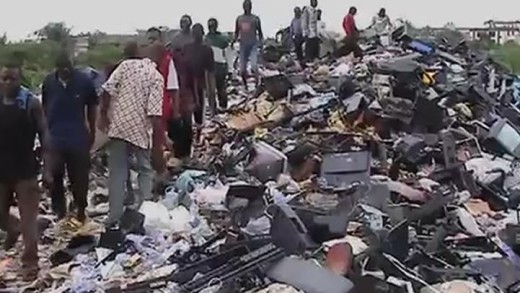
22:51The Digital Dump -- Exposing The Electronics Waste Trade travels to Lagos, Nigeria with the Executive Director of a global environmental organisation called BAN based in Seattle. The film is recorded over the course of 10 hectic days, during the week that Hurricane Katrina hit, documenting the reality of an escalating global trade in toxic, obsolete, discarded computers and other e-waste collected in North America and Europe. The waste is sent to countries like Nigeria by waste brokers and so-called recyclers. In Lagos, while there is some ability to repair and refurbish old electronic equipment, local experts explain that of the estimated 500 40-foot containers shipped to Lagos each month, as much as 75% of the imports are simply junk and are not economically repairable or marketable. Consequently, this e-waste is being discarded and routinely burned, despite the legal status of it as being hazardous materials.
 56:41
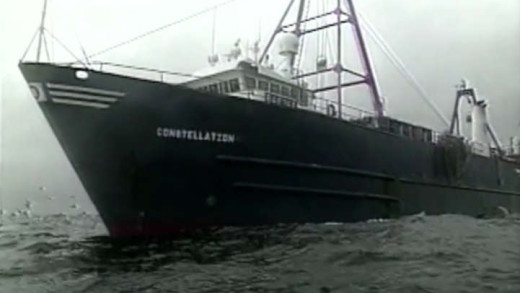
56:41One More Dead Fish reveals how destructive industrial fishing practices have decimated the Grand Banks of the North Atlantic Ocean, once an abundant area of food. The film also tells the dramatic story of how local hook-and-line fishermen are battling huge commercial fishing practices in order to survive in a globalised fishing industry. In interviews with local fishermen, government officials, biologists, and industry CEO's, the film explores regulatory, legislative, and environmental issues. The film grounds the viewer in a clear historical context as it explains one of the world's great environmental disasters. In examining the twisted language of the multinational fishing industry, One More Dead Fish questions why we don't hear more about the true environmental costs of industrial fishing practices, partly the result of globalisation.
 52:33
52:33Testify: Eco-Defence And The Politics Of Violence examines the forces that drive revolutionary environmental activism, using examples of direct-actions from the Animal Liberation Front (ALF) and the Earth Liberation Front (ELF) to illustrate tactics...
 56:39
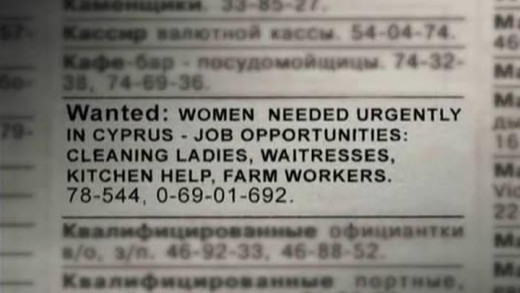
56:39Sex Slaves documents an extraordinary journey deep into the world of sex trafficking from the perspective of Viorel--a young man trying to find his wife Katia who was four months' pregnant when she left home looking for a job. Along the way, the production team takes a rare, hidden-camera look at various traffickers, pimps and middlemen who buy and sell hundreds of thousands of women each year. Lured by traffickers who prey on their dreams of employment abroad, many of the women are then kidnapped and "exported" to Europe, the Middle East, the United States and elsewhere. During this process, they are sold to pimps, locked in brothels, drugged, terrorised and raped repeatedly. In Eastern Europe, sex trafficking has become the fastest growing form of organised crime, with Moldova and Ukraine widely seen as major suppliers of women into the global sex trade...
 1:07:51
Disarm
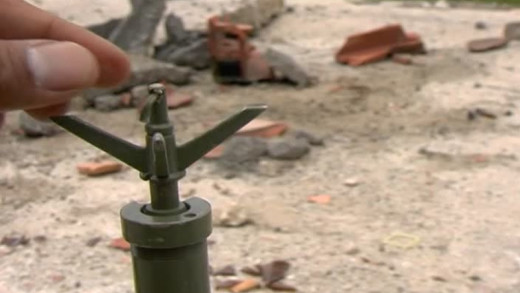
Disarm travels a dozen countries to look at how—despite a global ban—millions of anti-personnel landmines continue to be used to claim victims daily in more than eighty countries. The forces challenging the achievement of a landmine-free world are predictable. As such, the film mixes the views of diplomats and governments against that of victims, de-miners, soldiers, campaigners and aid workers to explore the issues that both hinder and further the case against the use of landmines across the world.
 52:03
52:03The Big Lie
When the hired guns of British American Tobacco came to Australia to appeal a decision in favour of a terminally-ill wife and mother, they didn't stop once they had the award overturned. They then set out to pursue the family of Rolah McCabe in order to cover their own legal costs in the case. Combining tense legal action with the highly-charged emotional fallout that is the legacy of those who put themselves in the sights of Big Tobacco, The Big Lie is an eloquent essay in deceit and corporate thuggery.
 49:21
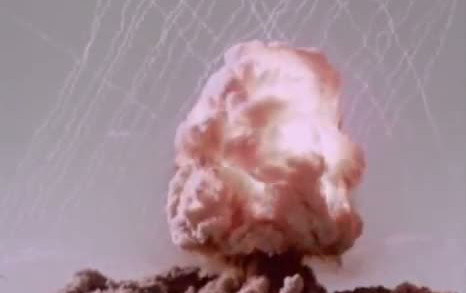
49:21Atomic Confessions investigates the devastating effects of atomic weapons testing carried out in Australia by the British military during the 1950s. Members of the Australian Army, Air Force and Navy detail former top-secret aspects of the tests, while prominent Aboriginal Elders describe the real impacts on the ground. Using archival film and photographs, as well as eye witness accounts, Atomic Confessions chronicles the consequences of nuclear testing imposed on the Australian people, and the land, showing that these tests are not just skeletons of the past...
 1:39:04
Is American foreign policy dominated by the idea of military supremacy? Why We Fight examines America's policies regarding making war, most recently the Iraq invasion and what is termed "the Bush doctrine" that includes pre-emptive strikes. This policy has been in the works for many years on reflection of the past wars of the 20th century alone. In this film, a variety of people are asked "Why We Fight?" with a variety of answers, followed by a look at today's U.S. military industrial complex via interviews with individuals involved with it...
 48:42
48:42After many experiments with cloning and genetically manipulation on other species, technology and genetic science is now turning to the frontier of the human. Every parent wants their child to be healthy, but does this extend to picking their genes for them? What about those who are unable to have children naturally for whatever reason, who turn to artificial insemination or genetic modification? Is this designing children? What are the repercussions in a world dominated by genetically modified people? Will we evolve into a new species and transcend our history to one of inclusion and harmony? Or, will we simply end up in a world that is further divided -- by genetic apartheid?
The Dark Side of Porn is a six part series of films that each examine an aspect of the modern porn industry. Using specific examples of films, and by speaking directly with former performers, filmmakers and families themselves; the series of films journey through the firsthand and often unseen issues that are pervasive to modern pornography--such as STIs, the use and abuse of relationships, rape, human trafficking, the recruitment process, and the seen and unseen cultural impacts of films such as Deep Throat and Emmanuelle, to name a few. Consequently, this series offers a disturbing account of the tip of the iceberg of modern mainstream pornography...
 1:48:41
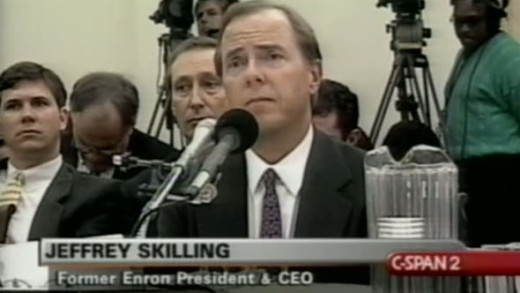
In 2001, the collapse of the Enron Corporation was of one of the largest business scandals in American history. The collapse resulted in criminal trials for several of the company's top executives, bringing the facts of exposure to Enron's involvement in the California electricity "crisis," where the company had rigged the market in order to generate huge speculative profits during the power shortages and blackouts of the time that effected millions of people.
 53:51
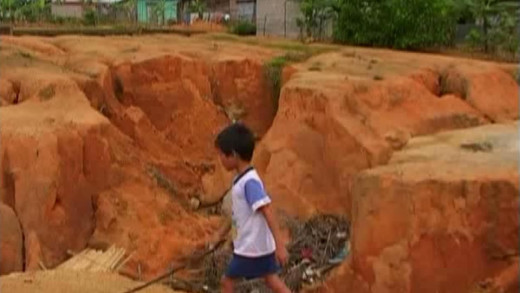
53:51For the people of Vietnam, war is not over. Three generations on from 1975, babies are still being born with serious birth defects and genetic abnormalities -- the legacy of the United States intensive use of chemical weapons. To this day, it is still unknown just how many have been affected. In 2005, on the eve of a historic lawsuit to determine the culpability of the United States, this film directly portrays the powerful effects of Agent Orange.
 27:12
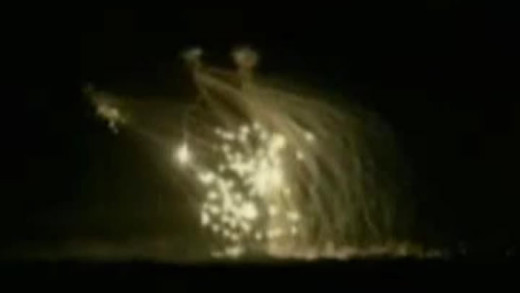
27:12This film comprehensively documents the use of chemical weapons--particularly the use of incendiary bombs--along with hordes of other horrific indiscriminate violence against civilians and children by the United States military in the city of Fallujah during the invasion of Iraq in November 2004. The cases portrayed involve the use of white phosphorus and other substances similar to napalm, such as Mark-77, which constitute clearly defined war crimes involving chemical weapons. Interviews with ex-military personnel involved in the Fallujah offensive back up the case for the use of such weapons by the United States, while reporters stationed in Iraq discuss the government's attempts to suppress the news by covert means.
 1:35:39
Every day in Vienna the amount of unsold bread that is sent back and thrown away is enough to supply Austria's second-largest city, Graz. Around 350,000 hectares of agricultural land, above all in Latin America, are dedicated to the cultivation of soybeans to feed Austria’s livestock, while one quarter of the local population starves. Every European eats ten kilograms a year of artificially irrigated greenhouse vegetables from southern Spain, with water shortages as the result. We Feed The World is a film about food and globalisation, fishermen and farmers, long-distance truck drivers and high-powered corporate executives, the flow of goods and cash flow, a film about scarcity amongst plenty.
 1:31:58
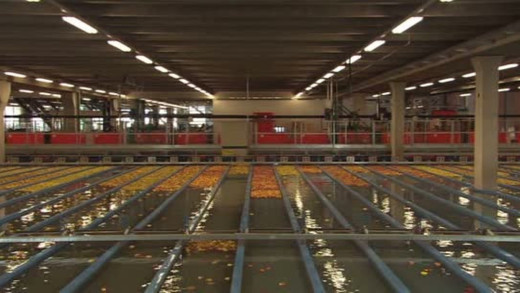
Welcome to the world of industrial food production and high-tech factory farming. Set to the pace of conveyor belts, immense machines, surreal landscapes and bizarre sounds, Our Daily Bread takes an inside look at the industrial environment that mass-produces today's food. Made entirely of visuals, without commentary, this film provides a raw view of the strange realities of industrial food production, which isn't always easy to digest...
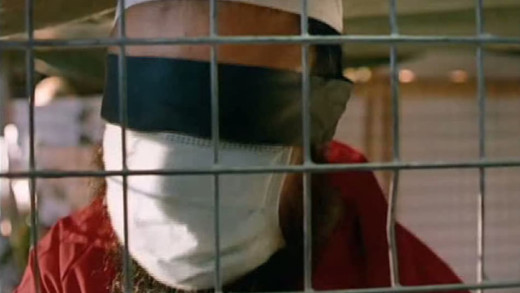 1:15:57
In the wake of the attacks of September 11th 2001, the United States opened a prison camp in Guantánamo Bay, Cuba. The hundreds of prisoners detained there are not afforded prisoners of war status according to the Geneva Convention, they are labelled "unlawful combatants" and are held indefinitely and tortured with no right to a lawyer or a trial. Gitmo -- The New Rules Of War cuts through the official political rhetoric surrounding Guantánamo to expose what really goes on at the United States central gulag in the 'war on terror'.
 1:00:19
Filmmaker Brian Flemming documents his journey exploring Christianity by questioning the existence of Jesus, examining evidence that supports the Myth of a Christ against the existence of a historical Jesus, as well as examining other aspects of the religion such as the questions of ethics of indoctrinating children in schools at a young age with the fear of god and other principles of faith instilled in them institutionally.
 1:37:38
Walmart is an iconic American company, known worldwide for selling cheap retail goods. While economists and global marketers call Walmart a success, there are many stories of mistreatment of employees, and a general feeling of mistrust and discontent among the businesses it has destroyed, such as local community stores. Walmart -- High Cost Of Low Prices highlights that it is worth being aware of the labour, social and corporate governance practices of companies that you do business with...