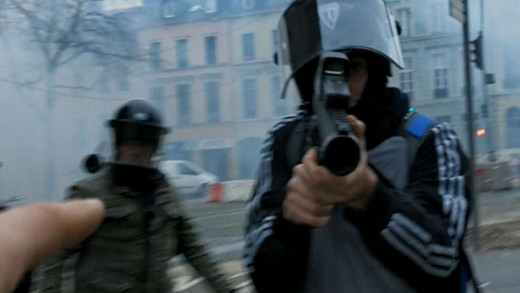
 1:28:32
The Monopoly of Violence is a study of police brutality in France, specifically documenting the gilet jaunes protest movement of 2018 and 2019. But the footage could just as easily have been from the United States, or Hong Kong, or Britain. Citing the work of sociologist Max Weber as a starting point, which shows that the state has the monopoly on the legitimate use of physical force, the film expands into the space of questioning a form of policing that descends into systematic brutality and violence. Using footage from demonstrators and independent journalists to ground the analysis, the images are discussed between lawyers, representatives of social movements, academics, police officers, and victims of police aggression. The result is a clarion call for the rights of the citizen, and the accountability and responsibility of the State.

Jeffrey Epstein: Filthy Rich is a miniseries about convicted sex-offender Jeffrey Epstein based on the 2016 book of the same name by James Patterson, and co-written by John Connolly and Tim Malloy. The four-part documentary features interviews with several survivors including Virginia Giuffre and Maria Farmer, along with former staff members and former police chief Michael Reiter, a key individual from the first criminal case against Epstein. The series provides insight into the survivors of Jeffrey Epstein, and how he used his wealth and power to commit his crimes.
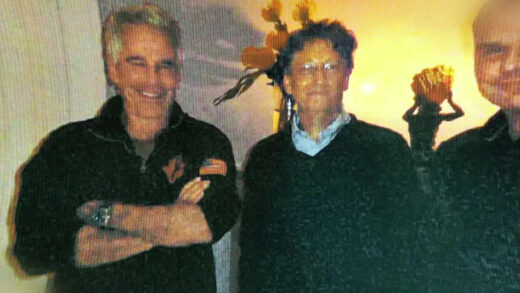
Surviving Jeffrey Epstein is a four-part series that investigates the convicted sex-offender Jeffrey Epstein who used his power, influence, and finances to not only shield his predatory sexual behaviour over several decades, but successfully manipulated the justice system to avoid true penalty. Deals made in secret. Investigations suppressed. Connections to the rich and powerful, participating in the web of trafficking across the globe. Eight survivors share their stories across the series, including the testimony of Courtney Wild, Rachel Kay Benavides, and Virginia Roberts Giuffre. Through the strength of their resolve and other survivors, the series shines a light on Epstein's tentacles, and the pursuit for real justice.
 1:28:09
Sustenance
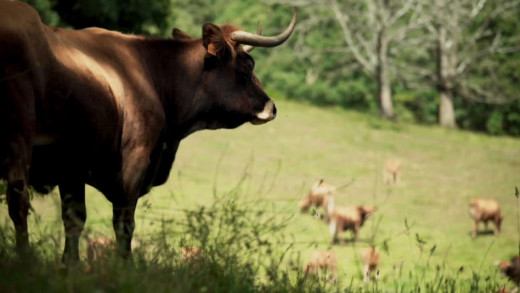
A group of friends become curious about the sustainability of their eating regiments. They instigate a challenge, and send filmmaker Yasi Gerami off on a quest to investigate the sustainability of their eating ideologies. The friends come from different backgrounds and live in Toronto, Canada, but the inquiry takes the story of their food around the globe. As Gerami digs deeper, she realises the inconvenient truths not only about the environmental catastrophes caused by our dependence on mainstream food production methods, but also by the cataclysmic social justice impact of our eating habits in the global south. The film unfolds some popular myths on topics such as plant-based diets, healthy and nutritional foods, ethical eating, food politics, industrial agriculture, and how to attain a sustainable food culture. Sustenance helps the viewer discover these themes, prompting the viewer to question where our food really comes from, and how it genuinely affects the health of other people, other species, and ultimately the entire planet.
 53:20
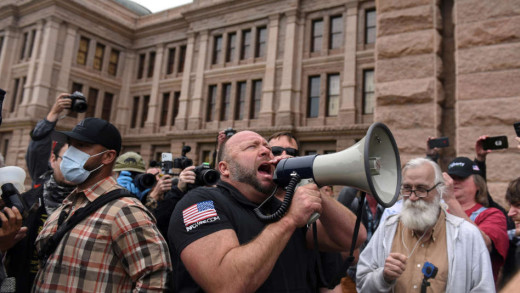
53:20United States of Conspiracy investigates the alliance of far-right radio show host and conspiracy theorist Alex Jones, Donald Trump, and long-time Trump associate Roger Stone, and their roles in deepening the battle over truth and lies in an age of disinformation. Drawing on interviews with Stone, former staffers from Jones' InfoWars website, people who have been directly affected by their conspiracy theories, and experts in how misinformation spreads, we see how once-fringe conspiracy theories have come to be wielded as a pervasive tool at the highest levels of mainstream politics.
 1:39:18
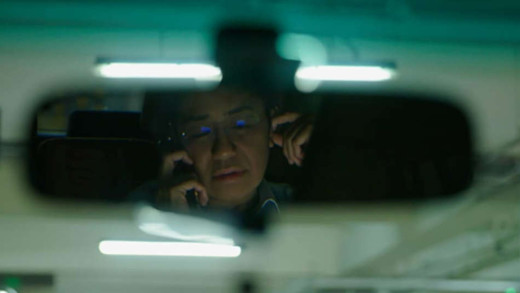
A Thousand Cuts is a timely film about modern-day journalism and freedom of the press inside the Philippines where the political space has been usurped by social media disinformation campaigns, celebrity propaganda spectacle, and direct organised political violence. The film comes as the world awaits the verdict of the case against of Maria Ressa, the CEO and founder of the news network Rappler, who has been vocal about holding president Rodrigo Duterte accountable for his government's much-criticised and violent "war on drugs." In what is a salient trend of our time, A Thousand Cuts examines the disinformation campaigns and the crackdown on the media, while journalists Maria Ressa and her team place the tools of their trade--and their freedom--on the line in defence of truth and democracy.
 1:28:35
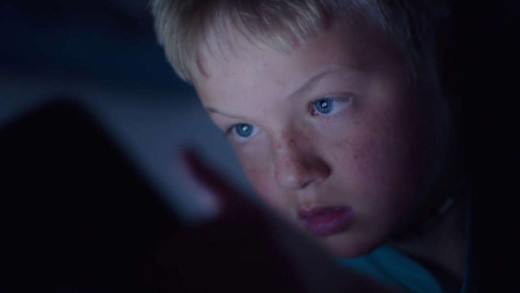
Mental illness and suicide have become the greatest threats to school-aged children. Many parents still view dangers to children and teens as primarily physical and external, but they're missing the real danger: young people spending more time online and less time engaging in real life, free play, and autonomy. While older generations might have learned the value of being outside, household chores, and in-person playtime with friends, the youth of today have fallen prey to smartphones and video games. Childhood 2.0 is an exploration of this dramatic technological and cultural shift, where children and parents face the rise of social networks, mobile devices, and the screen culture, along with addiction, withdrawal, anxiety, depression, online abuse, bullying, the pervasiveness of pornography, sexting, the rise of online pedophilia and sexual predators, the loss of playtime, imagination and autonomy, and the rapid growth of suicide among children and teens. In addition to mental health professionals, the filmmakers speak with a series of concerned parents who have witnessed a profound transformation in their children, especially when placed in contrast to their own beginnings. Then there are the children themselves who speak to the overpowering allure of their devices, the pressures these devices place on them in their daily lives, and the challenge they face when they try to turn away from the screen.
 1:23:49
9to5
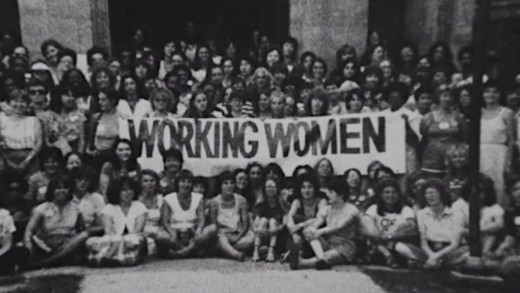
When Dolly Parton sang “9 to 5,” she was doing more than just shining a light on the fate of working women in the United States. Parton was singing the true story of the 9to5 movement that started with a group of secretaries in the early 1970s that wanted change in their workplaces. Their goals were simple: equal pay, fair work, and an end to sexual harassment. As the movement went national, it encapsulated the unique intersection of the women’s movement and the labour movement, as the women worked hard to unionise and press for real change in their workplaces. Featuring interviews with 9to5’s founders, 9to5: The Story of a Movement documents the struggle that changed workplace culture in the United States, and echos today.
 58:29
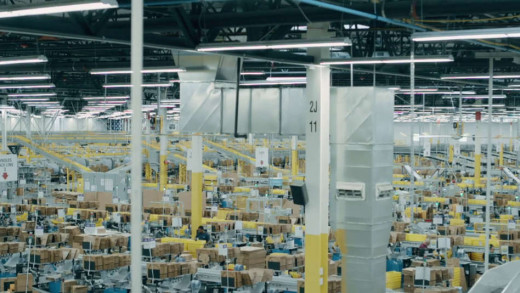
58:29In a quarter of a century, the Amazon corporation has propelled Jeff Bezos from 'online bookseller' to technology behemoth. He is the richest man on the planet, and the company he founded is one of the most powerful in the world. This documentary investigates Amazon's rise to corporate rein, revealing the problematic inside-operations that have the public tethered to its services. Former high-level insiders describe Amazon's obsessive data-gathering operations, that enable the company to use what it knows about us to shape not only the future of retail, but the workplace and technology in synergy. On both sides of the world, politicians and regulators are tardily beginning to question Amazon's power. But can the public rein in this corporate empire and break its addiction before even more damage is done to the structure of society and the environment?
 1:52:43
Jeff Bezos is not only one of the richest men in the world, the vast corporate empire he has built is unprecedented in the history of capitalism. The corporate power to shape everything from the future of work to the future of commerce to the future of technology is unrivaled. The company's reach into the everyday life of citizens, manipulating their experience and extracting extreme profits, is profound. It's extraction of labour and giant streams of data is cataclysmic. It's reach into culture, media, law enforcement, even a deal with the CIA, is indicative. But despite all of this, the company contradictorily claims it is "just a speck." As regulators around the world tardily start to consider the global impact of Amazon and how to rein in its extreme corporate power, filmmakers Anya Bourg and James Jacoby reveal how Bezos's plan to build one of the most influential economic and cultural forces in the world has already transpired, and how the job of reining in this pervasive corporate power will be testing in the extreme.
 1:45:37
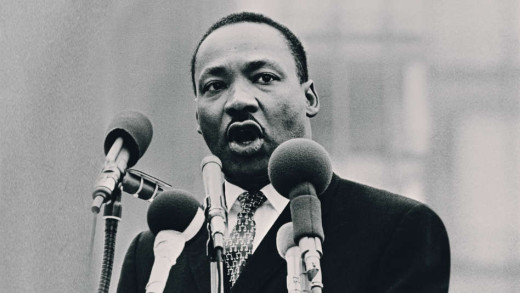
MLK/FBI documents the extent of the FBI's surveillance and harassment of Martin Luther King based on newly declassified files and documents obtained through the Freedom of Information Act and unsealed by the National Archives. Using these, as well as restored historical video footage, the film explores the United States government's history of targeting Black activists through surveillance programs specifically aimed the Civil Rights Movement. The film covers the attempts by J. Edgar Hoover and the FBI to personally discredit King by collecting recordings and images of his private sexual life with women other than his wife. This was used to denigrate his status within the civil rights movement in the United States. Not all FBI documents have been declassified, but the whole record will be made available public in 2027.
 1:50:13
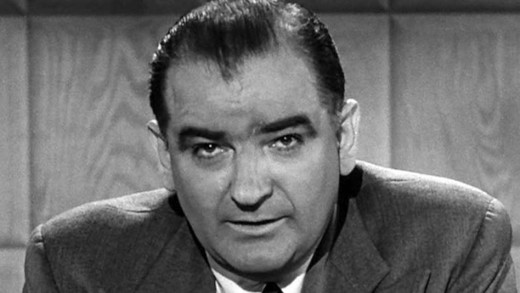
McCarthy chronicles the rise and fall of Joseph McCarthy, the United States senator who came to power after a stunning victory in an election that no one thought he could win. Once in office, he declared that there was a vast conspiracy threatening the United States--not emanating from a rival superpower, but from within. Then, without restraint or oversight, he conducted a vast crusade against those he accused of being "enemies of the state," a chilling campaign marked by groundless accusations, bullying, intimidation, grandiose showmanship, and cruel victimisation. With lawyer Roy Cohn at his side, McCarthy belittled critics, spinning a web of lies and distortions while spreading fear and confusion. After years in the headlines, he was brought down by his own excesses and overreach.
 1:51:02
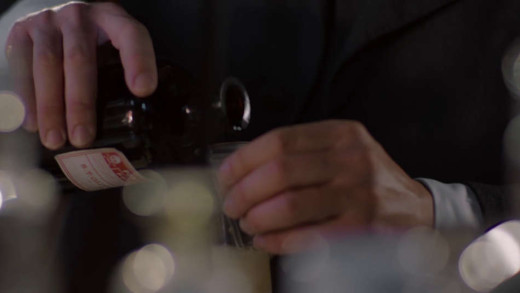
By the close of the Industrial Revolution, the food supply in the United States was tainted with frauds, fakes, and legions of new and untested chemicals, dangerously threatening the health of the public. The Poison Squad, based on the book by the same name from author Deborah Blum, tells the story of Dr. Harvey Wiley, a government chemist who was determined to banish these dangerous substances from dinner tables, and so took on powerful food manufacturers and their allies. Wiley embarked upon a series of bold and controversial trials on 12 human subjects who would become known as the “Poison Squad.” Following Wiley’s unusual experiments and tireless advocacy, the film charts the path of the forgotten heroes who together laid the groundwork for consumer protection laws in the United States, and ultimately, paved the way for the creation of the Food and Drug Administration.
 9:31
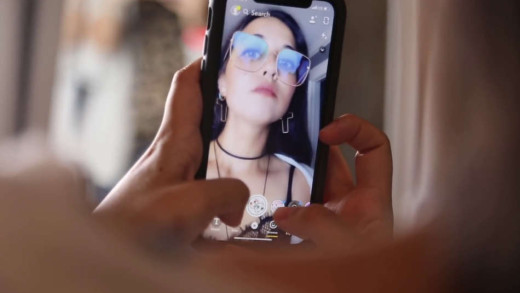
9:31A 37-year old mum goes undercover as an 11-year old girl to expose the dangers facing kids on social media platforms like Instagram, Snapchat, TikTok, and Kik. Left unsupervised, young children can be exposed to online predators, grooming, and psychological abuse within minutes. In 2018 alone, the filmmakers of this project alerted the FBI to 99 child predators. In 2019 that number is more than 300 and counting. Each of these cases represents a real child experiencing real harm, and the challenge of this short film is to help parents and schools understand this new reality, while also acting to bring online predators, groomers, and paedophiles to justice.
 49:39
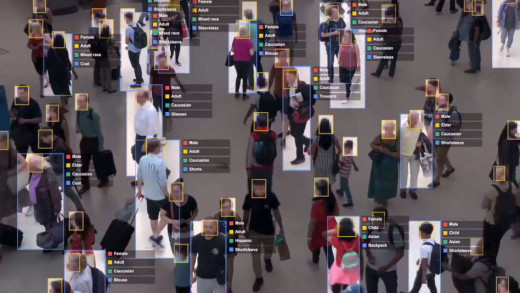
49:39In 2018, Professor Shoshana Zuboff published The Age of Surveillance Capitalism, a monumental book about the new global economy, where the biggest technology corporations extract, manipulate, and trade our personal information, data about our lives, and data about our personalities, on a scale never before possible. How did this happen? In The Big Data Robbery, Zuboff starts with the volatile dot-com boom and bust of the late 1990s and 2000s. How did Google, a company created during that time, survive the bursting of the Internet bubble? Founders Larry Page and Sergey Brin discover that the "residual data" that people leave behind in their searches on the Internet is very precious and tradable, and begin as one corporation of many, the Big Data Robbery, extracting and building huge datasets about people. Zuboff takes the lid off Google and Facebook to reveal a merciless form of capitalism in which the citizen itself now serves as a raw material.
 1:27:32
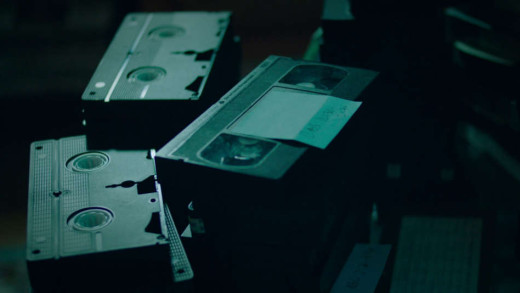
Marion Stokes was secretly recording television twenty-four hours a day for thirty years. It started in 1979 with the Iranian Hostage Crisis at the dawn of the twenty-four hour news cycle, and ended in 2012 while the Sandy Hook massacre played on television as Marion passed away. In between, Marion recorded on 70,000 VHS tapes, capturing revolutions, lies, wars, triumphs, catastrophes, bloopers, talk shows, advertising--all of which deeply show how television has shaped the world of today. Remarkably prescient, Marion knew this, and saved it as a form of activism, knowing that archiving everything that was said and shown on television was part of the fight for the truth and historical memory, keeping those in power accountable. At the time, the public didn’t know it, but TV networks themselves were not keeping archives of their material, with huge swathes of recorded history lost. If it wasn't for Marion, and the Internet Archive that will soon digitise her tapes for prosperity and free public access, these records would be lost forever. This film is about a radical Communist activist, who became a fabulously wealthy recluse archivist, and whose work was unorthodox, but also genius, even though she would pay a profound price for dedicating her life to such a visionary project.
 18:19
18:19Invasion
Invasion is a short film about the Unist’ot’en camp, where Wetʼsuwetʼen First Nation peoples have been living on their traditional unceded territory since time immemorial, only to face repeated threats in the past decade by the Canadian government and corporations that are relentlessly pushing to install oil pipelines and other extractive industries on their land. Wetʼsuwetʼen feel they have a sacred duty to protect their land from harm and preserve it for future generations, and so formed the Unist’ot’en camp to resist the colonisers and their destructive ways. Located 1,200 km from Vancouver, the camp is on the shores of the Wedzin Kwah and mouth of Gosnell Creek, as a healing space for Indigenous people and settlers alike, and an active example of decolonisation and resistance.
 1:35:29
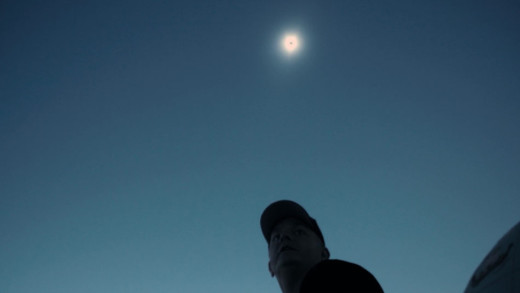
Behind the Curve documents the resurgence of believers of a flat Earth, as made popular through YouTube videos. The film is a personal exploration of how people became exposed to flat Earth theories (the YouTube algorithm), and how those ideas were reinforced in an echo chamber of social media, rejecting empirical evidence, at a time of increasing countercultural distrust in authority figures and the epistemology of science. The narrative at the core of the film reveals how the screen bubble can envelop a person's informational exposure, and change their relationships and perceptions in the real world, where confirmation bias is reinforced, making alternative views threatening, and individualism sacrosanct. Information that is contrary to a deeply held belief then becomes increasingly impossible to accept, especially if it has changed your life and circle of friends. So with empathy and a playful warmth, Behind the Curve becomes a warning light to the importance of honest discourse and critical analysis, falsifiability and dogma, but above all, to empathy and understanding of a person's desire to create meaning and acceptance in a lonely, fragmented culture.
 49:43
49:43Slavery is still existing in Mauritania, although it has officially been prohibited by law. The government of Mauritania has been trying to hide slavery from the outside world for years. Slavery has officially been abolished since 1981, almost a century after it happened worldwide. But activists are still fighting for the liberation of tens of thousands of black Mauritanians owned by someone else. Slavery still exists.
 1:10:19
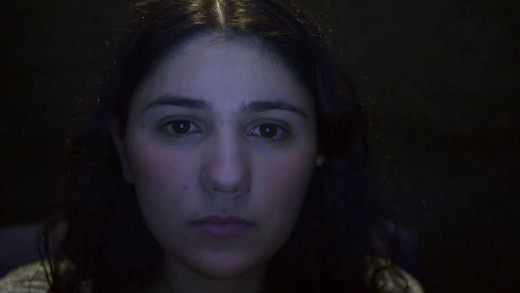
The Viewing Booth recounts a unique encounter between a filmmaker and a viewer--exploring the way meaning is attributed to images in today's culture of the screen. In a lab-like location, Maia Levy, a young Jewish American woman, watches videos portraying life in the occupied West Bank, while verbalising her thoughts and feelings in real time. Maia is an enthusiastic supporter of Israel, and the images in the videos, depicting Palestinian life under Israeli military rule, contradict some of her most deep-seated beliefs. Empathy, anger, embarrassment, innate biases, and healthy curiosity all play out before our eyes, as we watch her watch the images created by the occupation. As Maia navigates and negotiates the images, which threaten her worldview, she also reflects on the way she sees them. Her candid and immediate reactions form a one-of-a-kind cinematic testimony to the psychology of the viewer, most especially in the digital era.
 1:53:50
AI, or Artificial Intelligence, is spouted as the ability of machines to "think" [sic] at a speed and depth far beyond the capacity of any human. Proponents of these digital technologies claim their systems are used in ways that are beneficial for society. But as we see, the current use of AI isn't necessarily aligned with the goals of building a better society. There still remain escalating concerns about labour, the future of work, privacy, the surveillance society, and social control--all valid criticisms that go back many decades--while the rivalry for technological supremacy between the United States and China mirrors the dynamics of the cold war. In the Age of AI is an investigation that touches on these areas, providing a platform to ask fundamental questions about unrestrained technological escalation.
 1:30:39
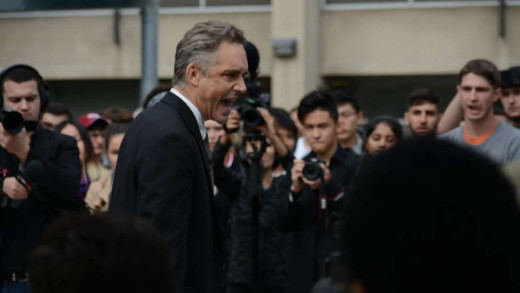
University of Toronto psychology professor Jordan Peterson launched into the public eye after he published a controversial video series entitled Professor Against Political Correctness in 2016. Within 2 years, he sells over 3 million copies of his self-help book, appears on numerous television shows, and fills theatres with his lectures. At the same time, he endures a swell of backlash, including that from a former colleague that now labels him as a dangerous threat. After mobilising some on the right for his criticisms of the left, Peterson fends-off being labelled a right-wing figurehead while moving through the media spectacle, arguing his shifting philosophical views. Filmed during this period of Peterson's rise to fame, and told through family, friends, and foes, The Rise of Jordan Peterson presents a complex kaleidoscopic narrative and personal portrait, enabling the viewer to examine Peterson in several different ways, while considering his wide and often conflicting range of perspectives and social commentary.
 1:19:30
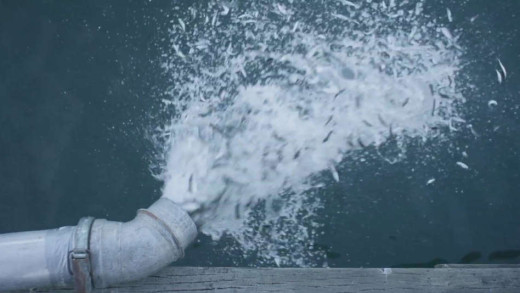
Artifishal is a film about people, rivers, and the fight for the future of wild fish and the environment that supports them. It explores wild salmon’s slide toward extinction, threats posed by fish hatcheries and fish farms, and this culture's relentless pursuit of engineering, mechanisation, and commodification in the face of environmental collapse. The film shows how fish hatcheries and fish farms threaten wild salmon populations, which in-turn has wide effects on the rest of the environment, but instead of helping wild salmon recover, this culture powers on with hatcheries and farms at great cost, both economically and ecologically. Artifishal explores the process, and what's at stake if this culture continues its destructive path.
 1:45:22
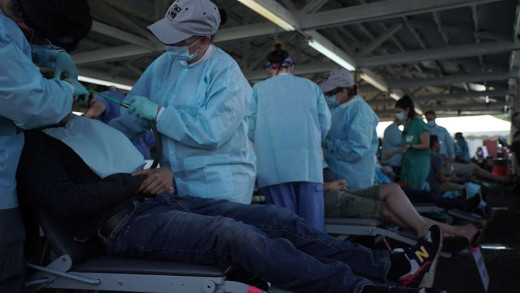
Britain's National Health Service, the NHS, was the world's first universal public health service, created out of the ideal that healthcare should be available to everyone, regardless of wealth. Designed to give millions of people "freedom from fear" following the Second World War, the NHS today is under threat of being sold-off and converted to a free-market model, inspired by the private health insurance system in the United States, which results in the deaths of an estimated 45,000 people every year. President Trump says the NHS is "on the table" in any future trade deal with America. Filmed in Britain and the United States, this timely documentary reveals what may be the last battle to preserve the most fundamental human right: health. Veteran filmmaker John Pilger takes us through a history of threats to Britain's National Health Service, from its founding in 1948, through a push for privatisation during the 1980s, to challenges by the new politics of today and the drive for corporate take-over.
 1:59:29
Coup 53
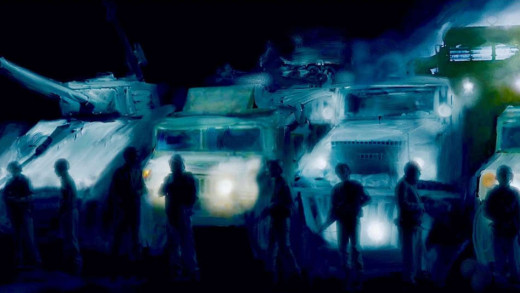
The 1953 Iranian coup d'état was the overthrow of the democratically elected government of Iran in favour of strengthening the monarchical rule of the Shah for the purposes of foreign access to Iran's oil. BP was at the heart of this story. The operation was orchestrated by the United States under the name TPAJAX Project (Operation Ajax) and the United Kingdom under the name Operation Boot. While making a documentary about this CIA/MI6 coup, Iranian director Taghi Amirani and editor Walter Murch discover never seen before archive material hidden for decades. The 16mm footage and documents not only allow the filmmakers to tell the story of the overthrow of the Iranian government in unprecedented detail, but also leads to explosive revelations about dark secrets buried for 67 years. Working with Ralph Fiennes to help bring the lost material to life, what begins as a historical documentary about four days in August 1953 turns into a live investigation, taking the film-makers into uncharted cinematic territory.
 1:28:30
At the Heart of Gold: Inside the USA Gymnastics Scandal reveals a dangerous athletic culture that prioritised winning over everything else, including protecting young female athletes. For more than 30 years, Larry Nassar worked with gymnasts, as a respected trainer and doctor. He was charming, taught at church, volunteered in the community, and was seemingly well-liked throughout. He treated girls' aches and pains, becoming a friend and confidant to many along the way, while also sexually abusing them during sessions for many years. When some girls began to speak up about their experiences, they were silenced, gaslighted or denied, all the way up to the highest levels of management, across multiple sporting institutions. After many complaints and eventually a cumulative legal investigation, Nassar ends up exposed as a serial sex offender. This film unpacks the scandal, its cover-up, and aftermath, through interviews with dozens of survivors, as well as coaches, lawyers and journalists, as one of the most high-profile paedophile trials in recent years. It documents the grooming, methods, and psychology of a charismatic sexual abuser, as well as the culture that enables and perpetuates it.
 1:06:34
Public Figure
Public Figure is a measured exploration of this culture's obsession with social media, exemplified through the lives of several Instagram "influencers." The film invites the viewer to question how much of what we see online is real or delusion, while slowly, the "influencers" themselves reveal the extent to which they've completely commodified their lives into enterprises, as giant advertising engines, while also touching on the personal impacts of screen culture addiction. These commentaries are contrasted by views from clinical psychologists and counsellors, whom also question the long term effects of social media culture. While some figures use their commodified lives to inspire, promote a cause, or market their business, all in all, each and every "influencer" is wittingly or unwittingly part of a multi-billion dollar advertising engine that spends more money on marketing than education in the United States. Instagram advertisers will spend $2.38 billion on "influencers" in 2019. Public Figure asks us to reflect on our personal social media use, while questioning how society perceives reality.
 1:31:32
Push
Housing is fundamental human right. But in cities all around the world, housing affordability is decreasing at record pace. The local working and middle classes have become unable to afford housing in major cities: London, New York, Berlin, Hong Kong, Toronto, Tokyo, Valparaiso, Sydney, Melbourne, Caracas, Barcelona, Paris, Amsterdam, Stockholm... the list seems endless. People are being pushed out of their very own homes--because living in them has rapidly become unaffordable. Told through the eyes of Leilani Farha, a United Nations special rapporteur on housing, Push touches on the foundations of the crisis, as we follow the rise of abstract finance and the pervasive influence of neoliberalism that conjures a perfect storm: the global financial crisis of 2008--where houses packaged as "complex financial instruments" were the core of the crisis. Then, once the financial industry was bailed out by the public to the tune of trillions of dollars, financiers bought up millions of houses around the globe for cents on the dollar, and their power and influence has only increased in the subsequent decades. Farha travels all around the world, speaking to people that now spend 90% of their income on rent, after wages have stayed stagnant since 1970s, and how large corporations swallow up entire communities, guided by the same politik. She says we still need to confront those old ideas--the financialisation of the housing 'market.' "There's a huge difference between housing as a commodity and gold as a commodity." These systems don't consider the people they extract from.