 58:59
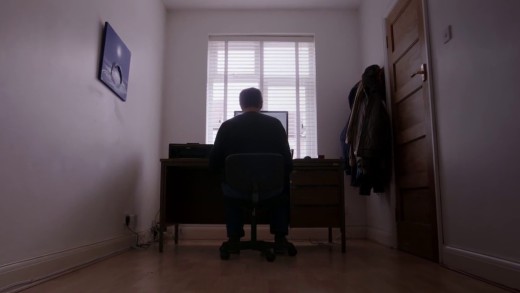
58:59The premise of The Age of Loneliness is of how our communities and indeed lives have been completely subsumed by capitalism, leaving us alone in tiny units, solitary. Screen culture and technology is often blamed, but this is more an extension of a larger problem. The Age of Loneliness is exacerbated by this culture making us feel like we have no purpose. How many of us know our neighbours? How many of us even know the land where we live? How has this been destroyed, usurped? What of the nuclear family? With single parents in numbers like never before and families spanning across the globe, all of this poses much larger questions about paternity and the dominant model of relationships. Consumerism and commodification also plays a central role—make note of the screens, computers, TVs and dating websites in the life of the lonely. What's the common thread here? The Age of Loneliness is a film that spans generations, and can function as a call for all of us to reconnect with each other and the places we live for real. To turn away from the spectacle and instead build a better world, with purpose, meaning, friends and real community.
 1:29:27
The American Blackout chronicles the 2002 defeat, and 2004 re-election, of Congresswoman Cynthia McKinney to the U.S. House of Representatives, focussing on issues surrounding voter disenfranchisement and the use of electronic voting machines in both the 2000 and 2004 presidential elections...
 1:12:08
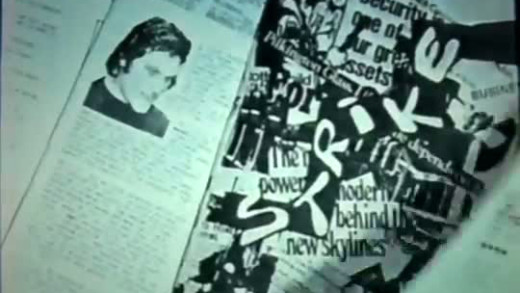
Between 1970 and 1972, a group of activists used weapons to symbolically attack property, sparked by demonstrations in London against the Vietnam War. Calling themselves the Angry Brigade, the group published a series of communiqués with the actions, explaining the choice of targets and the philosophy. Targets included the embassies of repressive regimes, police stations, army barracks, boutiques, factories, government departments and the homes of Cabinet ministers, the Attorney General and the Commissioner of the Metropolitan Police. The attacks on senior authority figures increased the desire for 'results' and consequently brought an avalanche of police raids. But from the start the police were faced with the difficulty of getting to grips with the section of society they found to be totally alien -- were they facing an organisation, or an idea?
 52:50
52:50In the weeks after the September 11th attacks in the United States in 2001, envelopes carrying Anthrax were delivered to government offices, network news divisions, and a tabloid newspaper throughout the country. Five people were killed, many more infected, and the nation was fearful. Seven years later, after mistakenly pursuing one suspect, the most expensive and complex investigation ever undertaken by the FBI ended when they identified army scientist Dr. Bruce Ivins as the sole perpetrator of the attacks--after Ivins had taken his own life. Now, new questions are being raised about the FBI’s investigative methods and whether Ivins really did it.
 44:59
44:59When modern antidepressants like Prozac were launched in the late 1980s, they were quickly heralded as wonder drugs for treating anxiety and depression with few side effects. While many say they have benefited from taking the drugs, there is an increasing body of evidence that reveal physical and mental side effects of the drugs that are wide-ranging and are often downplayed. From headaches and brain fog, to loss of sexual function and suicidal thoughts. The Antidepressant Story speaks to patients grappling with side effects such as these and asks if this multi-billion dollar pharmaceutical industry is really helping.
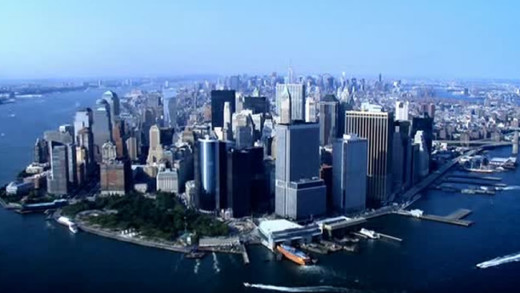
For millions of people, the global economic collapse has generated curiosity about how money systems actually work, as opposed to how they're portrayed, especially when so many financial pundits seem to be baffled. In The Ascent of Money, economist Niall Ferguson works through some history that created today's money system, visiting the locations where key events took place and poring over actual ledgers and documents, such as the first publicly traded share of a company. Viewed with a critical eye, this series aims to show how the history of money is indeed at the core of civilisation, with economic strength determining political dominance, wars fought to create wealth and individual financial barons determining the fates of millions.
 1:32:26
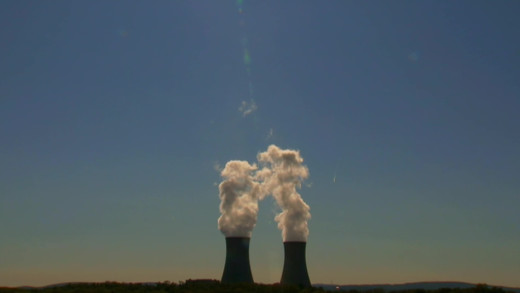
In 2010, the United States announced the construction of the first new nuclear power plant in more than 30 years. But a year later in Japan, a 9.0 magnitude earthquake hit, preceding a cataclysmic meltdown at the Fukushima Daiichi Power Plant bringing the reality of nuclear power back into public consciousness across the globe. For some. Both political parties of the United States ignored this and continued a pro-nuclear agenda, while others, forgetting more of the past, didn't realise the history of home. The Atomic States of America serves to break this forgetting by travelling from the gates of Three Mile Island, to the cooling ponds of Braidwood to document just some of what has happened and is happening with nuclear power in the United States today. By speaking with communities throughout the country, this film documents arrays of stories of polluted drinking water, government collusion with industry, cover-ups, cancer epidemics and other suppressed stories. Begun more than a year before the disaster in Japan, this film gains a unique before and after perspective, seeking to inspire an honest remembering about just what this culture has done and continues to do for power at the expense of the world.
 52:32
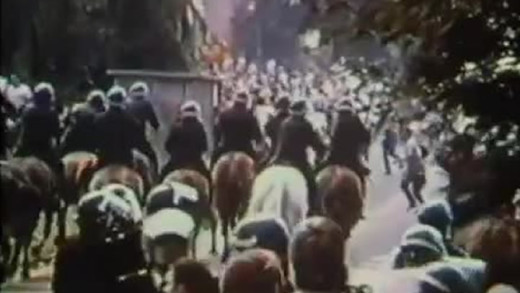
52:32Orgreave in the North of England was the focal point for a mass protest by miners in June 1984. At this time, miners were angry over proposed pit closures and reacted by striking and pressuring other pits to close. The culmination of these protests was a mass gathering of miners from all over the country at Orgreave. On the morning of 18th June miners were escorted into Orgreave. At this point, police tactics already resembled a military campaign. After a push by the miners, the police acted with force, charging the pickets on horses. The protest soon turned violent with the police deploying dogs, batons and guns in an attempt to suppress the protest. The Battle for Orgreave interviews defendants directly about their experiences of Orgreave, and how those experiences changed their life...
 23:28
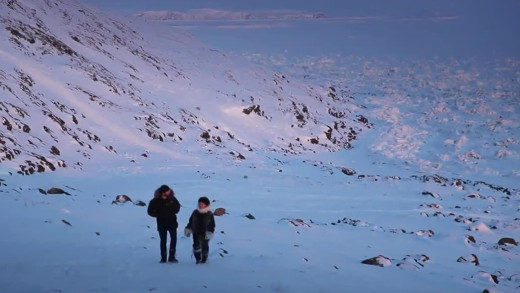
23:28With the United Nations laying out a deadline for 2013 on claims to the Arctic seabed to be exploited for oil, minerals and gas; countries such as Canada, the United States, Russia, Norway and Greenland are all attempting to stake a claim. As the beginning battle for territory intensifies, the rapid disappearance of the Polar ice caps opens up potential shipping routes, which further fuels the blood lust by those in power to exploit the region. The Battle For The Arctic heads to the Far North to see first-hand who and what is threatened, and exactly what is at stake with these final grabs for energy, territory, and power.
 1:32:58
The Battle Of Chernobyl recounts the most significant and catastrophic nuclear explosion in history -- an incident that was kept secret for twenty years by the Soviet Union and United States alike. More than 200 people died or were seriously injured by radiation exposure immediately after the explosion and many generations later, the impacts are still felt in cancers, birth defects and toxic ecology, with millions of people still suffering from radiation related health problems such as leukaemia and thyroid cancer...
 41:44
41:44Presented by author and activist Naomi Wolf, The Beauty Myth explores the phenomenon of how the social power and prominence of women has increased in the past few decades, alongside a paradoxical increase in the pressure they feel to adhere to unrealistic social standards of physical beauty, appearance and presentation. It seems the more legal and material hindrances women have broken through, the more strictly and heavily and cruelly images of female beauty have come to weigh upon us. Women have breached the power structure, but meanwhile eating disorders have risen exponentially and cosmetic surgery has become a fastest-growing specialty. Pornography has become the main media category--ahead of legitimate films and records combined--and thirty-three thousand American women told researchers that they would rather lose ten to fifteen pounds than achieve any other goal. How did this come to be? The Beauty Myth shows how the edacious commercial culture drives this pressure and leads to a pervasive preoccupation with appearance in both sexes, compromising the ability of women to be effective in and accepted by society. The film is a call to question the culture and redefine the notions of success, beauty and indeed what it means to be a sane human being in this toxic culture.
 1:25:52
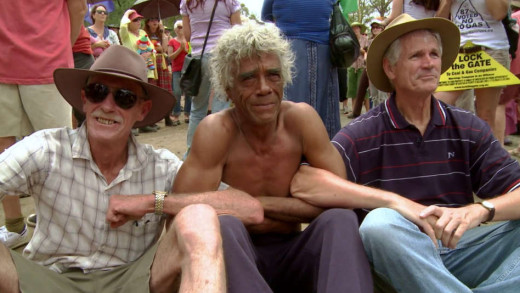
The Bentley Effect recounts the story of citizens throughout the Northern Rivers shire of Australia protesting against coal-seam gas extraction. When the community first learns of the news, a critical mass of people from all walks of life--farmers, landowners, mums, dads, activists, and scientists--come together to rally against the invasion. But despite enormous public opposition, the gas industry and the State Government are determined to see their plan through. So the community changes tact and resorts to differing methods of civil disobedience and non-violent protest. This culminates in a music festival of sorts in Bentley, New South Wales, which brings together the community and also spurs them on to initiating political action.
 49:39
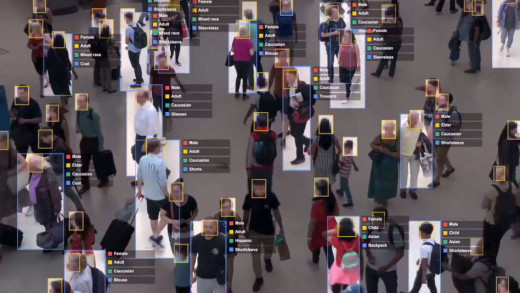
49:39In 2018, Professor Shoshana Zuboff published The Age of Surveillance Capitalism, a monumental book about the new global economy, where the biggest technology corporations extract, manipulate, and trade our personal information, data about our lives, and data about our personalities, on a scale never before possible. How did this happen? In The Big Data Robbery, Zuboff starts with the volatile dot-com boom and bust of the late 1990s and 2000s. How did Google, a company created during that time, survive the bursting of the Internet bubble? Founders Larry Page and Sergey Brin discover that the "residual data" that people leave behind in their searches on the Internet is very precious and tradable, and begin as one corporation of many, the Big Data Robbery, extracting and building huge datasets about people. Zuboff takes the lid off Google and Facebook to reveal a merciless form of capitalism in which the citizen itself now serves as a raw material.
 25:00
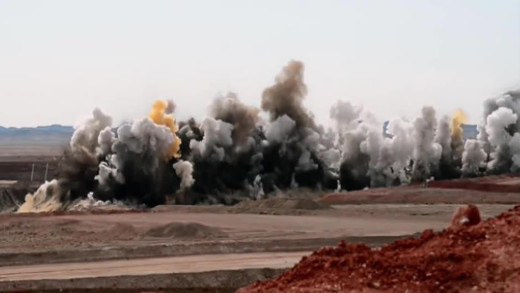
25:00Mongolia is the next target for the world's biggest mining corporations for copper. The Oyu Tolgoi mine currently under construction in the South Gobi Desert is a combined open-pit and underground mine due to start extraction in the next few months of 2012. But the problems don't end there. The Oyu Tolgoi deal between the Mongolian government and the massive Australian mining company Rio Tinto is truly indicative—Mongolia gets just 34 percent, while Rio Tinto is exempt from a profits tax and receives open access to scarce desert aquifers and the provisioning of water to people living close to land that the mining company now claims to own. The Big Dig documents how this avaricious mining-driven culture comes at the expense of the natural world and the way of life of local communities.
 1:30:19
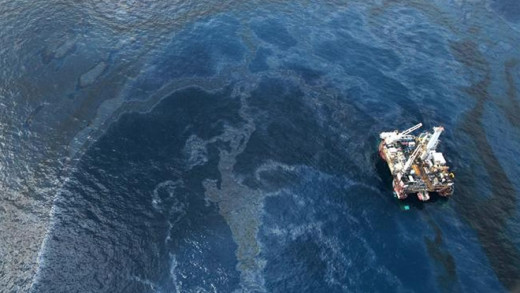
On April 22, 2010 the Deepwater Horizon offshore drilling rig, run by oil giant BP, sunk into the Gulf of Mexico--creating the world's biggest and most catastrophic environmental crime in history. After over 750 million litres of crude oil and millions of litres of the chemical dispersant Corexit dumped into the sea, the disaster was deemed over and all damage repaired. This is bullshit however. Film-makers Josh and Rebecca Tickell travel to the Gulf of Mexico to document first-hand the extent of environmental and community damage, continuing many years after the explosion. Beginning by tracing BP’s origins and fingerprints across decades of US manipulation in Iran, The Big Fix assembles an indictment of this monumental disaster by unpacking the workings of the complex oligarchies that put pursuit of profit over all other ends...
 52:03
52:03The Big Lie
When the hired guns of British American Tobacco came to Australia to appeal a decision in favour of a terminally-ill wife and mother, they didn't stop once they had the award overturned. They then set out to pursue the family of Rolah McCabe in order to cover their own legal costs in the case. Combining tense legal action with the highly-charged emotional fallout that is the legacy of those who put themselves in the sights of Big Tobacco, The Big Lie is an eloquent essay in deceit and corporate thuggery.
 1:34:54
The Big Sellout reveals the reality of privatisation and globalisation by examining the corporate takeover of basic public services throughout the world, such as water supply, electricity, public transportation, and public health care. In South America, Asia, Africa, but also in Europe and the United States, filmmaker Florian Opitz talks to the architects of the new economic world order, as well as to ordinary people who have to deal with the real direct effects. The result is a tapestry of narratives the world over that show where the dogma of privatisation cames from, who profits from it, what societies lose, and why resistance is so important.
 58:38
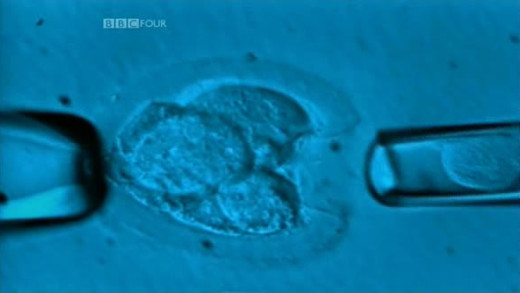
58:38The Biotech Revolution is largely an exploration by scientists working in genetics and biotechnology that repeatedly promise "unprecedented health benefits and longevity for all," amongst other things, to rationalise their work in the so-called "biotechnology revolution." But in reality, isn't this "revolution" simply just more of the same control imperative of science and this culture's technology, essentially ending in the prospect of a monoculture of genetically modified people? Will such control foster into globalisation a history of inclusion and harmony? Or, will we simply end up in an extension of the current order, albeit one that is further divided, this time by genetic apartheid?
 1:54:24
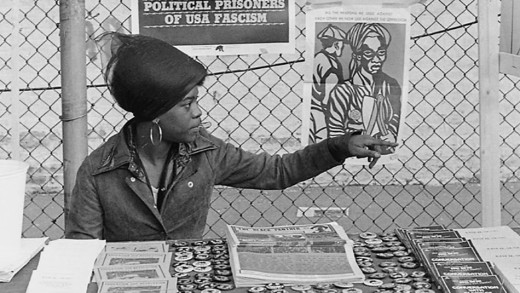
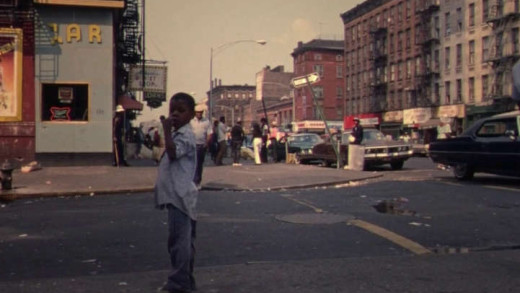
1966, United States. A new revolutionary culture was emerging and it sought to overthrow the corrupt systems of power waging the invasion of Vietnam, amongst the struggle for equality and civil rights at home. Beginning with armed citizens' patrols to keep police accountable and challenge police brutality in Oakland California, The Black Panther Party put itself at the vanguard for social change, expanding in 1969 to community social programs, including free breakfast for school kids and community health clinics. This lead the FBI to call the movement "the greatest threat to the internal security of the country," and start an extensive government program called COINTELPRO to surveil, infiltrate, perjure, harass, discredit, destabilise and disintegrate the movement. This film chronicles the story arc of the Black Panthers successes and failures, through the voices of the people who were actually there: police, FBI informants, journalists, white supporters and detractors, and the Black Panthers themselves.
 1:30:38
Using collated footage discovered in the cellar of Swedish Television some 30 years later after recording, The Black Power Mixtape is a film that examines the evolution of the Black Power movement in the United States from 1967 to 1975. Commentaries and interviews carry the film, from leading contemporary African-American artists, activists, musicians and scholars which is divided into 9 sections based chronologically on each successive year between 1967 and 1975. The film focuses on several topics and subjects relevant to the Black Power Movement including Opposition to United States involvement in the Vietnam War, the Black Panther Party, COINTELPRO, and the War on Drugs.

The Blue Planet is a comprehensive series of films about the natural history of the world's oceans. Each film in the series examines a different aspect of marine life—from the Arctic and Antarctica, to the depths of wide open oceans and coral reefs, to the coastlines and tides of the Galápagos Islands, Russia, Australia, Argentina and elsewhere.
 51:58
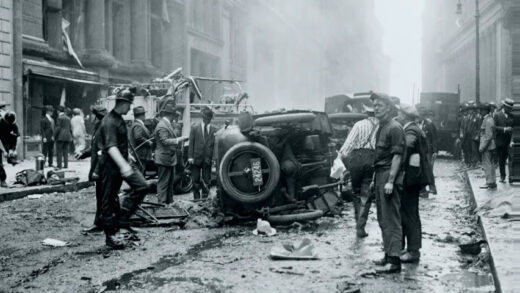
51:58The Wall Street bombing occurred on September 16, 1920, when a horse-drawn wagon filled with dynamite exploded in front of J.P. Morgan & Co., killing 38 people and injuring hundreds. The attack was never solved, but it is believed to have been carried out by anarchists as a form of political violence against capitalism. The bombing helped launch the career of a young J. Edgar Hoover and sparked a bitter national debate about how far the government should go to protect the nation from acts of political violence.
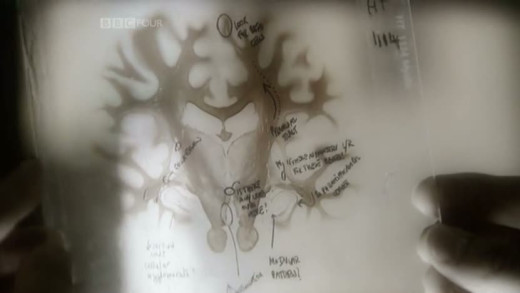
The Brain -- A Secret History is a series about how various theories and experiments on the human mind over decades have led to profound insights into how the human brain works, but also have involved great cruelty and pose terrible ethical dilemmas. Historical experiments such as severe maternal deprivation, brainwashing and other experiments in mind control such as MKULTRA are covered, along with physical interventions such as the history of electric shock 'treatment', behaviour modification, experimental psychology, and the Milgram experiment.
 55:41
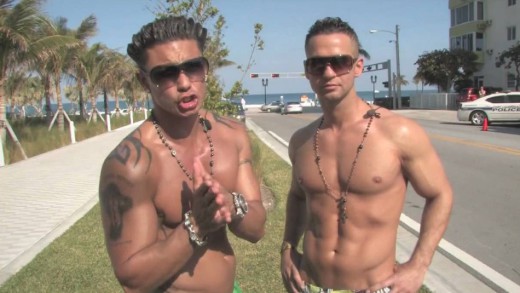
55:41The Bro Code unpacks and takes aim at the forces of masculinity that condition boys and men to fundamentally dehumanise and disrespect women. The film breaks down a range of contemporary media forms that are saturated with sexism—movies and music videos that glamorise misogyny, pornography that trades in the brutalisation and commodification of women, comedy routines that make light of sexual assault, and a slate of men's magazines and TV shows that propagate myths of what it means to be a man in this culture: that it's not only normal, but "cool" for boys and men to control and humiliate women. There's nothing natural or inevitable about this mentality. And it's extremely harmful in the real world. By setting the myths against reality, The Bro Code challenges young people to step up and fight back against this culture, to reject the fundamental idea that being a 'real man' means disrespecting women.
 1:25:20
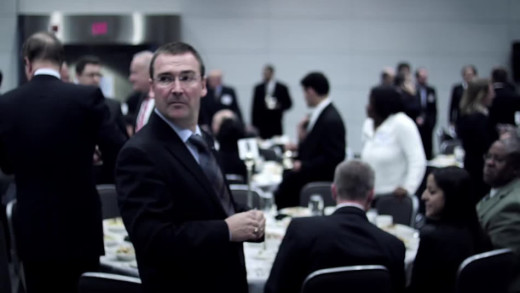
Brussels, the capital and largest city of Belgium, has a long history of hosting the institutions of the European Union within its European Quarter; while the Union itself claims it has no capital and no plans to declare one--despite the fact that Brussels hosts the official seats of the European Commission, Council of the European Union, and European Council, as well as a seat of the European Parliament. In any event, it is here--in this centre of smoke and mirrors--that exists one of the largest concentrations of lobbyist power in the world. The Brussels Business scratches the surface of this extensive world hidden-from-view by looking at the direct influence of lobbyists and the complete lack of transparency in the decision-making processes. Speaking with lobbyists and activists themselves, The Brussels Business reveals the beginnings of a vast landscape of PR conglomerates, front companies, think-tanks and their closely-interlinking networks of power and ties to political and economic elites. The questions then become: Who actually runs the European Union? How? And why?
 49:38
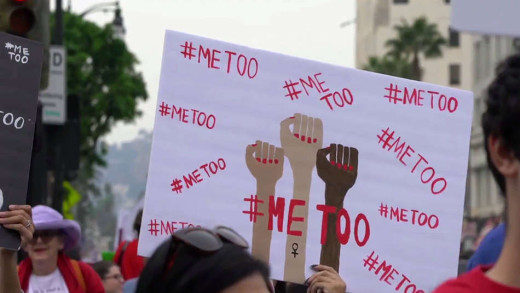
49:38The 'MeToo' movement has brought the pervasiveness of sexual abuse and harassment in this culture to the mainstream, creating an unprecedented demand for sexual violence prevention models that actually work. The Bystander Moment tells the story of one of the most prominent and proven of these models developed by activist and writer Jackson Katz and his colleagues. Illustrated through archival footage and clips from news, sports, and entertainment media, Katz explores the role of bystanders--especially friends, teammates, classmates, and co-workers--in perpetuating sexual harassment and sexual assault. Katz also gives attention to peer culture dynamics--in particular the male peer culture dynamics across race and ethnicity--that help normalise sexism and misogyny while silencing other men in the face of abuse. The Bystander Moment qualifies the crucial importance of appealing to people not as potential perpetrators or passive spectators, but as active bystanders and allies who have a positive role to play in challenging and changing sexist cultural norms, to stopping abuse and violence.
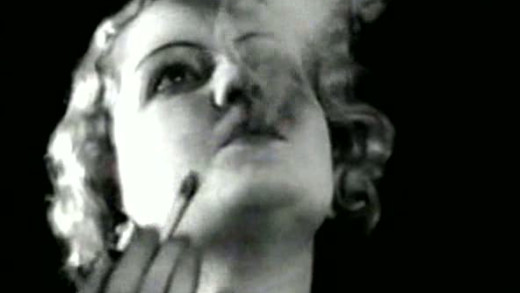
To many in both business and government, the triumph of the self is the ultimate expression of democracy, where power is truly moved into the hands of the people. Certainly the people may feel they are in charge, but are they really? The Century of the Self tells the untold and controversial story of the growth of the mass-consumer society. How is the all-consuming self created, by whom, and in whose interest?
 1:39:39
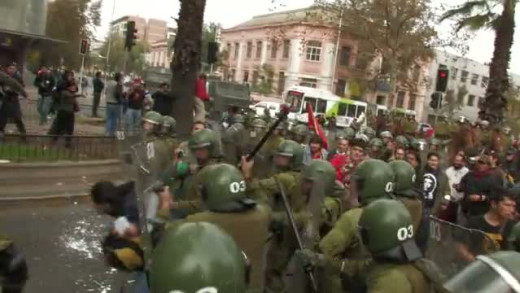
The Chicago Conspiracy reviews the legacy of the military dictatorship in Chile by sharing the story of combatant youth who were killed by the Pinochet regime as a backdrop to the history of the military dictatorship and current social conflict. The larger history is wrapped around three shorter pieces, which explore the student movement, the history of neighbourhoods that became centres of armed resistance against the dictatorship, and the story of the indigenous Mapuche...