 53:50
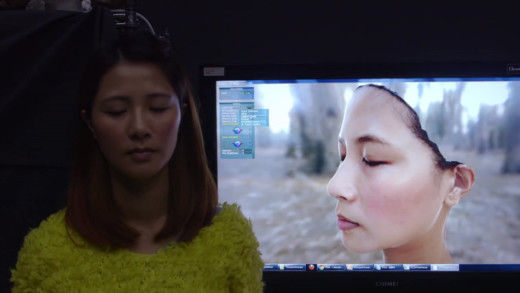
53:50The Illusionists examines how global advertising firms, mass media, and the beauty, fashion, and cosmetic-surgery industries have together colonised the way people all around the world define beauty and see themselves. Taking us from Harvard to the halls of the Louvre, from a cosmetic surgeon's office in Beirut to the heart of Tokyo's Electric Town, The Illusionists shows how these industries saturate our lives with narrow, Westernised, consumer-driven images of so-called beauty that show little to no respect for biological realities or cultural differences. Featuring voices from prominent sociologists, magazine editors, scientists, artists, and activists, The Illusionists documents a truly global phenomenon, with hegemonic results.
 44:17
44:17We live in an absolutely saturated media environment of images that span 'real' and fake—whether it's newspaper and tabloid photos, journalism itself, art and culture, or the human body. Images claim to be hardly distinguishable from the originals, while the virtual world is increasingly becoming 'seamless' in the real world. Kids today see a Clown Fish but instead impose their imagery of Finding Nemo. People interact with machines more than they do living beings. The narratives imposed by this technological and media culture are fast seeking to entirely replace the real world with a simulation of it. So what does that mean for the truth? The Industry of Fake explores the shifting boundaries and inequality in journalism and in art, as well as providing a basis to question this culture's fascination with simulacra—a process of mimicry mediated by images that represents the real thing, but is not the real thing. What does it mean if we value our projections or stories about the thing as opposed to the thing in-and-of itself? What does this mean in the real world if we come to value our simulations or representations as more authentic things as opposed to copies or toxic mimics?
 58:32
58:32The Intelligence Revolution is an extolling and largely non-critical account by advocate Michio Kaku who unflinchingly explains how artificial intelligence will "revolutionise homes, workplaces and lifestyles," and how virtual worlds will apparently become "so realistic" that they will "rival" the real physical world. Robots with "human-level intelligence" may finally become a reality according to Kaku, and in the ultimate stage of scientific mastery, the era of control imperative and domination, this culture will seek to merge human minds with so-called machine intelligence. Also, for the first time, we see how a severely depressed person can be turned into a happy person at the push of a button—all thanks to the convergence of neuroscience and microtechnology. What's wrong with such developments? And the larger culture such that technologies like this are being developed in the first place? How do such prospects impact the real physical world and the real physical lives of all of us?
 1:44:40
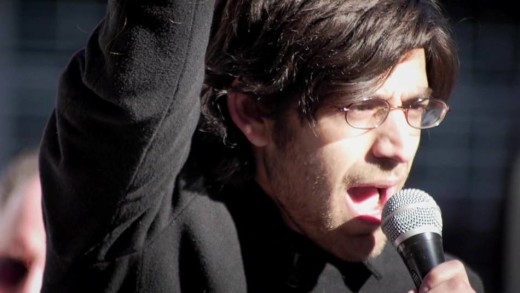
The Internet's Own Boy is a biographical documentary of the programmer and activist Aaron Swartz, who died at age 26. From his help in the development of the basic Internet protocol RSS at age 14, to the co-founding of the social network website Reddit in 2006, Swartz becomes disillusioned with the grooming of academia to the corporate life presented to him, and turns instead to work on issues of sociology, civic awareness and activism. It then becomes Swartz's work in social justice issues and political organising, combined with an open and sharing approach to information access that ensnares him in a two year legal battle, in which authorities seek to make an example of him and the work. The battle sadly ends with Swartz taking his own life. This film is a personal story about what we lose when we are tone deaf about technology and its relationship to the political system, civil liberties and human relationships.
 51:54
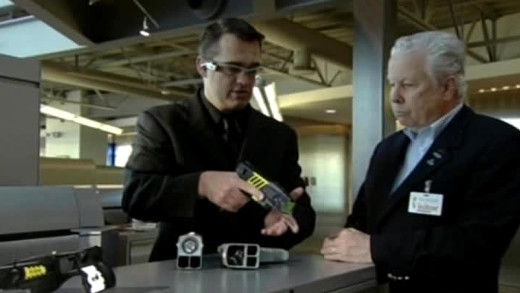
51:54The Invisible War documents the rapid militarisation of police in recent years by looking at the deployment of so-called 'non-lethal' weapons and the real effects of their use. Shotguns loaded with bean bags, rubber bullets, wood, rubber, and foam cylinders; electrical tasers; pepper sprays, OC-gas, and other chemical weapons; microwaves, stink bombs, pulsed energy weapons and many more. What is interesting is that, according to an overwhelming amount of recorded cases, these weapons have turned out to have caused many deaths and/or serious injuries, and are more often used on peaceful non-compliant citizens, or protesters, as a means of obedience rather than protection—invoking serious questions about the future of police and society.
 49:56
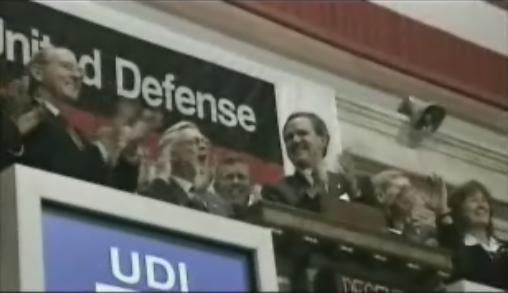
49:56The Carlyle Group is one of the largest investment banks in the world. Based in Washington, it has accumulated its wealth mainly by investments in defence--a lucrative market in the continued tradition of American war, imperialism and militarism. A strange coincidence? Their list of private investors include George Soros, the Saudi Royal Family and the Bin Laden Family. How does the Carlyle Group really operate and who are the people behind it?
 50:30
50:30For many years now the American foreign policy has been characterized by the strong tie between the United States and Israel. Does the United States in fact keep Israel on its feet? And how long will it continue to do so?
 1:41:38
The Janes
Roe v. Wade, the 1973 Supreme Court decision that protected a women's right to an abortion, had not yet been handed down, meaning the procedure was illegal throughout most of the United States, forcing women with unwanted pregnancies to turn to exploitative abortion providers (like the Mafia) or resort to dangerous methods to self-induce an abortion. Using code names, blindfolds, and safe houses, a group of brave women built an underground service for women seeking safe, affordable, illegal abortions calling themselves JANE. Ultimately, the Jane Collective provided close to 11,000 abortions by the time Roe v. Wade came into effect. Through interviews with the former Janes, this film portraits the history of JANE, and reminds the viewer of their commitment to ensuring the safety and well-being of other women was a measured, intelligent response to the inadequacies of a system that refused to fend for its own.
 1:18:29
The Kill Team
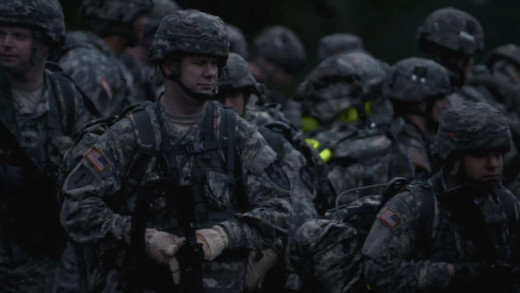
The Kill Team profiles four young American men, who referred to themselves as the "Kill Team," that carried out a string of war crimes in 2010, during the United States' invasion of Afghanistan, systematically murdering Afghan citizens. The film focuses on Private Adam Winfield who attempted, with the help of his father, to alert the military to the murders his platoon was committing. His pleas went unheeded. Faced with threats to his life from superior officers and other members of the military, Winfield makes a split-second decision that changes his life forever. The Kill Team follows Winfield and his family through the wartime events and legal proceedings that follow, interspersed with interviews of the other soldiers involved, and video footage from Afghanistan, revealing first-hand revelations of a war culture rooted in hatred, social pressure, and sociopathy.
 40:37
40:37By addressing the question of violence and the media from a number of different angles, The Killing Screens presents a comprehensive view on how to think about the effects of the media environment in new and complex ways. In contrast to the relatively simplistic behaviourist model, that "media violence causes real-world violence," renowned media scholar and researcher George Gerbner shows us how to think about the psychological, political, social, and developmental impacts of growing up and living within a cultural environment of pervasive violent imagery and narratives. What are some of the impacts of this culture and what can be done about it?
 1:30:37
The Killing$ of Tony Blair documents former UK Prime Minister Tony Blair's well-remunerated business interests since leaving government, and his complicity in the thousands of innocent people who have died following his decision to invade Iraq.
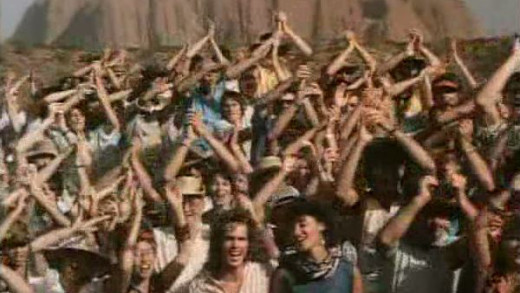
In these three films, John Pilger and Alan Lowery return to Australia to celebrate the country’s bicentenary, interviewing an extraordinary range of Australians from diverse backgrounds, each of whose views are a long way from those of the treasured Aussie stereotypes...
 1:35:09
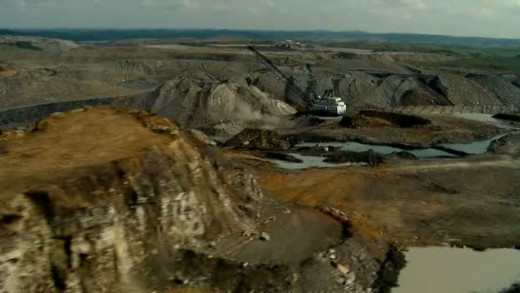
The Last Mountain follows the fight for the last great mountain in North America's Appalachian heartland where mining giants that want to deforest and explode it to extract the coal inside are faced with a community fighting to preserve the mountain. The film considers the health consequences and environmental impacts of mining, burning coal for electricity, also looking at the wider context and history of environmental laws in the United States.

The Life of Birds follows the evolution and habits of bird species all across the globe, showing how a huge variety of birds each deal with a different aspect of life.

The Life of Mammals is a ten part series that follows the evolution and habits of various mammal species around the world. Each episode looks at one or several closely related mammal groups and discusses the different facets of their day-to-day existence and evolutionary origins.
 52:52
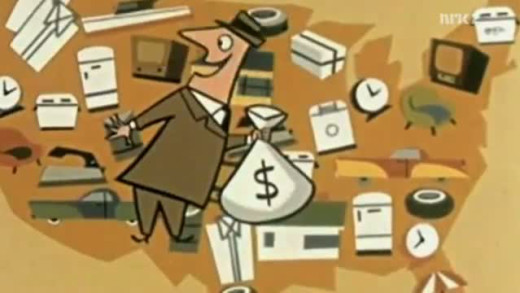
52:52The Light Bulb Conspiracy investigates the history of Planned Obsolescence--the deliberate shortening of product life span to guarantee consumer demand--by charting its beginnings in the 1920s with a cartel set up expressly to limit the life span of light bulbs, right up to present-day products involving cutting edge electronics such as the iPod. The film travels to France, Germany, Spain and the US to find witnesses of a business practice which has become the basis of the modern economy, and brings back graphic pictures from Ghana where discarded electronics are piling up in huge cemeteries for electronic waste, causing intense environmental destruction and health problems.
 24:09
24:09A young woman is raped when a one-night stand far from home goes terribly wrong. In the aftermath, as she struggles to make sense of what happened, she decides to make a film about the relationship between her own experience and the tangle of political, legal, and cultural questions that surround issues of sex and consent. Using a hidden camera, filmmaker Nancy Schwartzman goes head-to-head with the man who assaulted her, recording their conversation in an attempt to move through the trauma of her experience and achieve a better understanding of the sometimes ambiguous line between free will and coercion. The result is a powerful documentary about the terrible reality of rape and sexual violence, and the more complicated and ambivalent ways sexual assault is often framed and understood in the wider culture, examining issues too often deemed embarrassing, shameful, or taboo.

The Living Dead: Three Films About the Power of the Past is a series of films that investigate the way that history and memory (both national and individual) have been manipulated and distorted by politicians and others for various means of control...

The Long War provides a historical context to how the United States and Israel have escalated a long conflict in the Middle East, through targeted assassinations, bombings, covert operations, propaganda campaigns, and arming and funding various terrorist organisations that have switched allegiances since the Cold War, or have transformed into other political alliances throughout the United States' so-called War on Terror.
 1:31:46
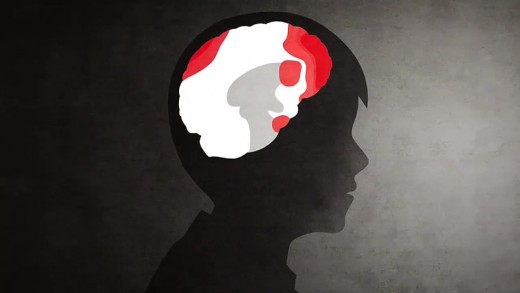
The Mask You Live In unpacks how this culture's narrow and harmful definition of masculinity effects boys, young men; girls and women; and society in general in myriad ways, as our children struggle to stay true to themselves when confronted by this culture. Pressured by their peer group, heavily influenced by a barrage of media messages, and even their very own parents and other adults in their lives, our protagonists confront messages encouraging them to disconnect from and suppress their emotions, devalue authentic friendships, objectify and degrade women, and resolve conflicts through violence, control and manipulation. These traits and stereotypes closely interconnect with problems of race, class, and circumstance, creating a maze of identity issues boys and young men must navigate to become "real" men as the culture expects and perpetuates. Experts in neuroscience, psychology, sociology, sports, education, and media also weigh in, offering empirical evidence of how these issues intersect, and what we can do about it.

The Mayfair Set is a four part series that studies how capitalists overtly and surreptitiously came to prolifically shape governments during the 1980s, epitomised by the Thatcher government in Britain at the time. But the corporate influence of political power doesn't simply arrive, it rather culminates after decades of engineering rooted in the economic collapse from the aftermath of the Second World War. This series focuses on the unreported and almost unseen approach that capitalists have taken since the 1940s to gradually take control of the political systems of not only the United States and Britain, but elsewhere around the world—exemplified by the boom of globalisation.
 50:57
50:57Based on the comprehensive work of media scholar George Gerbner, The Mean World Syndrome takes aim at the for-profit media system that thrives on violence, stereotypes, and the cultivation of anxiety. The film takes us through how the more television people watch, the more likely they are to tend to think of the world as an intimidating and unforgiving place, while being insecure and afraid of others. We see how these media-induced fears and anxieties provide fertile ground for intolerance, extremism, and a paranoid style of politics that threatens basic social values. The result is an accessible introduction to debates about media violence and more broadly, the effects of the media system. This film is a powerful tool for helping to make sense of the increasingly intense and fractious political climate of today.
 55:08
55:08The Medicated Child confronts psychiatrists, researchers and government regulators about the risks, benefits and many questions surrounding psychotropic drugs for children. The biggest current controversy surrounds the diagnosis of bipolar disorder. Formerly called manic depression, bipolar disorder was long believed to only 'apply to adults', but in the mid-1990s 'bipolar disorder in children' began to be diagnosed at much higher rates, sometimes in children as young as 4 years old...
 52:11
52:11The Mexicans
The Mexicans reports on the history of political repression and corruption in Mexico, a country dominated to this day by its close neighbour—the United States.
 1:31:20
The Miami Model
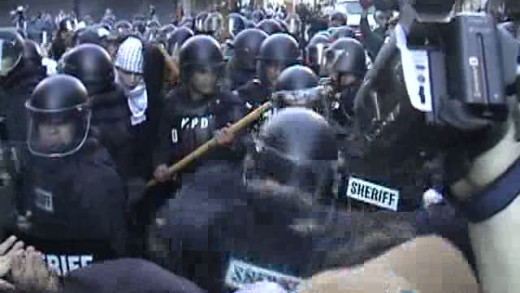
The Miami model was the name given to a set of tactics employed by police during protests in Miami, Florida relating to the Free Trade Area of the Americas (FTAA) trade agreement meetings in November 2003. State Attorney Kathy Fernandez Rundle responded to allegations of police brutality by saying, "The police were very professional, very controlled... I think we have a model here for the rest of the world to emulate in the future when these sort of events take place." This film documents these tactics from the perspective of the protesters, to show what really happened to them and to document their work opposing the FTAA, countering the mainstream media narratives of the event and the tropes espoused by those in power.
 44:41
44:41The Milgram experiment on obedience to authority figures was a series of social psychology experiments conducted by psychologist Stanley Milgram in July 1961, three months after the start of the trial of German Nazi war criminal Adolf Eichmann. The experiment set out to measure the willingness of study participants to obey an authority figure who instructed them to perform acts conflicting with their personal conscience, in an attempt to answer the popular question at that time: "Could it be that Eichmann and his million accomplices in the Holocaust were just following orders?"
 1:28:32
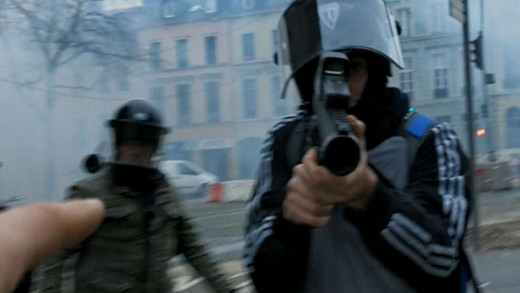
The Monopoly of Violence is a study of police brutality in France, specifically documenting the gilet jaunes protest movement of 2018 and 2019. But the footage could just as easily have been from the United States, or Hong Kong, or Britain. Citing the work of sociologist Max Weber as a starting point, which shows that the state has the monopoly on the legitimate use of physical force, the film expands into the space of questioning a form of policing that descends into systematic brutality and violence. Using footage from demonstrators and independent journalists to ground the analysis, the images are discussed between lawyers, representatives of social movements, academics, police officers, and victims of police aggression. The result is a clarion call for the rights of the citizen, and the accountability and responsibility of the State.
 1:33:45
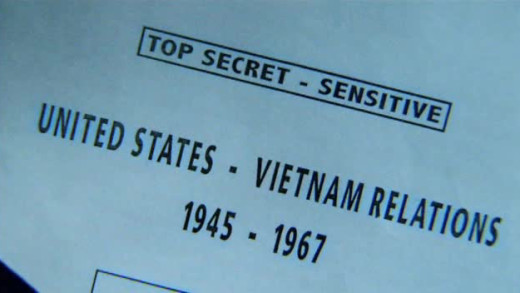
In 1971, Daniel Ellsberg shook the United States to its foundations when he leaked top-secret Pentagon documents to the New York Times that showed how five Presidents consistently lied about the Vietnam War. Consequently, National Security Advisor Henry Kissinger called Ellsberg "the most dangerous man in America," who "had to be stopped at all costs." But Ellsberg wasn't stopped. Facing 115 years in prison on espionage and conspiracy charges, he fought back...