 44:41
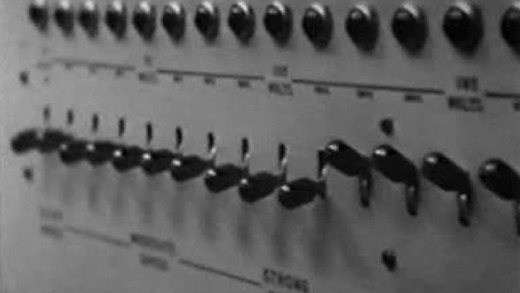
The Milgram experiment on obedience to authority figures was a series of social psychology experiments conducted by psychologist Stanley Milgram in July 1961, three months after the start of the trial of German Nazi war criminal Adolf Eichmann. The experiment set out to measure the willingness of study participants to obey an authority figure who instructed them to perform acts conflicting with their personal conscience, in an attempt to answer the popular question at that time: "Could it be that Eichmann and his million accomplices in the Holocaust were just following orders?"
 58:29
In a quarter of a century, the Amazon corporation has propelled Jeff Bezos from 'online bookseller' to technology behemoth. He is the richest man on the planet, and the company he founded is one of the most powerful in the world. This documentary investigates Amazon's rise to corporate rein, revealing the problematic inside-operations that have the public tethered to its services. Former high-level insiders describe Amazon's obsessive data-gathering operations, that enable the company to use what it knows about us to shape not only the future of retail, but the workplace and technology in synergy. On both sides of the world, politicians and regulators are tardily beginning to question Amazon's power. But can the public rein in this corporate empire and break its addiction before even more damage is done to the structure of society and the environment?
 1:38:25
iHuman
iHuman is about artificial intelligence, social control, and power. It shows how this technology is changing dominant culture. The constant surveillance via phones, Internet devices, and social systems is the crucial foundation for the development of AI, so the question is posed, are we already are governed by algorithms that are created by big tech corporations, governments and the military industry? The result is a profiling of Palantir Technologies, Cambridge Analytica, China's Social Credit System, Google's Project Maven and its close relationship with the United States military, along with Amazon, Microsoft, IBM. All of this together forms the existential risk from 'Artificial General Intelligence.'
 1:59:46
Going Clear
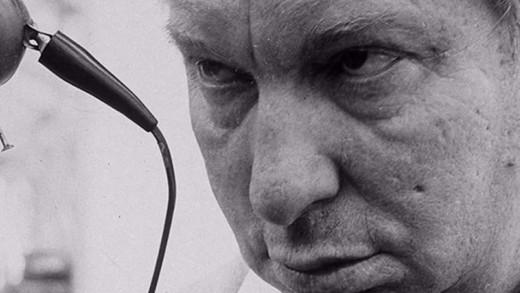
Going Clear: Scientology and the Prison of Belief profiles eight former-members of the cult of Scientology, leading to a series of revelations of the history of systematic abuse, manipulation, and betrayal in the organisation by Scientology officials and celebrity figures. The film highlights the origins of Scientology, from its roots in the mind of founder L. Ron Hubbard and successor David Miscavige, to its rise in popularity in Hollywood and beyond. The result is a record of great harm, paranoia, abuse, the vast accumulation of wealth, and a lust for power and control.
 49:39
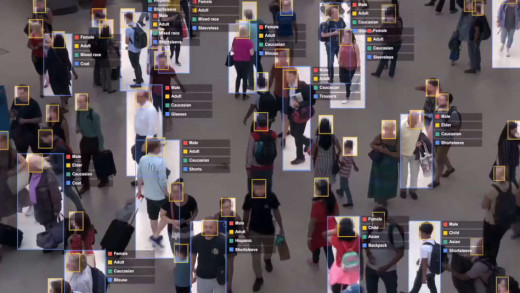
In 2018, Professor Shoshana Zuboff published The Age of Surveillance Capitalism, a monumental book about the new global economy, where the biggest technology corporations extract, manipulate, and trade our personal information, data about our lives, and data about our personalities, on a scale never before possible. How did this happen? In The Big Data Robbery, Zuboff starts with the volatile dot-com boom and bust of the late 1990s and 2000s. How did Google, a company created during that time, survive the bursting of the Internet bubble? Founders Larry Page and Sergey Brin discover that the "residual data" that people leave behind in their searches on the Internet is very precious and tradable, and begin as one corporation of many, the Big Data Robbery, extracting and building huge datasets about people. Zuboff takes the lid off Google and Facebook to reveal a merciless form of capitalism in which the citizen itself now serves as a raw material.
 1:26:10
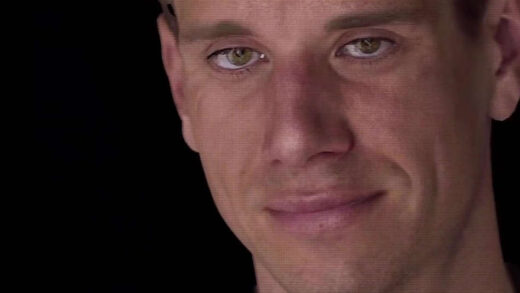
In the race to make money in the explosion of 'Artificial Intelligence', several start-up companies have created digital avatars of dead people for use by their loved ones, so that they can 'talk with them' after their deaths. Eternal You explores the consequences of turning the mortality of life into a simulation and a product. Joshua chats day and night with a digital 'clone' of his deceased first girlfriend, sharing his daily life with the computer. Christi just wants confirmation that her deceased best friend is doing well in heaven, but has a harrowing experience with the AI counterpart. Jang Ji-Sung meets the Virtual Reality 'clone' of her deceased seven-year-old daughter, with mixed results. Like the other major technology companies of our time, the inventors of these services reject any responsibility for the profound psychological consequences of these experiences.
 1:32:49
Merchants of Doubt looks at the well established Public Relations tactic of saturating the media with shills who present themselves as independent scientific authorities on issues in order to cast doubt in the public mind. The film looks at how this tactic, that was originally developed by the tobacco industry to obfuscate the health risks of smoking, has since come to cloud other issues such as the pervasiveness of toxic chemicals, flame retardants, asbestos, certain pharmaceutical drugs and now, climate change. Using the icon of a magician, Merchants of Doubt explores the analogy between these tactics and the methods used by magicians to distract their audiences from observing how illusions are performed. For example, with the tobacco industry, the shills successfully delayed government regulation until long after the health risks from smoking was unequivocally proven. Likewise with manufacturers of flame retardants, who worked to protect their sales after the toxic effects and pervasiveness of the chemicals were discovered. This is all made analogous to the ongoing use of these very same tactics to stall governmental action in regards to global climate change today.