
The Power Principle is a series of films examining the history of the United States and the building of its empire with particular emphasis on the last seventy years of United States foreign policy. The methods that make empire possible are also examined—the politics of fear, the rise of public relations, the 'Mafia Principle' and the reoccurring use of fabled enemies, contrasting the Soviet Union and the Cold War alongside the parallels of today with the "War On Terror". Not only does The Power Principle tie together historical events to revive a common thread, the series may also encourage viewers to reconsider their understanding of historical events and the portrayal of them, showing how those in power play a role in manipulating the collective memory through generations.
 1:30:39
University of Toronto psychology professor Jordan Peterson launched into the public eye after he published a controversial video series entitled Professor Against Political Correctness in 2016. Within 2 years, he sells over 3 million copies of his self-help book, appears on numerous television shows, and fills theatres with his lectures. At the same time, he endures a swell of backlash, including that from a former colleague that now labels him as a dangerous threat. After mobilising some on the right for his criticisms of the left, Peterson fends-off being labelled a right-wing figurehead while moving through the media spectacle, arguing his shifting philosophical views. Filmed during this period of Peterson's rise to fame, and told through family, friends, and foes, The Rise of Jordan Peterson presents a complex kaleidoscopic narrative and personal portrait, enabling the viewer to examine Peterson in several different ways, while considering his wide and often conflicting range of perspectives and social commentary.
 1:33:21
The Social Dilemma brings together former product directors and designers of Facebook, Google, Instagram, Pintrest, Twitter, and so on, to reflect on their creations and face questions about the age of addiction, information manipulation, and algorithmic social control they've ushered in. The creators speak openly about how they themselves took part in this co-optation of society, either naively or with malignant indifference, by designing websites in such a way to influence and manipulate billions of people for corporate interests by using deep psychological and addictive triggers in the human mind. Detailed explanations about how this can play out in the real world are illustrated through dramatisations, which are also expanded upon by experts in psychology, technology, and social studies. The result is a sobering call for emergency damage control, to undo the massive harm that technology companies have unleashed on society unrestrained for the past several decades, at a time of rapid social unravelling.
 46:36
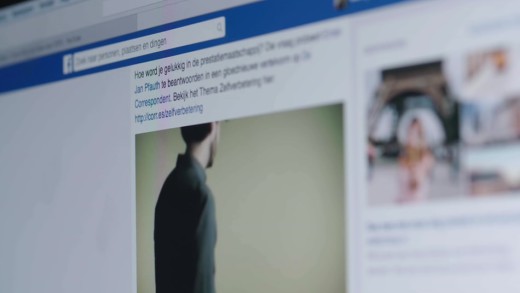
46:36Every day, billions of people are unwittingly taking part in what is the largest most comprehensive psychological experiment ever conducted. The old marketing and advertising world using billboards, advertisements and TV commercials to persuade us, has been comprehensively augmented by an entirely new field of "user experience architects" and "online persuasion agents." These forces are given tremendous power from the proliferation of digital technologies. So how do these powerful forces ensure that we fill our online shopping carts to the brim, or stay on websites as long as possible? Or vote for a particular candidate? What Makes You Click examines how these prolific entities collectively and individually use, shape, and manipulate our experiences via an online world, not just when it comes to buying things, but also with regards to our free time and political perspectives. The manipulation has become so good that these powerful controllers, former Google employees among them, are themselves arguing for the introduction of an ethical code. What does it mean when the grand conductors of these huge experiments themselves are asking for their power, influence and possibilities to be restricted?