 1:00:58
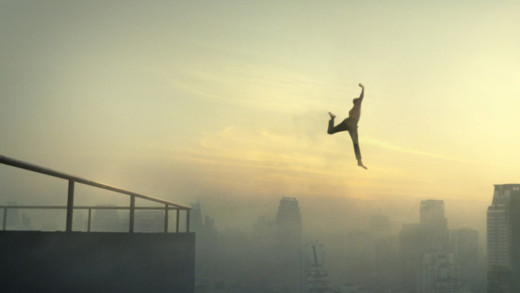
Ten years on from his previous film, Advertising & the End of the World, renowned media scholar Sut Jhally follows up by exploring the since-escalating devastating personal and environmental fallouts of advertising and the near-totalising commercial culture. The film tracks the emergence of the advertising industry in the early 20th century to the full-scale commercialisation of the culture today, identifying the myth running throughout all of advertising: the idea that corporate brands and consumer goods are the keys to human happiness and fulfilment. We see how this powerful narrative, backed by billions of dollars a year and propagated by clever manipulative minds, has blinded us to the catastrophic costs of ever-accelerating rates of consumption. The result is a powerful film that unpacks fundamental issues surrounding commercialism, media culture, social well-being, environmental degradation, and the dichotomy between capitalism and democracy.
 1:52:43
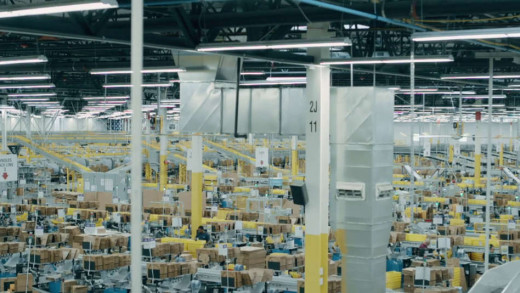
Jeff Bezos is not only one of the richest men in the world, the vast corporate empire he has built is unprecedented in the history of capitalism. The corporate power to shape everything from the future of work to the future of commerce to the future of technology is unrivaled. The company's reach into the everyday life of citizens, manipulating their experience and extracting extreme profits, is profound. It's extraction of labour and giant streams of data is cataclysmic. It's reach into culture, media, law enforcement, even a deal with the CIA, is indicative. But despite all of this, the company contradictorily claims it is "just a speck." As regulators around the world tardily start to consider the global impact of Amazon and how to rein in its extreme corporate power, filmmakers Anya Bourg and James Jacoby reveal how Bezos's plan to build one of the most influential economic and cultural forces in the world has already transpired, and how the job of reining in this pervasive corporate power will be testing in the extreme.
 1:26:39
In recent years, nature conservation has become a booming business where huge sums of money change hands, and endangered species become exotic financial products. Banking Nature, delves into this hidden world of so-called environmental banking, where huge corporations such as Merrill Lynch and JP Morgan Chase buy up the land and habitat of endangered species, and then sell them in the form of shares. Companies that inevitably harm the environment are then obliged to buy credits to offset the damage that they have caused. In Uganda, we meet men who measure trees to determine how much carbon they store and then a banker from the German firm that sells the resulting carbon credits. In Brazil, the steel giant Vale destroys the rainforest, replaces it with a monocrop tree plantation, and reaps the benefits of environmental credits as if the rainforest was still standing. Banking Nature posits that we disallow the same corporate criminals responsible for the global financial crisis from turning what's left of the natural world into their final corrupt commodities market.
 36:19
36:19Behind the Screens explores how Hollywood movies have largely become vehicles for the ulterior motives of advertising and marketing by the studios and media owners, rather than genuine storytelling or simple entertainment in their own right. By showing examples from popular movies such as Wayne's World, Forrest Gump, The Lion King, Summer of Sam, and Toy Story, this documentary demonstrates how this trend toward hypercommercialism—through product placement, tie-ins, merchandising and cross-promotions—comes to define the modern movie. What are the problems with this, as well as the cultural and social impacts? Combined with analysis from film scholars, critics, political economists, and an Oscar-nominated screenwriter, Behind the Screens presents accessible arguments to these questions.
 52:11
52:11Who profits when disaster strikes? Business of Disaster investigates the United States in the aftermath of Hurricane Sandy, where thousands of people lost their homes while insurance corporations made millions.

Can't Get You Out of My Head: An Emotional History of the Modern World is a six-part series that explores how modern society has arrived to the strange place it is today. The series traverses themes of love, power, money, corruption, the ghosts of empire, the history of China, opium and opioids, the strange roots of modern conspiracy theories, and the history of Artificial Intelligence and surveillance. The series deals with the rise of individualism and populism throughout history, and the failures of a wide range of resistance movements throughout time and various countries, pointing to how revolution has been subsumed in various ways by spectacle and culture, because of the way power has been forgotten or given away.
 1:39:44
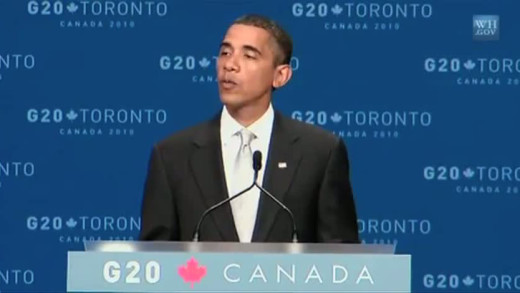
The 2008 'financial crisis' was a systemic fraud in which wealthy finance capitalists stole trillions of public dollars all over the world. No one was jailed for this massive crime, the largest theft of public money in history. Instead, the rich forced working people across the globe to pay for their 'crisis' through punitive austerity programs that gutted public services and repealed workers' rights. Capitalism Is The Crisis shows and explains this fundamental functioning of the global economy, while visiting protests from around the world against it, revealing revolutionary paths for the future. Special attention is devoted to the current situation in Greece, the 2010 G20 Summit protest in Toronto Canada, and the remarkable surge of solidarity in Madison, Wisconsin.
 1:08:29
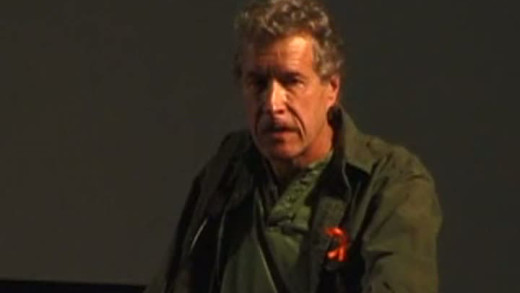
Confessions of an Economic Hit Man is a presentation by John Perkins, based on the book by the same name published by him in 2004. Perkins describes the role: "Economic hit men are highly-paid professionals who cheat countries around the globe out of trillions of dollars. They funnel money from the World Bank, the US Agency for International Development (USAID), and other foreign "aid" organisations into the coffers of huge corporations and the pockets of a few wealthy families who control the planet's natural resources. Their tools included fraudulent financial reports, rigged elections, pay-offs, extortion, sex, and murder. They play a game as old as empire, but one that has taken on new and terrifying dimensions during this time of globalisation."
 41:56
41:56Consumer capitalism dominates the economy, politics, and culture of our age, despite a growing trove of research showing that it is a failed system. In this illustrated presentation, media scholar Justin Lewis makes a compelling case that capitalism can no longer deliver on its myth of the dream and its promise to enhance the quality of life. He argues that changing direction will require changing our media system and our cultural environment, as capitalism has become economically and environmentally unsustainable. This presentation explores how the media and information industries make it difficult to envision other forms of life by limiting critical thinking and keeping us locked in a cycle of consumption, and shows us that change will only be possible if we take culture seriously and transform the very way we organise our media and communications systems.
 1:37:20
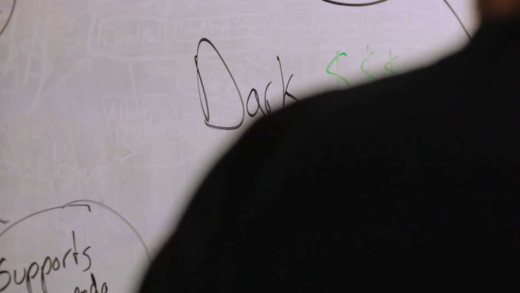
Dark Money tracks the influence of corporate money in contemporary politics in the United States. Using Montana as a case study, the film engages with the complex history that Montana state politics has with corporate influence. Starting with the Anaconda Copper Mining Company, Dark Money shows how the influence of mining corporations caused state legislators to relax mining regulations, which resulted in an environmental catastrophe in Butte, with problems that persist today. John S. Adams of the Montana Free Press plays a central role in the film as an investigative journalist who has been tracking state politics and following the money for several years. Adams has reported on everything from the role of the American Tradition Partnership (formerly known as Western Tradition Partnership) funds in the shaping of state election laws, to the illegal political activities of a "right to work" PAC in Montana. The film follows Adams's work as a reporter, but it also includes interviews from other prominent figures in Montana state politics and those involved in the movement to examine and limit the influence of dark money in politics.
 1:29:49
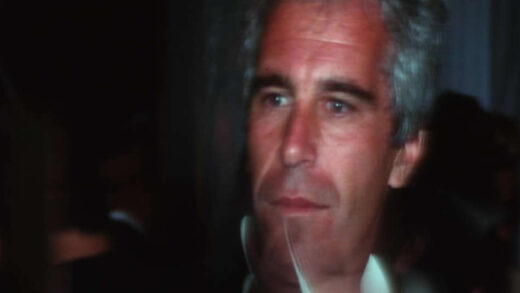
Through the voices of survivors, journalists, and excerpts of legal depositions, Diabolical dips its toes into the world of the Epstein Files--a partially released collection of millions of documents, images, videos, e-mails, and other records pertaining to criminal investigations undertaken by the FBI of convicted paedophile Jeffrey Epstein. The records were reluctantly released after much political pressure, and millions of files are still yet to be made public. Many of the world's billionaires, and most powerful figures in politics and mainstream culture appear in the files, as persons in the orbit of Epstein and his life trafficking teenage girls for sex. The film lays bare how the rich evade the legal and justice system with their wealth and power, and raises some conspiratorial questions about just who Epstein was, along with his connection to power and influence in the United States.
 1:03:59
Tracing the Internet's history as a publicly-funded government project in the 1960s, to its full-scale commercialisation today, Digital Disconnect shows how the Internet's so-called "democratising potential" has been radically compromised by the logic of capitalism, and the unaccountable power of a handful of telecom and tech monopolies. Based on the acclaimed book by media scholar Robert McChesney, the film examines the ongoing attack on the concept of net neutrality by telecom monopolies such as Comcast and Verizon, explores how internet giants like Facebook and Google have amassed huge profits by surreptitiously collecting our personal data and selling it to advertisers, and shows how these monopolies have routinely colluded with the national security state to advance covert mass surveillance programs. We also see how the rise of social media as a leading information source is working to isolate people into ideological information bubbles and elevate propaganda at the expense of real journalism. But while most debates about the Internet focus on issues like the personal impact of Internet-addiction or the rampant data-mining practices of companies like Facebook, Digital Disconnect digs deeper to show how capitalism itself turns the Internet against democracy. The result is an indispensable resource for helping viewers make sense of a technological revolution that has radically transformed virtually aspect of human communication.
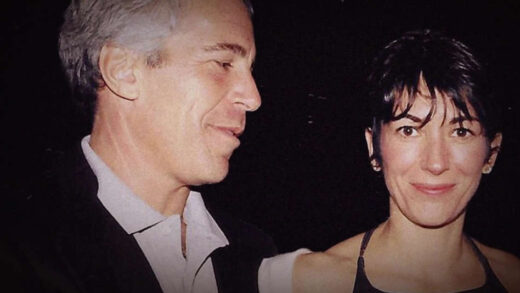
Epstein's Shadow is a short series that investigates the powerful, connected, and mysterious Ghislaine Maxwell, who was once the heiress to the media proprietor Robert Maxwell's fortune, but whose life takes a sordid turn after when her father dies and she meets Jeffrey Epstein, the serial sex offender. The series reveal a complicated story of power, sex, money, and corruption, which leads to Ghislaine Maxwell's arrest, and mounds of destruction in her wake, and that of Epstein and his co-conspirators.
 1:26:10
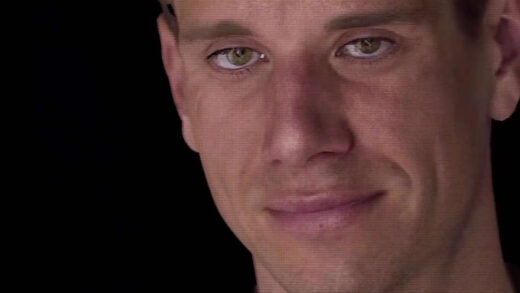
In the race to make money in the explosion of 'Artificial Intelligence', several start-up companies have created digital avatars of dead people for use by their loved ones, so that they can 'talk with them' after their deaths. Eternal You explores the consequences of turning the mortality of life into a simulation and a product. Joshua chats day and night with a digital 'clone' of his deceased first girlfriend, sharing his daily life with the computer. Christi just wants confirmation that her deceased best friend is doing well in heaven, but has a harrowing experience with the AI counterpart. Jang Ji-Sung meets the Virtual Reality 'clone' of her deceased seven-year-old daughter, with mixed results. Like the other major technology companies of our time, the inventors of these services reject any responsibility for the profound psychological consequences of these experiences.
 1:03:16
Over the past three decades, obesity rates in the United States have more than doubled for children and tripled for adolescents, and a startling 70% of adults are now obese or overweight. The result has been a widening epidemic of obesity-related health problems. But while discussions about this crisis tend to focus solely on the need for individual responsibility and more exercise, Feeding Frenzy turns its focus squarely on the responsibility of the processed food industry and the outmoded government policies it benefits from. It lays bare how government subsidies designed to feed the hungry during the Great Depression have enabled the food industry to flood the market with a rising tide of cheap, addictive, high calorie food products, and offers an engrossing look at the tactics of the multi billion-dollar advertising industry that makes sure that everyone keeps consuming.
 1:33:58
Robert Kenner and Melissa Robledo team up with authors Michael Pollan and Eric Schlosser to examine the modern food industry's efficiency and vulnerabilities as a follow-up to the first documentary of the same title. This film focuses on corporate consolidation in the food and agriculture business in the United States, while raising questions about the future of the industrial food system.
 11:22
11:22Would any sane person think dumpster diving would have stopped Hitler, or that composting would have ended slavery or brought about the eight-hour workday; or that chopping wood and carrying water would have gotten people out of Tsarist prisons; or that dancing around a fire would have helped put in place the Voting Rights Act of 1957 or the Civil Rights Act of 1964? Then why now, with all the world at stake, do so many people retreat into these entirely personal "solutions"? Why are these "solutions" not sufficient? But most importantly, what can be done instead to actually stop the murder of the planet?
 1:45:45
Generation Wealth is a visual history of the materialistic, image, and celebrity-obsessed culture, explored through the work of photographer and filmmaker Lauren Greenfield. Part historical essay, part autobiographical, Greenfield puts the pieces of her life's work together to reveal the pathologies that have created the richest and most unequal society the world has ever seen. Spanning consumerism, beauty, gender, body commodification, aging, and sex, Generation Wealth unpacks the global boom-bust economy, the corrupt American Dream and the human costs of capitalism, narcissism and greed.

2009, pornography has grown into a $10 billion business, and some of the world's most-known corporations are silently sharing in the profits. Companies like Time Warner, Marriott, and Vodaphone earn huge amounts of revenue by piping pornography into homes and hotel rooms, but you won't see anything about it in their company reports. Even the Catholic Church invests in companies that distribute pornography, along with pension funds that earn huge profits from investing in ventures that relate to porn. Hardcore Profits is a two part television series that explores how in the 21st century, pornography has never been more profitable, nor more pervasive.
 2:07:01
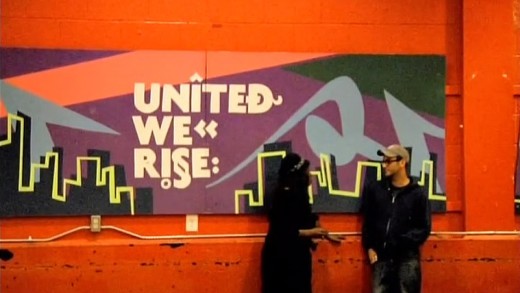
How to Let Go of the World and Love All the Things Climate Can't Change travels the globe, from New York City to the Marshall Islands and China, to meet with people who are committed to reversing the tide of global warming. The film examines the intricately woven forces that threaten the stability of the climate and the lives of the world's inhabitants.
 1:38:25
iHuman
iHuman is about artificial intelligence, social control, and power. It shows how this technology is changing dominant culture. The constant surveillance via phones, Internet devices, and social systems is the crucial foundation for the development of AI, so the question is posed, are we already are governed by algorithms that are created by big tech corporations, governments and the military industry? The result is a profiling of Palantir Technologies, Cambridge Analytica, China's Social Credit System, Google's Project Maven and its close relationship with the United States military, along with Amazon, Microsoft, IBM. All of this together forms the existential risk from 'Artificial General Intelligence.'
 1:53:50
AI, or Artificial Intelligence, is spouted as the ability of machines to "think" [sic] at a speed and depth far beyond the capacity of any human. Proponents of these digital technologies claim their systems are used in ways that are beneficial for society. But as we see, the current use of AI isn't necessarily aligned with the goals of building a better society. There still remain escalating concerns about labour, the future of work, privacy, the surveillance society, and social control--all valid criticisms that go back many decades--while the rivalry for technological supremacy between the United States and China mirrors the dynamics of the cold war. In the Age of AI is an investigation that touches on these areas, providing a platform to ask fundamental questions about unrestrained technological escalation.

Jeffrey Epstein: Filthy Rich is a miniseries about convicted sex-offender Jeffrey Epstein based on the 2016 book of the same name by James Patterson, and co-written by John Connolly and Tim Malloy. The four-part documentary features interviews with several survivors including Virginia Giuffre and Maria Farmer, along with former staff members and former police chief Michael Reiter, a key individual from the first criminal case against Epstein. The series provides insight into the survivors of Jeffrey Epstein, and how he used his wealth and power to commit his crimes.
 1:47:39
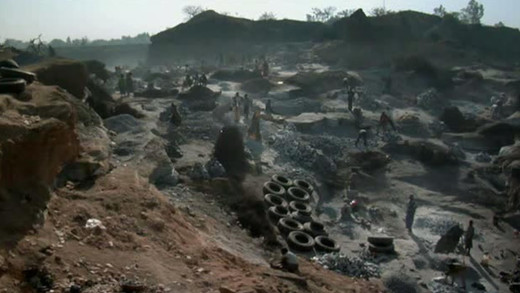
Let's Make Money investigates the development of the world-wide financial system, showing that elitists economically exploit the rest of society, especially in the developing world, but also in western nations. Using the savings of a typical depositor as a case study, the film moves around the global system, showing exploitation at many levels. There are several interviews with investment managers, politicians, economists as well as homeless people and workers who give their take on the system and its impacts...
 1:32:49
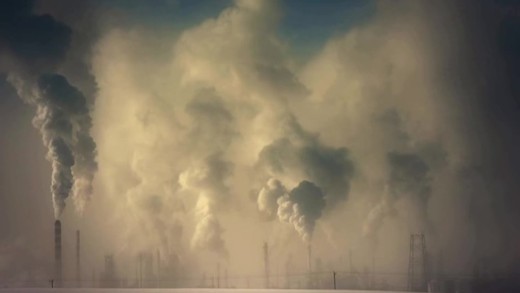
Merchants of Doubt looks at the well established Public Relations tactic of saturating the media with shills who present themselves as independent scientific authorities on issues in order to cast doubt in the public mind. The film looks at how this tactic, that was originally developed by the tobacco industry to obfuscate the health risks of smoking, has since come to cloud other issues such as the pervasiveness of toxic chemicals, flame retardants, asbestos, certain pharmaceutical drugs and now, climate change. Using the icon of a magician, Merchants of Doubt explores the analogy between these tactics and the methods used by magicians to distract their audiences from observing how illusions are performed. For example, with the tobacco industry, the shills successfully delayed government regulation until long after the health risks from smoking was unequivocally proven. Likewise with manufacturers of flame retardants, who worked to protect their sales after the toxic effects and pervasiveness of the chemicals were discovered. This is all made analogous to the ongoing use of these very same tactics to stall governmental action in regards to global climate change today.
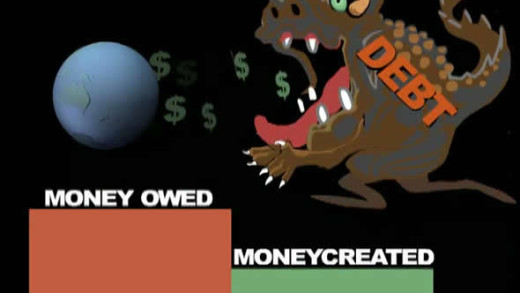
Money is a new form of slavery and is only distinguishable from the old slavery simply by the fact that it is impersonal--that there is no human relation between master and slave. Debt in government, corporate and household has reached astronomical proportions. Where does all this money come from? How could there be that much money to lend? The answer is that there isn’t...
 1:35:06
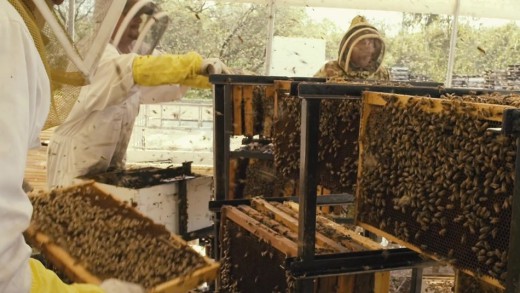
With a lens of torturous mechanistic science, as well as the commercial perspective from farmers and commodity bee-keepers alike, More Than Honey is a film about the insanity of industrial agriculture and the consequential collapse of honeybee populations throughout the world. By looking through some of the industrial operations in California, Switzerland, China and Australia, More Than Honey is a visual exploration of colony collapse, drawing attention to the many symbiotic relationships that go unrecognised and uncared for by industrial operations and commercial food practices. If bees are so important to the health of so many other species of animals and plants and foods, how can we stand by and allow them to be killed?
 51:47
51:47Obey
Obey is a video essay based on the book "Death of the Liberal Class" by author and journalist Chris Hedges. The film charts the rise of corporatocracy and examines the trending possible futures of obedience in a world of unfettered capitalism, globalisation, staggering inequality and environmental crisis -- posing the question, do we resist or obey?