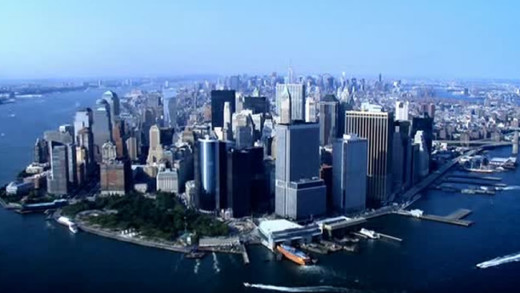
For millions of people, the global economic collapse has generated curiosity about how money systems actually work, as opposed to how they're portrayed, especially when so many financial pundits seem to be baffled. In The Ascent of Money, economist Niall Ferguson works through some history that created today's money system, visiting the locations where key events took place and poring over actual ledgers and documents, such as the first publicly traded share of a company. Viewed with a critical eye, this series aims to show how the history of money is indeed at the core of civilisation, with economic strength determining political dominance, wars fought to create wealth and individual financial barons determining the fates of millions.
 1:33:27
Up the Yangtze
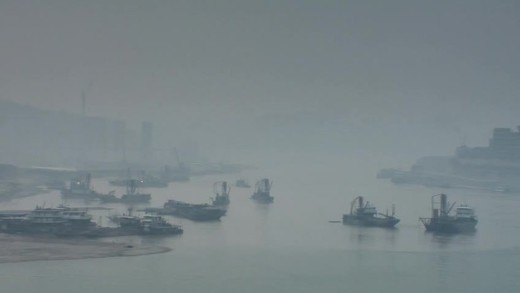
Up the Yangtze focuses on the people affected by the building of the Three Gorges Dam across the Yangtze river in Hubei, China. Countless ancient villages and historic locales will be submerged, and 2 million people will lose their homes and livelihoods. The theme of the film is the rapacious transition towards consumer capitalism from a traditional farming and peasant-based society...
 1:34:54
The Big Sellout reveals the reality of privatisation and globalisation by examining the corporate takeover of basic public services throughout the world, such as water supply, electricity, public transportation, and public health care. In South America, Asia, Africa, but also in Europe and the United States, filmmaker Florian Opitz talks to the architects of the new economic world order, as well as to ordinary people who have to deal with the real direct effects. The result is a tapestry of narratives the world over that show where the dogma of privatisation cames from, who profits from it, what societies lose, and why resistance is so important.
 1:08:29
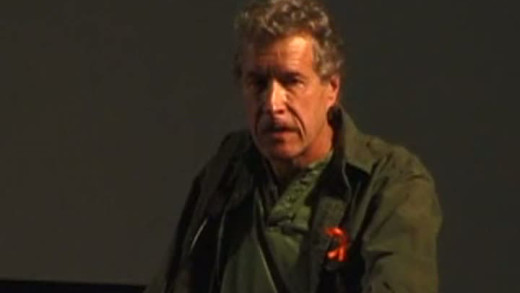
Confessions of an Economic Hit Man is a presentation by John Perkins, based on the book by the same name published by him in 2004. Perkins describes the role: "Economic hit men are highly-paid professionals who cheat countries around the globe out of trillions of dollars. They funnel money from the World Bank, the US Agency for International Development (USAID), and other foreign "aid" organisations into the coffers of huge corporations and the pockets of a few wealthy families who control the planet's natural resources. Their tools included fraudulent financial reports, rigged elections, pay-offs, extortion, sex, and murder. They play a game as old as empire, but one that has taken on new and terrifying dimensions during this time of globalisation."
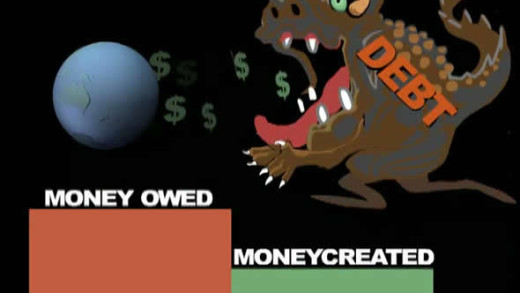
Money is a new form of slavery and is only distinguishable from the old slavery simply by the fact that it is impersonal--that there is no human relation between master and slave. Debt in government, corporate and household has reached astronomical proportions. Where does all this money come from? How could there be that much money to lend? The answer is that there isn’t...
 53:29
53:29The Secret History of the Credit Card uncovers the deceptive techniques and tactics used by banks and financial corporations to get citizens to take on ever more debt, while earning record profits. Penalty fees, defaulting, changing contracts, increasing rates retrospectively---these are some of the ways credit card companies gouge their users, and increase influence. The film shows how such profitability of credit cards began in the 1980s, when the banking industry successfully eliminated the limit on the interest rate a lender can charge a borrower. This deregulation, coupled with real-time tracking of personal financial information, facilitated the widening availability of credit cards. Despite a growing number of consumer complaints, the ability of state and local governments to investigate the credit card companies has virtually been eliminated, due to companies incessant lobbying and litigation that has created a jurisdictional "turf battle."
 31:54
31:54Based on the book of the same title by Juliet Schor, The Overspent American scrutinises the form of consumerism ever-pervasive in this current era that is driven by upscale spending and debt; shaped and reinforced by a media system driven by commercial interests. We're encouraged from all angles to spend money we don't have, working longer hours than ever before. Illustrated with hundreds of examples, The Overspent American draws attention to both the financial and social costs of this giant consumption machine, where the frivolous and relentless search for "happiness" and identity is espoused by advertising.
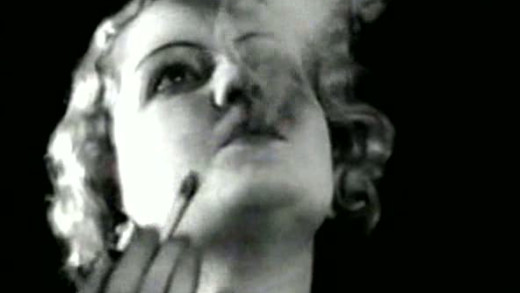
To many in both business and government, the triumph of the self is the ultimate expression of democracy, where power is truly moved into the hands of the people. Certainly the people may feel they are in charge, but are they really? The Century of the Self tells the untold and controversial story of the growth of the mass-consumer society. How is the all-consuming self created, by whom, and in whose interest?
 36:19
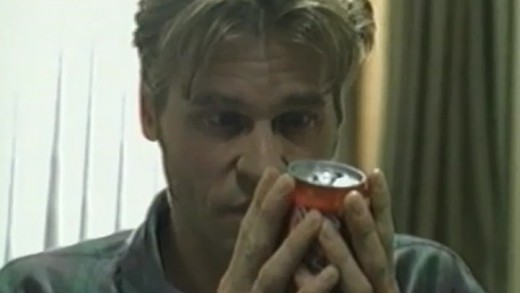
36:19Behind the Screens explores how Hollywood movies have largely become vehicles for the ulterior motives of advertising and marketing by the studios and media owners, rather than genuine storytelling or simple entertainment in their own right. By showing examples from popular movies such as Wayne's World, Forrest Gump, The Lion King, Summer of Sam, and Toy Story, this documentary demonstrates how this trend toward hypercommercialism—through product placement, tie-ins, merchandising and cross-promotions—comes to define the modern movie. What are the problems with this, as well as the cultural and social impacts? Combined with analysis from film scholars, critics, political economists, and an Oscar-nominated screenwriter, Behind the Screens presents accessible arguments to these questions.

The Mayfair Set is a four part series that studies how capitalists overtly and surreptitiously came to prolifically shape governments during the 1980s, epitomised by the Thatcher government in Britain at the time. But the corporate influence of political power doesn't simply arrive, it rather culminates after decades of engineering rooted in the economic collapse from the aftermath of the Second World War. This series focuses on the unreported and almost unseen approach that capitalists have taken since the 1940s to gradually take control of the political systems of not only the United States and Britain, but elsewhere around the world—exemplified by the boom of globalisation.