 1:19:30
The Truth About Killer Robots considers several cases where humans have been killed from interactions with automatic machines. From the Volkswagen factory in Germany, to workers in Chinese sweatshops assembling smartphones, to a bomb-carrying police droid in the United States, the film exposes this culture's fundamental fascination with machines, while illustrating the insatiable expansion of capitalism via automation and machine redundancy. Also explored are 'self-driving' cars; surveillance devices; humanless-stores, automated pizzas, robotic supermarkets and hotels; so-called 'sex' robots; and vast data gathering machines such as Facebook, which have subverted notions of real human interaction and intimacy. Told through the machine lens of engineers themselves, journalists and philosophers, the film attempts to go beyond the deaths of humans to reveal some of the ways that robots affect this culture in general. Not just by the displacement of labour, but fundamentally as humans of this culture adjust their lives to the rhythms of more and more machines, basic human faculties atrophy, and true connection to the real world and each other becomes more remote and strenuous, at precisely the same time where we need each other the most.
 50:29
50:29The Wall Street Code explores the once-secret lucrative world of prolific algorithmic trading by profiling an inside programmer who, in 2012, dared to stand up against Wall Street and its extreme culture of secrecy, to blow the whistle on insights into the way the modern global money market works. His name is Haim Bodek—aka 'The Algo Arms Dealer'—and having worked for Goldman Sachs, his revelations speak to the new kind of wealth made only possible by vast mathematical formulas, computer technologies and clever circumventions of laws and loophole exploits. Vast server farms and algorithms working beyond the timescale of human comprehension, have largely taken over human trading on the global financial markets for decades. What are the implications of that? The algorithms seem to have a life of their own. Snippets of code secretly lie waiting for the moment that your pension fund gets on the market; trades done in nanoseconds on tiny fluctuations in stock prices. And the only ones who understand this system are its architects—the algorithm developers. The Wall Street Code provides just a small insight into this new world of high-frequency trading, amongst other things...
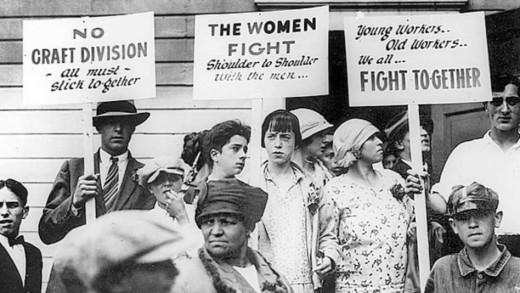
The War at Home: The Untold History of Class War in the United States is a series that traverses the history of the labour movement and state repression in the United States. The series looks at history through the lens of the working class, from the Haymarket massacre in Chicago in 1886 to the Jim Crow spread in Louisiana, to the Triangle Shirtwaist tragedy of 1911, to the violent strikes and police raids of the Great Depression, and beyond. The series makes the connection between the purging of radicals from unions and the decline of union power in the 1920s, towards the 1960s and beyond.
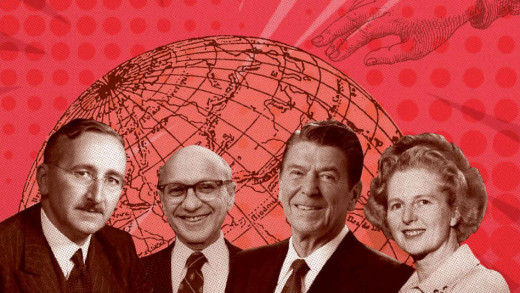
This Is Neoliberalism is a series of video essays that explore the origins and makings of neoliberalism--the dominant ideology of capitalism. The series explains what neoliberalism is and where it came from. Economic liberalisation, privatisation of the public sphere, deregulation of corporations, tax cuts for the rich, "free trade," "austerity," and reductions in government spending in order to increase the role of the private sector in society are just some of the many themes of neoliberalism, which as an ideology, fundamentally seeks to increase the power of corporations and ensure wealth remains shifted to the upper class. The series begins in 1918, and takes us up to modern politics, through globalisation, and to the modern ruling economy.
 46:48
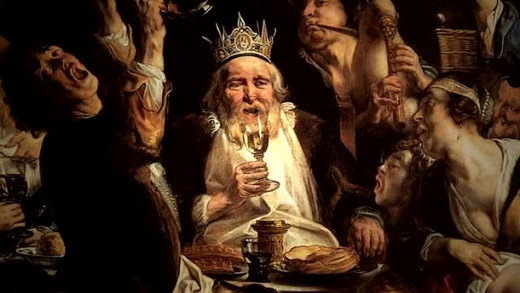
46:48For more than three decades, transnational corporations have been busy buying up what used to be thought of and known as unbuyable--forests, oceans, public broadcast airwaves, important intellectual and cultural works. Before their commodification, these commons were recognised as things in common to all people, for the benefit of all people. In This Land is Our Land, author David Bollier confronts the free-market extremism of our age to show how commercial interests have been undermining the public interest for years, and how it's become so normalised that we don't even notice it anymore. By revealing the commons within the tradition of community engagement and the free exchange of ideas and information, This Land is Our Land shows how a bold new international movement is trying to reclaim the commons for the public good by modelling practical alternatives to the restrictive monopoly powers of corporate elites.
 28:39
28:39For years, regulatory agencies and environmental groups have insisted that the increase in whale deaths off the East Coast of the United States has nothing to do with the rapidly-expanding wind industry's high-decibel pile driving, sonar mapping, and boat activities, to install wind-harvesting facilities for electricity generation. Thrown To The Wind travels to parts of the ocean where these activities are underway, to investigate these claims, showing that indeed these industrial activities are impacting critically endangered species in profound ways--which are being systematically ignored, while the climate and ecological crisis rages.
 1:33:27
Up the Yangtze
Up the Yangtze focuses on the people affected by the building of the Three Gorges Dam across the Yangtze river in Hubei, China. Countless ancient villages and historic locales will be submerged, and 2 million people will lose their homes and livelihoods. The theme of the film is the rapacious transition towards consumer capitalism from a traditional farming and peasant-based society...
 46:36
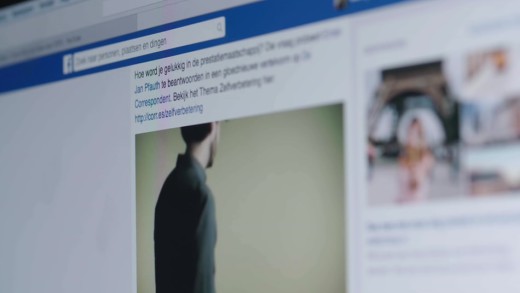
46:36Every day, billions of people are unwittingly taking part in what is the largest most comprehensive psychological experiment ever conducted. The old marketing and advertising world using billboards, advertisements and TV commercials to persuade us, has been comprehensively augmented by an entirely new field of "user experience architects" and "online persuasion agents." These forces are given tremendous power from the proliferation of digital technologies. So how do these powerful forces ensure that we fill our online shopping carts to the brim, or stay on websites as long as possible? Or vote for a particular candidate? What Makes You Click examines how these prolific entities collectively and individually use, shape, and manipulate our experiences via an online world, not just when it comes to buying things, but also with regards to our free time and political perspectives. The manipulation has become so good that these powerful controllers, former Google employees among them, are themselves arguing for the introduction of an ethical code. What does it mean when the grand conductors of these huge experiments themselves are asking for their power, influence and possibilities to be restricted?
 49:43
49:43Slavery is still existing in Mauritania, although it has officially been prohibited by law. The government of Mauritania has been trying to hide slavery from the outside world for years. Slavery has officially been abolished since 1981, almost a century after it happened worldwide. But activists are still fighting for the liberation of tens of thousands of black Mauritanians owned by someone else. Slavery still exists.
 44:57
44:57YouTube, owned by Google, has become one of the most powerful online media platforms in the world, fast to be replacing the viewership of television with over 30 billion hours watched per month in 2017. Young people flock to the platform in the hopes of fame and fortune, which comes for a select few, but not all, hence the allure to 'make it.' YouTube celebrities are now mainstream celebrities. The result is troves competing to live their lives as monetised open-wounds for the corporate platform, constantly pleading for subscribers, attention and engagement, all at the hands of Google, its secret algorithms, and the screen culture of spectacle, pornography, and targeted advertising. On both sides of the screen, the treadmill is all about keeping the ad dollars constantly rolling. YouTube, YouTubers and You offers a glimpse into this new media and advertising world, pondering how this culture may continue to undermine our future media and informational landscape. What sort of people and world is this culture creating and perpetuating?