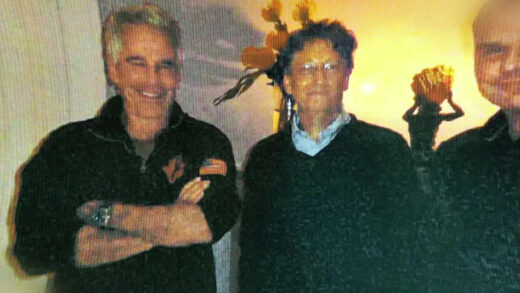
Surviving Jeffrey Epstein is a four-part series that investigates the convicted sex-offender Jeffrey Epstein who used his power, influence, and finances to not only shield his predatory sexual behaviour over several decades, but successfully manipulated the justice system to avoid true penalty. Deals made in secret. Investigations suppressed. Connections to the rich and powerful, participating in the web of trafficking across the globe. Eight survivors share their stories across the series, including the testimony of Courtney Wild, Rachel Kay Benavides, and Virginia Roberts Giuffre. Through the strength of their resolve and other survivors, the series shines a light on Epstein's tentacles, and the pursuit for real justice.
 56:24
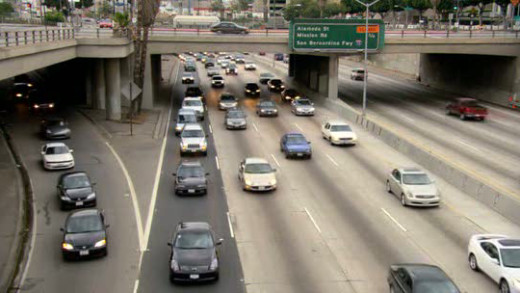
56:24Taken for a Ride details the conspiracy led by General Motors to buy up and dismantle public transport lines throughout the United States in the 1930s. Across the nation, tram and train tracks were torn up--sometimes overnight--and diesel buses placed on city streets. The highway lobby then pushed out a vast network of urban freeways that fuelled suburban development, increased auto dependence and elicited passionate opposition...
 44:09
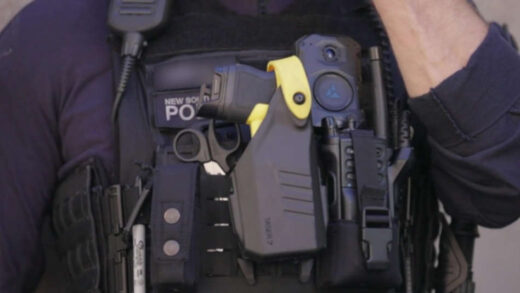
44:09Taser Tactics
Police have embraced handheld "conducted energy devices" over the past two decades. The largest manufacturer is Axon, a corporate giant in the United States, with its renowned product the Taser. Axon has captured police forces throughout Australia and the world, supplying police with their Taser guns, body worn cameras, drones, evidence tracking tools, and data analysis. The weapons are claimed to be a "safer way to stop dangerous situations", but people are dying. It's also being covered up. Taser Tactics examines Axon, its role in 'high-tech' policing, and its secretive tactics to obfuscate and eliminate investigations into controversial deaths from their technologies. Case studies include 95-year-old Clare Nowland, who died after being tasered in a nursing home in 2023, as well as footage of a farmer being tasered within seconds of a police encounter on his own property for "non-compliance". The multi-billion-dollar tech giant has made itself indispensable to police in every state and territory, but when someone is killed with a Taser, what happens?
 52:32
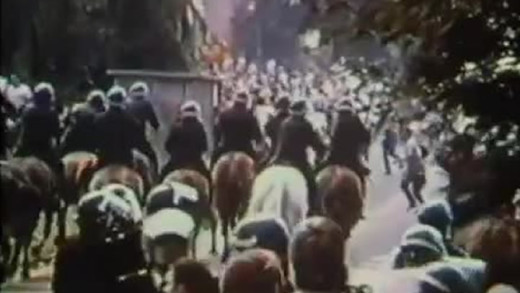
52:32Orgreave in the North of England was the focal point for a mass protest by miners in June 1984. At this time, miners were angry over proposed pit closures and reacted by striking and pressuring other pits to close. The culmination of these protests was a mass gathering of miners from all over the country at Orgreave. On the morning of 18th June miners were escorted into Orgreave. At this point, police tactics already resembled a military campaign. After a push by the miners, the police acted with force, charging the pickets on horses. The protest soon turned violent with the police deploying dogs, batons and guns in an attempt to suppress the protest. The Battle for Orgreave interviews defendants directly about their experiences of Orgreave, and how those experiences changed their life...
 1:30:19
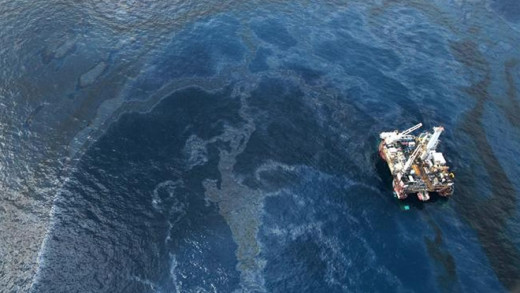
On April 22, 2010 the Deepwater Horizon offshore drilling rig, run by oil giant BP, sunk into the Gulf of Mexico--creating the world's biggest and most catastrophic environmental crime in history. After over 750 million litres of crude oil and millions of litres of the chemical dispersant Corexit dumped into the sea, the disaster was deemed over and all damage repaired. This is bullshit however. Film-makers Josh and Rebecca Tickell travel to the Gulf of Mexico to document first-hand the extent of environmental and community damage, continuing many years after the explosion. Beginning by tracing BP’s origins and fingerprints across decades of US manipulation in Iran, The Big Fix assembles an indictment of this monumental disaster by unpacking the workings of the complex oligarchies that put pursuit of profit over all other ends...
 2:24:01
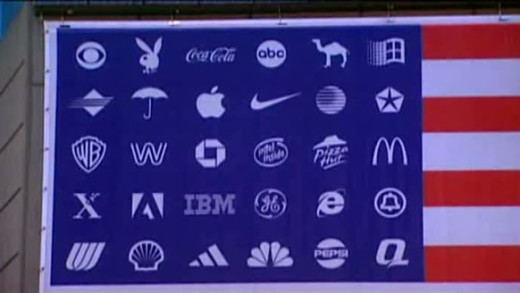
Did you know that the legal system recognises a corporation as a person? What kind of 'person' is it then? What would happen if it sat down with a psychologist to discuss its behaviour and attitude towards society and the environment? Explored through specific examples, this film shows how and why the modern-day corporation has rapaciously pressed itself into the dominant institution of our time, posing big questions about what must be done if we want a equitable and sustainable world. What must we do when corporations are psychopaths?
 1:44:40
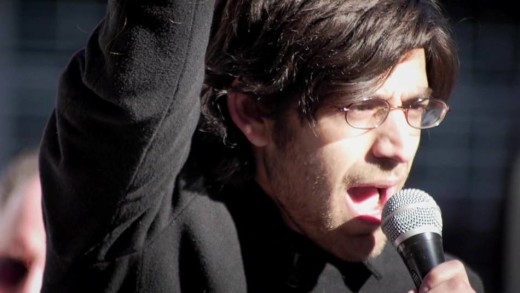
The Internet's Own Boy is a biographical documentary of the programmer and activist Aaron Swartz, who died at age 26. From his help in the development of the basic Internet protocol RSS at age 14, to the co-founding of the social network website Reddit in 2006, Swartz becomes disillusioned with the grooming of academia to the corporate life presented to him, and turns instead to work on issues of sociology, civic awareness and activism. It then becomes Swartz's work in social justice issues and political organising, combined with an open and sharing approach to information access that ensnares him in a two year legal battle, in which authorities seek to make an example of him and the work. The battle sadly ends with Swartz taking his own life. This film is a personal story about what we lose when we are tone deaf about technology and its relationship to the political system, civil liberties and human relationships.
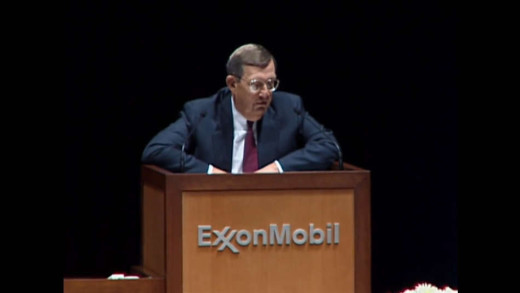
The Power of Big Oil is a three-part series that investigates the decades-long failure to confront the threat of climate change and the role of the fossil fuel industry. The series presents a parade of former oil company scientists, lobbyists, and public relations strategists who lay bare how the biggest petroleum firm in the United States, Exxon, and then the broader petroleum industry globally, moved from attempting to understand the causes of a global heating to a concerted campaign to hide the making of an environmental catastrophe. Over three episodes--Denial, Doubt, Delay--the series documents the corporate cooptation of science, the manipulation of public opinion, and political figureheads that mirror conduct by other industries--from big tobacco to the pharmaceutical companies responsible for the opioid epidemic.
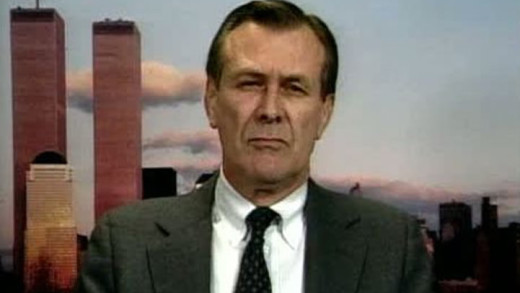
Is the threat of radical Islamism as a massive, sinister organised force of destruction—specifically in the form of al-Qaeda—a myth perpetrated by politicians across the globe, but particularly the American neo-conservatives, in order to unite and justify empire? This series of films charts the rise of both groups and movements, drawing comparisons between them and their origins, to provide much-needed and missing context to the War of Terror.
 1:15:11
The Revolution Will Not Be Televised documents first-hand the events in Venezuela leading up to and during the April 2002 coup d'état attempt which briefly deposed President Hugo Chávez. A television crew from Ireland's national broadcaster, RTÉ happened to be recording a documentary about Chávez during the events. Shifting focus, the crew followed events as they occurred and captured images that they say contradict explanations given by Chávez's opposition, the private media, the US State Department, and then White House Press Secretary Ari Fleischer. The Revolution Will Not Be Televised details how the coup was the result of a conspiracy between various old guard and anti-Chávez factions within Venezuela and the United States...
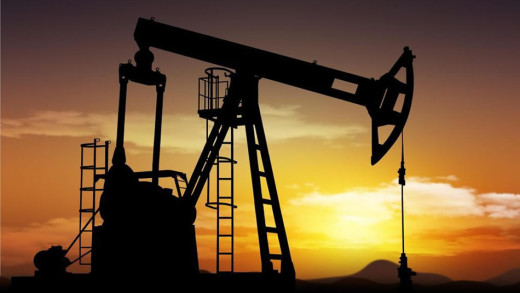
The Secret of the Seven Sisters is a four-part series examining the rise of a powerful cartel of seven companies that control the world's oil supply. The 'seven sisters' comprises Anglo-Persian Oil Company (now BP); Gulf Oil, Standard Oil of California (SoCal) and Texaco (now Chevron); Royal Dutch Shell; Standard Oil of New Jersey (Esso) and Standard Oil Company of New York (Socony), (now ExxonMobil). Prior to the oil crisis of 1973, the Seven Sisters controlled around 85% of the world's petroleum reserves, but in recent decades the dominance of the companies and their successors has declined. This series is about the power of oil, the conspiracy of business, and the control that oil provides the few...
 1:18:37
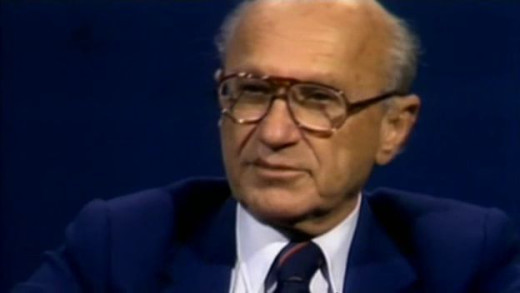
By comparing the confluence of ideas about modifying behaviour using shock therapy and other forms of sensory deprivation (which culminated in the top-secret CIA project called MKULTRA during the 1950s) alongside the metaphor of similar shock treatment modifying national economics using the teachings of Milton Friedman and the Chicago School of economics, The Shock Doctrine presents the workings of global capitalism in this framework of how the United States, along with other western countries, has exploited natural and human-engineered disasters across the globe to push through reforms and set-up other mechanisms that suit those in power and 'shock' other countries into a certain wanted behaviour. Chronologically, some historical examples are the using of Pinochet's Chile, Argentina and its junta, Yeltsin's Russia, and the invasion of Iraq. A trumped-up villain always provides distraction or rationalisation for the intervention of the United States—for example, the threat of Marxism, the Falklands, nuclear weapons, or terrorists—and further, is used by those in power as more justification for the great shift of money and power from the many into the hands of the few(er).
 1:19:36
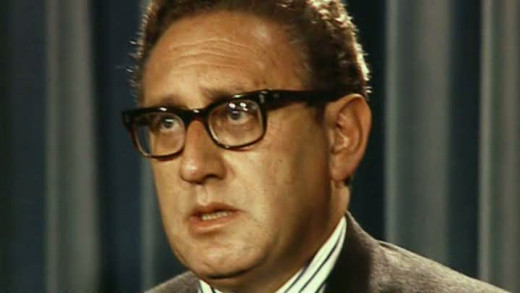
The Trials of Henry Kissinger examines the evidence of war crimes by Henry Kissinger during his time as the United States "National Security Advisor" and later Secretary of State for President Nixon and President Ford. Acting in the role of the prosecution, journalist Christopher Hitchens presents solid evidence of Kissinger's complicity in a series of war crimes involving Indonesia, Bangladesh, Chile, Cyprus, East Timor and many other countries...
 1:49:01
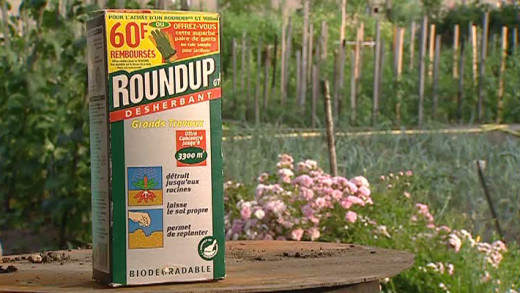
Monsanto corporation seems to be stopping at nothing: Controlling corn, wheat, soy beans, canola, mustard, okra, bringe oil, rice, cauliflower... Once they have established the norm, they aim to claim all these seeds as their intellectual property, royalties will be collected and enforced by patent law. If Monsanto controls seed, they control food and they know it. It's strategic. It can be more devastating than bombs, it can be more powerful than guns. This is their way to control the populations of the world, and as The World According to Monsanto reveals, it's governments in the cross-hairs also.
 1:30:57
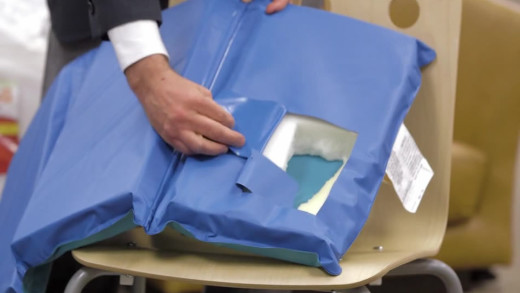
Chemical flame retardants are everywhere--in our furniture, our homes, our bodies. But do they work as promised? And are they making us sick? The three chemical companies producing flame retardants would prefer that we not ask these questions, and they've spent millions of dollars on lobbyists, publicists and influencers to ensure that we don't. Toxic Hot Seat wades through the mess to piece together an intricate story of manipulation that details how Big Tobacco skillfully convinced fire safety officials to back a standard that, in effect, requires all furniture to be filled with toxic chemicals...
 1:32:27
Why was the the electric vehicle made by General Motors destroyed in the late 1990s? Why did it receive only limited commercialisation despite being hugely popular? It was among the fastest, most efficient production cars ever built. It ran on electricity, produced no exhaust and catapulted American technology to the forefront of the automotive industry. The lucky few who drove it never wanted to give it up. So why did General Motors suddenly crush its fleet of EV-1 electric vehicles in the Arizona desert? Was it because of a lack of consumer confidence or conspiracy?