 52:51
Pepsi vs. Coke in The Ice Cold War traces the history of the worldwide struggle for soft drink supremacy by the Coca Cola Company, against the backdrop of World War II. The war was the perfect vehicle for Coca-Cola distribution, including to the Nazis. Bottling plants on front lines were paid for by the US war department. Nixon got Kremlin supremo, Khrushchev, to pose drinking Pepsi, which became the first US product made in the Soviet Union. In 1949, Mao kicked Coca-Cola out of China. President Carter got it back in 1978. In Chile, Pepsi Cola's boss ran a daily paper which was used by the CIA to help Pinochet's bloody coup...
 1:29:38
Along the way to winning an eight-hour workday and fair wages in the early 20th century, the Wobblies were one of the few unions to be racially and sexually integrated and often met with imprisonment, violence, and the privations of prolonged strikes. The Wobblies airs a provocative look at the forgotten American history of this most radical of unions, screening the unforgettable and still-fiery voices of Wobbly members -- lumberjacks, migratory workers, and silk weavers -- in their 70s, 80s, and 90s.
 45:23
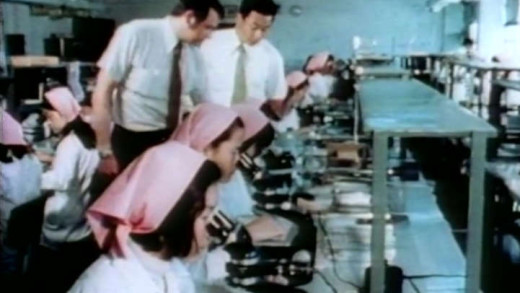
Controlling Interest is one of the first documentary films to provide a critical analysis on the growth of multinational corporations, and their impacts on people and the environment. Upon its release, Controlling Interest quickly became a standard audio-visual text for those concerned about the growing impact of multinational corporations, examining how the ever-increasing concentration of money and power affects employment in the United States, shapes patterns of development across the world, and influences foreign policy. This is the film that helped kick-off the anti-globalisation movement. Remarkably candid interviews with business executives provide a rare glimpse of the reasoning behind corporate global strategy, and the never-ending search for resources, ever-cheaper labour, and the commodification of life. The film documents the impact of corporate decisions on people around the world, including how "freedom" has come increasingly to mean the freedom of global corporations to operate without restriction. Some of the case studies include Massachusetts' declining machine tool industry, Brazil's "economic miracle," and Chile before and after the 1973 coup.
 25:51
Thalidomide: The Ninety-Eight We Forgot follows a four-year investigation on behalf of a group of children damaged at birth by the drug Thalidomide which was introduced in the late 1950s to treat morning sickness and to aid sleep. The drug caused birth deformities, such as phocomelia, with more than 10,000 children in 46 countries born with deformities. This film investigates why a group of people are excluded from compensation from the effects of Thalidomide by various legal proceedings—still relevant today in the context of how the legal system continues to protect corporations at the expense of life itself.