 1:12:47
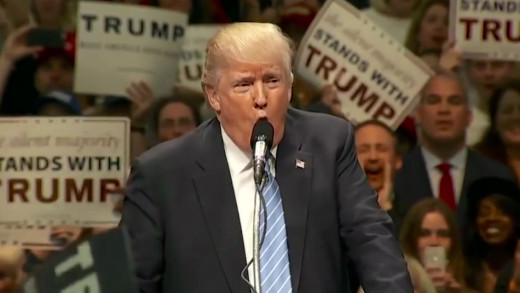
The Great White Hoax contextualises the current day politicking in the United States, with a primary focus on Donald Trump's race-baiting 2016 campaign for president. The film also widens scope however to show how Trump’s charged rhetoric fits into a long-standing historical pattern in politics in the United States, offering a stunning survey of how racism and racial scapegoating have shaped American politics for centuries. The film becomes a solid resource for a basis on race relations, white privilege, the intersectionality of race, class, and gender identities, presidential politics, and political propaganda in the age of "social media."

The Living Dead: Three Films About the Power of the Past is a series of films that investigate the way that history and memory (both national and individual) have been manipulated and distorted by politicians and others for various means of control...
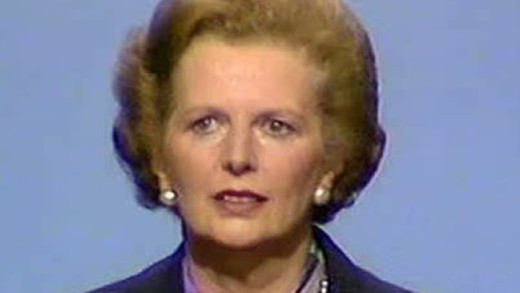
The Mayfair Set is a four part series that studies how capitalists overtly and surreptitiously came to prolifically shape governments during the 1980s, epitomised by the Thatcher government in Britain at the time. But the corporate influence of political power doesn't simply arrive, it rather culminates after decades of engineering rooted in the economic collapse from the aftermath of the Second World War. This series focuses on the unreported and almost unseen approach that capitalists have taken since the 1940s to gradually take control of the political systems of not only the United States and Britain, but elsewhere around the world—exemplified by the boom of globalisation.
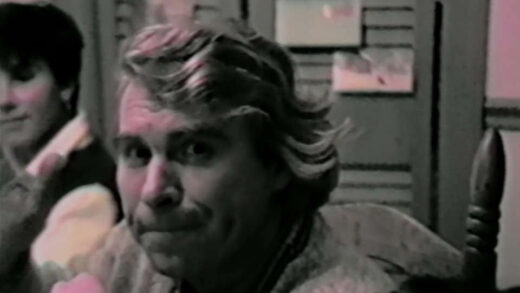
A documentary series that explores an investigation led by freelance writer Danny Casolaro on what he called "The Octopus," an elaborate conspiracy network involving the United States government and its covert operations. The series stems from the circumstances around Casolaro eventually being found dead in a hotel room. Researcher Christian Hansen revisits Casolaro's work and questions whether Casolaro actually died by suicide. The series tracks Casolaro investigating the circumstances around Inslaw's PROMIS software, a database system built to to aid law enforcement and legal prosecutors in tracking court cases, which the Department of Justice began using, stopped paying for, and then was later accused of stealing. The Iran-Contra affair also features, and the 1980 'October Surprise', where Ronald Reagan's presidential campaign covertly negotiated with Iran to delay the release of American hostages until after the election to influence its outcome. Through a cast of shady characters, the corporate world, spies, and interesting real and theorised information, The Octopus Murders is a murder mystery wrapped in major 20th-century scandals.
 1:31:10
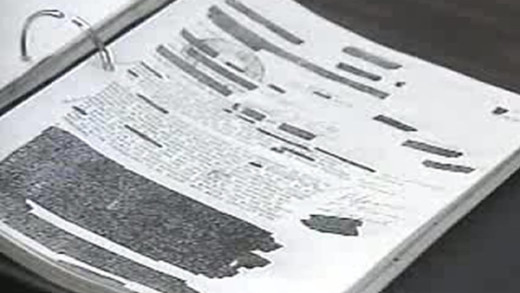
The Panama Deception documents the invasion of Panama in December 1989—codenamed Operation 'Just Cause.' The film gives context to the events which led to the invasion, and explores the real impact on the ground and devastating aftermath—all contrary to the views portrayed by mainstream media and rhetoric espoused at the time by government officials in the Bush administration. News footage and media critics reveal the extent of media control and self censorship of the invasion, relevant to any news coverage today, particularly during times of war.
 1:23:06
Each year, legions of ad people, copywriters, market researchers, pollsters, consultants, and even linguists spend billions of dollars and millions of hours trying to determine how to persuade consumers what to buy, whom to trust, and what to think. Increasingly, these techniques are migrating to the high-stakes arena of politics, shaping policy and influencing how Americans choose their leaders. In The Persuaders, renowned media scholar Douglas Rushkoff explores how the cultures of marketing and advertising have come to influence not only what we buy, but also how we view ourselves and the world around us. The Persuaders draws on a range of experts and observers of the advertising and marketing world, to examine how, in the words of one on-camera commentator, “the principal of democracy yields to the practice of demography,” as highly customised messages are targeted to individuals using technology and fine-tuned social engineering techniques.
Is the threat of radical Islamism as a massive, sinister organised force of destruction—specifically in the form of al-Qaeda—a myth perpetrated by politicians across the globe, but particularly the American neo-conservatives, in order to unite and justify empire? This series of films charts the rise of both groups and movements, drawing comparisons between them and their origins, to provide much-needed and missing context to the War of Terror.
The Power Principle is a series of films examining the history of the United States and the building of its empire with particular emphasis on the last seventy years of United States foreign policy. The methods that make empire possible are also examined—the politics of fear, the rise of public relations, the 'Mafia Principle' and the reoccurring use of fabled enemies, contrasting the Soviet Union and the Cold War alongside the parallels of today with the "War On Terror". Not only does The Power Principle tie together historical events to revive a common thread, the series may also encourage viewers to reconsider their understanding of historical events and the portrayal of them, showing how those in power play a role in manipulating the collective memory through generations.
 1:44:28
The Square
The Square follows the anti-government protest movement in Egypt through the eyes of six very different activists, starting in Tahrir Square in 2011, up until the 2013 coup d'état. The film follows the activists on a life-changing journey through the euphoria of victory into the uncertainties and dangers of the current military rule, where everything they fought for is now under threat or teetering in the balance. The Square becomes an immersive experience, transporting the viewer into the intense emotional drama and personal stories behind the revolts. It is an inspirational account of people asserting their rights, struggling against multiple forces--from a brutal army dictatorship willing to crush protesters with military tanks, to a corrupt Muslim Brotherhood using mosques to manipulate voters; a struggle unfinished, unfolding.
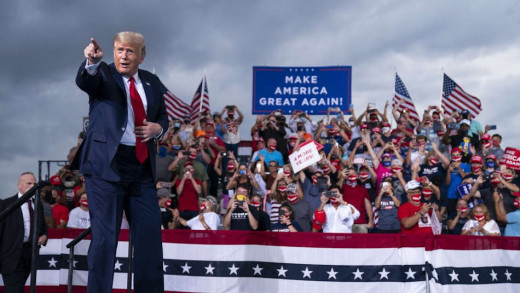
In the United States and elsewhere, both sides of politics have revelled in spectacle and image for many decades. But when Donald Trump, the billionaire reality-television host became president, a new escalation of image and spectacle engulfed dominant culture. The Trump Show is a series that explores the beguiling spectacle of the Trump years, through interviews with former White House staffers, media managers, campaign directors, and other personalities that were close to Trump during his presidency. The series documents how image has now replaced substance in politics in a totalising way, and how false constructions seek to pave over reality through a culture that is deeply rooted in hyper-individualism, fierce and corrupt competition, ideological dogmatism, and post-modern delusions.
 1:20:13
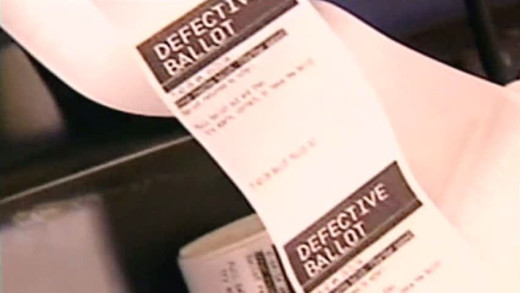
Uncounted documents how the election fraud that altered the outcome of the 2004 election led to even greater fraud in 2006 and now looms as an unbridled threat to the outcome of the 2008 and future elections. The film shows how easy it is to change election outcomes and undermine election integrity across the United States using electronic voting machines and even other simple methods of manipulation...
 57:10
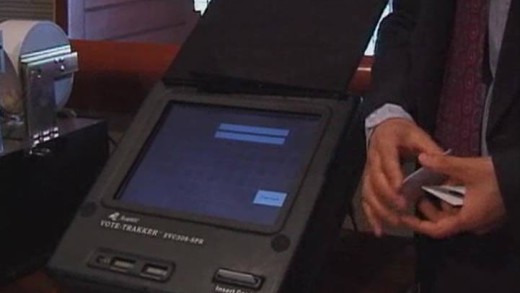
57:10Unprecedented looks at voting irregularities in the controversial presidential election in the United States from the year 2000. With a focus on the swing state of Florida, the recount, the ensuing supreme court decision in December, and future elections; the film also shows how fundamentally, many people--the majority being African-American--have outright been refused the ability to vote by a clever mix of legalese, electronic voting machines, political maneuvering and simple racism. A 1868 law prevented felons from voting--originally crafted to keep blacks from the polls in the wake of the Civil War--was resurrected in 2000, used to create a computerised list of people supposedly illegible to vote. The list had weird parameters and included as many as 57,000 to 91,000 non-felons; overwhelmingly targeting people of colour. On election day, these people were turned away at the polls. The role of electronic voting machines is also examined, as they are totally unaccountable and do not allow audits. The argument is made because of copyright over the software and trademarks. The machines also do not give paper receipts, so there is no physical evidence in case of the need for a recount. How does the United States--the so-called and self-proclaimed world-famous democracy--fair as one in light of this?
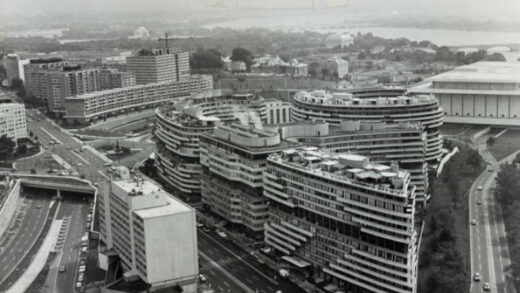
Watergate is a mini-series that provides insight on the presidential corruption scandal in the United States involving Richard M. Nixon through the early 1970s. The scandal eventually led to his resignation as America's president. The series is based on the book Watergate: The Corruption and Fall of Richard Nixon, by Fred Emery.
 25:30
25:30Founded in 1976, the United States Office of Multilateral Diplomacy--known informally as the Zap Office--was created by Henry Kissinger to try and influence the voting patterns of third world nations at the United Nations by withholding food aid to those who did not vote alongside the United States. Zap! The Weapon Is Food is an investigation of this policy, one that makes food more powerful than oil...