 1:31:20
The Hacker Wars explores the strange duality of the modern-day computer-hacker as a mischievous provocateur, but also in some cases, societal activists with underlying political fervour, serious or not. The film explores this by profiling some of the renowned characters that have tickled the secretive inner workings of corporations and government agencies for various reasons—ranging from the nefarious and narcissistic, to the political and scandalous. Some do it for the lulz, others do it to prove a point, and others do it to "speak truth to power." In any event, many have faced severe punishments as a result. By following through this, The Hacker Wars touches on issues of whistleblowing, social justice, and power relations, in a time where computer technologies represent extreme power and control. But for whom? And what? This poses the question in deciphering the personalities of the hackers themselves. Are they serious activists with good intentions, or are they driven by insane ideologies?
 51:54
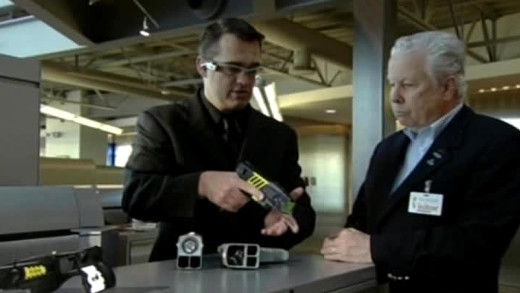
51:54The Invisible War documents the rapid militarisation of police in recent years by looking at the deployment of so-called 'non-lethal' weapons and the real effects of their use. Shotguns loaded with bean bags, rubber bullets, wood, rubber, and foam cylinders; electrical tasers; pepper sprays, OC-gas, and other chemical weapons; microwaves, stink bombs, pulsed energy weapons and many more. What is interesting is that, according to an overwhelming amount of recorded cases, these weapons have turned out to have caused many deaths and/or serious injuries, and are more often used on peaceful non-compliant citizens, or protesters, as a means of obedience rather than protection—invoking serious questions about the future of police and society.
 1:51:02
By the close of the Industrial Revolution, the food supply in the United States was tainted with frauds, fakes, and legions of new and untested chemicals, dangerously threatening the health of the public. The Poison Squad, based on the book by the same name from author Deborah Blum, tells the story of Dr. Harvey Wiley, a government chemist who was determined to banish these dangerous substances from dinner tables, and so took on powerful food manufacturers and their allies. Wiley embarked upon a series of bold and controversial trials on 12 human subjects who would become known as the “Poison Squad.” Following Wiley’s unusual experiments and tireless advocacy, the film charts the path of the forgotten heroes who together laid the groundwork for consumer protection laws in the United States, and ultimately, paved the way for the creation of the Food and Drug Administration.
 52:52
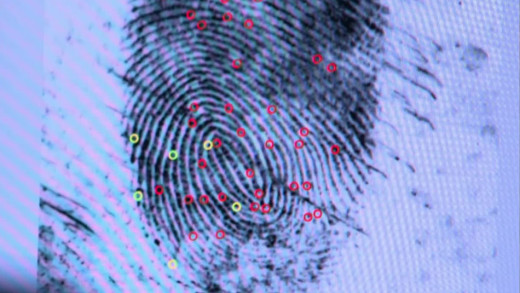
52:52From the courtroom to the lounge room--helped extensively by television and the infamous series "CSI"--forensic science brims with flash and glamour, where cutting-edge technology always reveals the "truth," and is routinely called on to solve the most difficult criminal cases with ease and "objectivity." But how reliable is the science behind forensics and its methods as they interface with the legal system? The Real CSI investigates these questions and finds serious flaws in some of the best-known tools of forensics, with systemic inconsistencies in how evidence is presented in the courtroom, along with how the culture of entertainment of this sort can seriously skew a jury's perceptions. From the sensational murder trial of Casey Anthony, to the FBI's botched investigation of the Madrid bombing, to capital cases in rural Mississippi of the United States; The Real CSI documents how a field with few standards and unproven science can seriously undermine the concept of justice, and what this means for a future of continued technological escalation...
 1:16:59
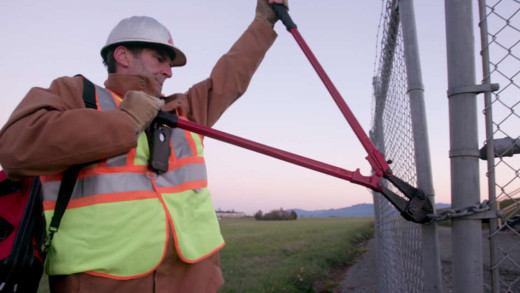
If a crime is committed in order to prevent a greater crime, is it excusable? Is it, in fact, necessary? The Reluctant Radical follows Ken Ward as he confronts his fears and acts on these questions to stop climate change. After twenty years leading some of the most renowned mainstream environmental organisations, Ken witnesses first-hand how ineffective and unthreatening they are. As their efforts fail, and environmental collapse increases in scope and speed, Ken comes to see how direct action civil disobedience is the most effective political tool to deal with catastrophic circumstances. Ken breaks the law, to fulfil his obligation to future generations, to stop the oil economy. By following Ken for a year and a half through a series of direct actions, this film culminates with his participation in the coordinated action that shut down all the tar-sands oil pipelines in the United States on October 11, 2016. The film reveals the personal costs but also the true fulfilment that comes from following one's moral calling, even if that means breaking the law and its consequences. Ken has no regrets.
 1:18:01
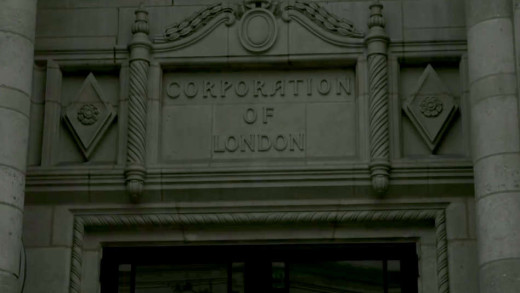
The Spider's Web: Britain's Second Empire shows how Britain transformed from a colonial power into a global financial power. At the demise of empire, the City of London's financial interests created a web of offshore secrecy jurisdictions that captured wealth from across the globe and hid it behind obscure financial structures, and webs of offshore islands. Today, up to half of global offshore wealth may be hidden in British offshore jurisdictions, and these are now the largest players in the world of international finance. Based in part on the book Treasure Islands by expert Nicholas Shaxson, and through contributions from former-insiders, academics, and campaigners for justice, The Spider's Web reveals how, in the world of international finance, corruption and secrecy have prevailed over regulation and transparency, and how the United Kingdom is a pioneer of the modern corrupt global economy.
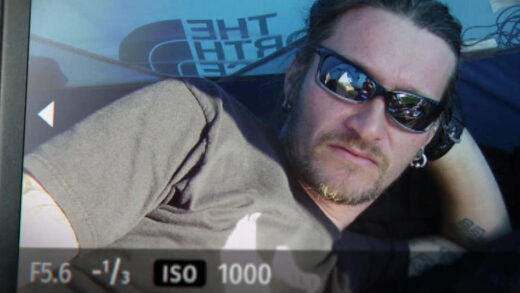
Five women come together for the first time on camera to reveal their experiences of being deceived into decades-long intimate relationships with undercover police officers as part of the Spycops scandal in the United Kingdom. The series examines the secret unit of UK undercover police who undertook these extensive spying operations on the public for over 40 years, including deceiving over 60 women into intimate relationships. Undercover police used false personas, including the identities of dead children to the relationships with members of targeted groups, and in some cases proposed marriage or got protesters pregnant, conceiving children with them.
 46:48
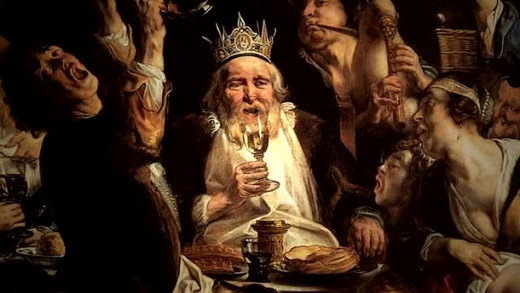
46:48For more than three decades, transnational corporations have been busy buying up what used to be thought of and known as unbuyable--forests, oceans, public broadcast airwaves, important intellectual and cultural works. Before their commodification, these commons were recognised as things in common to all people, for the benefit of all people. In This Land is Our Land, author David Bollier confronts the free-market extremism of our age to show how commercial interests have been undermining the public interest for years, and how it's become so normalised that we don't even notice it anymore. By revealing the commons within the tradition of community engagement and the free exchange of ideas and information, This Land is Our Land shows how a bold new international movement is trying to reclaim the commons for the public good by modelling practical alternatives to the restrictive monopoly powers of corporate elites.
 1:08:32
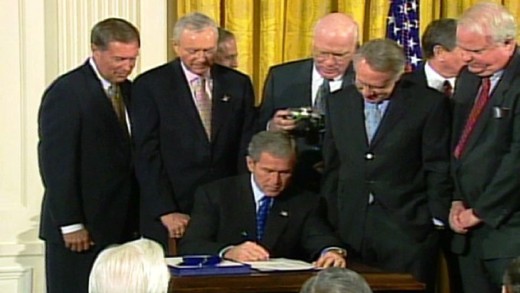
A few weeks after the September 11 attacks in 2001, the United States congress quickly passed the USA PATRIOT Act--a complicated and controversial law which was purportedly required to help with tracking future terrorist threats. Unconstitutional sets out to explain this law and examine its true impact. Citing a trove of examples from people whose lives have been directly effected, what we see is how law enforcement has rounded up Muslims and people with Arabic names to detain them for wild unspecified lengths of time without due process or even charges; the massive curtailment of civil liberties; erosion of enshrined privacy rights, increases in surveillance; and the abuses of Guantanamo Bay and Abu Ghraib.
 57:10
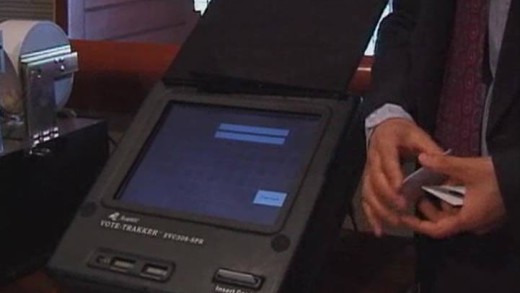
57:10Unprecedented looks at voting irregularities in the controversial presidential election in the United States from the year 2000. With a focus on the swing state of Florida, the recount, the ensuing supreme court decision in December, and future elections; the film also shows how fundamentally, many people--the majority being African-American--have outright been refused the ability to vote by a clever mix of legalese, electronic voting machines, political maneuvering and simple racism. A 1868 law prevented felons from voting--originally crafted to keep blacks from the polls in the wake of the Civil War--was resurrected in 2000, used to create a computerised list of people supposedly illegible to vote. The list had weird parameters and included as many as 57,000 to 91,000 non-felons; overwhelmingly targeting people of colour. On election day, these people were turned away at the polls. The role of electronic voting machines is also examined, as they are totally unaccountable and do not allow audits. The argument is made because of copyright over the software and trademarks. The machines also do not give paper receipts, so there is no physical evidence in case of the need for a recount. How does the United States--the so-called and self-proclaimed world-famous democracy--fair as one in light of this?