 1:08:32
A few weeks after the September 11 attacks in 2001, the United States congress quickly passed the USA PATRIOT Act--a complicated and controversial law which was purportedly required to help with tracking future terrorist threats. Unconstitutional sets out to explain this law and examine its true impact. Citing a trove of examples from people whose lives have been directly effected, what we see is how law enforcement has rounded up Muslims and people with Arabic names to detain them for wild unspecified lengths of time without due process or even charges; the massive curtailment of civil liberties; erosion of enshrined privacy rights, increases in surveillance; and the abuses of Guantanamo Bay and Abu Ghraib.
Race: The Power of an Illusion is a three-part series that investigates the idea of race in society, science and history. It navigates through myths and misconceptions, and scrutinises some of the assumptions that are taken for granted. The division of people into distinct categories--"white," "black," "yellow," "red," and so on--has become so widely espoused and so deeply rooted, that most people do not think to question its veracity. This series challenges the myth of race as biology, and traces its notions to the 19th century, demonstrating how race has a continuing negative impact through institutions and social policies.
 2:24:01
Did you know that the legal system recognises a corporation as a person? What kind of 'person' is it then? What would happen if it sat down with a psychologist to discuss its behaviour and attitude towards society and the environment? Explored through specific examples, this film shows how and why the modern-day corporation has rapaciously pressed itself into the dominant institution of our time, posing big questions about what must be done if we want a equitable and sustainable world. What must we do when corporations are psychopaths?
 47:59
47:59Raped
Between 1999 and 2000, nearly 8,000 women reported a rape to the police. Out of those women, 90 per cent identified their attacker, and DNA evidence helped place the accused at the scene of the crime. But the admission of a prior relationship with the perpetrator counted against the victim. In any case, the conviction rate for rape is unbelievably low—only nine convictions for every 100 cases reported. Film-maker Rachel Coughlan follows the heart-wrenching stories of five women to win their fight for justice, showing in the process the systematic failures of the legal system in why such cases—the ones that do even make it to court—often don't result in conviction.
 57:10
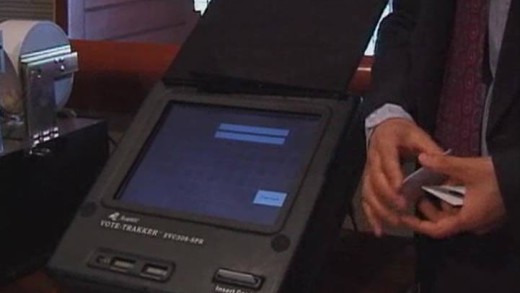
57:10Unprecedented looks at voting irregularities in the controversial presidential election in the United States from the year 2000. With a focus on the swing state of Florida, the recount, the ensuing supreme court decision in December, and future elections; the film also shows how fundamentally, many people--the majority being African-American--have outright been refused the ability to vote by a clever mix of legalese, electronic voting machines, political maneuvering and simple racism. A 1868 law prevented felons from voting--originally crafted to keep blacks from the polls in the wake of the Civil War--was resurrected in 2000, used to create a computerised list of people supposedly illegible to vote. The list had weird parameters and included as many as 57,000 to 91,000 non-felons; overwhelmingly targeting people of colour. On election day, these people were turned away at the polls. The role of electronic voting machines is also examined, as they are totally unaccountable and do not allow audits. The argument is made because of copyright over the software and trademarks. The machines also do not give paper receipts, so there is no physical evidence in case of the need for a recount. How does the United States--the so-called and self-proclaimed world-famous democracy--fair as one in light of this?
 28:59
28:59It has been 30 years since Title IX legislation granted women equal playing time, but the male-dominated world of sports journalism has yet to catch up with the law. Coverage of women's sport lags far behind men's, and focuses on female athletes femininity and sexuality over their achievements on the court and field. While female athleticism challenges the narrative of gender roles, women athletes continue to be depicted in traditional roles that reaffirm their femininity as wives and mothers or sex objects. By comparison, male athletes are framed according to heroic masculine ideals that honour courage, strength, and endurance. Playing Unfair is the first video to critically examine the post-Title IX media landscape in terms of the representation of female athletes, using numerous media examples to catalyse debate among women and men, athletes and non-athletes, about the meaning of images in a world transformed by the presence of women in sport.
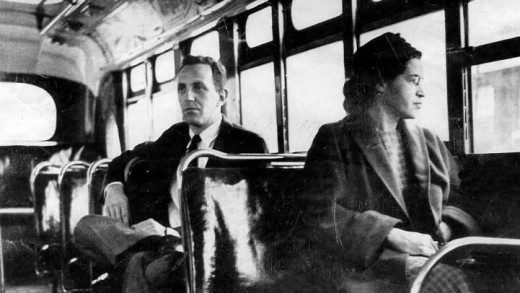
Eyes on the Prize tells the story of the civil rights era from the point of view of the women and men whose extraordinary actions launched a movement that changed the fabric of American society, and embodied a struggle whose reverberations continue to be felt today. It is the story of the people--young and old, male and female, northern and southern--who, compelled by a meeting of conscience and circumstance, worked hard to eradicate a world where whites and blacks could not go to the same school, ride the same bus, vote in the same election, or participate equally in society. It was a world in which peaceful demonstrators were met with resistance and brutality--a reality that is now nearly incomprehensible to many young Americans. Through contemporary interviews and historical footage, Eyes on the Prize traces the civil rights movement from the Montgomery bus boycott to the Voting Rights Act; from early acts of individual courage through the flowering of a mass movement and its eventual split into factions.
 26:37
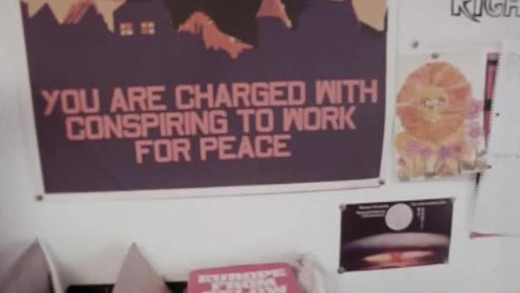
26:37A Nod And A Wink reviews the use of vague Conspiracy laws in Britain from 1975, laws which are much in the same as those used in police states such as Brazil and the Soviet Union to suppress political and moral dissent. This film raises and addresses the serious questions about the way the legal system works in Britain--and indeed elsewhere...
 28:40
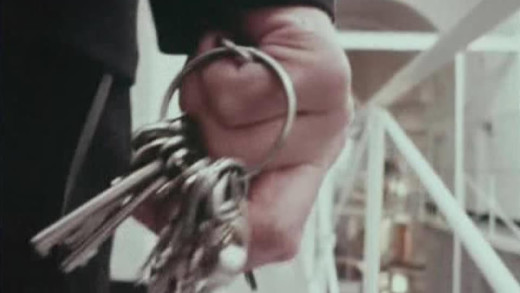
28:40Guilty Until Proven Innocent reports on the issue of innocent people confined to prisons on remand in the UK, circa 1974. People are imprisoned without trial and are later released with either a small fine, a set of mandatory conditions, or leave completely innocent. It's a strange set of circumstances in a country with such pretensions of a bill of rights and espoused 'legal protections.' Is bail a right or a privilege?
 25:51
25:51Thalidomide: The Ninety-Eight We Forgot follows a four-year investigation on behalf of a group of children damaged at birth by the drug Thalidomide which was introduced in the late 1950s to treat morning sickness and to aid sleep. The drug caused birth deformities, such as phocomelia, with more than 10,000 children in 46 countries born with deformities. This film investigates why a group of people are excluded from compensation from the effects of Thalidomide by various legal proceedings—still relevant today in the context of how the legal system continues to protect corporations at the expense of life itself.