 1:31:38
Skandal!
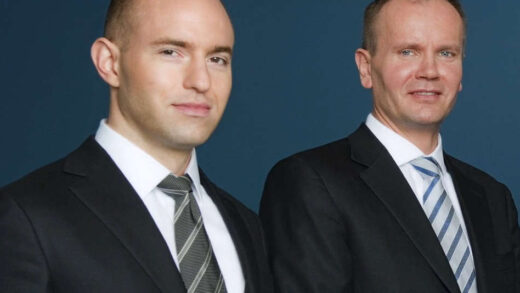
Skandal! Bringing Down Wirecard is a thriller documentary of one of the largest world-wide financial crimes. It follows journalist Dan McCrum, who reveals the inside story of a 6-year investigation into the German corporation Wirecard and the dirty tricks that were deployed against him and the Financial Times, as they battle to expose a multi-billion euro fraud at the centre of one of Germany's most successful online payment corporations of the time. The film traverses the colourful characters of the scam, such as the mafia, porn barons, gambling outfits, Libyan and Russian intelligence agencies, corporate spies, private investigators, hired thugs and surveillance operatives, demanding answers of the chief executive officer, Markus Braun, awaiting trial in Munich, and its mysterious chief operating officer, Jan Marsalek, who vanishes.
 29:05
29:05There are billions of people increasingly glued to 'smartphones' and consumed by the seemingly endless spectacle of 'social media.' But why? Reporter Hilary Andersson seeks to answer this question by tracking down insiders who reveal how social-media companies have deliberately developed habit-forming technology to get people addicted. Former Facebook manager, Sandy Parakilas, tells us the "goal is to addict you and then sell your time." Likewise, Leah Pearlman, the co-creator of the renowned 'Like' button, warns of the dangers of social-media addiction. Through these voices, and many others, Andersson shows how behavioural science is profoundly used by tech companies to keep people endlessly checking their phones, to the end of huge profits.
 57:26
57:26Spin
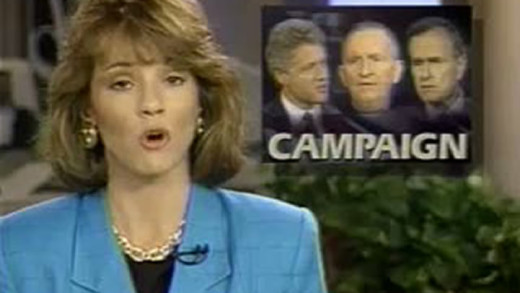
Using the 1992 presidential election as his springboard, film-maker Brian Springer captures the behind-the-scenes manoeuvrings of politicians and newscasters in the early 1990s. Pat Robertson banters about "homos," Al Gore learns how to avoid abortion questions, George Bush talks to Larry King about halcyon and other drugs—all presuming they're off-air. Composed of 100% unauthorised satellite footage, Spin is a surreal expose of media-constructed reality, posing larger questions about the functioning of not only corporate media, but the political systems in which they support and how this in-turn plays to the media-constructed reality and so on.
 43:51
43:51Spin the Bottle critiques the role that popular culture plays in glamorising excessive drinking and high-risk behaviour, in contrast to the ways alcohol affects the lives of real young men and women in reality. This film decodes the power and influence of seductive media images to show how they shape personal identity when linked to the use of alcohol. Nowhere is this link more apparent than on America's college campuses. By exploring the party scene, Spin the Bottle also shows the difficulties young people have in navigating a cultural environment saturated with messages about gender and alcohol. Interviews with health professionals provide a clear picture of how drinking impacts student health and academic performance, but it is the students' own experiences and reflections that tell the real story behind alcohol's alluring public and cultural image.
 44:12
44:12Split Screen tells the story of January 6, 2021, where an estimated 2,000 people stormed the United States Capitol building, attempting to stop the certification of votes from the 2020 election. What started as a protest became violent chaos, killing several people and injuring over 140. The event was the culmination of years of angst, anger, violence, and confusion, that began stirring years or even decades earlier in the thick of growing polarisation in the United States. Certain media outlets and social media influencers spread content fuelling division and angst in the months leading up to and following the election. Allegations of voter fraud--rejected by state and federal officials in both parties, as well then-Attorney General William Barr--were amplified and emboldened by conservative media, ultimately igniting the rage and frustration of an undeniable portion of people in the United States who get their news and information through big tech, and the slurry of social media echo-chambers.
 1:40:32
Starsuckers
By planting a variety of fake celebrity-related stories in the UK media and having tabloid newspapers accept them without corroboration or evidence, Starsuckers navigates through the shams and deceit involved in creating a pernicious celebrity culture, uncovering the real reasons behind the addiction to fame and the corporations and individuals who profit from it.
 25:52
25:52Street of Joy
Street Of Joy looks at how product marketing methods and advertising techniques are applied to politics by specifically following the campaigns around the election of Jimmy Carter in the United States during 1976. In these times, the techniques of today are seen in their early years, especially the use of carefully crafted images for use on television...
 28:57
28:57Subconscious War is a video essay exploring the influences of media and the culture of violence on reality, and the cultivation of collective values in society. The film contrasts the writings of Aldous Huxley and Neil Postman's grim assessments; relating the concepts of works such as 'Brave New World' and 'Amusing Ourselves to Death' to the current cultural influences that foster today--corporate media and indeed media saturation, video games, television, and a pervasive technoculture, for example. What is being created? And what sort of people are being cultivated by this culture? Who benefits?
 57:28
57:28Sugar Coated investigates a once secret public relations campaign, dating back to the 1970s, where the sugar industry deflected threats to its multi-billion dollar empire from scientific research emerging implicating processed sugar with adverse health effects. In order to continue sweetening the world's food supply, thus securing continued profits, the sugar industry turned to the very same deceptions and tactics lifted from the tobacco industry. Using big sugar's own internal documents on this strategy, Sugar Coated reveals the well-oiled tricks of the trade to confuse the public about what is really driving the global pandemic of obesity, diabetes, and heart disease. Will we be fooled again?
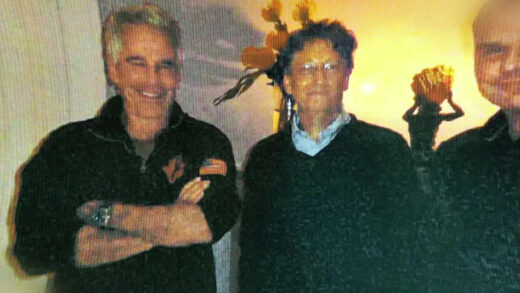
Surviving Jeffrey Epstein is a four-part series that investigates the convicted sex-offender Jeffrey Epstein who used his power, influence, and finances to not only shield his predatory sexual behaviour over several decades, but successfully manipulated the justice system to avoid true penalty. Deals made in secret. Investigations suppressed. Connections to the rich and powerful, participating in the web of trafficking across the globe. Eight survivors share their stories across the series, including the testimony of Courtney Wild, Rachel Kay Benavides, and Virginia Roberts Giuffre. Through the strength of their resolve and other survivors, the series shines a light on Epstein's tentacles, and the pursuit for real justice.
 44:09
44:09Taser Tactics
Police have embraced handheld "conducted energy devices" over the past two decades. The largest manufacturer is Axon, a corporate giant in the United States, with its renowned product the Taser. Axon has captured police forces throughout Australia and the world, supplying police with their Taser guns, body worn cameras, drones, evidence tracking tools, and data analysis. The weapons are claimed to be a "safer way to stop dangerous situations", but people are dying. It's also being covered up. Taser Tactics examines Axon, its role in 'high-tech' policing, and its secretive tactics to obfuscate and eliminate investigations into controversial deaths from their technologies. Case studies include 95-year-old Clare Nowland, who died after being tasered in a nursing home in 2023, as well as footage of a farmer being tasered within seconds of a police encounter on his own property for "non-compliance". The multi-billion-dollar tech giant has made itself indispensable to police in every state and territory, but when someone is killed with a Taser, what happens?

The Brain -- A Secret History is a series about how various theories and experiments on the human mind over decades have led to profound insights into how the human brain works, but also have involved great cruelty and pose terrible ethical dilemmas. Historical experiments such as severe maternal deprivation, brainwashing and other experiments in mind control such as MKULTRA are covered, along with physical interventions such as the history of electric shock 'treatment', behaviour modification, experimental psychology, and the Milgram experiment.

To many in both business and government, the triumph of the self is the ultimate expression of democracy, where power is truly moved into the hands of the people. Certainly the people may feel they are in charge, but are they really? The Century of the Self tells the untold and controversial story of the growth of the mass-consumer society. How is the all-consuming self created, by whom, and in whose interest?
 1:12:37
Arguing that advertising not only sells things, but also ideas about the world, The Codes of Gender examines the commercial culture's inability to let go of reactionary gender representations. Presenter Sut Jhally's starting point is the breakthrough work of the late sociologist Erving Goffman, whose 1959 book The Presentation of the Self in Everyday Life prefigured the growing field of performance studies. Jhally applies Goffman's analysis of the body in print advertising to hundreds of print ads today, uncovering an astonishing pattern of regressive and destructive gender codes. By looking beyond advertising as a medium that simply sells products, and beyond analyses of gender that tend to focus on either biology or objectification, The Codes of Gender offers important insights into the social construction of masculinity and femininity, the relationship between gender and power, and the everyday performance of cultural norms.
 2:24:01
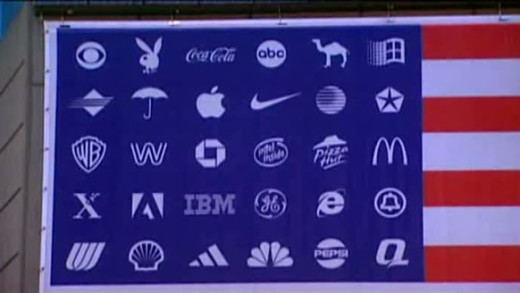
Did you know that the legal system recognises a corporation as a person? What kind of 'person' is it then? What would happen if it sat down with a psychologist to discuss its behaviour and attitude towards society and the environment? Explored through specific examples, this film shows how and why the modern-day corporation has rapaciously pressed itself into the dominant institution of our time, posing big questions about what must be done if we want a equitable and sustainable world. What must we do when corporations are psychopaths?
 25:12
25:12Through exploring deep questions about the way mainstream media is organised and perpetuated in concert with technological development, media expert George Gerbner delivers a solid indictment of the way the so-called "information superhighway" is now being constructed. Following on from his solid work looking at the impacts of television on society, Gerbner turns to examining emerging technologies like V-chip and the way they interface with globalisation. This film urges the viewer to struggle for democratic principles in this emerging technoculture.
 1:08:16
While corporations and governments continue to disseminate globalisation and the rapacious drive for consolidation of corporate power, people around the world are pushing back to reinstate local communities. Groups are coming together to rebuild human scale, local and ecological economies based on a new paradigm of localisation and sustainability. The Economics Of Happiness documents these shifts and shows how these communities have reclaimed their autonomy...
 31:41
31:41Television has colonised human storytelling--not only has creating and passing on culture been usurped by television and corporate media, today dominant culture is television and corporate media. The Electronic Storyteller outlines these changes and shows the cumulative impacts that television and mass media has on the way we think about ourselves and how we construct views of the world around us. With a focus on the stories of gender, class, and race, The Electronic Storyteller delivers an analytical framework to understand the pervasive forces behind what is at stake in the new world of saturated media and controlled imagery...

The Facebook Dilemma aims to open an in-depth investigation into the impact Facebook has had on privacy and democracy in the United States and throughout the world, by revealing how the decisions made by the company as it sought increased wealth and new users, transformed it into a vast surveillance machine, a media company, and a 'hidden hand' in elections and political discourse. Drawing on original interviews from those inside the company, this two part series catalogues some of the ignored warning signs, both inside and outside the company, of Facebook's negative impact, growing from Zuckerberg's dorm-room project and into a powerful global empire.
 1:19:51
By examining the people and practices of the media and entertainment industries, The Fourth Estate illuminates not only specific incidences of corruption by press groups, but how the wider model of mainstream journalism itself as a for-profit entity has a huge amount to answer for in terms of democracy and the state of politics throughout the world. Filmed over two years throughout the UK on no budget, the filmmakers profile journalists, organisers and critics of industrial media practices, stemming from the Leveson Inquiry in 2011 which was set up to examine the culture, practices and ethics of the British press following the News International phone hacking scandals of the Murdoch media empire. While the phone hacking scandal illuminated the depth and breadth of the culture of British journalism, the media's focus at the time quickly diverted from a brief period of self-examination, back to business as usual. This film instead continues the analysis by looking at the larger implications of a for-profit media model and its connections to ideology, entertainment, and hence the resulting political framework that's in crisis.
 1:28:02
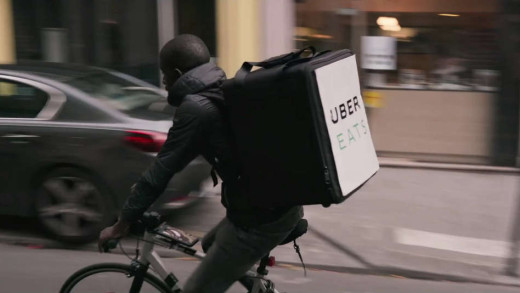
Millions of people around the world are finding work by-the-job online. The "gig economy" is worth more than $5 trillion worldwide, and seemingly growing. But who are these workers? Seduced by the promise of independence, and control over their working hours and income, people around the world that are lured into the gig economy now face the harsh reality of it algorithmically-driven market place: dangerous working conditions, instability, and the precariousness of their work that can stop overnight in the case of deactivation or a bad review. Through committed characters, The Gig is Up shows that the so-called 'freedom' that is espoused by this technological economy is only an illusion.
 1:53:07
The Great Hack is an inside account of the company Cambridge Analytica, which used vast amounts of personal data scraped from portals such as Facebook to manipulate elections throughout India, Kenya, Malta, Mexico, the United Kingdom and United States over the past decade. The company, owned by SCL Group--a British firm that has a background in military disinformation campaigns and psychological warfare--came to public attention after the Brexit campaign in the UK, and soon after, the election of Donald Trump in the United States, both closely worked on by Cambridge Analytica and its billionaire backer, Robert Mercer. This resulted in inquires and investigations into both Facebook and Cambridge Analytica, but the company liquidated, along with its internal documents. Two former employees instead step forward to offer an inside account into the dark world of data mining and personalised propagandising, having some regret for what they have done. The film tracks these characters, as Cambridge Analytica lives on as Emerdata Limited, in the same London office. The Great Hack exemplifies big questions about democracy in the age of targeted information manipulation via the screen, and just how much power over our awareness has been ceded to giant corporations.
 1:12:47
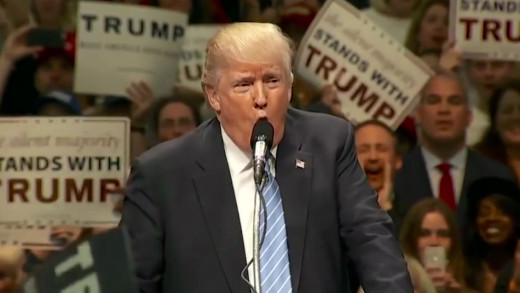
The Great White Hoax contextualises the current day politicking in the United States, with a primary focus on Donald Trump's race-baiting 2016 campaign for president. The film also widens scope however to show how Trump’s charged rhetoric fits into a long-standing historical pattern in politics in the United States, offering a stunning survey of how racism and racial scapegoating have shaped American politics for centuries. The film becomes a solid resource for a basis on race relations, white privilege, the intersectionality of race, class, and gender identities, presidential politics, and political propaganda in the age of "social media."
 53:50
53:50The Illusionists examines how global advertising firms, mass media, and the beauty, fashion, and cosmetic-surgery industries have together colonised the way people all around the world define beauty and see themselves. Taking us from Harvard to the halls of the Louvre, from a cosmetic surgeon's office in Beirut to the heart of Tokyo's Electric Town, The Illusionists shows how these industries saturate our lives with narrow, Westernised, consumer-driven images of so-called beauty that show little to no respect for biological realities or cultural differences. Featuring voices from prominent sociologists, magazine editors, scientists, artists, and activists, The Illusionists documents a truly global phenomenon, with hegemonic results.
 44:17
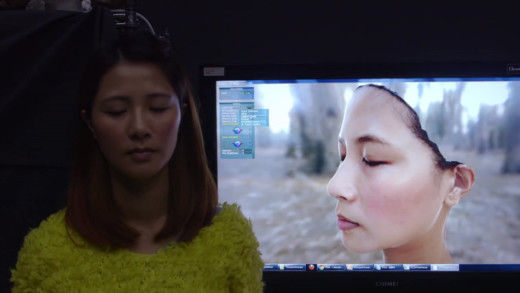
44:17We live in an absolutely saturated media environment of images that span 'real' and fake—whether it's newspaper and tabloid photos, journalism itself, art and culture, or the human body. Images claim to be hardly distinguishable from the originals, while the virtual world is increasingly becoming 'seamless' in the real world. Kids today see a Clown Fish but instead impose their imagery of Finding Nemo. People interact with machines more than they do living beings. The narratives imposed by this technological and media culture are fast seeking to entirely replace the real world with a simulation of it. So what does that mean for the truth? The Industry of Fake explores the shifting boundaries and inequality in journalism and in art, as well as providing a basis to question this culture's fascination with simulacra—a process of mimicry mediated by images that represents the real thing, but is not the real thing. What does it mean if we value our projections or stories about the thing as opposed to the thing in-and-of itself? What does this mean in the real world if we come to value our simulations or representations as more authentic things as opposed to copies or toxic mimics?
 1:44:40
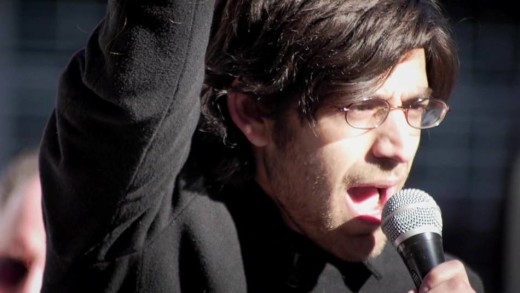
The Internet's Own Boy is a biographical documentary of the programmer and activist Aaron Swartz, who died at age 26. From his help in the development of the basic Internet protocol RSS at age 14, to the co-founding of the social network website Reddit in 2006, Swartz becomes disillusioned with the grooming of academia to the corporate life presented to him, and turns instead to work on issues of sociology, civic awareness and activism. It then becomes Swartz's work in social justice issues and political organising, combined with an open and sharing approach to information access that ensnares him in a two year legal battle, in which authorities seek to make an example of him and the work. The battle sadly ends with Swartz taking his own life. This film is a personal story about what we lose when we are tone deaf about technology and its relationship to the political system, civil liberties and human relationships.

The Living Dead: Three Films About the Power of the Past is a series of films that investigate the way that history and memory (both national and individual) have been manipulated and distorted by politicians and others for various means of control...
 50:57
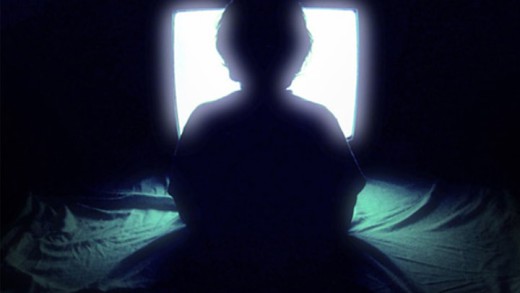
50:57Based on the comprehensive work of media scholar George Gerbner, The Mean World Syndrome takes aim at the for-profit media system that thrives on violence, stereotypes, and the cultivation of anxiety. The film takes us through how the more television people watch, the more likely they are to tend to think of the world as an intimidating and unforgiving place, while being insecure and afraid of others. We see how these media-induced fears and anxieties provide fertile ground for intolerance, extremism, and a paranoid style of politics that threatens basic social values. The result is an accessible introduction to debates about media violence and more broadly, the effects of the media system. This film is a powerful tool for helping to make sense of the increasingly intense and fractious political climate of today.