
Misogyny is rampant in this culture, and corporations capitalise on making women hate their bodies. Indeed all aspects of womanhood are commodified, hypersexualised, and squeezed into gender stereotypes. Being female comes at a cost. So it's no wonder that young people growing up can feel horrible about themselves and their bodies, and further feel confused about what it means to be a woman in today's world. Into this perfect storm steps queer theory, an ideology born in the 1990s, that tells people that all the confusing feelings they may experience about the world they live in can be fixed not by changing the world, but by changing themselves. The past decade has seen a steep rise in the number of young girls seeking to alter their bodies by undergoing life threatening, irreversible procedures. Dysphoric is a series that explores this concept of gender transition, told through the voices of clinicians, psychiatrists, sociologists, feminists, academics, detransitioners, and concerned citizens and parents. The series also discusses the permanent medical side-effects of hormones and surgeries, the propaganda of corporations that glorify thousands of stereotypical gender presentations coalesced as fashion, the surge in pronoun policing, censorship and the curtailment of speech, language hijacking that calls women "menstruators," and the many other hurdles women face while trying to question this modern-day misogyny.
 1:11:52
American philosopher Elbert Hubbard was fond of quoting his father on friendship. "When you die," his father would tell him, "if you've got five real friends, you've had a great life." Five Friends is the story of how one man sought to live that life. Shot from the mountains of Southern California to the New England coastline, the film follows 65-year-old Hank Mandel and his five closest friends as they navigate and reflect on success, conflict, marriage, divorce, fatherhood, children, and dying. From touching moments and humour, to horrific tragedy and darkness, Five Friends provides an exploration of the emotional lives of men and what they're capable of when they dare to open up with one another.
 59:40
59:40Generation M looks at misogyny and sexism in mainstream media, exploring how negative definitions of femininity and hateful attitudes toward women get constructed and perpetuated throughout popular culture. The film tracks this across a broad and disturbing range of media phenomena: from the hyper-sexualization of commercial products aimed at girls, to the explosion of violence against women in video games aimed at boys; from the hysterical sexist rants of popular hip-hop artists and talk-radio shock-jocks, to the continually harsh, patronizing caricature of women found in virtually every area of media. Generation M posits the consequences of misogyny in all of its forms, showing that when we devalue more than half the population based on gender, we harm everyone—boys and men, women and girls alike.
 14:47
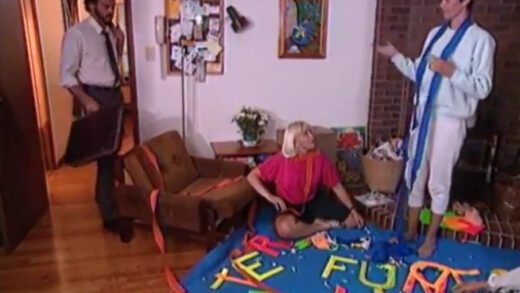
14:47The combination of detailed descriptions by abused women and great dramatisations helps both male and female viewers to understand the realities of spousal abuse, what motivates this kind of activity, and reveals the myths that surround it. Low self-esteem, rather than straight anger, is the central causal issue and the ability to quit habitual spousal abuse is as problematic as recovery from any other addiction.
 56:39
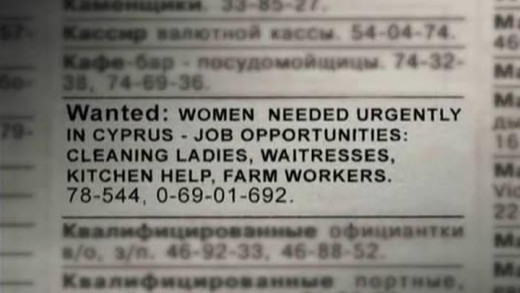
56:39Sex Slaves documents an extraordinary journey deep into the world of sex trafficking from the perspective of Viorel--a young man trying to find his wife Katia who was four months' pregnant when she left home looking for a job. Along the way, the production team takes a rare, hidden-camera look at various traffickers, pimps and middlemen who buy and sell hundreds of thousands of women each year. Lured by traffickers who prey on their dreams of employment abroad, many of the women are then kidnapped and "exported" to Europe, the Middle East, the United States and elsewhere. During this process, they are sold to pimps, locked in brothels, drugged, terrorised and raped repeatedly. In Eastern Europe, sex trafficking has become the fastest growing form of organised crime, with Moldova and Ukraine widely seen as major suppliers of women into the global sex trade...
 43:51
43:51Spin the Bottle critiques the role that popular culture plays in glamorising excessive drinking and high-risk behaviour, in contrast to the ways alcohol affects the lives of real young men and women in reality. This film decodes the power and influence of seductive media images to show how they shape personal identity when linked to the use of alcohol. Nowhere is this link more apparent than on America's college campuses. By exploring the party scene, Spin the Bottle also shows the difficulties young people have in navigating a cultural environment saturated with messages about gender and alcohol. Interviews with health professionals provide a clear picture of how drinking impacts student health and academic performance, but it is the students' own experiences and reflections that tell the real story behind alcohol's alluring public and cultural image.
 55:41
55:41The Bro Code unpacks and takes aim at the forces of masculinity that condition boys and men to fundamentally dehumanise and disrespect women. The film breaks down a range of contemporary media forms that are saturated with sexism—movies and music videos that glamorise misogyny, pornography that trades in the brutalisation and commodification of women, comedy routines that make light of sexual assault, and a slate of men's magazines and TV shows that propagate myths of what it means to be a man in this culture: that it's not only normal, but "cool" for boys and men to control and humiliate women. There's nothing natural or inevitable about this mentality. And it's extremely harmful in the real world. By setting the myths against reality, The Bro Code challenges young people to step up and fight back against this culture, to reject the fundamental idea that being a 'real man' means disrespecting women.
 1:12:37
Arguing that advertising not only sells things, but also ideas about the world, The Codes of Gender examines the commercial culture's inability to let go of reactionary gender representations. Presenter Sut Jhally's starting point is the breakthrough work of the late sociologist Erving Goffman, whose 1959 book The Presentation of the Self in Everyday Life prefigured the growing field of performance studies. Jhally applies Goffman's analysis of the body in print advertising to hundreds of print ads today, uncovering an astonishing pattern of regressive and destructive gender codes. By looking beyond advertising as a medium that simply sells products, and beyond analyses of gender that tend to focus on either biology or objectification, The Codes of Gender offers important insights into the social construction of masculinity and femininity, the relationship between gender and power, and the everyday performance of cultural norms.