 1:29:20
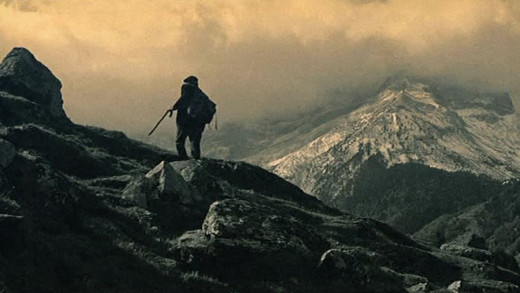
There are plenty of anarchists in the world. Many have committed robbery or smuggling for their cause. Fewer have discussed strategies with Che Guevara or saved the skin of Eldridge Cleaver, the leader of the Black Panthers. There is only one who has done all that, and also brought to its knees the most powerful bank in the world by forging travellers cheques, without missing a single day of work bricklaying. He is Lucio Urtubia from a tiny village in Navarra in North of Spain. Lucio, 75, now lives in Paris, still doing valued political work. Lucio has been protagonist and witness to many of the historic events of the second half of the 20th century. His family was persecuted by Franco's regime; he was on the streets of Paris for the phenomenon of May of 1968; he actively supported Castro's revolution; and helped thousands of exiled people by providing false documents to them. But without a doubt, his greatest triumph came in the second half of the 1970s where he swindled 25 million dollars from the First National Bank--or Citibank--to later invest the money in causes he believed in.
 53:54
53:54The myths of globalisation have been incorporated into much of our everyday language. "Thinking globally" and "the global economy" are part of a jargon that assumes we are all part of one big global village, where national borders and national identities no longer matter. But what is globalisation? And where is this global village? In some respects you are already living in it. The clothes in your local store were probably stitched together in the factories of Asia. Much of the food in your local supermarket will have been grown in Africa...
 1:12:39
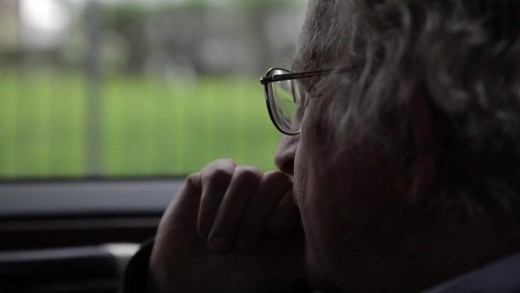
In Requiem for the American Dream, renowned intellectual figure Noam Chomsky deliberates on the defining characteristics of our time—the colossal concentration of wealth and power in the hands of the few and fewer, with the rise of a rapacious individualism and complete collapse of class consciousness. Chomsky does this by discussing some of the key principles that have brought this culture to the pinnacle of historically unprecedented inequality by tracing a half century of policies designed to favour the most wealthy at the expense of the majority, while also looking back on his own life of activism and political participation. The film serves to provide insights into how we got here, and culminates as a reminder that these problems are not inevitable. Once we remember those who came before and those who will come after, we see that we can, and should, fight back.
 1:48:27
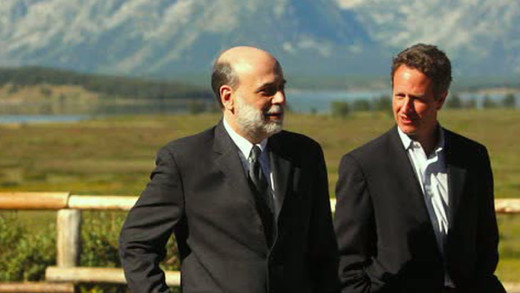
Inside Job provides a comprehensive analysis of the global financial crisis of 2008, which at a cost over $20 trillion, caused millions of people to lose their jobs and homes in the worst recession since the Great Depression, and nearly resulted in a global financial collapse. Through interviews with key financial insiders, politicians, journalists, and academics, Inside Job traces the rise of a rogue industry which has corrupted government and academia...
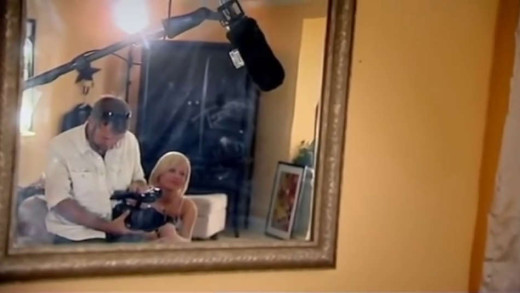
2009, pornography has grown into a $10 billion business, and some of the world's most-known corporations are silently sharing in the profits. Companies like Time Warner, Marriott, and Vodaphone earn huge amounts of revenue by piping pornography into homes and hotel rooms, but you won't see anything about it in their company reports. Even the Catholic Church invests in companies that distribute pornography, along with pension funds that earn huge profits from investing in ventures that relate to porn. Hardcore Profits is a two part television series that explores how in the 21st century, pornography has never been more profitable, nor more pervasive.
 58:32
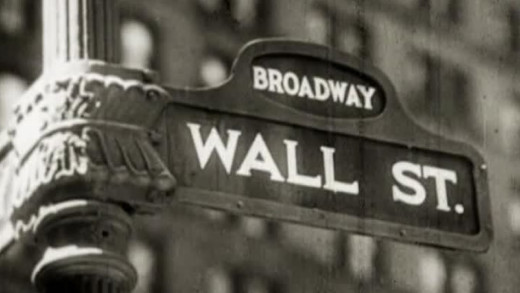
58:32Over six desperate days in October 1929, the New York Stock Exchange crashed leading to the collapse of three thousand banks, taking people's savings with them. In a matter of days, the United States economy was obliterated. The crash was followed by a devastating worldwide depression that lasted until the Second World War. Finances did not regain their pre-crash values until 1954. This film recounts the story of a financial disaster that we hoped could never happen again, revealing the familiar tune of cheap credit, consumerism, greed, corruption and cronyism in the current-day financial crisis...
 1:08:51
Recorded by over 100 media activists, this film tells the story of the enormous street protests in Seattle, Washington in November 1999, against the World Trade Organisation summit. Vowing to oppose--among other faults--the WTO's power to arbitrarily overrule nations' environmental, social and labour policies in favour of unbridled corporate greed, thousands of people from all around the United States came out in force to stop the summit. Against them was a brutal police force and a hostile media. This Is What Democracy Looks Like documents the struggle, as well as providing a narrative to the history of success and failure of modern political resistance movements.
 31:54
31:54Based on the book of the same title by Juliet Schor, The Overspent American scrutinises the form of consumerism ever-pervasive in this current era that is driven by upscale spending and debt; shaped and reinforced by a media system driven by commercial interests. We're encouraged from all angles to spend money we don't have, working longer hours than ever before. Illustrated with hundreds of examples, The Overspent American draws attention to both the financial and social costs of this giant consumption machine, where the frivolous and relentless search for "happiness" and identity is espoused by advertising.
 52:24
52:2425 Million Pounds details the collapse of Barings Bank in the mid 1990s primarily by a broker called Nick Leeson, who lost £827 million ($1.3 billion) by speculating on futures contracts. The film contextualises the downfall as the history of Barings Bank was one of the oldest and most prestigious merchant banks in Britain, run by the same family for decades with extensive ties to Britain's elites. But in the late 19th century Barings almost went bankrupt after investing heavily in South American bonds, including backing the construction of a sewer system in Buenos Aires. The bank was saved by The Bank of England, but Edward Baring, the head of the bank, was financially ruined and never recovered. This film explores the culture of Barings and of the financial markets during the 1990s, and how Nick Leeson was able to cause another huge loss of money to the bank, this time bankrupting the company. He did this by claiming fictitious profits on the Singapore International Monetary Exchange and using money requested from London as margin payments on fictitious trades to finance his loss-making positions. It's also the profile of a stereotypical corporate psychopath, as Leeson himself explains how he was able to manipulate those around him to achieve his ends and rationalise his actions.
 54:31
54:31The Power of the Fed investigates how the United States central bank's actions have played out over the years on Wall Street versus Main Street, since the last financial crash of 2008. The film traces how the experiment the Fed began in 2008 has been dramatically ratcheting up, peaking with the COVID-19 crisis in 2020. But, of course, rather than help correct from the huge corruption and financial abstractions that caused the 2008 crash, the fed has doubled down on its policies of "quantitative easing" which have gone on to help widen the greatest inequality of wealth in history, pushing financial products even further removed from the economy, driving inflation, automation, and worsening the impending cycles of boom and bust. The rise of speculative cryptocurrencies and non-fungible tokens (NFTs) has only fueled the mania, as economic volatility increases.
 51:47
51:47Obey
Obey is a video essay based on the book "Death of the Liberal Class" by author and journalist Chris Hedges. The film charts the rise of corporatocracy and examines the trending possible futures of obedience in a world of unfettered capitalism, globalisation, staggering inequality and environmental crisis -- posing the question, do we resist or obey?
 1:14:02
The film is a video essay by Professor Albert Bartlett essentially serving as an introduction to the concept of steady growth and doubling time, by taking us through the impacts and consequences of exponential growth on a finite planet. By making good observations of this impossible growth as applied to fossil-fuel consumption, population and the endless growth of which the global economy requires, this presentation gives us the basic tools to fundamentally understand that we've got a real problem on our hands.
 55:34
55:34Nearly 100 years after its creation, the power of the United States Federal Reserve has never been greater. Governments and financial systems around the world pay close attention to the Fed Chairman's every word, philosophies and ideologies. Yet the average person knows very little about the most powerful and least understood financial institution. Money For Nothing takes viewers inside the Fed and reveals the impact of Fed policies past, present, and future.
 1:08:29
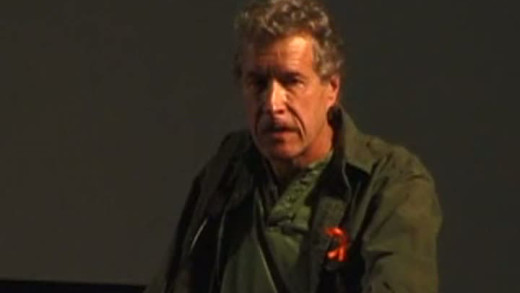
Confessions of an Economic Hit Man is a presentation by John Perkins, based on the book by the same name published by him in 2004. Perkins describes the role: "Economic hit men are highly-paid professionals who cheat countries around the globe out of trillions of dollars. They funnel money from the World Bank, the US Agency for International Development (USAID), and other foreign "aid" organisations into the coffers of huge corporations and the pockets of a few wealthy families who control the planet's natural resources. Their tools included fraudulent financial reports, rigged elections, pay-offs, extortion, sex, and murder. They play a game as old as empire, but one that has taken on new and terrifying dimensions during this time of globalisation."
 1:31:32
Push
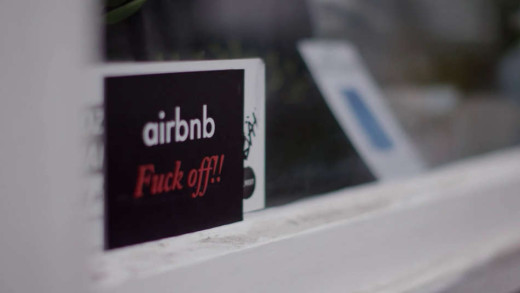
Housing is fundamental human right. But in cities all around the world, housing affordability is decreasing at record pace. The local working and middle classes have become unable to afford housing in major cities: London, New York, Berlin, Hong Kong, Toronto, Tokyo, Valparaiso, Sydney, Melbourne, Caracas, Barcelona, Paris, Amsterdam, Stockholm... the list seems endless. People are being pushed out of their very own homes--because living in them has rapidly become unaffordable. Told through the eyes of Leilani Farha, a United Nations special rapporteur on housing, Push touches on the foundations of the crisis, as we follow the rise of abstract finance and the pervasive influence of neoliberalism that conjures a perfect storm: the global financial crisis of 2008--where houses packaged as "complex financial instruments" were the core of the crisis. Then, once the financial industry was bailed out by the public to the tune of trillions of dollars, financiers bought up millions of houses around the globe for cents on the dollar, and their power and influence has only increased in the subsequent decades. Farha travels all around the world, speaking to people that now spend 90% of their income on rent, after wages have stayed stagnant since 1970s, and how large corporations swallow up entire communities, guided by the same politik. She says we still need to confront those old ideas--the financialisation of the housing 'market.' "There's a huge difference between housing as a commodity and gold as a commodity." These systems don't consider the people they extract from.
 1:18:26
Golden Rule presents a picture of today's political economy interpreted through the framework of the "Investment Theory of political Parties". The theory, first articulated in 1983 by Thomas Ferguson, is largely based on quantitative analysis of activity in the stock market and its relationship to politics--that is to say that "elections are moments when groups of investors coalesce and invest to control the state." The film takes this theory and tests it against developments in the political and social spheres of recent decades, right up to the election of Barack Obama in the United States in 2008...
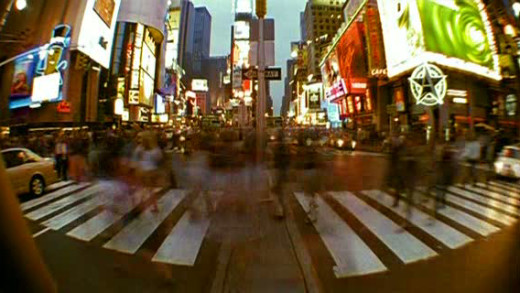 51:18
51:18Featuring George Bush's famous "go-shopping-speech" calling for a war against terrorism that deters the nation from the fear of consumption; Castro responding with hymns to the anti-consumerist, advertising-free island of Cuba; Bill Gates and Steve Ballmer preaching that the computer will give us peace on earth, and "bring people together rather than isolate them"; while Adbuster Kalle Lasn warns that advertising pollutes us mentally, that over-consumption is unsustainable, that we are running out of oil and this will cause a global economic collapse...
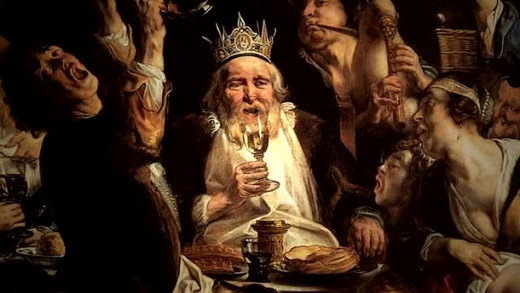 46:48
46:48For more than three decades, transnational corporations have been busy buying up what used to be thought of and known as unbuyable--forests, oceans, public broadcast airwaves, important intellectual and cultural works. Before their commodification, these commons were recognised as things in common to all people, for the benefit of all people. In This Land is Our Land, author David Bollier confronts the free-market extremism of our age to show how commercial interests have been undermining the public interest for years, and how it's become so normalised that we don't even notice it anymore. By revealing the commons within the tradition of community engagement and the free exchange of ideas and information, This Land is Our Land shows how a bold new international movement is trying to reclaim the commons for the public good by modelling practical alternatives to the restrictive monopoly powers of corporate elites.
 1:08:16
While corporations and governments continue to disseminate globalisation and the rapacious drive for consolidation of corporate power, people around the world are pushing back to reinstate local communities. Groups are coming together to rebuild human scale, local and ecological economies based on a new paradigm of localisation and sustainability. The Economics Of Happiness documents these shifts and shows how these communities have reclaimed their autonomy...
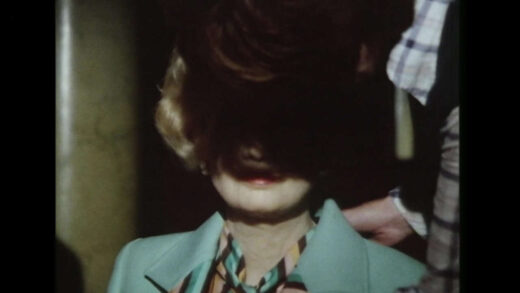
Shifty
Shifty is a series of films that traverse the past 40 years in Britain, showing how the shift of political power to finance and hyper-individualism came together in powerful ways, to undermine one of the fundamental structures of mass democracy--the shared idea of what is real. As that fell apart, with it went the language and the ideas that people had turned to for the last 150 years to make sense of the world they lived in. As a result, life in Britain and the current and former colonies of its empire, has become strange--a hazy dream-like flux, where distrust in politicians keeps growing, and the political class seems to have lost control. Through archive footage, news reels, and on-screen-text in video essay format, Shifty documents the shapes of how this happened, using the vast ranges of footage to evoke what if felt like to live through an epic transformation during the 1980s.
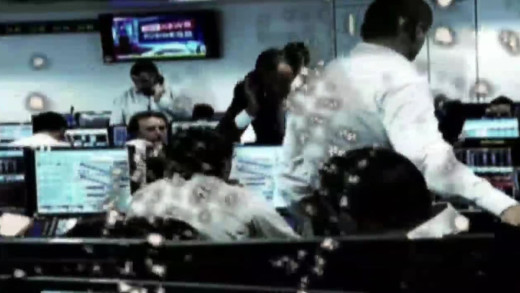 46:21
46:21With the recent global financial crisis, governments across the world promised decisive action -- the biggest financial stimulus packages in history, along with gargantuan bail-outs of corporations and floods of money into private banks and investment firms. But what crazed logic is this: propping up bad debt with…more bad debt? Overdose reviews the happenings of the bail-outs over these years, showing how dangerous the situation continues as a burst bubble is re-inflated globally. What happens next?
 44:03
44:03Dirty Money
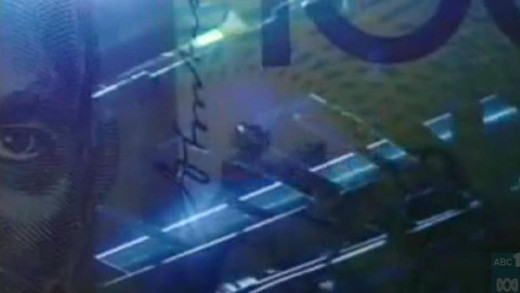
In the late 1990s, the Reserve Bank of Australia thought it was on a winner. The bank had developed the technology to create polymer bank notes that it claimed rivalled paper money. So the Reserve Bank decided to set up a subsidiary company called Securency to sell the technology to the world. It had just one problem though—getting legitimate access to other central bank officials to pitch the idea. So instead, Securency decided to employ a shadow network of local "fixer agents" to make "connections" with relevant officials, lavishing them with prostitutes, cash, and bribing them into deals. Dirty Money is the story of this institutional corruption at the highest level of finance in Australia.
 47:18
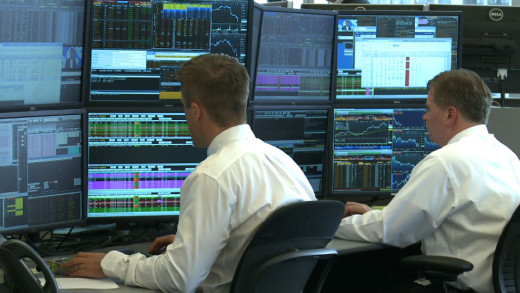
47:18"Quants" are the mathematicians, software developers and computer programmers at the centre of the global economy. These are the people who designed the "complex financial products" that caused the financial crisis of 2008. Here they speak openly about their game of huge profits, and how the global economy has become increasingly dependent on mathematical models that quantify commodified human behaviours to the point of insanity. But things don't stop there. Through the convergence of economy and technology, the Quants have now brought this model into the world of the machines, where trades are done at the speed of light, far from the realm of human experience. The machines are in charge. Some Quants are even now worried. What are the risks of this complex machine? Will the Quants be able to keep control of this financial system, or have they created a monster?
 1:47:39
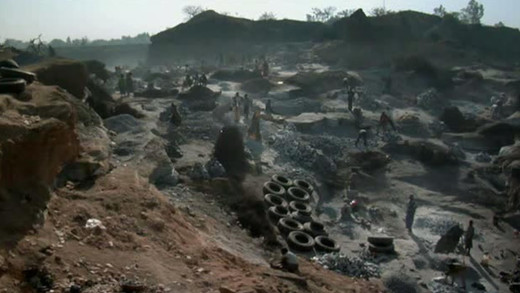
Let's Make Money investigates the development of the world-wide financial system, showing that elitists economically exploit the rest of society, especially in the developing world, but also in western nations. Using the savings of a typical depositor as a case study, the film moves around the global system, showing exploitation at many levels. There are several interviews with investment managers, politicians, economists as well as homeless people and workers who give their take on the system and its impacts...
 1:31:38
Skandal!
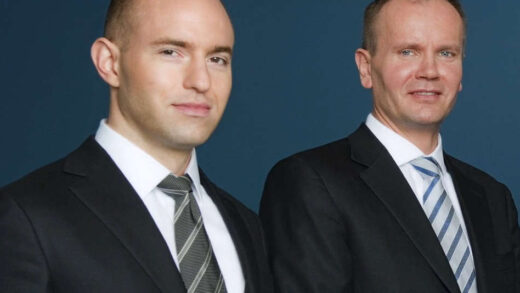
Skandal! Bringing Down Wirecard is a thriller documentary of one of the largest world-wide financial crimes. It follows journalist Dan McCrum, who reveals the inside story of a 6-year investigation into the German corporation Wirecard and the dirty tricks that were deployed against him and the Financial Times, as they battle to expose a multi-billion euro fraud at the centre of one of Germany's most successful online payment corporations of the time. The film traverses the colourful characters of the scam, such as the mafia, porn barons, gambling outfits, Libyan and Russian intelligence agencies, corporate spies, private investigators, hired thugs and surveillance operatives, demanding answers of the chief executive officer, Markus Braun, awaiting trial in Munich, and its mysterious chief operating officer, Jan Marsalek, who vanishes.
 51:35
51:35The Tax Free Tour travels the globe to expose the workings of offshore tax havens and the elite banking systems of the world's billionaires which operate in extreme secrecy. Using examples from multi-national corporations such as Apple Computer and Starbucks, the film traces sizeable capital streams that travel the world literally in milliseconds--all to avoid local laws and paying tax. Such routes go by resounding names like 'Cayman Special', 'Double Irish', and 'Dutch Sandwich'. The Tax Free Tour is a sobering look at how the world's rich live in an entirely different world than the rest of us...
Pandora’s Box
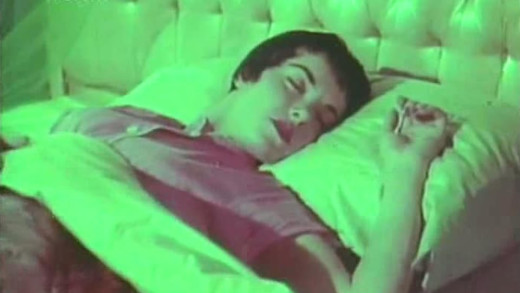
Pandora's Box -- A fable from the age of science, is a six part series examining the consequences of political and technocratic rationalism, tying together communism in the Soviet Union, systems analysis and game theory during the Cold War, economy in the United Kingdom during the 1970s, the insecticide DDT, Kwame Nkrumah's leadership in Ghana during the 1950s and 1960s and the history of nuclear power.
 45:23
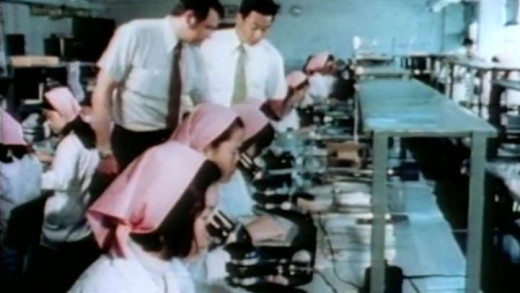
45:23Controlling Interest is one of the first documentary films to provide a critical analysis on the growth of multinational corporations, and their impacts on people and the environment. Upon its release, Controlling Interest quickly became a standard audio-visual text for those concerned about the growing impact of multinational corporations, examining how the ever-increasing concentration of money and power affects employment in the United States, shapes patterns of development across the world, and influences foreign policy. This is the film that helped kick-off the anti-globalisation movement. Remarkably candid interviews with business executives provide a rare glimpse of the reasoning behind corporate global strategy, and the never-ending search for resources, ever-cheaper labour, and the commodification of life. The film documents the impact of corporate decisions on people around the world, including how "freedom" has come increasingly to mean the freedom of global corporations to operate without restriction. Some of the case studies include Massachusetts' declining machine tool industry, Brazil's "economic miracle," and Chile before and after the 1973 coup.