 1:28:58
The Murder of Fred Hampton is a film which began with the intention of documenting Fred Hampton and the Illinois Black Panther Party during 1971, but during the film's production, Hampton was murdered by the Chicago Police Department and FBI. The film project then quickly split into two parts: the portrait and biography of Fred Hampton, and an investigative report into his murder. The result chronicles important historical context. Hampton was a radical activist and deputy chairman of the national Black Panther Party, during the civil rights and black power movements in the United States. Hampton was killed as part of COINTELPRO—the illegal "counter-intelligence program" run by the FBI, aimed at destroying domestic political organisations through surveillance, infiltration, disruption, threats, violence and assassinations.
A documentary series that explores an investigation led by freelance writer Danny Casolaro on what he called "The Octopus," an elaborate conspiracy network involving the United States government and its covert operations. The series stems from the circumstances around Casolaro eventually being found dead in a hotel room. Researcher Christian Hansen revisits Casolaro's work and questions whether Casolaro actually died by suicide. The series tracks Casolaro investigating the circumstances around Inslaw's PROMIS software, a database system built to to aid law enforcement and legal prosecutors in tracking court cases, which the Department of Justice began using, stopped paying for, and then was later accused of stealing. The Iran-Contra affair also features, and the 1980 'October Surprise', where Ronald Reagan's presidential campaign covertly negotiated with Iran to delay the release of American hostages until after the election to influence its outcome. Through a cast of shady characters, the corporate world, spies, and interesting real and theorised information, The Octopus Murders is a murder mystery wrapped in major 20th-century scandals.
 47:17
47:17Peter Francis, a former undercover police spy turned conscientious whistleblower, breaks ranks by speaking to the media after becoming troubled by the unaccountable culture of secret police operations throughout the United Kingdom targeting peace activists for decades. Tactics included undercover police officers having sexual relationships with activists, even going as far as commonly having children with the women they were spying on. Undercover agents also often assumed the identities of dead children in order to have "solid cover stories." We also see how undercover police were asked to look for intelligence that could be used to discredit the family of murdered teenager Stephen Lawrence and their campaign. The Lawrence family both speak of their shock at hearing about that the police did this to them. This short investigation opens a flood of questions about the secret history of covert police operations, and indeed the future of them in the context of the sprawling surveillance state of today.
 37:29
37:29The Secret Policeman exposes first hand evidence of racism in the British police forces, revealing how much it has been driven underground since 2002 when a government inquiry branded the police as institutionally racist. Undercover journalist Mark Daly joins the Greater Manchester Police as a trainee, and infiltrates Bruche Police Training Centre in Warrington, Cheshire for several months using hidden cameras to capture direct instances of racism throughout the police force.
 58:37
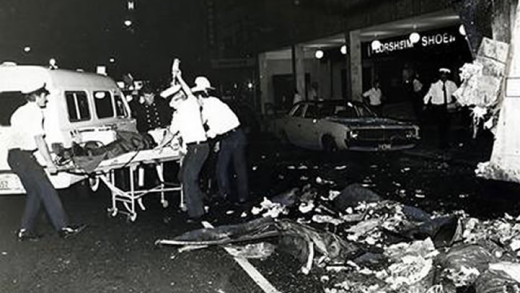
58:37In 1978, Australia was shocked by the explosion of a massive bomb placed in a rubbish bin outside the Sydney Hilton Hotel in NSW. The perpetrators were never found. However, evidence that the Australian security and intelligence forces may have been responsible resulted in the NSW State Parliament unanimously calling for an inquiry in 1991 and then again in 1995. The Federal Government vetoed any inquiry. No investigation was held. The government then set-up the Australian Federal Police and increased support for "anti-terrorist measures"...
 1:13:35
The Tall Man
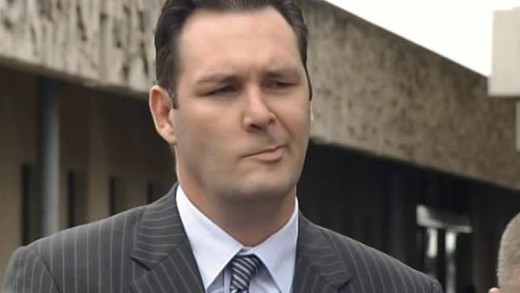
The Tall Man is the story of an Aboriginal man, Cameron Doomadgee (tribal name: Mulrunji) who in 2004 was arrested by Senior Sergeant Chris Hurley (the so-called 'Tall Man') in Palm Island, a tropical paradise in Australia's Far North. 45 minutes after the arrest, Mulrunji was found dead in the Palm Island police station. His injuries were like those of someone who'd been in a fatal car crash. The police claimed he had "tripped on a step," but the community knew this was bullshit. The Palm Islanders protested for truth and burnt down the police station. The subsequent trial of Hurley—who had been decorated for his work in Aboriginal communities—made headlines day after day, shadowed by Queensland police threatening to strike. The police officer was acquitted for the death by the Attorney General. The Tall Man follows these stories by delving into the courtroom, the notorious Queensland police force, and speaking with the Indigenous community of Palm Island, where this tale is sadly still indicative of many of the continuing atrocities of Aboriginal deaths in police custody.
 53:09
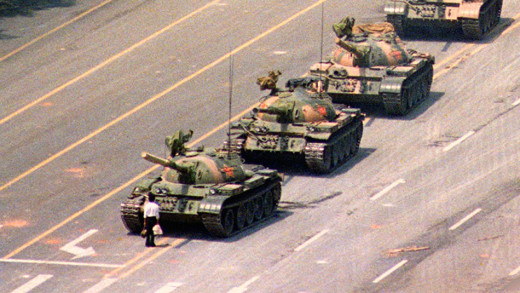
53:095th June 1989, Tiananmen Square, Beijing. After weeks of mass killing, oppression and violence by the Chinese government against it's own people, the image of a lone man standing defiant with his shopping to a line of tanks still lives on...
The Trap
If one steps back and looks at what freedom actually means in the West today, it's a strange and limited kind of freedom. The United States and its empire self-describe fighting the Cold War for "individual freedom," yet it is still something that the leaders of our so-called democracies continually promise to give us. Abroad, in Iraq and Afghanistan, the attempt to force "freedom" on to other people has led to more than just bloody mayhem, and this, in turn, has helped inspire terrorist attacks in Britain and elsewhere. In response, the government has dismantled long-standing laws that were designed to protect individual freedom and civil liberties.
Five women come together for the first time on camera to reveal their experiences of being deceived into decades-long intimate relationships with undercover police officers as part of the Spycops scandal in the United Kingdom. The series examines the secret unit of UK undercover police who undertook these extensive spying operations on the public for over 40 years, including deceiving over 60 women into intimate relationships. Undercover police used false personas, including the identities of dead children to the relationships with members of targeted groups, and in some cases proposed marriage or got protesters pregnant, conceiving children with them.
 1:08:51
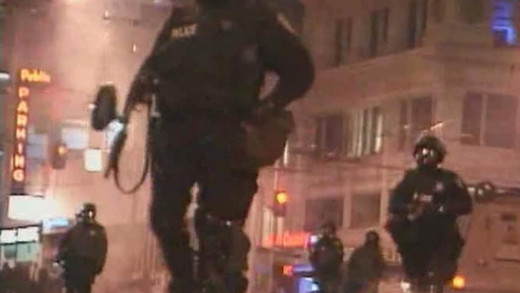
Recorded by over 100 media activists, this film tells the story of the enormous street protests in Seattle, Washington in November 1999, against the World Trade Organisation summit. Vowing to oppose--among other faults--the WTO's power to arbitrarily overrule nations' environmental, social and labour policies in favour of unbridled corporate greed, thousands of people from all around the United States came out in force to stop the summit. Against them was a brutal police force and a hostile media. This Is What Democracy Looks Like documents the struggle, as well as providing a narrative to the history of success and failure of modern political resistance movements.
 48:55
48:55Nina Hobson, an officer in the Leicestershire police force, leaves the force disillusioned at the rampant culture of sexism, apathy and neglect that is rife amongst the institution. Five years later, Nina returns to the police force, but this time as an undercover journalist to document the culture behind the scenes, blowing the whistle. Filmed over four months, gaining unprecedented access to officers, Nina secretly captures footage first-hand showing the various ways the culture perpetuates itself. Reports of sexual assault and rape are not taken seriously, to the extent that in one scene, a female police officer says that if she was ever raped, she would not report it to the police. We see multiple cases where officers turn away from domestic violence incidents because they do not want to turn up, or do not want to answer emergency calls because they are out to get a meal instead. In another scene, officers are playing poker and indoor cricket rather than attending to others who are working with prisoners or doing patrol work. In another scene, a police officer boasts about how he pretended not to see someone injured and bleeding because he had a football match to watch while on duty. The examples continue. The result is that Undercover Copper not only exposes the brutality of these specific incidents, but posits fundamental questions about the police as an institution itself, embedded in a larger culture that is apathetic, misogynist, and self-interested. It shows just how much needs to be done to turn this around.
 48:05
48:05Unwritten Future
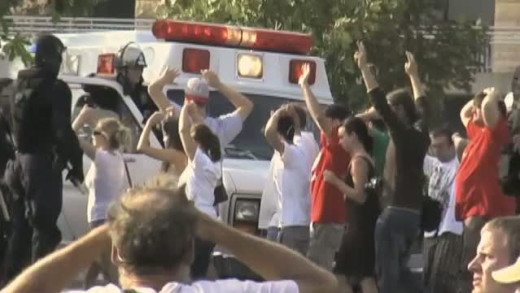
Unwritten Future documents the events during the Republican National Convention in 2008 where excessive use of force and questionable tactics by police are on full show. Even peaceful radio host Amy Goodman is arrested. The film is dispersed with interviews with activists, asking them what they are fighting for, contrasted with police response and the aftermath.
 1:41:20
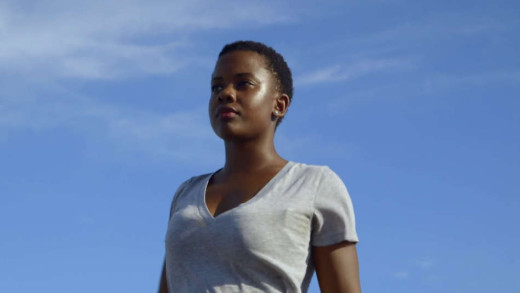
Told by the activists and leaders who live and breathe for justice, Whose Streets? is an unflinching look at the uprising in Ferguson in the United States after unarmed teenager Michael Brown is killed by police and left lying in the street. Grief, long-standing racial tensions, and renewed anger bring residents together to hold vigil, and protest the latest tragedy in a long history of police brutality. Empowered parents, artists, and teachers from around the country come together to act and support. As the national guard descends on Ferguson with military grade weaponry, young community members become the torch-bearers of a new generation of resistance. Whose Streets? is a powerful battle cry from a generation fighting, not only for their civil rights, but for the right to live.