 52:18
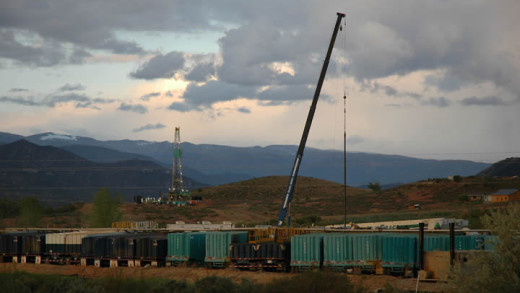
52:18Exempt from environmental protection laws, the oil and gas industry has left idyllic landscapes and rural communities throughout the United States pockmarked with abandoned homes, polluted waterways and aquifers, as well as plenty of sick people. Split Estate zeroes in on Garfield County in Colorado, and the San Juan Basin where more demonstrations of water that can be set on fire are found, but industry isn't just stopping there -- fracking is spreading across the United States, with plans to even drill in the New York City watershed, as well as elsewhere around the globe. As the appetite for fossil fuels increases, Split Estate debunks claims by an industry that assures the public that it is a good neighbour, driving home the need to stop fracking, both here and abroad...
 1:22:21
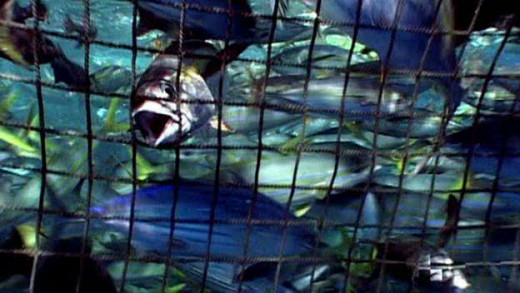
Advances in technology, global demand and the very essence of the commercial fishing industry itself means that whole species of wild fish are under threat. The species of fish that we eat today are predicted to be in a state of collapse by 2050 -- some are already extinct. Overfishing, or even more simply, the commercial fishing industry in general is to blame for this, along with celebrity chefs and 'exotic' restaurants; and mass consumer demand in today's world of globalisation. The End Of The Line documents the concerns and the processes behind commercial fishing and it's impact on the environment, the climate and the future existence of many species -- including our own...
 1:20:34
Collapse
Collapse is a documentary film exploring the theories, writings and life story of controversial author Michael Ruppert, a former Los Angeles police officer turned investigative reporter who has authored books on the events of the September 11 attacks, documented widespread drug trafficking and other secret operations by the CIA, and written on the issue of peak oil and other energy issues. Using archival footage interspersed as illustration, Collapse explores Ruppert's conclusions that unsustainable energy and financial policies have led to an ongoing collapse of modern industrial civilisation...
 42:15
42:15Petropolis
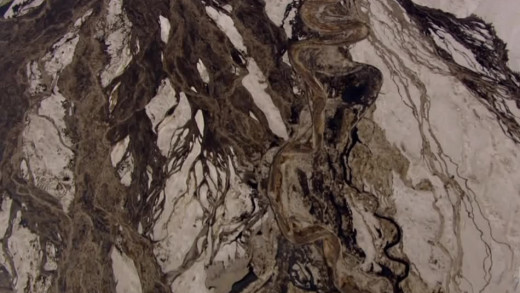
Canada's tar sands are the largest industrial project ever undertaken--spanning the size of England. Extracting the oil and bitumen from underneath unspoiled wilderness requires a massive industrialised effort with far-reaching impacts on the land, air, water, and climate. It's an extraordinary industrial spectacle, the true scope of which can only be understood from an aerial view. Shot primarily from a helicopter, Petropolis: Aerial Perspectives on the Alberta Tar Sands offers an unparalleled view of the world's largest ever industrial project...
 54:00
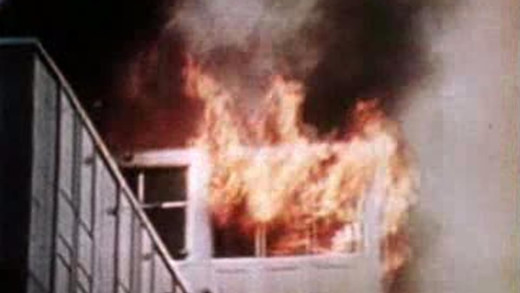
54:00Based on the immersive theatre production and experimental work by Adam Curtis, It Felt Like A Kiss is a visual exploration of the story of an enchanted world that was built by the rise of the United States as supreme power after the Second World War, and how those living in that dream world responded to this. Using extensive archive footage from throughout the 1960s, this experimental film sets out to explore the themes and consequences of how power really works in the world since the beginning of the post-world-war era, and how the perspective of the way society is organised since that time is a political product of the ideas of that time.
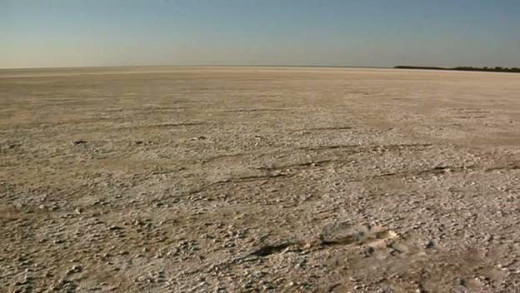 1:20:24
Made from the same elements as stars, plants, food and human beings, dirt is very much alive and very much just as complex. One teaspoon of dirt contains a billion organisms working in balance to sustain a series of thriving communities that have become pretty much totally invisible to our daily lives. Dirt -- The Movie tells the story of Earth's most valuable and underappreciated source of fertility, from its miraculous beginning to its tragic degradation...
 1:48:02
Poisoned Waters investigates some of the root causes of what we see worldwide with ecological collapse, dead-zones and pollution effecting oceans, rivers and watersheds. With a focus on major waterways in the United States such as the Chesapeake Bay and Puget Sound, the film follows the culmination of decades of evidence that today's systemic and growing environmental collapse comes not only from the toxic activities of industry, agriculture and massive suburban development; but also from the permeated satiety of chemicals in prolific consumer products such as face-creams, deodorants, prescription medicines and household cleaners. This is a startling reminder of the compounding threat facing our world and the need to act imperatively.
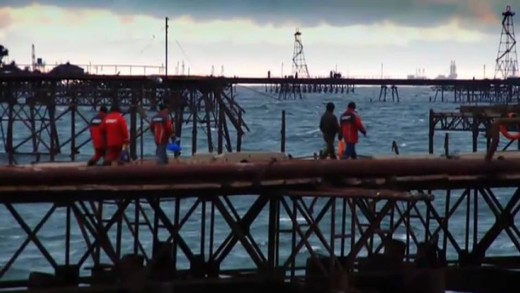 51:47
51:47Oil Rocks--otherwise known as Neft Daşları--is one of the first and largest offshore oil-platforms ever built. The location is a vast industrial city in the middle of the Caspian Sea, ordered by the Stalin regime in 1949. 60 years on, Oil Rocks is still operational and the first western film crew in its history receives access. The result is this film which documents 200 kilometers of bridges, thousands of oil workers, hundreds of platforms, up to nine-story buildings, a park and a sports field--nothing less then an oil-rig 'Atlantis.' By combining archive footage from the Soviet era and interviews with workers, this film tells the story of the oil fields and the extremely hard work by those involved to this day.
 1:18:57
Introduction To Permaculture provides an overview of some practical examples of permaculture design, while following the interwoven themes of ethics, community, planning and ecology. The film follows Geoff Lawton who is a permaculture consultant, designer and teacher in Australia and throughout the world, demonstrating some of the possibilities of permaculture design and how it can transform the way we eat and live...
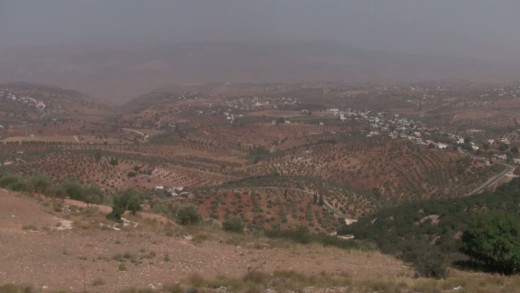 36:33
36:33Greening The Desert follows permaculturalist Geoff Lawton and his team to the Jordan desert where they transform 10 acres of the arid desert into a lush, thriving, food producing garden. In a massive transformation, the team develops a system to harvest rainwater, creates swells with over a foot of mulch and designs the system to reduce salt levels in the soil dramatically—only a few miles from the Dead Sea.
 6:16
6:16Oh Dearism
As the mainstream media attempts to create a simple narrative from hugely complex events, much is obviously lost in the translation—most often purposefully. This short film attempts to contrast the character of this narrative in the 1990s, where events were almost universally portrayed as 'the little guy versus the big guy' to the post Rwanda narrative of 'scattered terrible things happening everywhere, Oh Dear.' It is not that we can't actually do anything about these events, it is only that mainstream media presents these events within a framework that makes it seem that way and that in itself is a very powerful way to control society.
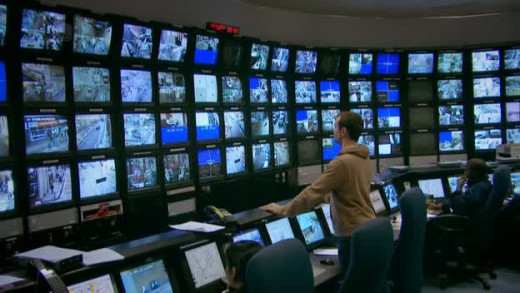 1:19:45
Film maker David Bond lives in one of the most intrusive surveillance states in the world -- Britain. When David receives a letter stating that both he and his daughter are amongst the 25 million residents whose details have been lost by the government in a massive data breach, David sets out to investigate some potential impacts of such data being lost in a society of mass surveillance. Erasing David documents the test where David hires two private detectives to track him down as he chooses to 'disappear' for 30 days to see if he can avoid being caught amongst the vast data trails generated by modern society...
 45:20
45:20The shocking story of a well respected Indigenous community leader in outback Western Australia who was locked in a metal cell in the back of a prison van and driven through the desert in the searing heat. Four hours later he was dead. Reporter Liz Jackson reveals the tragic train of events that led to this death, despite repeated warnings that Western Australia's prisoner transport system was unsafe and inhumane...
 31:19
31:19Since 1945, by deed and by example, the US has overthrown 50 governments, including democracies, crushed some 30 liberation movements and supported tyrannies from Egypt to Guatemala. Bombing and war is as American as apple pie. Obama, having stacked his government with warmongers, Wall Street cronies and polluters from the Bush and Clinton eras, the 45th president is merely upholding tradition...
 1:04:33
Filmmaker Denice Ann Evans draws heavily on the voices of students in this powerful exploration of hookup culture on college campuses. Supplementing the stories of students with analysis from health professionals and social commentary, the film's main concern is whether hookup culture is offering young people a new and potentially liberating set of sexual rules, or whether it's simply reinforcing traditional gender roles and blurring the line between consent and coercion. The result is a timely film that asks tough questions about the relationship between hookup culture, gender politics, and the alarming levels of sexual assault and binge drinking that continue to plague college campuses.
 1:40:32
Starsuckers
By planting a variety of fake celebrity-related stories in the UK media and having tabloid newspapers accept them without corroboration or evidence, Starsuckers navigates through the shams and deceit involved in creating a pernicious celebrity culture, uncovering the real reasons behind the addiction to fame and the corporations and individuals who profit from it.
 1:23:57
Ray Kurzweil, noted inventor and futurist, is a man who refuses to accept physical reality and the inevitability of death. Instead, he claims that the trending exponential increase in the growth of information technology can continue indefinitely, and that a so-called "singularity" will emerage—a point where humans and machines will converge, allowing one to "transcend" biological "limitations." But there are many who share deep concerns about the consequences of working towards Kurzweil's world...
 54:27
54:27In September 2008 when the American economy was on the verge of melting down, the then-Secretary of the Treasury Henry Paulson, his former protégé John Thain (CEO of Merrill Lynch), and Ken Lewis (CEO, President, and Chairman of the Bank of America) secretly cut a deal to merge Bank of America and Merrill Lynch -- in the midst of stock collapse; a rocky merger; the worst fourth-quarter losses in at least 17 years; a stockholder revolt and an urgent need to raise more capital despite a $45 billion "bail-out" from the federal government...
 1:12:37
Arguing that advertising not only sells things, but also ideas about the world, The Codes of Gender examines the commercial culture's inability to let go of reactionary gender representations. Presenter Sut Jhally's starting point is the breakthrough work of the late sociologist Erving Goffman, whose 1959 book The Presentation of the Self in Everyday Life prefigured the growing field of performance studies. Jhally applies Goffman's analysis of the body in print advertising to hundreds of print ads today, uncovering an astonishing pattern of regressive and destructive gender codes. By looking beyond advertising as a medium that simply sells products, and beyond analyses of gender that tend to focus on either biology or objectification, The Codes of Gender offers important insights into the social construction of masculinity and femininity, the relationship between gender and power, and the everyday performance of cultural norms.
 45:10
45:10Lethal Force takes a detailed look at four incidents, in different parts of Australia, where people suffering mental illness or psychological distress died after being shot or tasered by police. Specifically detailed is how in certain cases, the victims had even sought help at hospital and after having left of their own free will, were shot dead by police...
 1:36:19
The Idiot Cycle investigates six major chemical companies—Dow Chemical, BASF, Bayer, Dupont, Astrazeneca and Monsanto—that are not only responsible for producing decades of cancer causing chemicals and pollution all across the globe, but also profit extensively from controlling cancer treatments and the production of drugs for those treatments. The irony is palpable. Also examined is how these very same companies own the most patents on genetically modified foods that have also never been tested for long-term health impacts like cancer. When there's dioxin in every mother's breast-milk, rivers throughout the world that no longer support life, cataclysmic environmental damage from industry and manufacturing—when do we say enough is enough?
 48:38
48:38A Farm For The Future follows wildlife film maker Rebecca Hosking as she investigates how to transform her family's farm in Devon, England, into a low energy farm with future peak energy concerns considered. With her father close to retirement, Rebecca returns to the farm to become the next generation to work the land, and the journey begins as she realises that all food production in the UK is completely dependent on cheap, abundant fossil fuel, particularly oil. After setting out to discover just how 'secure' the oil supply is and being alarmed by the answers, Rebecca is motivated to explore ways of farming without using fossil fuel. With the help of pioneering farmers and growers, A Farm For The Future shows that it is actually a return to nature that holds the key to farming in a low-energy future.
 1:18:37
By comparing the confluence of ideas about modifying behaviour using shock therapy and other forms of sensory deprivation (which culminated in the top-secret CIA project called MKULTRA during the 1950s) alongside the metaphor of similar shock treatment modifying national economics using the teachings of Milton Friedman and the Chicago School of economics, The Shock Doctrine presents the workings of global capitalism in this framework of how the United States, along with other western countries, has exploited natural and human-engineered disasters across the globe to push through reforms and set-up other mechanisms that suit those in power and 'shock' other countries into a certain wanted behaviour. Chronologically, some historical examples are the using of Pinochet's Chile, Argentina and its junta, Yeltsin's Russia, and the invasion of Iraq. A trumped-up villain always provides distraction or rationalisation for the intervention of the United States—for example, the threat of Marxism, the Falklands, nuclear weapons, or terrorists—and further, is used by those in power as more justification for the great shift of money and power from the many into the hands of the few(er).
 1:29:40
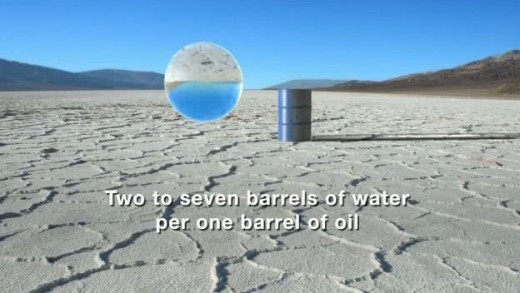
Across the globe, this culture is polluting, diverting, pumping and wasting fresh water at a crazy rate, as population grows and technology escalates. The rampant expansion of agriculture, housing and industry increase the demands for fresh water well beyond the limited supply, resulting in the desertification of the Earth. Corporate giants force developing countries to privatise their water supply for profit, Wall Street investors target desalination and mass bulk-water export schemes, while governments use water for economic and political gain. Military control of water emerges and a new geo-political map and power structure forms, setting the stage for global conflict over fresh water. Blue Gold follows numerous worldwide examples of people fighting for their basic right to water, from court cases to United Nations conventions, to revised constitutions, to local protests at grade schools, to complete revolutions. A line is crossed when water is a commodity. Will you fight to stop it and protect it?
 1:27:10
Bananas!*
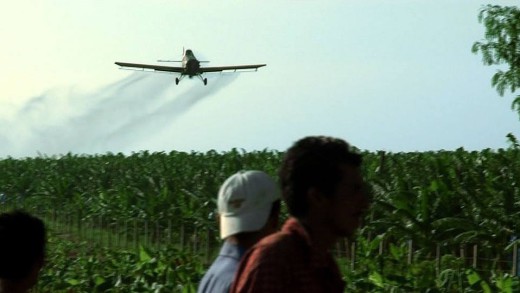
Bananas!* documents the legal battle of banana plantation workers in Nicaragua against the Dole Food Company over cases of sterility caused by the pesticide DBCP. The chemical, despite being banned, was knowingly sprayed on crops and workers. The result is the same old battle with corporate power as the film unpacks the issues of the case and the lives of the workers through the local lawyer Juan Dominguez. Dominguez bridges the gap between the rapacious North American company and the South American workers who were not told about or protected from the pesticide, to make a claim against one of the largest corporations in the world for justice for its workers.
 1:30:36
The Cove analyses and questions Japan's dolphin hunting culture, being a call to action to halt mass dolphin kills, to change commercial fishing practices and to inform and educate the public about the risks and ever increasing hazard of mercury poisoning from dolphin meat. Told from ocean conservationist Richard O'Barry's point of view, The Cove documents a group of Taiji fishermen who engage in mass dolphin kills, which in large part, are motivated by the tremendous revenue generated for the town by selling some of the captured dolphins to aquariums and marine parks. The dolphins that are not sold into captivity are then slaughtered in the cove and the meat is sold in supermarkets...
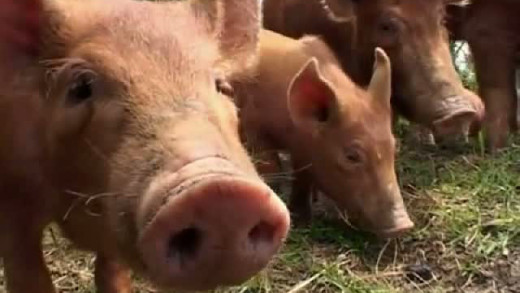 51:08
51:08Pig Business investigates the rise of factory farming, a system which abuses animals, pollutes the environment, threatens human health through dangerous overuse of antibiotics and destroys rural communities. The film shows how this system which was developed in the United States and is now being used in eastern Europe from where the pork, often produced below legal animal welfare standards, is exported to other EU countries putting local farmers out of business...
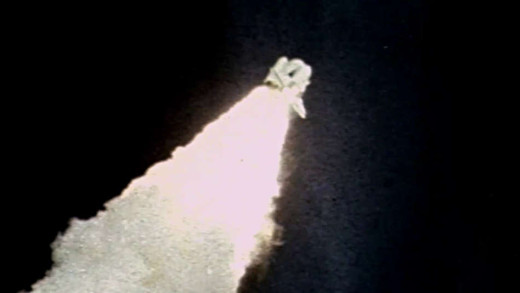 1:25:13
Pax Americana and the Weaponization of Space takes us to the Cold War and beyond, where an arms race of weapons technology plays out by the world's superpowers in space. Satellites, nuclear weapons, tracking technologies, rockets--the weaponisation of space was and is more of the same colonialism in the tradition of empire, much like the sea battles of the 18th and 19th centuries. Indeed, as we learn through Operation Paperclip, the United States recruited than 1,600 scientists from Nazi Germany for work in the Space Race after the end of World War II. Fast forward to today, in the name of protecting commercial investment, the United States has crowned itself with being the so-called "arbiter of peace" in space. But with their weapons industry replacing almost all other manufacturing in America, this claim is ludicrous. More than fifty cents of every US tax dollar is spent on the military. The dream of the original Dr. Strangelove, Wernher von Braun--the Nazi rocket-scientist turned NASA director--has survived every US administration since World War II and is coming to life ever more rapidly. Today, space is largely weaponised, a massive military-industrial-complex thrives, and many nations are manoeuvring for advantage with yet more weapons of war, surveillance, and control.