 1:19:14
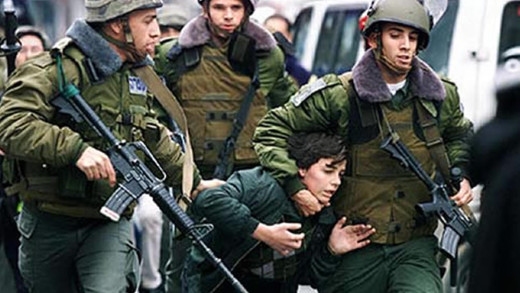
By providing a striking comparison of U.S. and international media coverage of the crisis in the Middle East, Peace, Propaganda and The Promised Land zeros in on how structural distortions in U.S. media coverage have reinforced false perceptions of the Israeli-Palestinian conflict and how, through the use of language, framing and the context of the Israeli occupation of the West Bank and Gaza remains hidden in the news media...
 49:56
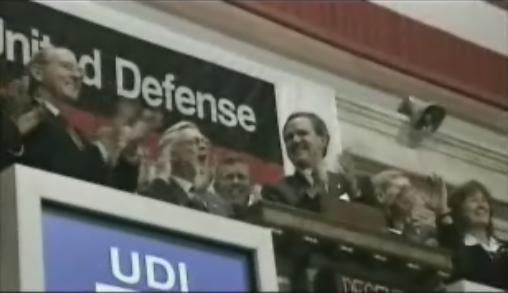
49:56The Carlyle Group is one of the largest investment banks in the world. Based in Washington, it has accumulated its wealth mainly by investments in defence--a lucrative market in the continued tradition of American war, imperialism and militarism. A strange coincidence? Their list of private investors include George Soros, the Saudi Royal Family and the Bin Laden Family. How does the Carlyle Group really operate and who are the people behind it?
 1:17:43
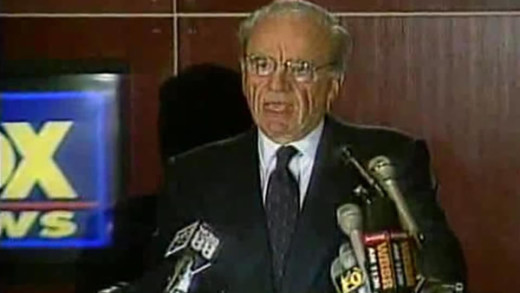
The global growth of Rupert Murdoch's media enterprise is cause for concern. The concentration of media ownership on a global scale in the hands of one man infringes on the freedom of the press by definition at the very least. But the real life example here is Fox News and it's own claim of being "Fair and Balanced" -- one only has to look at the coverage of the invasion of Iraq for example, or "commentators" such as Bill O'Reilly or Sean Hannity and the interactions they have with their "guests"; the vast political connections between Fox News, the Whitehouse and the Pentagon propaganda unit; the suppressed news stories, the censorship, the manipulation and control over the "news" by Murdoch and the president Roger Ailes themselves, not to mention the control over reporters, with former journalists alleging that Fox News asked them to lie and when they refused they were fired. Even lawsuits entailed from this with the court ruling that it is not against the law to lie on a news program...
 39:28
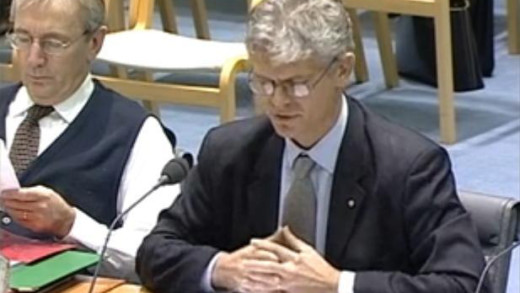
39:28Outsourcing Torture documents the account of Mamdouh Habib, an Australian Muslim arrested in Afghanistan during a "general round up" where he was sent to Egypt to be tortured. Three years after his arrest, Mahdouh Habib is still imprisoned in Guantanamo, still not having been charged with any crime...
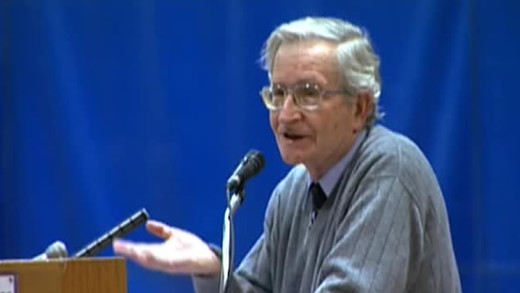 1:13:36
Rebel Without A Pause follows renowned linguist and activist, Noam Chomsky through discussions and talks on various world events such as the invasion of Iraq, the September 11th attacks and the War on Terror. Chomsky also weaves in accounts of media manipulation, social control, and discusses the workings of the politics of fear. The film combines footage from large forums to small interactive discussions on these topics, as well as reflections from others...
 41:47
41:47No Logo
In the age of the brand, logos are everywhere. But why do some of the world's best-known brands find themselves at the end of spray paint cans and the targets of anti-corporate campaigns? No Logo, based on the best-selling book by Canadian journalist and activist Naomi Klein, reveals the reasons behind the backlash against the increasing economic and cultural reach of multinational companies. Analysing how brands like Nike, The Gap, and Tommy Hilfiger became revered symbols worldwide, Klein argues that globalisation is a process whereby corporations discovered that profits lay not in making products (outsourced to low-wage workers in developing countries), but in creating branded identities people adopt in their lifestyles. Using hundreds of media examples, No Logo shows how the commercial takeover of public space, the restriction of 'choice', and replacement of real jobs with temporary work -- the dynamics of corporate globalisation -- impact everyone, everywhere...
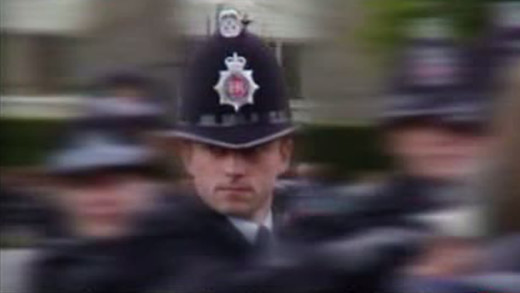 37:29
37:29The Secret Policeman exposes first hand evidence of racism in the British police forces, revealing how much it has been driven underground since 2002 when a government inquiry branded the police as institutionally racist. Undercover journalist Mark Daly joins the Greater Manchester Police as a trainee, and infiltrates Bruche Police Training Centre in Warrington, Cheshire for several months using hidden cameras to capture direct instances of racism throughout the police force.
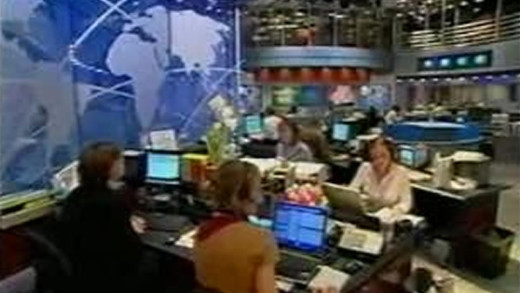 50:53
50:53How does one sell a war? This was a question that weighed heavy on the minds of those in the United States government long before the invasion even started. Operation Saddam: America’s Propaganda Battle takes a look at the marketing of war -– a cocktail of distortion, lies and forgeries -– as shown by former secret service agent Ray McGovern, American investigative journalist Seymour Hersh and best-selling author John MacArthur, presenting the individual stages of the propaganda battle, by which American, British and other governments sought to justify the second invasion of Iraq...
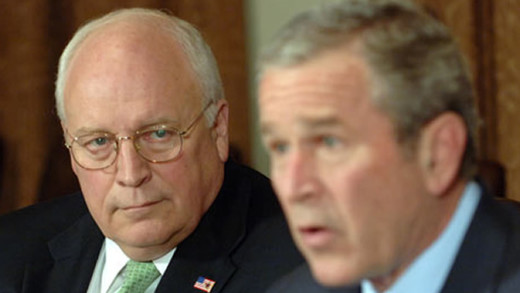 40:24
40:24As the U.S. stands at the brink of invasion into Iraq, many are now warning about the potential consequences: the danger of getting 'bogged down' in Baghdad, the prospect of long-time allies leaving America's side, the possibility of chaos in the Middle East, the threat of 'renewed terrorism'. The Bush administration insiders who helped define the doctrine of pre-emption and who have argued most forcefully for invasion, are determined to set a course that will "remake America's role in the world"...
 1:23:06
Each year, legions of ad people, copywriters, market researchers, pollsters, consultants, and even linguists spend billions of dollars and millions of hours trying to determine how to persuade consumers what to buy, whom to trust, and what to think. Increasingly, these techniques are migrating to the high-stakes arena of politics, shaping policy and influencing how Americans choose their leaders. In The Persuaders, renowned media scholar Douglas Rushkoff explores how the cultures of marketing and advertising have come to influence not only what we buy, but also how we view ourselves and the world around us. The Persuaders draws on a range of experts and observers of the advertising and marketing world, to examine how, in the words of one on-camera commentator, “the principal of democracy yields to the practice of demography,” as highly customised messages are targeted to individuals using technology and fine-tuned social engineering techniques.
 43:02
43:02They brought us war in Iraq, the promotion of "American global leadership," pre-emptive strikes; the "spreading of Democracy." This is the Project for the New American Century. But what do the hawks in Washington have in store for the world now? The War Party investigates this group of beurocrats responsible for the Project for the New American Century, called the neo-conservatives. This interconnected, dispersed group are running the White House in concert of the Bush years and family dynasty. Is it surprising how little has changed?
 1:06:05
In October 2003, an extraordinary uprising challenged the United States empire and kicked out President Gonzalo Sánchez de Lozada -- a representative of the United States administration and transnational corporate interests. The people are calling for new forms of representation and organisation that question the portrayed notions of democracy and traditional political parties. In February 2003, a mutiny by the police against the imposition of income taxation on the poor to fulfil IMF demands, provoked the withdrawal of tax measures; throughout 2002, peasants revolted against the US-imposed 'coca war' -- the coca-eradication plan -- that would've destroyed the only possible source of survival for thousands of people. In 2001, the people of Cochabamba fought successfully against the a most outrageous form of privatisation -- of the water supply -- forcing the government to cancel the agreement with Bethell, a US-based company...
 1:20:48
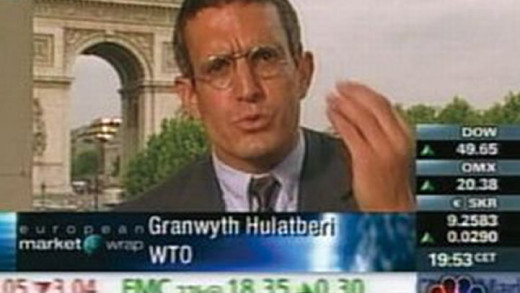
The Yes Men are a culture-jamming activist-duo from the United States that are known for their impersonations of entities that they dislike as a form of protest. Using spoofed personas, they spread awareness of problematic social issues through the mainstream media. The two have also created and maintained fake websites, which have even led to numerous interviews, conferences, and TV invitations for their spoofed personas to espouse the truth about just how corporations and governmental organisations often act in dehumanising ways toward the unwitting public. In this film, we see how the two Yes Men take on the World Trade Organisation and confront the brutal realities of globalisation using satire and tactical media to get their message across, culture-jamming the corporate interest.
 1:43:40
Could a media system, controlled by a few global corporations with the ability to overwhelm all competing voices, be able to turn lies into truth? This documentary examines the relationship between the media, corporations, and government. In a country where the top 1% control 90% of the wealth, the film argues that the media system is nothing but a subsidiary of the corporate world. Have we entered an Orwellian world of doublespeak where outright lies can pass for the truth?
 1:16:07
From the front-lines of conflicts in Mexico, Argentina, South Africa, Palestine, Korea, and the North; from Seattle to Genova and the "War on Terror" in New York, Afghanistan, and Iraq, The Fourth World War documents the stories of women and men all around the world who resist being annihilated in this war. Centred around economics and systems such as NAFTA, GATT, the G20, APEC and others, this is a war which plays along with the spread of rapacious globalisation, a feat that has pervasive consequences in the real world...
 29:46
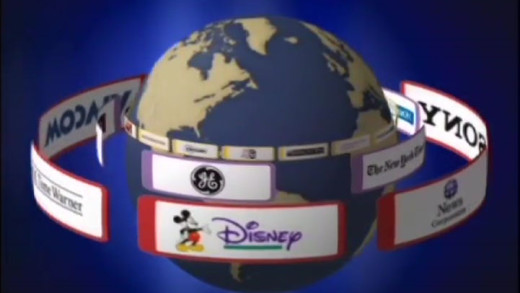
29:46If a key indicator of the health of a democracy is the state of its media, the United States is in deep trouble. In Rich Media, Poor Democracy, renowned media experts Robert McChesney and Mark Crispin Miller explore how the façade of a diverse mainstream media is in fact a system characterised by a handful of powerful corporations which leads to homogenisation and centralisation. Through numerous examples, we see how journalism has been compromised by business power and how conglomerates such as Disney, Sony, Viacom, News Corp, and AOL Time Warner produce a system of news that is high on sensationalism and low on information. This film suggests that unless citizen activism can reclaim the commons, this corporate system will be characterised by a rich media spectacle and an ever impoverished democracy.
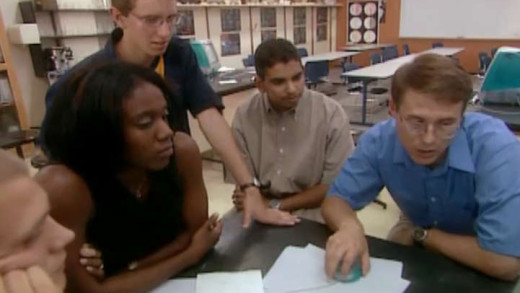
Race: The Power of an Illusion is a three-part series that investigates the idea of race in society, science and history. It navigates through myths and misconceptions, and scrutinises some of the assumptions that are taken for granted. The division of people into distinct categories--"white," "black," "yellow," "red," and so on--has become so widely espoused and so deeply rooted, that most people do not think to question its veracity. This series challenges the myth of race as biology, and traces its notions to the 19th century, demonstrating how race has a continuing negative impact through institutions and social policies.
 1:15:11
The Revolution Will Not Be Televised documents first-hand the events in Venezuela leading up to and during the April 2002 coup d'état attempt which briefly deposed President Hugo Chávez. A television crew from Ireland's national broadcaster, RTÉ happened to be recording a documentary about Chávez during the events. Shifting focus, the crew followed events as they occurred and captured images that they say contradict explanations given by Chávez's opposition, the private media, the US State Department, and then White House Press Secretary Ari Fleischer. The Revolution Will Not Be Televised details how the coup was the result of a conspiracy between various old guard and anti-Chávez factions within Venezuela and the United States...
 1:54:49
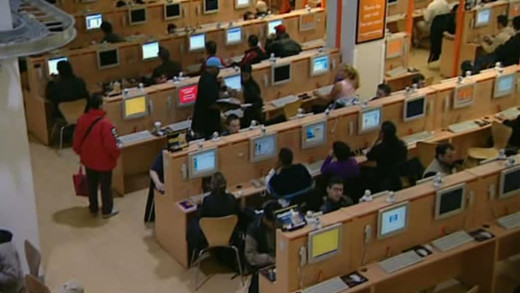
The Net explores the back-story of Ted Kaczynski (the infamous 'Unabomber') as a prism to the often unexamined side of the history of the Internet. The film combines travelogue and investigative journalism to trace contrasting counter-cultural responses to the so-called 'cybernetic' revolution of the 1970s. For some whom resist the pervasive systems of digital technology, the Unabomber can come to symbolise an ultimate figure of refusal. But for those that embrace the technologies, as did and do the champions of so-called 'media art', such as Marshall McLuhan, Nam June Paik and Stewart Brand, the promises of worldwide networking and instantaneous communication outweigh any and all of the concerns. The Net links these multiple nodes of cultural and political history, analogous to the Internet itself. Circling through themes of utopianism, anarchism, terrorism, the CIA, LSD, MKULTRA, Timothy Leary, Ken Kesey and the Merry Pranksters, The Net exposes the conspiracies and upheavals, secrets and cover-ups as part of the forgotten subversive history of the Internet.
 54:52
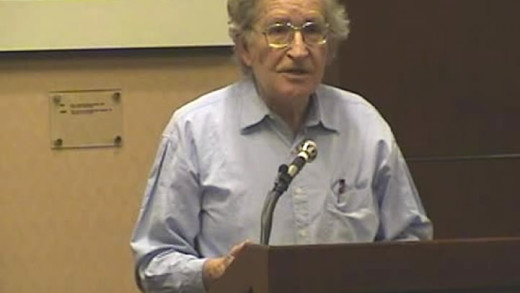
54:52The hypocrisy of the United States government is scrutinized in Distorted Morality—a scathing thesis against war and the invasion of Iraq, presented by renowned scholar Noam Chomsky in 2002. Chomsky sets fair and logical parameters to test his ideas, before outlining the reasons why the United States post-9/11 "war on terror" is a logical absurdity. This, according to Chomsky's carefully supported analysis, is because the US government has been, and continues to be, a major supporter of state-supported terrorism; favoring retaliatory or preemptive aggression over mediation in the world court, and avoiding accountability by excluding itself from the globally accepted definition of terrorism. Explored also are numerous historical examples to support.
 51:18
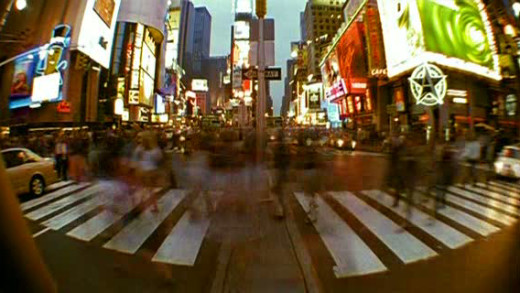
51:18Featuring George Bush's famous "go-shopping-speech" calling for a war against terrorism that deters the nation from the fear of consumption; Castro responding with hymns to the anti-consumerist, advertising-free island of Cuba; Bill Gates and Steve Ballmer preaching that the computer will give us peace on earth, and "bring people together rather than isolate them"; while Adbuster Kalle Lasn warns that advertising pollutes us mentally, that over-consumption is unsustainable, that we are running out of oil and this will cause a global economic collapse...
 26:48
26:48The United States proudly self-identifies as the major purveyor of peace and democracy across the world. But does this perception of self match up to the actual policies and history of military actions throughout recent decades? Are the United States' seemingly constant wars of aggression befitting to achieving peace? These are some of the central dichotomies addressed in this short film In Whose Interest? We see internal documentation of the US involvement in countries like Vietnam or Guatemala which indicate that the main factors motivating American foreign policy are clearly economic concerns. In Guatemala, the United States overthrows a democratically elected government to install a military-backed dictatorship that is suitable to the American United Fruit corporation. A similar pattern emerges in Vietnam, El Salvador and East Timor. Perhaps most oppressive yet is US policy in the Middle East, where the US provides Israel with more than $3 billion per year in military assistance—more aid than they give to the entire continent of Africa. We see how American policy is determined by the corporate sector, tightly linked to the state, which makes decisions in their own self-interest—in stark opposition to the rhetoric of democracy...
 51:57
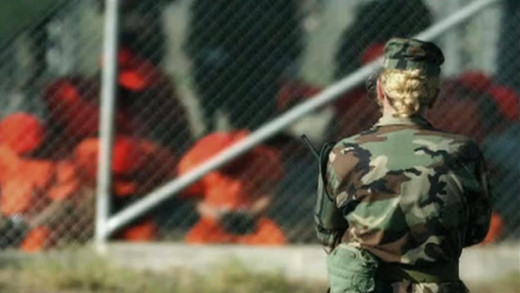
51:57The discrepancies between the "War on Terror" and the facts on the ground in Afghanistan and Iraq are many. In 2001, as the bombs began to drop, George W. Bush promised Afghanistan, "the generosity of America and its allies." Now, the familiar old warlords are retaining their power, religious fundamentalism is expanding its grip and military 'skirmishes' continue routinely. In "liberated" Afghanistan, America has its military base and pipeline access, while the people have the warlords who are, as one woman says in the film, "in many ways worse than the Taliban."
 51:46
51:46In Deadly Persuasion: The Advertising of Alcohol & Tobacco, Jean Kilbourne exposes the manipulative marketing strategies and tactics used by the tobacco and alcohol industries to keep people hooked on their dangerous products. Illustrating her analysis with hundreds of current advertising examples from mainstream and trade sources, Kilbourne presents a compelling argument that these cynical industries have a clear and deep understanding of the psychology of addiction and an understanding they exploit to create and feed a life-threatening dependency on their products. Deadly Persuasion casts a critical eye on the corporate interests that lie behind the industries whose products kill more than 450,000 people each year in the United States.
 1:31:20
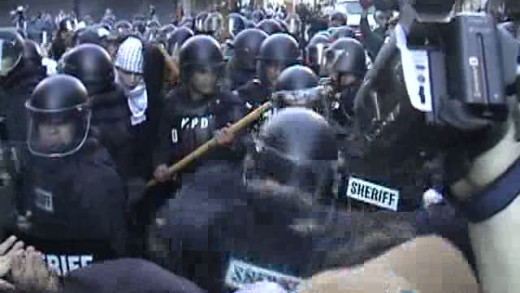
The Miami Model
The Miami model was the name given to a set of tactics employed by police during protests in Miami, Florida relating to the Free Trade Area of the Americas (FTAA) trade agreement meetings in November 2003. State Attorney Kathy Fernandez Rundle responded to allegations of police brutality by saying, "The police were very professional, very controlled... I think we have a model here for the rest of the world to emulate in the future when these sort of events take place." This film documents these tactics from the perspective of the protesters, to show what really happened to them and to document their work opposing the FTAA, countering the mainstream media narratives of the event and the tropes espoused by those in power.
 2:24:03
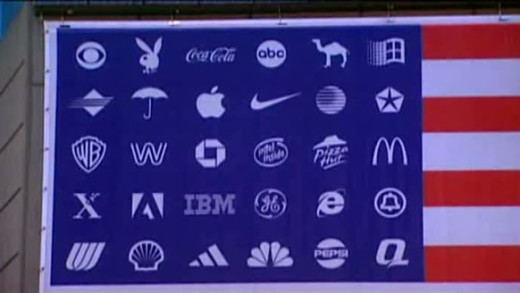
Did you know that the legal system recognises a corporation as a person? What kind of 'person' is it then? What would happen if it sat down with a psychologist to discuss its behaviour and attitude towards society and the environment? Explored through specific examples, this film shows how and why the modern-day corporation has rapaciously pressed itself into the dominant institution of our time, posing big questions about what must be done if we want a equitable and sustainable world. What must we do when corporations are psychopaths?
 39:03
39:03The belief that good triumphs over evil resonates deeply through the religious and political discourses of dominant culture. It is also a common theme in the entertainment media where the struggle between good and evil is frequently resolved through violence. The negative impacts of media violence on children has long been a public concern, but it is even more troubling when military violence, both in the news and in entertainment, is often glorified as heroic and noble. Beyond Good & Evil: Children, Media & Violent Times is a look at how mass communication distorts and manipulates language and visual imagery. It shows viewers how the media's overriding objective of satisfying an audience converts real issues surrounding race, war, and violence into nothing more than spectacle.
 59:09
59:09To its backers, Woomera detention centre played a so-called "humane yet crucial role in housing the growing numbers of 'boat people' landing on Australia's shores." To its critics, this prison, as a heavily guarded cluster of buildings ringed by red desert and razor wire, represented the "dead-heart of asylum-seeker policy" and Australia's lacklustre regard for human rights. Woomera opened for business less than four years ago. Built for 400 people, it soon housed more than 1,400. It became notorious for riots, protests and breakouts by desperate detainees. There were reports that mental illness and self-harm were rife and as the reports mounted, TV cameras captured the protests at the perimeter fence. Certain press warned of detainees' declining health and morale. Yet when Woomera was quietly placed in mothballs last month, its full story remained to be told...