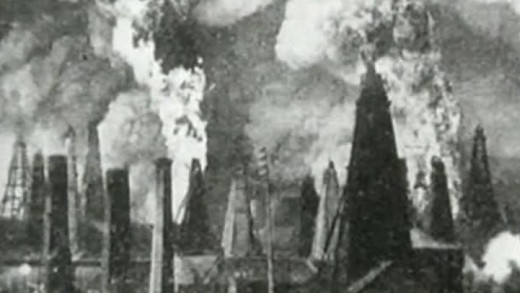
The Prize: The Epic Quest for Oil, Money, and Power is an 8-part series based on Daniel Yergin's book by the same name, that captures the panoramic history of the largest industry in the world and traces it's changing face over the decades. Each episode in the series focuses on an era of oil, from beginning to today; while examining the connections and ramifications of an industry that literally transformed global political and economic landscapes--while continuing to make its mark...
 8:21
8:21The Program
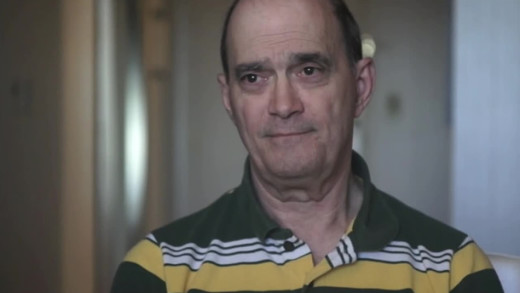
The Program is a short film focusing on William Binney—a former highly placed intelligence official with the United States National Security Agency, turned whistleblower after revelations that a system he created for foreign intelligence gathering was turned inward for domestic spying at the behest of the Bush administration in 2001. For this, Binney resigned in October of that year and later began speaking publicly. He is among a group of NSA whistle-blowers, including Thomas A. Drake, who have each risked everything—their livelihoods, freedom, and personal relationships—to warn everyone about the dangers of the current era of mass surveillance.
 45:40
45:40The Purity Myth takes a look at the resurgence of a movement of abstinence, brought about by a powerful alliance of religious ideologues, right-wing politicians, conservative media pundits and policy intellectuals who have been exploiting irrational fears about women's sexuality. From daddy-daughter "purity balls," taxpayer-funded abstinence-only curricula, and political attacks on 'Planned Parenthood,' to recent attempts by legislators to de-fund women's reproductive healthcare and narrow the legal definition of rape, The Purity Myth identifies the single false assumption underlying this huge push: that the worth of a woman depends on what she does—or does not do—sexually. This film also argues that the health and well-being of women is too important to be left to figureheads bent on vilifying feminism and undermining women's autonomy.
 58:37
58:37The Quantum Revolution spouts claims of turning many ideas of science fiction into science fact—from materials with mind-boggling properties like invisibility through to so-called "limitless quantum energy" and room temperature superconductors, to a space elevator for tourism. Are such developments worthwhile, sustainable, equitable or even necessary? Scientists forecast that in the latter half of the century everybody will have a personal matter fabricator that "re-arranges molecules to produce everything from almost anything." Yet how will those in power ultimately use the domination of matter and life on Earth? How is science already doing this and to what ends? What are the unasked questions about science itself and the desire to control the very fabric of the universe? What insanity are we up against?
 52:52
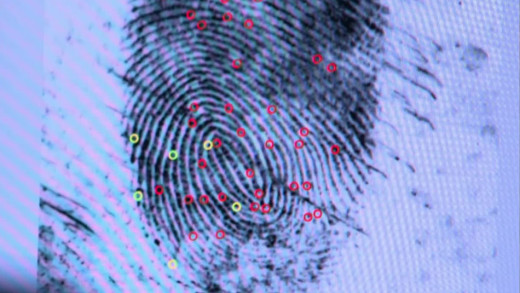
52:52From the courtroom to the lounge room--helped extensively by television and the infamous series "CSI"--forensic science brims with flash and glamour, where cutting-edge technology always reveals the "truth," and is routinely called on to solve the most difficult criminal cases with ease and "objectivity." But how reliable is the science behind forensics and its methods as they interface with the legal system? The Real CSI investigates these questions and finds serious flaws in some of the best-known tools of forensics, with systemic inconsistencies in how evidence is presented in the courtroom, along with how the culture of entertainment of this sort can seriously skew a jury's perceptions. From the sensational murder trial of Casey Anthony, to the FBI's botched investigation of the Madrid bombing, to capital cases in rural Mississippi of the United States; The Real CSI documents how a field with few standards and unproven science can seriously undermine the concept of justice, and what this means for a future of continued technological escalation...
 1:22:28
For close to a century, a great tale played out in the tiny town of Caledonia, Illinois. The Real Dirt On Farmer John tells this story of John Peterson, his farm and his family -- a story that parallels the history of American farming. But Farmer John is no laconic, Grant Wood-type with a scowl and a pitchfork. With the help of friends, John transformed his farm into an organic commune flooded with art and music, all in the centre of conformist Midwestern America...
 24:11
24:11As high-technology permeates further into the industrialised world, manufacturers will go to any lengths to get the raw materials to make their gadgets. Coltan from the Congo is one such rare ingredient. Few in the west know where their gadgets come from and that in the middle of Africa much human suffering is created in the pursuit of "technological advancement"...
 1:16:59
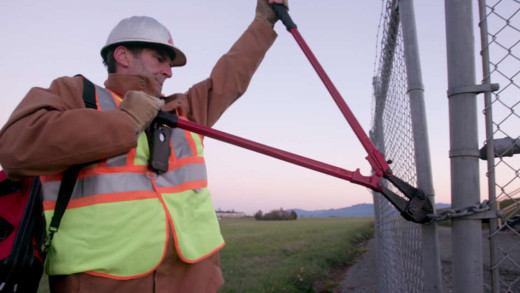
If a crime is committed in order to prevent a greater crime, is it excusable? Is it, in fact, necessary? The Reluctant Radical follows Ken Ward as he confronts his fears and acts on these questions to stop climate change. After twenty years leading some of the most renowned mainstream environmental organisations, Ken witnesses first-hand how ineffective and unthreatening they are. As their efforts fail, and environmental collapse increases in scope and speed, Ken comes to see how direct action civil disobedience is the most effective political tool to deal with catastrophic circumstances. Ken breaks the law, to fulfil his obligation to future generations, to stop the oil economy. By following Ken for a year and a half through a series of direct actions, this film culminates with his participation in the coordinated action that shut down all the tar-sands oil pipelines in the United States on October 11, 2016. The film reveals the personal costs but also the true fulfilment that comes from following one's moral calling, even if that means breaking the law and its consequences. Ken has no regrets.
 52:14
52:14Your retirement plan, if you're even lucky enough to have one, is a gamble. Fees, self-dealing, kickbacks, deregulation and/or no regulation at all brings great profits to the financial system, while imperiling the future of individuals who provide 100% of the funds, take 100% of the risks, but only get 30% of the returns. Even the privileged Baby Boomer generation now faces uncertainties, to say nothing of those who come after and face an even more staggering wealth inequality. The paternalistic "American dream" of the 1950s has long been over. Now, thanks to decades of neoliberalism, with a financial system geared towards short term profits and externalising risks and costs, the retirement fund industry is a ten trillion dollar industry, protected by obfuscation and complexity. The Retirement Gamble offers a window into this racket, raising just some of the troubling questions about how this supposed system claims to "work for everyone" when it does nothing of the sort, by design.
 27:36
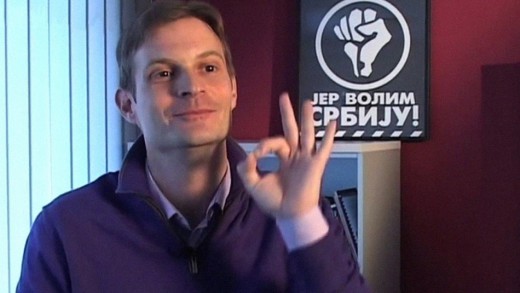
27:36The Revolution Business examines the role of United States intelligence agencies in the recent revolutionary movements such as the Arab Spring and others by the use of "Revolution Consultants." Of particular interest is a Serbian man Srđa Popović, who formed an organisation called Отпор! (Otpor) which tought "non-violent struggle" in the overthrow of Slobodan Milošević in Serbia during the 1990s, and which has now gone on to inspire a new generation of activists. However, some political commentators like William Engdahl are convinced that Otpor is financed by the United States and has ties to intelligence agenices, also having dubious funding from sources such as the Rand Corporation, the Department of Defence, as well as various fronts such as the National Endowment for Democracy (NED), the International Republican Institute (IRI), the US Institute of Peace and the Ford Foundation--all of which have a long history of collaborating with the Pentagon, the State Department and the CIA in destabilising movements and usurping popular uprisings, removing their teeth.
 1:15:11
The Revolution Will Not Be Televised documents first-hand the events in Venezuela leading up to and during the April 2002 coup d'état attempt which briefly deposed President Hugo Chávez. A television crew from Ireland's national broadcaster, RTÉ happened to be recording a documentary about Chávez during the events. Shifting focus, the crew followed events as they occurred and captured images that they say contradict explanations given by Chávez's opposition, the private media, the US State Department, and then White House Press Secretary Ari Fleischer. The Revolution Will Not Be Televised details how the coup was the result of a conspiracy between various old guard and anti-Chávez factions within Venezuela and the United States...
 3:50
3:50This short film chronicles a metamorphosis of mainstream media and political power throughout the last decades, by looking at the role of the television journalist. In the early 1950s, not long after the invention of television itself, TV journalists essentially served as prompters for government figureheads and official viewpoints. This function changed somewhat however, with the political scandals of the 1960s and 70s, exemplified by Watergate, where some journalists joined the mainstream shift in society of questioning political power, big business and bureaucracy. Out of this boomed a new era of investigative journalism. But this ended with the fall of the Berlin Wall as the old certainties of "good and bad" and "right and left" were blurred and no longer simple. But rather than working to make sense of the complexity, journalism turned from moral principles to a simple reporting of experience, devoid of context. TV journalists now plead with the audience to send in photos and videos as a kind of so-called "democratised" media, but what actually functions as a vast echo-chamber of uncertainty and unaccountability.
 1:30:39
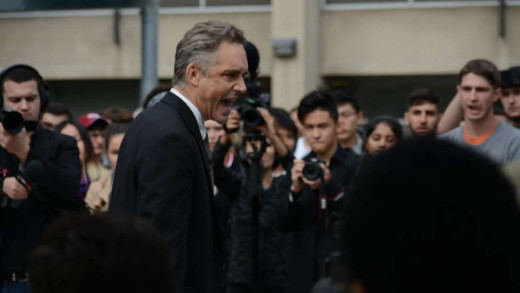
University of Toronto psychology professor Jordan Peterson launched into the public eye after he published a controversial video series entitled Professor Against Political Correctness in 2016. Within 2 years, he sells over 3 million copies of his self-help book, appears on numerous television shows, and fills theatres with his lectures. At the same time, he endures a swell of backlash, including that from a former colleague that now labels him as a dangerous threat. After mobilising some on the right for his criticisms of the left, Peterson fends-off being labelled a right-wing figurehead while moving through the media spectacle, arguing his shifting philosophical views. Filmed during this period of Peterson's rise to fame, and told through family, friends, and foes, The Rise of Jordan Peterson presents a complex kaleidoscopic narrative and personal portrait, enabling the viewer to examine Peterson in several different ways, while considering his wide and often conflicting range of perspectives and social commentary.
 1:32:02
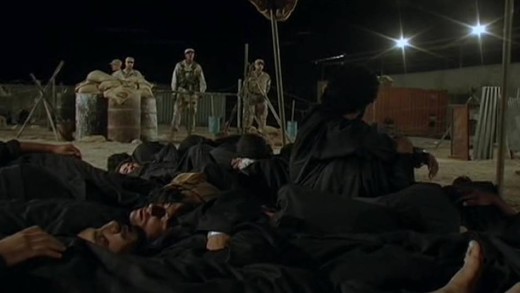
The Road to Guantánamo is a docu-drama about the incarceration of three British citizens--otherwise known as the Tipton Three--who were captured in Afghanistan in 2001 and detained for more than two years by the United States in Guantánamo Bay Naval Base, Cuba. The three were held in mostly solitary confinement and without legal representation for that time, after being released in 2004 without charge. Based on interviews, The Road to Guantánamo reenacts their experience in the camp, depicting the use of torture techniques such as stress positions, and attempts by the United States Army and CIA interrogators to extract forced confessions of involvement with al-Qaeda and the Taliban.
 49:59
49:59In The Road to Terror, activists explain how their dream of revolution in Iran descended into a nightmare of terror and execution. Many speak as political exiles in Paris, a city that is preparing to look back on its own mass revolution of 1978. Back in Iran, behind the historical images, the struggle for power during the Iranian revolution followed a pattern uncannily similar to many of the great revolutions of the past. Just as 200 years ago in France, the Iranian revolution has gone down the old road from liberation to repression--the road to terror.
 52:30
52:30The Search For Truth In Wartime investigates the changing face of war reporting and the role of the media during wartime, in context with the Crimea through the two World Wars, to Vietnam and the Falklands. "What is the role of the media in wartime? Is it simply to record, or is it to explain? And from whose point of view--the military, the politicians or the victims?"
 1:26:30
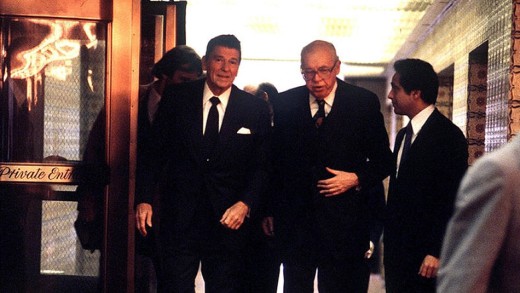
The Secret Government, as its title suggests, is essentially an investigation into the processes, plans, operations and persons responsible for systemic abuses of power at senior levels of the United States government during the 1980s. The film covers multiple covert operations and secret projects, but takes a particular focus on the Iran–Contra affair of 1986, where Ronald Regan secretly facilitated the illegal sale of arms to Iran—which was the subject of an arms embargo at the time—to support a right-wing terrorist group called "The Contras," and also make obscene profits from the sale of such weapons. Transported to the political happenings of today, The Secret Government is a call to remember history, and see that mass profits from weapons dealing running covert/secret wars were a reality then, and now, as well as to reveal just how far institutionalised propaganda and obfuscation works to conceal these home truths, still generations later.
 53:29
53:29The Secret History of the Credit Card uncovers the deceptive techniques and tactics used by banks and financial corporations to get citizens to take on ever more debt, while earning record profits. Penalty fees, defaulting, changing contracts, increasing rates retrospectively---these are some of the ways credit card companies gouge their users, and increase influence. The film shows how such profitability of credit cards began in the 1980s, when the banking industry successfully eliminated the limit on the interest rate a lender can charge a borrower. This deregulation, coupled with real-time tracking of personal financial information, facilitated the widening availability of credit cards. Despite a growing number of consumer complaints, the ability of state and local governments to investigate the credit card companies has virtually been eliminated, due to companies incessant lobbying and litigation that has created a jurisdictional "turf battle."
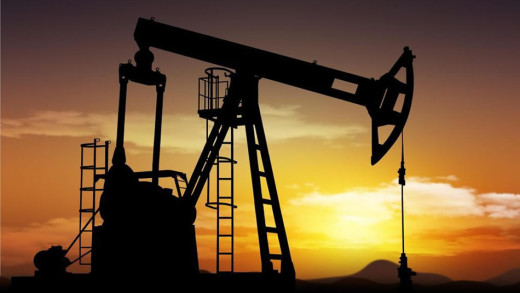
The Secret of the Seven Sisters is a four-part series examining the rise of a powerful cartel of seven companies that control the world's oil supply. The 'seven sisters' comprises Anglo-Persian Oil Company (now BP); Gulf Oil, Standard Oil of California (SoCal) and Texaco (now Chevron); Royal Dutch Shell; Standard Oil of New Jersey (Esso) and Standard Oil Company of New York (Socony), (now ExxonMobil). Prior to the oil crisis of 1973, the Seven Sisters controlled around 85% of the world's petroleum reserves, but in recent decades the dominance of the companies and their successors has declined. This series is about the power of oil, the conspiracy of business, and the control that oil provides the few...
 37:29
37:29The Secret Policeman exposes first hand evidence of racism in the British police forces, revealing how much it has been driven underground since 2002 when a government inquiry branded the police as institutionally racist. Undercover journalist Mark Daly joins the Greater Manchester Police as a trainee, and infiltrates Bruche Police Training Centre in Warrington, Cheshire for several months using hidden cameras to capture direct instances of racism throughout the police force.
 24:26
24:26Over the past decade, the United States military has shifted the way it fights its wars, deploying more technological systems in the battlefield than human forces. Today there are more than 7,000 drones and 12,000 ground robots in use by all branches of the military. These systems mean less deaths for US troops, but increased killings and precision elsewhere for the United States war machine. With lethal drone strikes being carried out in secret by the CIA and occurring outside of officially declared war zones such as Pakistan, Yemen and Somalia, the secret use of robots and drones in this way evokes serious questions about the operations of the United States and what this means for the rest of the world as more and more autonomy is developed for these technologies.
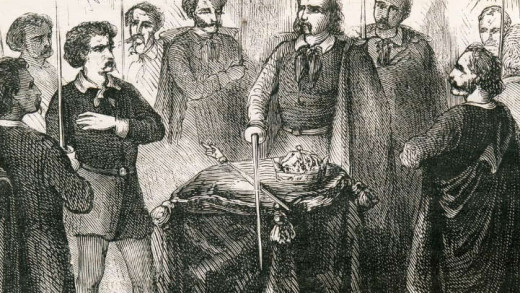
The Secret Rulers of the World details journalist Jon Ronson's encounters with key conspiracy theory figures throughout the United States during the early 2000s. The 5 part series is an accompaniment to Ronson's book Them: Adventures with Extremists which profiles ideologues on the fringe of the political, religious, and sociological spectrum. The series is a rare look at figures who have since gone on to become renowned figures in conspiracy theory circles, before their bigger rises to fame after the September 11th attacks, expanding on their already well-espoused occult theories from throughout the 1990s. The series also provides background on some of the theories that have since entered pop culture and how they originated from connections to neo-nazis, right-wing militia groups, and fundamentalist Christians. Examples being the theory of the New World Order, and various other apocalyptic millenarian scenarios which are influencing escalating lone-wolf terrorism, and the rise to power of authoritarian ultra-nationalist demagogues. The series provides this insight, examining some of the key figures and how they come to believe their theories and perceive the world.
 46:31
46:31What do you get when you combine the culture of screens with the society of the spectacle, pervasive individualism with its rampant loneliness, in a media environment awash in a culture of pornography, instant gratification and self-interested sexual impetuousness? An insight into the question could be perhaps explained through The Secret World of Tinder. Tinder is an 'app' for 'smartphones' that displays profile pictures of people that are near the phone. When couples are matched, they can text each other. Many call it "the sex button" and the app indeed has a reputation in the world of online dating. This short TV documentary attempts to explore what it means in today's culture mediated by technology, as seen through the Tinder app, providing insights into the way some people think and feel about sex and relationships in the age of the technocracy.
 21:55
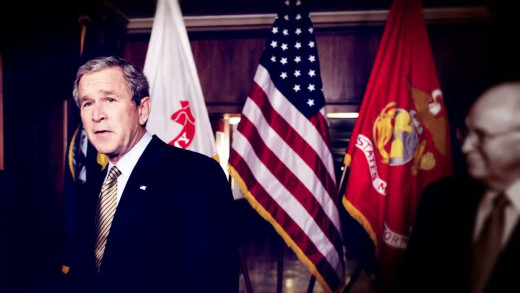
21:55To this day, questions remain about what really happened in New York and Washington DC on 11th September 2001. All over the world and over a decade later, people still question the official story and the veracity of the explanations given for the events that took place that day. The Sensible Doubt meets with 6 Danes who talk about their doubt and scepticism of the official story espoused by the United States government and global mainstream media, and how they've come to their conclusions...
 1:18:37
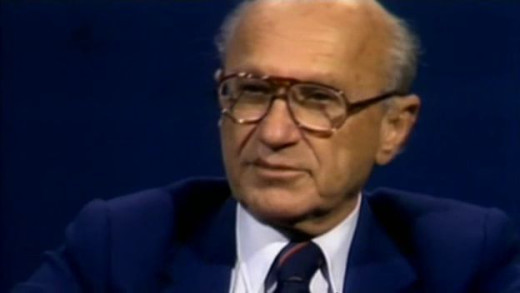
By comparing the confluence of ideas about modifying behaviour using shock therapy and other forms of sensory deprivation (which culminated in the top-secret CIA project called MKULTRA during the 1950s) alongside the metaphor of similar shock treatment modifying national economics using the teachings of Milton Friedman and the Chicago School of economics, The Shock Doctrine presents the workings of global capitalism in this framework of how the United States, along with other western countries, has exploited natural and human-engineered disasters across the globe to push through reforms and set-up other mechanisms that suit those in power and 'shock' other countries into a certain wanted behaviour. Chronologically, some historical examples are the using of Pinochet's Chile, Argentina and its junta, Yeltsin's Russia, and the invasion of Iraq. A trumped-up villain always provides distraction or rationalisation for the intervention of the United States—for example, the threat of Marxism, the Falklands, nuclear weapons, or terrorists—and further, is used by those in power as more justification for the great shift of money and power from the many into the hands of the few(er).
 18:33
18:33The Sky Is Pink
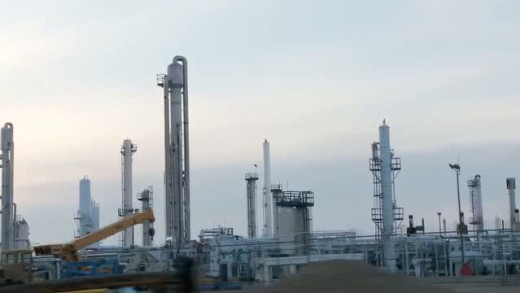
As an emergency short film following up Gasland, film maker Josh Fox returns to the urgent crisis of drilling and fracking throughout the United States and the world. Induced hydraulic fracturing or 'hydrofracking', commonly just known as 'fracking', is a technique used to release petroleum, natural gas, shale gas, tight gas, coal seam gas, and other substances for extraction. The Sky Is Pink returns to the issues of water contamination and the cataclysmic environmental impacts caused by fracking to show again first hand evidence of widespread ecological damage and the threat of more to come unless we stop it...
 1:33:21
The Social Dilemma brings together former product directors and designers of Facebook, Google, Instagram, Pintrest, Twitter, and so on, to reflect on their creations and face questions about the age of addiction, information manipulation, and algorithmic social control they've ushered in. The creators speak openly about how they themselves took part in this co-optation of society, either naively or with malignant indifference, by designing websites in such a way to influence and manipulate billions of people for corporate interests by using deep psychological and addictive triggers in the human mind. Detailed explanations about how this can play out in the real world are illustrated through dramatisations, which are also expanded upon by experts in psychology, technology, and social studies. The result is a sobering call for emergency damage control, to undo the massive harm that technology companies have unleashed on society unrestrained for the past several decades, at a time of rapid social unravelling.
 1:14:40
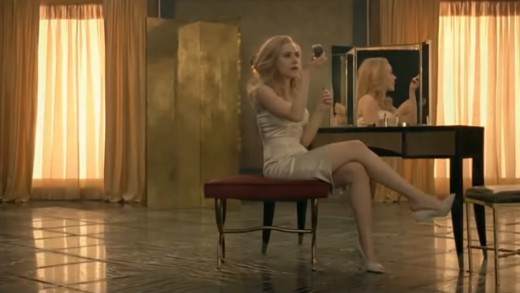
The Society of the Spectacle is a film based on the 1967 book of the same name by French political theorist and philosopher, Guy Debord. The work traces the development of modern society, in which Debord argues that authentic social life has been replaced with representations, and that the history of social life can be understood as "the decline of being into having, and having into merely appearing." This emerges from and gives rise to a pervasive and all encompassing spectacle in which relations between commodities have supplanted relations between people, in which "passive identification with the spectacle supplants genuine activity." The film weaves the text of the original book with modern-day imagery, illustrating many elements of the spectacle, including that "the spectacle is not a collection of images, rather, it is a social relation among people, mediated by images." This makes the material hard to decipher at times, especially with conflicting subtitles between languages: but this is part of Debord's goal, to "problematise reception" and force the viewer to be active rather than passive. In addition, the words of some of the authors are "détourned" (hijacked) through deliberate misquoting. The result is a foundational work on the concept of the spectacle and its characteristics, to encourage critical thinking, to build and extrapolate critiques to apply to the wider social scale.