 41:56
41:56Consumer capitalism dominates the economy, politics, and culture of our age, despite a growing trove of research showing that it is a failed system. In this illustrated presentation, media scholar Justin Lewis makes a compelling case that capitalism can no longer deliver on its myth of the dream and its promise to enhance the quality of life. He argues that changing direction will require changing our media system and our cultural environment, as capitalism has become economically and environmentally unsustainable. This presentation explores how the media and information industries make it difficult to envision other forms of life by limiting critical thinking and keeping us locked in a cycle of consumption, and shows us that change will only be possible if we take culture seriously and transform the very way we organise our media and communications systems.
 1:06:04
By examining the practices of a relentless multi-billion dollar marketing machine that now sells kids and their parents everything from junk food and violent video games to bogus educational products and the family car, Consuming Kids presents the explosive growth of child marketing in the wake of deregulation, showing how youth marketers have used the latest advances in psychology, anthropology and neuroscience to transform children into one of the most powerful and profitable consumer 'demographics' in the world...
 1:26:31
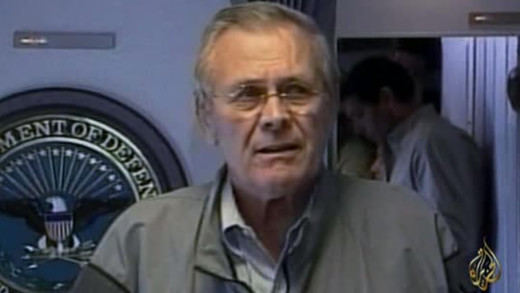
Control Room presents a rare window into the US invasion of Iraq from the perspective of Al Jazeera, the Arab world's most popular news outlet. Widely criticized and condemned by military figureheads, government officials and the mainstream media in the west for reporting with a "pro-Iraqi bias", airing civilian causalities, as well as showing footage of American POWs, Control Room reveals the situation in Iraq that the US government does not want you to see...
 45:23
45:23Controlling Interest is one of the first documentary films to provide a critical analysis on the growth of multinational corporations, and their impacts on people and the environment. Upon its release, Controlling Interest quickly became a standard audio-visual text for those concerned about the growing impact of multinational corporations, examining how the ever-increasing concentration of money and power affects employment in the United States, shapes patterns of development across the world, and influences foreign policy. This is the film that helped kick-off the anti-globalisation movement. Remarkably candid interviews with business executives provide a rare glimpse of the reasoning behind corporate global strategy, and the never-ending search for resources, ever-cheaper labour, and the commodification of life. The film documents the impact of corporate decisions on people around the world, including how "freedom" has come increasingly to mean the freedom of global corporations to operate without restriction. Some of the case studies include Massachusetts' declining machine tool industry, Brazil's "economic miracle," and Chile before and after the 1973 coup.
 24:32
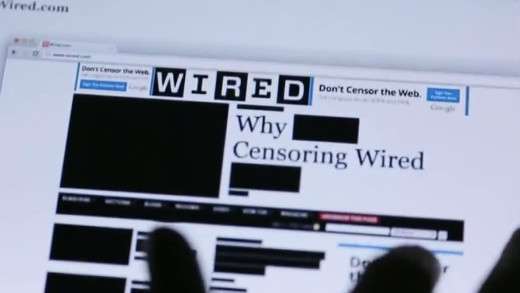
24:32In January 2012, two controversial pieces of legislation were making their way through the United States Congress. SOPA, the "Stop Online Piracy Act", and PIPA, the "Protect Intellectual Property Act", were meant to 'crack down' on the illegal sharing of digital media. The laws were drafted on request of the 'content industry' -- Hollywood studios and major record labels. But websites reacted against the government to speak out against SOPA, and the bill was effectively killed off after the largest online 'protest' in history. But it was only one win in a long battle between authorities and online users over Internet regulation. SOPA and PIPA were just the latest in a long line of 'anti-piracy' legislation that governments have been pressing since the 1990s. Can and should the internet be controlled? Who gets that power? How far will the United States government go to control the Internet?
 1:38:40
Copwatch
Copwatch depicts WeCopWatch, an organisation dedicated to video recording the police in the United States. For example, Cop Watch members capture original video of the deaths of Eric Garner in Staten Island and Freddie Gray in Baltimore. Its members legally record and document police arrests as part of a movement for police accountability and transparency, but often find themselves to be the victims of chaos and police brutality as a result of the culture of extreme police misconduct and violence. The stories are told through Ramsey Orta, Kevin Moore, who filmed the police abuse of Freddie Gray, and David Whitt who lived in the apartment complex where Michael Brown was killed, as well as Jacob Crawford, who co-founded Copwatch groups inspired by the Berkeley Copwatch group. The film shows how Cop Watchers are dedicated to bringing awareness to their community, by exposing police brutality and harassment.
Corporations On Trial is a five-part series following just some of the many lawsuits being brought against multinational corporations for war crimes, conspiracy, corruption, assassinations, environmental devastation and payments to terrorists. Such serious charges have forced some of the world's largest companies to hire high-profile defence lawyers to protect public relations in cases often brought by plaintiffs who are barely literate. These five films reveal a growing anxiety about the power and influence of big business, as many multinational corporations have annual revenues greater than some countries' national budgets and indeed increasingly hold governments to ransom by their economic power. Around the world, ordinary people are fighting back and asking how many more times their interests should be sacrificed for corporate greed and shareholder profit...
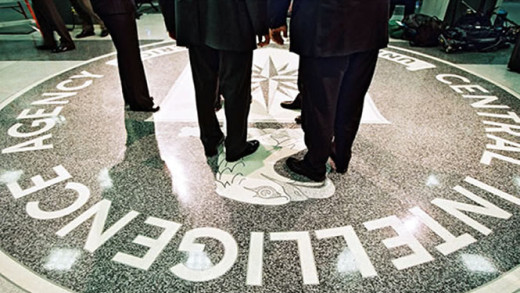
Counter-Intelligence is a 5 part series that explores in-depth, the vast, sprawling and secret National Security State that operates throughout the United States--and indeed the world. The series examines the foundations of the Military-Industrial-Intelligence Complex, charting through to the myriad consequences in today's world where secret intelligence organisations continue to hijack governments, manipulate elections and commit heinous crimes against humanity--all under the cloak of "National Security". In the wake of the continued revelations of the NSA PRISM program, this series is now more important than ever to provide a solid historical context to the workings of the rapacious and ever-expanding National Security State...
 1:59:29
Coup 53
The 1953 Iranian coup d'état was the overthrow of the democratically elected government of Iran in favour of strengthening the monarchical rule of the Shah for the purposes of foreign access to Iran's oil. BP was at the heart of this story. The operation was orchestrated by the United States under the name TPAJAX Project (Operation Ajax) and the United Kingdom under the name Operation Boot. While making a documentary about this CIA/MI6 coup, Iranian director Taghi Amirani and editor Walter Murch discover never seen before archive material hidden for decades. The 16mm footage and documents not only allow the filmmakers to tell the story of the overthrow of the Iranian government in unprecedented detail, but also leads to explosive revelations about dark secrets buried for 67 years. Working with Ralph Fiennes to help bring the lost material to life, what begins as a historical documentary about four days in August 1953 turns into a live investigation, taking the film-makers into uncharted cinematic territory.
 43:25
43:25Cover Up
Why did appointed officials of the Australian Reserve Bank and its employees break sanctions in Iraq and cosy up to Saddam Hussein through a frontman during the late 1990s, early 2000s and beyond? Why did a former Deputy Governor and other directors hand-picked by the Reserve Bank to safeguard its subsidiary companies from corruption, end up--over a decade--overseeing some of the most corrupt business practices possible? How did they allow millions of dollars to be wired to third parties in foreign countries--including a known arms dealer--in order to win banknote contracts knowingly using bribery and supporting corruption?
 1:11:43
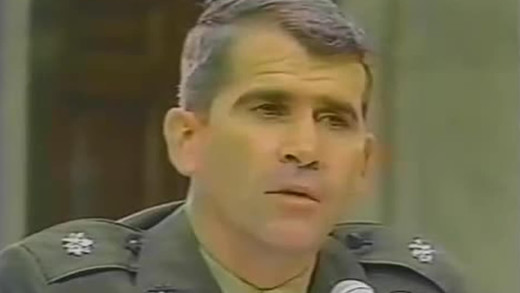
Cover Up -- Behind The Iran-Contra Affair is a thorough investigation into information suppressed during the Iran-Contra hearings in 1987 where it was found that senior officials in the United States government secretly facilitated the sale of arms to Iran. The film reveals a shadow government of former CIA operatives, drug smugglers, top US military personnel and others, revealing evidence of the history of CIA involvement in drug running from the Vietnam heroin era to the Central American cocaine epidemic -- raising serious questions about the so-called "war on drugs" and other government movements since the 1980s...
 1:56:32
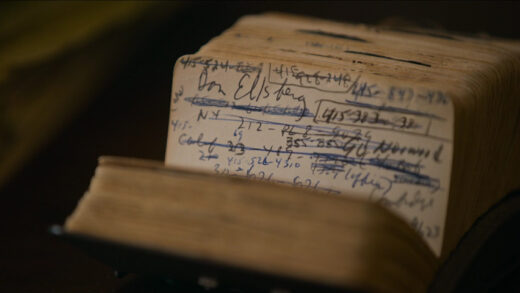
Cover-Up explores the investigative journalism career of Seymour Hersh, a Pulitzer Prize-winning journalist, exposing the United States' war crimes during the Vietnam War and the secret US bombing of Cambodia, the Watergate scandal, the CIA's program of domestic spying, and the torture and abuse of prisoners at Abu Ghraib during the war on terror and the invasion of Iraq.
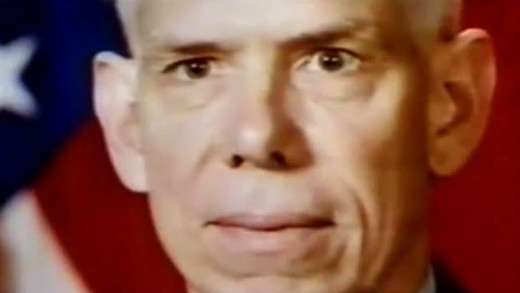
Crazy Rulers of the World is a series that investigates what happens when chiefs of the United States intelligence agencies and the army began believing in very strange things. With first-hand access to the leading characters in the story, filmmaker Jon Ronson examines the extraordinary and bizarre national secrets at the core of the war on terror.
 1:44:33
Crude
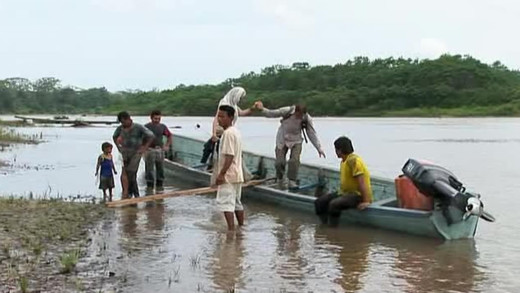
As one of the largest and most controversial legal cases on the planet, Crude takes a look inside the $27 billion "Amazon Chernobyl" case, viewing the real-life high stakes legal drama set against a backdrop of the environmental movement, globalisation, hackneyed celebrity 'activism', human rights, multinational corporate power and rapidly-disappearing indigenous cultures...
 1:22:52
Supported by a mix of archival footage, NASA shots of burning oil fields and historical film excerpts, Crude Awakening examines peak oil. From Houston to Caracas, the Lake of Maracaibo, the Orinoco delta, Central Asia's secretive republic of Azerbaijan with its ancient capital Baku and the Caspian Sea, to London and Zürich. The film questions the future of oil with leading authorities such as oil investment banker Matthew Simmons, former OPEC chairman Fadhil Chalabhi, Caltec's head of physics, Professor David Goodstein, Stanford University political scientist, Terry Lynn Karl and peak oil expert, Matthew Savinar...
 1:37:56
Crude Impact examines the interconnections of human economic activity, the use of fossil fuels and the effects that these have on the environment, the climate and humanity. What is peak oil? And what does this mean of the issue of global warming? The film also investigates the questionable practices of oil companies, to which there are plenty of examples...
 38:19
38:19Culture Jam
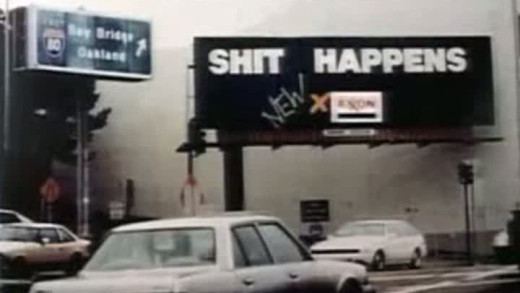
Culture Jam documents a movement against advertising and the repurposing of commercial messages by following pranksters and subversive artists as they hijack, subvert and reclaim corporate media space in the battle of public 'mind-share' dominated by the consumer culture. Stopping in San Francisco, New York's Times Square and other parts of the United States, Culture Jam documents some jamming in action—armed with everything from DIY anti-ad stickers, custom neon, to the art of performance and guerilla film screenings—to illustrate just some of what people can do to push back against the saturation of commercial media messages in public space.
 1:12:24
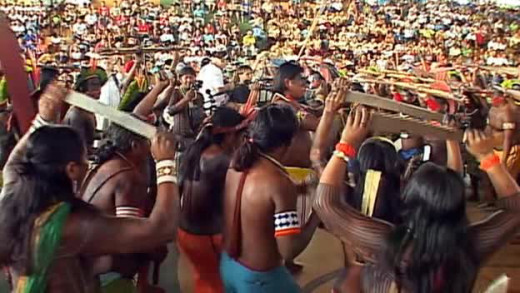
In 2003, on the eve of the Iraq war, director Iara Lee embarks on a journey to better understand a world increasingly embroiled in conflict. Several years later, after travelling to five continents, Lee encounters growing numbers of people who have committed their lives to change. From Iran to Burma to Palestine and Lebanon, Cultures Of Resistance explores how art and creativity can mould with the greater culture of resistance, a part of the battle for peace and justice...
 1:26:24
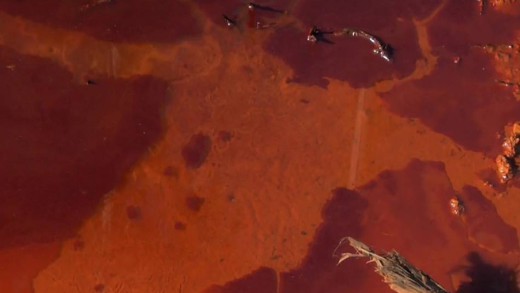
A new gold rush is sweeping through the Amazon rainforest where scores of people are bustling in to hunt for the last nuggets and specks of gold. This insatiable rush is perpetuating the further destruction of one of the largest remaining tropical forests in the world; bringing with it weapons, mercury, crime and alcoholism, and turning once pristine creeks and rivers into dumping grounds for mining. In the forest also lies the story of the Wayanas, a Native American tribe from Guiana, who are being poisoned by the mercury releases from the mining. Their communities are enduring one of the world's worst globalisation disasters, fighting back against all odds.
 1:21:05
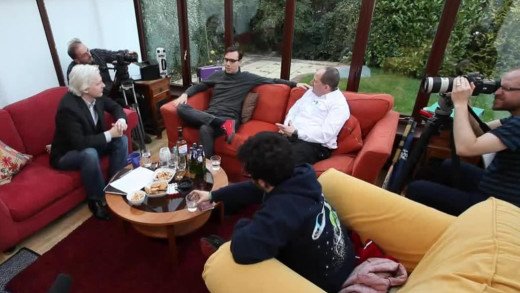
Cypherpunks is a movement originating from the 1980s aiming to improve Internet privacy and security through proactive use of cryptography. With WikiLeaks being a recent offshoot of the many projects derived from the Cypherpunk movement, WikiLeaks editor Julian Assange talks with three activists from the Cyberpunk world to cover the topics of mass surveillance and social control being tied directly into technology as modern society progressively intertwines with technological progress...
 1:26:41
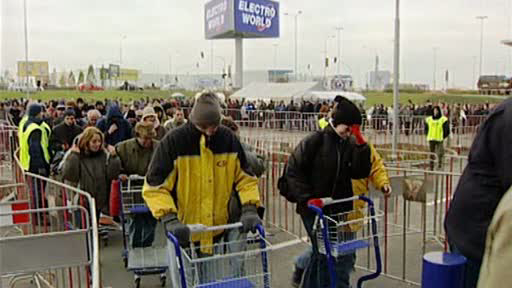
Two film students set out to explore the psychological and manipulative powers of consumerism by creating an extensive and pervasive advertising campaign for a fake hypermarket. The ads appear on radio, television, billboards; there is a promotional song, an internet site, ads in newspapers, magazines, and flyers with photos of fake Czech Dream products are distributed. Will people believe it and show up for the grand opening?
 1:28:07
DamNation
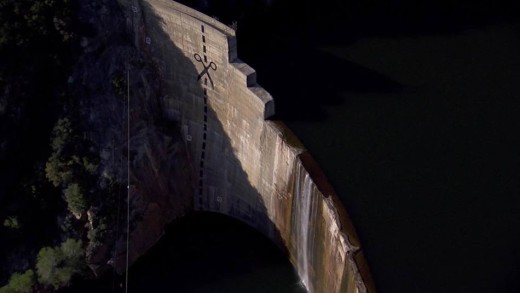
Travelling across North America, DamNation investigates the growing change in national attitude from strange pride in big dams as domineering engineering projects, to the growing truthful awareness that dams have always been the great killers of rivers, wildlife, the salmon, the forests, coastlines, watersheds. Life is bound to water and health of rivers, and now, dam removal in many forms—including Monkey Wrenching—is reclaiming that life and spreading. Where dams come down, rivers come back, allowing the salmon to return after decades of being concreted out. By making firsthand unexpected discoveries moving through rivers and the landscapes altered by dams, DamNation presents a much-needed metamorphosis in values, from conquest of the natural world to knowing ourselves as part of nature; to respect, and be humbled. With over two million dams in North America alone—75,000 of them over six feet tall—there's much work to be done. Let's get to it.
 34:27
34:27Damocracy
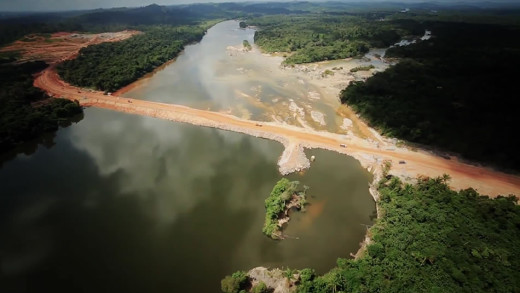
Damocracy travels from the deepest corners of the vast Amazon rainforest in Brazil to the mountains and plains of fertile upper Mesopotamia in south east Turkey, to expose the myth that large-scale dams, as clean energy, are a solution to climate change. The film records the priceless cultural and natural heritage the world will lose in the Amazon and Mesopotamia if two planned large-scale dams are built--the Belo Monte dam in Brazil, and the Ilisu dam in Turkey. Damocracy documents the story of resistance by the thousands of people who will be displaced if the two projects go ahead, and issues a call to the world to support this fight to save the last rivers from industrial civilisation...
 1:37:20
Dark Money tracks the influence of corporate money in contemporary politics in the United States. Using Montana as a case study, the film engages with the complex history that Montana state politics has with corporate influence. Starting with the Anaconda Copper Mining Company, Dark Money shows how the influence of mining corporations caused state legislators to relax mining regulations, which resulted in an environmental catastrophe in Butte, with problems that persist today. John S. Adams of the Montana Free Press plays a central role in the film as an investigative journalist who has been tracking state politics and following the money for several years. Adams has reported on everything from the role of the American Tradition Partnership (formerly known as Western Tradition Partnership) funds in the shaping of state election laws, to the illegal political activities of a "right to work" PAC in Montana. The film follows Adams's work as a reporter, but it also includes interviews from other prominent figures in Montana state politics and those involved in the movement to examine and limit the influence of dark money in politics.

The Dark Side of Porn is a six part series of films that each examine an aspect of the modern porn industry. Using specific examples of films, and by speaking directly with former performers, filmmakers and families themselves; the series of films journey through the firsthand and often unseen issues that are pervasive to modern pornography--such as STIs, the use and abuse of relationships, rape, human trafficking, the recruitment process, and the seen and unseen cultural impacts of films such as Deep Throat and Emmanuelle, to name a few. Consequently, this series offers a disturbing account of the tip of the iceberg of modern mainstream pornography...
 57:22
57:22By the early 1990s, solid research and overwhelming evidence had prompted a growing awareness of the epidemic nature of date rape, especially on college campuses. But, starting in 1993, the media used the anecdotal comments of one young woman, Katie Roiphe, to undermine efforts to stop this continuing crime against women. How did this happen?
 1:05:44
Imagine that a storm blows across your garden and that now, without your knowledge or consent, foreign and genetically-modified seeds are in your vegetable patch which you have nourished and maintained for over 50 years. A few days later, representatives of a large multi-national corporation secretly visit your home, only to return later and demand that you surrender all your vegetables and seeds. Then, they file a lawsuit against you for the illegal use of their patented and genetically-modified seeds that you never planted or used and, what's more, the court rules in favour of the corporation. Yet, you still fight back. This is the true story of Percy Schmeiser versus Monsanto.
 28:59
28:59Deadly Deception juxtaposes General Electric's rosy "We Bring Good Things To Life" commercials with the true stories of its workers and neighbours whose lives have been devastated by the company's involvement in building nuclear bombs. It tells a powerful story of how activists can challenge corporations causing harm. Driven by personal testimony and painstaking research, the film exposes what GE never wanted its customers to know: a shocking pattern of negligence and misinformation spanning several decades. The tragic stories are answered by the inspiring activism of the GE Boycott, a grassroots campaign run by corporate accountability organisation, Corporate Accountability International, to pressure GE out of the nuclear weapons industry.