 1:15:50
END:CIV
By examining the modern culture of industrial civilisation and the persistent widespread violence and environmental exploitation it requires, END:CIV details the resulting epidemic of poisoned landscapes and shell-shocked nations, while further delving into the history of resistance and the prospect of fighting back against such abuse. Detailed is an overview of the environmental movement analogous with the historical whitewashings of the supposedly 'pacifist' social struggles in India with Gandhi and Martin Luther King in the United States; the rise of greenwashing and the fallacy that all can be repaired by personal consumer choices. Based in part on 'Endgame,' the best-selling book by Derrick Jensen, END:CIV asks: If your homeland was invaded by aliens who cut down the trees, poisoned the water, the air, contaminated the food supply and occupied the land by force, would you fight back?
 1:39:26
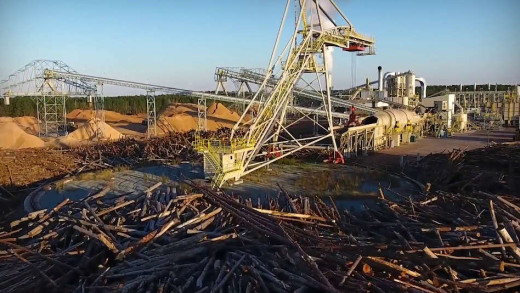
The central thesis of Planet of the Humans is that various people and organisations in the United States claiming to promote 'green energy' are actually promoting biomass energy--largely a euphemism for cutting down and burning forests--a practice which is not carbon neutral nor renewable nor sustainable. The film reveals the destruction of environments first-hand, and also explores how wind power and solar power don't fare much better than fossil fuels in terms of impacts once all the inputs for construction and maintenance are considered and compared. In most cases, the additional demands for resources and construction simply invoke more environmental degradation and pollution. The film examines this push for more industry through key figures in the modern environmental movement that are funded by entities connected to fossil fuels, or have established profit motives, revealing how the environmental movement has been essentially co-opted into a de-facto lobbying arm of 'green' industries. The film also posits that regardless of energy systems, overpopulation is a central problem of industrial civilisation, and that this current way of life is unsustainable no matter how it is powered or 're-imagined' by technology.
 1:30:00
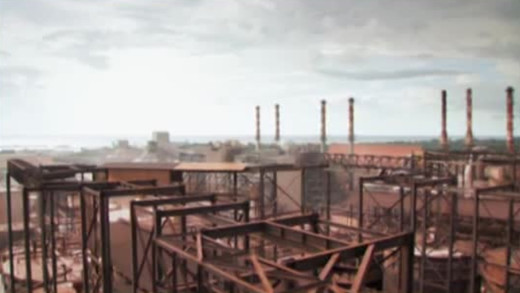
Aluminium is everywhere—beer cans, tinned food, cooking pans, computers, pens, cosmetics; and many medications, including most vaccinations. Though what do we know about this material? The Age of Aluminium profiles people whose health has been seriously impacted by unwitting exposure to aluminium; along with research exploring how aluminium as a known neurotoxin relates to the growing epidemic of chronic illnesses and disabilities such as breast cancer, Alzheimer’s disease, allergies, and autism. Aluminium mining and manufacturing have also created cataclysmic environmental problems in several parts of the world, as we see the devastating effects of aluminium mining in South America, and environmental disasters in Hungary and the UK. What are we doing with this material? And what can we do now to avoid the continued impacts on our lives and the natural world?
 41:57
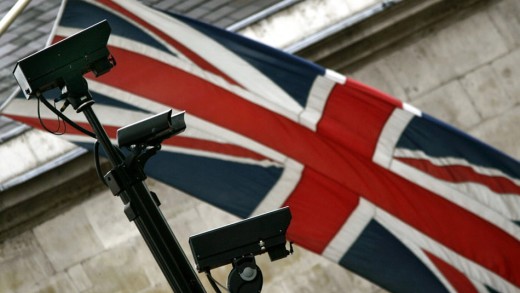
41:57Governments all around the world are using high-tech mass surveillance tools to monitor their citizens. Western corporations, including Britain's largest weapons manufacturer, BAE, are among those which are creating and selling mass surveillance infrastructures all across the globe, but especially to particularly repressive regimes. Weapons of Mass Surveillance makes example of what is happening throughout the Middle East where journalists, human rights advocates and activists are being targeted with surveillance tools developed by western corporations with extreme real-world consequences. Political opponents to tyrannical power are targeted, jailed, and in some cases, tortured or "disappeared." This shows the power of mass surveillance tools for great harm, and how the west is culpable in perpetuating systemic repression both at home and abroad.
 1:25:07
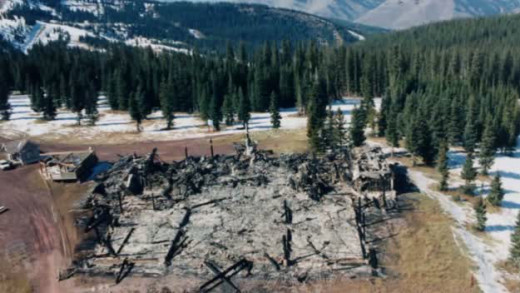
For years, the Earth Liberation Front--autonomous individuals operating in separate anonymous cells without any central leadership--carried out spectacular direct-actions against businesses that destroy the environment. Some of the targets were logging corporations, SUV dealerships, ranger stations, a slaughterhouse and a multi-million dollar ski-lodge at Vail, Colorado that was expanding into national forest. As authorities were not able to crack the case and disbanded many years later, the FBI got lucky when they were led to a former activist who agreed to co-operate with them and become an informant. If A Tree Falls provokes hard questions about environmentalism, activism, and the way 'terrorism' is defined by following the story of the activists who were turned over to the FBI, and their fate...
 1:33:21
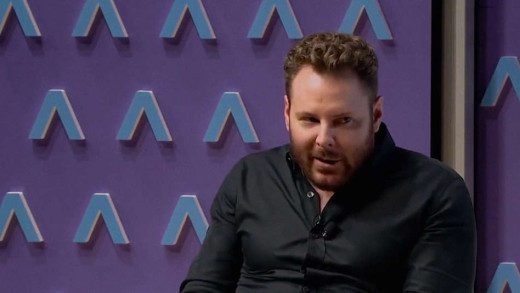
The Social Dilemma brings together former product directors and designers of Facebook, Google, Instagram, Pintrest, Twitter, and so on, to reflect on their creations and face questions about the age of addiction, information manipulation, and algorithmic social control they've ushered in. The creators speak openly about how they themselves took part in this co-optation of society, either naively or with malignant indifference, by designing websites in such a way to influence and manipulate billions of people for corporate interests by using deep psychological and addictive triggers in the human mind. Detailed explanations about how this can play out in the real world are illustrated through dramatisations, which are also expanded upon by experts in psychology, technology, and social studies. The result is a sobering call for emergency damage control, to undo the massive harm that technology companies have unleashed on society unrestrained for the past several decades, at a time of rapid social unravelling.
 1:26:16
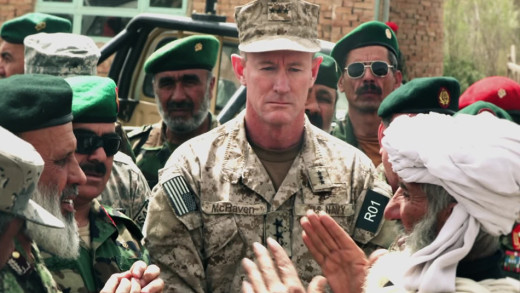
Dirty Wars follows investigative reporter Jeremy Scahill into the hidden world of the United States' covert wars and assassination programmes—from Afghanistan to Yemen, Somalia, and beyond. What begins as a relatively commonplace report on the cover-up of a murderous US night raid in a remote corner of Afghanistan, quickly turns into a global investigation of the secretive and powerful Joint Special Operations Command (JSOC)—a top secret arm of the Military-Industrial-Intelligence Complex. As Scahill digs deeper into the activities of JSOC, he is compelled to report on the growing chilling underworld of covert operations carried out across the globe at the behest of the United States government: Targeted killings of American citizens; secret drone strikes; outsourcing American kill lists to warlords, private corporations and paramilitaries. The list goes on. Dirty Wars is a sobering investigation and personal journey into the most important human rights story of our time.
 1:11:57
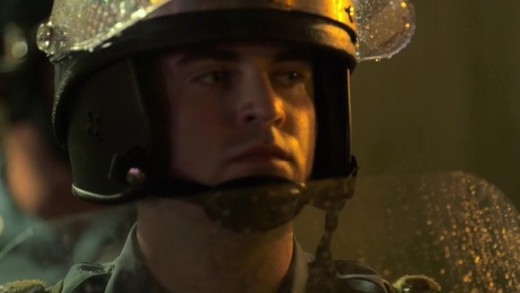
Do Not Resist documents, from the perspective of the police, their view of the social unrest following the shooting and killing of Michael Brown by police in Ferguson, 2014, against a backdrop of the routine and escalating use of military tactics and high-powered weaponry by local police forces throughout the United States in the past two decades. Military equipment deployed throughout the Middle East returns home to be used against the citizenry. Local police recruitment and training is awash in military commandments backed by views of escalating 'righteous' violence and sadism. Meanwhile curfews are imposed, along with frivolous drug raids and incessant racial profiling. The voices of concerned citizens ignored. What is the cultural and technological trajectory here?
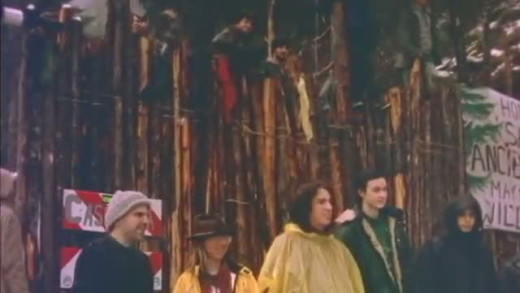 1:33:36
An eclectic group of activists take a stand to protect an old growth forest from logging at Warner Creek in the Willamette National Forest of Oregon. The activists block the logging road, repel State Police and intervene to stop timber sales. Over months a community builds around the blockade and similar actions spread across the region. Filmed by the activists themselves, PickAxe is the account of the direct actions from the perspective of the participants to save Warner Creek...
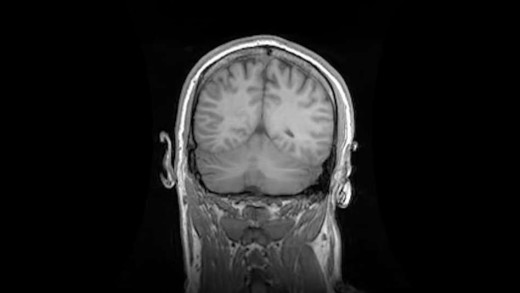
Can't Get You Out of My Head: An Emotional History of the Modern World is a six-part series that explores how modern society has arrived to the strange place it is today. The series traverses themes of love, power, money, corruption, the ghosts of empire, the history of China, opium and opioids, the strange roots of modern conspiracy theories, and the history of Artificial Intelligence and surveillance. The series deals with the rise of individualism and populism throughout history, and the failures of a wide range of resistance movements throughout time and various countries, pointing to how revolution has been subsumed in various ways by spectacle and culture, because of the way power has been forgotten or given away.
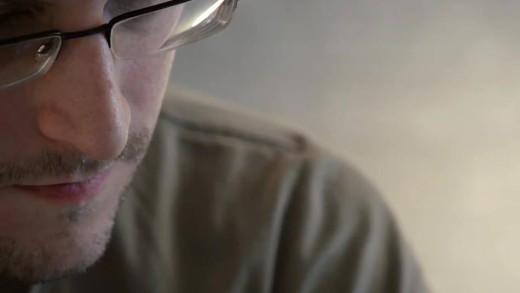 1:53:12
Citizenfour
In January 2013, film-maker Laura Poitras received an encrypted e-mail from a stranger who called himself Citizen Four. In it, he offered her inside information about illegal wiretapping practices of the NSA and other intelligence agencies. Poitras had already been working for several years on a film about mass surveillance programs in the United States, and so in June 2013, she went to Hong Kong with her camera for the first meeting with the stranger, who identified himself as Edward Snowden. She was met there by investigative journalist Glenn Greenwald and The Guardian intelligence reporter Ewen MacAskill. Several other meetings followed. Citizenfour is based on the recordings from these meetings. What follows is the largest confirmations of mass surveillance using official documents themselves, the world has never seen...
 53:50
53:50The Illusionists examines how global advertising firms, mass media, and the beauty, fashion, and cosmetic-surgery industries have together colonised the way people all around the world define beauty and see themselves. Taking us from Harvard to the halls of the Louvre, from a cosmetic surgeon's office in Beirut to the heart of Tokyo's Electric Town, The Illusionists shows how these industries saturate our lives with narrow, Westernised, consumer-driven images of so-called beauty that show little to no respect for biological realities or cultural differences. Featuring voices from prominent sociologists, magazine editors, scientists, artists, and activists, The Illusionists documents a truly global phenomenon, with hegemonic results.
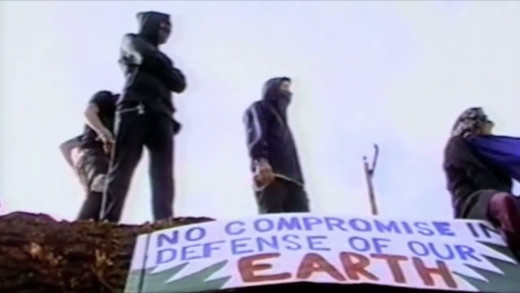 42:46
42:46People from industrial civilisation are fast to defend it, saying that they depend on this way of life for survival. It's an addiction. But what if civilisation is the very thing that is killing us and everyone else around? How could we survive then? The Fuck-It Point is about this pervasive disabling mindset of civilisation, its true cost, why and how we need to stop it from killing the planet, and why most people from civilisation don't want to do this. Will you do what is necessary to stop this culture from killing the planet?
 11:22
11:22Would any sane person think dumpster diving would have stopped Hitler, or that composting would have ended slavery or brought about the eight-hour workday; or that chopping wood and carrying water would have gotten people out of Tsarist prisons; or that dancing around a fire would have helped put in place the Voting Rights Act of 1957 or the Civil Rights Act of 1964? Then why now, with all the world at stake, do so many people retreat into these entirely personal "solutions"? Why are these "solutions" not sufficient? But most importantly, what can be done instead to actually stop the murder of the planet?
 2:08:21
We live in a world of screens. The average adult spends the majority of their waking hours in front of some sort of screen or device. We're enthralled, we're addicted to these machines. How did we get here? Who benefits? What are the cumulative impacts on people, society and the environment? What may come next if this culture is left unchecked, to its end trajectory, and is that what we want? Stare Into The Lights My Pretties investigates these questions with an urge to return to the real physical world, to form a critical view of technological escalation driven rapacious and pervasive corporate interest. Covering themes of addiction, privacy, surveillance, information manipulation, behaviour modification and social control, the film lays the foundations as to why we may feel like we're sleeprunning into some dystopian nightmare with the machines at the helm. Because we are, if we don't seriously avert our eyes to stop this culture from destroying what is left of the real world.
 1:13:33
The myth that humans are superior to all other life forms is a fundamental and unquestioned premise of dominant culture. It is an old historical idea, rooted in colonialism, and is deeply embedded in religion and science. It is one of the root causes for the destruction of the natural world, animal cruelty, war, the extinction of species and other immense problems. The Superior Human? challenges this arrogant and self-destructive ideology; unwinds the myths, using examples and common sense.
 21:52
21:52The terms 'liberal' and 'radical' have been thrown around a lot in political discourse over the past decades, largely with lost meaning. This is a significant gap in our political understandings as the worldview of liberal activists and radical activists are conceptually different--an education that most of us never had. Writer and activist Lierre Keith regrounds these differences as part of a larger understanding of how effective resistance can be nurtured and sustained.
 1:00:58
Ten years on from his previous film, Advertising & the End of the World, renowned media scholar Sut Jhally follows up by exploring the since-escalating devastating personal and environmental fallouts of advertising and the near-totalising commercial culture. The film tracks the emergence of the advertising industry in the early 20th century to the full-scale commercialisation of the culture today, identifying the myth running throughout all of advertising: the idea that corporate brands and consumer goods are the keys to human happiness and fulfilment. We see how this powerful narrative, backed by billions of dollars a year and propagated by clever manipulative minds, has blinded us to the catastrophic costs of ever-accelerating rates of consumption. The result is a powerful film that unpacks fundamental issues surrounding commercialism, media culture, social well-being, environmental degradation, and the dichotomy between capitalism and democracy.

The Power Principle is a series of films examining the history of the United States and the building of its empire with particular emphasis on the last seventy years of United States foreign policy. The methods that make empire possible are also examined—the politics of fear, the rise of public relations, the 'Mafia Principle' and the reoccurring use of fabled enemies, contrasting the Soviet Union and the Cold War alongside the parallels of today with the "War On Terror". Not only does The Power Principle tie together historical events to revive a common thread, the series may also encourage viewers to reconsider their understanding of historical events and the portrayal of them, showing how those in power play a role in manipulating the collective memory through generations.
 1:32:49
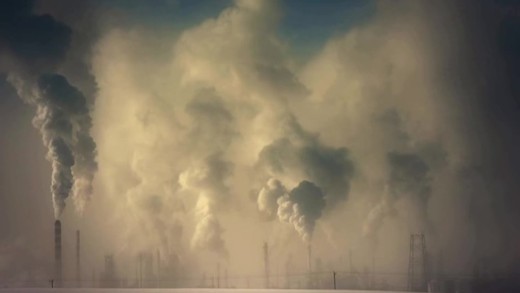
Merchants of Doubt looks at the well established Public Relations tactic of saturating the media with shills who present themselves as independent scientific authorities on issues in order to cast doubt in the public mind. The film looks at how this tactic, that was originally developed by the tobacco industry to obfuscate the health risks of smoking, has since come to cloud other issues such as the pervasiveness of toxic chemicals, flame retardants, asbestos, certain pharmaceutical drugs and now, climate change. Using the icon of a magician, Merchants of Doubt explores the analogy between these tactics and the methods used by magicians to distract their audiences from observing how illusions are performed. For example, with the tobacco industry, the shills successfully delayed government regulation until long after the health risks from smoking was unequivocally proven. Likewise with manufacturers of flame retardants, who worked to protect their sales after the toxic effects and pervasiveness of the chemicals were discovered. This is all made analogous to the ongoing use of these very same tactics to stall governmental action in regards to global climate change today.
 1:16:59
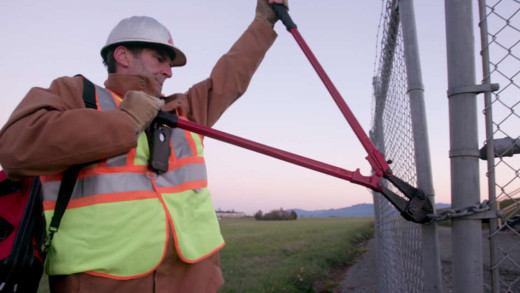
If a crime is committed in order to prevent a greater crime, is it excusable? Is it, in fact, necessary? The Reluctant Radical follows Ken Ward as he confronts his fears and acts on these questions to stop climate change. After twenty years leading some of the most renowned mainstream environmental organisations, Ken witnesses first-hand how ineffective and unthreatening they are. As their efforts fail, and environmental collapse increases in scope and speed, Ken comes to see how direct action civil disobedience is the most effective political tool to deal with catastrophic circumstances. Ken breaks the law, to fulfil his obligation to future generations, to stop the oil economy. By following Ken for a year and a half through a series of direct actions, this film culminates with his participation in the coordinated action that shut down all the tar-sands oil pipelines in the United States on October 11, 2016. The film reveals the personal costs but also the true fulfilment that comes from following one's moral calling, even if that means breaking the law and its consequences. Ken has no regrets.
 1:45:01
The End of Poverty? traces the growth of global poverty back to colonisation in the 15th century to reveal why it's not an accident or simple bad luck that there is a growing underclass around the world. Featuring interviews with a number of economists, sociologists, and historians, the film details how poverty is the clear consequence of free-market economic policy which has allowed powerful nations to exploit poorer ones for their assets, turning the money back to the hands of the concentrated few. This also follows on to how wealthy nations--especially the United States--thereby exert massive debts, seize a much disproportionate exploit of the natural world, and how this deep imbalance has dire consequences on the environment and on people...
 42:15
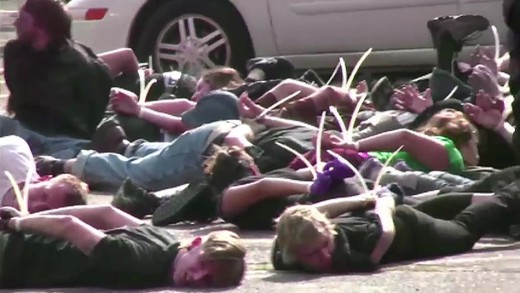
42:15The legacy of the Bush administration and the so-called "War on Terror" includes a new logic that stretches well beyond the realm of overzealous security agencies, airport security and international relations, and into suppressing public protest; expanded surveillance aimed at entire populations, but especially activists; and mobilising fear for social control. Special police techniques have even been developed and applied in order to specifically suppress dissent and manage protests, especially in the wake of the rising anti-globalisation movements towards the turn of the millennium. Preempting Dissent provides a quick overview of how some of this logic developed, as well as a glimpse of how political protest in the West has been shaped and controlled in the "post-9/11" years, up to and including the so-called Occupy movement. By provoking a reflection of the implications of the logic of the "War on Terror" and how its applied to stifle political protest, Preempting Dissent aims to lay some of the groundwork to develop more effective resistance tactics.
 1:03:59
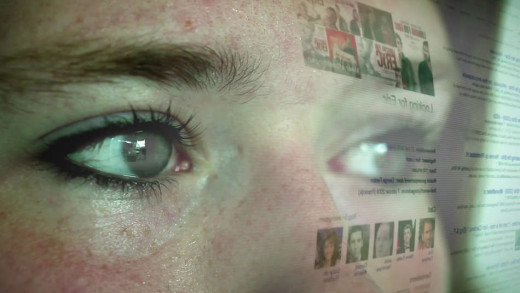
Tracing the Internet's history as a publicly-funded government project in the 1960s, to its full-scale commercialisation today, Digital Disconnect shows how the Internet's so-called "democratising potential" has been radically compromised by the logic of capitalism, and the unaccountable power of a handful of telecom and tech monopolies. Based on the acclaimed book by media scholar Robert McChesney, the film examines the ongoing attack on the concept of net neutrality by telecom monopolies such as Comcast and Verizon, explores how internet giants like Facebook and Google have amassed huge profits by surreptitiously collecting our personal data and selling it to advertisers, and shows how these monopolies have routinely colluded with the national security state to advance covert mass surveillance programs. We also see how the rise of social media as a leading information source is working to isolate people into ideological information bubbles and elevate propaganda at the expense of real journalism. But while most debates about the Internet focus on issues like the personal impact of Internet-addiction or the rampant data-mining practices of companies like Facebook, Digital Disconnect digs deeper to show how capitalism itself turns the Internet against democracy. The result is an indispensable resource for helping viewers make sense of a technological revolution that has radically transformed virtually aspect of human communication.
 53:34
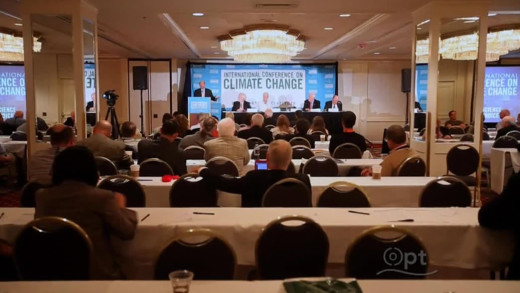
53:34Climate Of Doubt is an investigation into the growing forces manipulating public opinion on the scientific consensus of impacts to global climate by industrial civilisation. A massive disinformation campaign is growing from the fronts of government and corporate interests to undermine scientific processes and reshape public perceptions. Climate Of Doubt ventures inside these organisations to demonstrate the strong influence of the global politick on maintaining established denial, and ignoring culpability on the issue of anthropogenic climate change.
 47:17
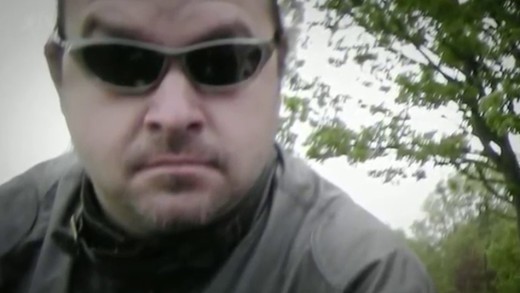
47:17Peter Francis, a former undercover police spy turned conscientious whistleblower, breaks ranks by speaking to the media after becoming troubled by the unaccountable culture of secret police operations throughout the United Kingdom targeting peace activists for decades. Tactics included undercover police officers having sexual relationships with activists, even going as far as commonly having children with the women they were spying on. Undercover agents also often assumed the identities of dead children in order to have "solid cover stories." We also see how undercover police were asked to look for intelligence that could be used to discredit the family of murdered teenager Stephen Lawrence and their campaign. The Lawrence family both speak of their shock at hearing about that the police did this to them. This short investigation opens a flood of questions about the secret history of covert police operations, and indeed the future of them in the context of the sprawling surveillance state of today.
 1:28:12
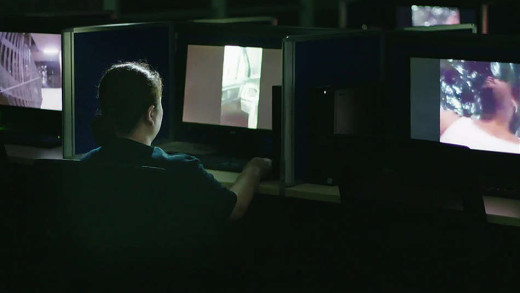
How do online giants such as Facebook and Google deal with problematic content posted to their platforms every minute? They outsource the act of "digital cleaning" to teams of people paid a pittance in countries such as the Philippines, to act as content moderators. It's these hidden low-paid workers, in giant click farms, that spend long shifts removing posts and deleting accounts. So how do their decisions influence what the billions of people using social media all around the world see and think? What are the policies they are told to enforce? Are the cleaners part of the online world of clever hoaxes and fake news, or are they on the frontline of social media spectacle and furor?
 58:22
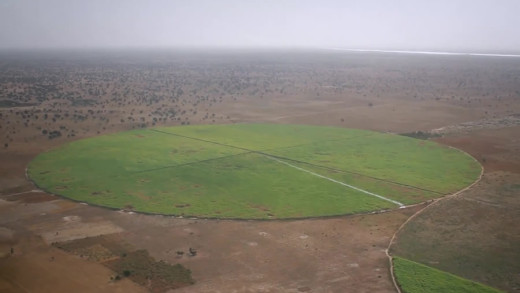
58:22Rich, land-hungry nations like China and Saudi Arabia are rushing to Mali, West Africa, to grab up land for large agribusiness investments. Malian peasants do not welcome these developments however, seeing this as yet another manifestation of imperialism. Indeed local farmers themselves are being forced off the land by their own governments to allow foreign interests in, promising large sums of money. Land titles are denied, lands are cleared and families moved on. Though as Mali experiences a military coup and developers are frightened off, the situation improves for local farmers...