 58:12
58:12Is the world heading for a population crisis? Since 1950, the human population has more than doubled. What is the effect of this rapid growth on the environment? While much of the projected growth in human population is likely to come from the so-called "developing world," it is the lifestyle enjoyed by the West that has the most impact--in the UK consumers use as much as two and a half times their fair share of Earth's resources. This film examines whether it is the duty of individuals to commit not only to smaller families, but to change the way they live for the sake of humanity and planet Earth.
 13:08
13:08Welcome to the wartime contracting bazaar in Afghanistan. It is a virtual carnival of characters with shady connections—former CIA officials and ex-military officers joining hands with former Taliban and mujahedeen to collect US government funds in the name of the war effort. US military's contractors pay suspected insurgents to protect American supply routes. It is an accepted fact of the military logistics in Afghanistan that the US government funds the very forces American troops are fighting—a deadly irony...
 24:26
24:26On 1 May 1946, under occupation and wage slavery by the white man, 800 Aboriginal workers walked off sheep stations in the north-west of Western Australia, marking the beginning of a carefully organised strike that was to last for at least three years, and never officially ended. The strike was a demand for basic freedoms and for better wages considering the imposed conditions. A fight that sadly continues to this day, speaking to the truth of a country still occupied and brutally colonised, land that was never ceded.
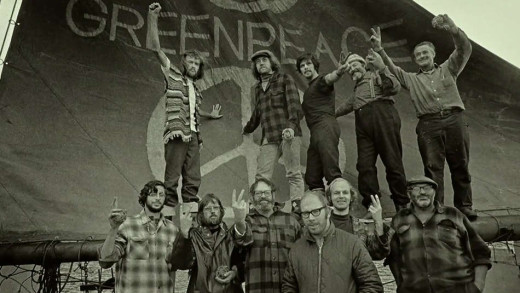
In the early 1970s, in response to the United States testing nuclear weapons on the island of Amchitka, a group of environmental activists got together with the aim of sailing a ship out to Amchitka to disrupt the weapons tests and stop them. But fuelled by bad weather, delays, infighting and clashes of ego, the group never reached the island and the weapons tests went ahead. Yet the symbolism of their attempt flourished in the media, entering the public consciousness. This is where the "Greenpeace movement" was born, emerging from the era of a philosophy of passive resistance, where bearing witness to objectionable activity is supposedly protested simply by a mere presence. But just how far can this philosophy go to actually stop atrocities? This film reveals the answer to that question, where Greenpeace eventually morphs into a large global organisation, far from its environmental ideals. Internal fallout leads to the founders each drifting their own separate ways, with some even coming to criticise Greenpeace and others even actively working against their own creation.
 2:07:01
How to Let Go of the World and Love All the Things Climate Can't Change travels the globe, from New York City to the Marshall Islands and China, to meet with people who are committed to reversing the tide of global warming. The film examines the intricately woven forces that threaten the stability of the climate and the lives of the world's inhabitants.
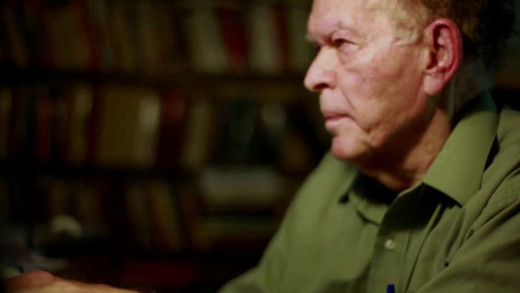
How to Start a Revolution is a profile of Nobel Peace Prize nominee and political theorist Gene Sharp, who is described as one of the world's foremost scholars on nonviolent revolution. The film profiles Sharp and his ideas, as well as their influence on popular uprisings around the world. There is particular focus on Sharp's key text From Dictatorship to Democracy, which has been translated by activists into more than 30 languages, and used in revolutions from Serbia and Ukraine, to Egypt and Syria. Quiet and unassuming, a softly spoken Sharp describes how his 198 methods of nonviolent action have spread from his tiny Boston office to inspire and inform uprisings across the globe.
 25:04
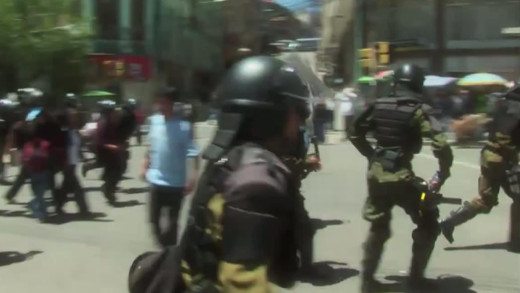
25:04How To Stop A Multinational follows three women in Argentina as they put themselves in harms way to stop a gold mining company from entering their town. With the activists having defeated a Canadian mining company, the campaign is now against a Chinese one that wishes to extend the operation, making use of large quantities of fresh water--up to 45,000,000 litres per day--a plan that seriously threatens the future viability of the town and the environment. This short film documents the campaign which is still in its early days, where activists carry out a series of direct-actions to stop the mining company from physically entering the town; training villagers, informing others and filming the outcomes along the way...
 1:59:23
Human Resources -- Social Engineering in the 20th Century is about the rise of mechanistic philosophy and the exploitation of human beings under modern hierarchical systems. The film captures how humans are regarded as a resource by corporations--something to be exploited for pecuniary gain--by following the history of psychological experiments in behaviour modification, conditioning and mind control; applying the outcomes to modern day establishment experiments such as institutionalised education, and social engineering by way of things like television...
 2:46:31
HyperNormalisation wades through the culmination of forces that have driven this culture into mass uncertainty, confusion, spectacle and simulation. Where events keep happening that seem crazy, inexplicable and out of control—from Donald Trump to Brexit, to the War in Syria, mass immigration, extreme disparity in wealth, and increasing bomb attacks in the West—this film shows a basis to not only why these chaotic events are happening, but also why we, as well as those in power, may not understand them. We have retreated into a simplified, and often completely fake version of the world. And because it is reflected all around us, ubiquitous, we accept it as normal. This epic narrative of how we got here spans over 40 years, with an extraordinary cast of characters—the Assad dynasty, Donald Trump, Henry Kissinger, Patti Smith, early performance artists in New York, President Putin, Japanese gangsters, suicide bombers, Colonel Gaddafi and the Internet. HyperNormalisation weaves these historical narratives back together to show how today's fake and hollow world was created and is sustained. This shows that a new kind of resistance must be imagined and actioned, as well as an unprecedented reawakening in a time where it matters like never before.
 46:42
46:42Hypothesis
In 2005, a physics professor named Steven Jones published a paper of a scientific hypothesis regarding the free-fall speed collapse of 3 buildings on September 11, 2001—the twin towers, and the collapse of World Trade Center building 7 which was not hit by a plane. He proposed based on obvious observations of the collapse, alongside direct evidence of the use of incendiaries, that the only way for all buildings to have collapsed the way they did was in a controlled demolition of some kind. Faced with scientific evidence challenging official reports, what ensued was a firestorm—Jones received hate mail, threats, muddled media attention, and even offers of bribes to stop his research. Why was this information so thoroughly reviled? And why such scientific evidence ignored and further inquiry suppressed?
 56:07
56:07I Am A Man is a film that links everyday black men from various socioeconomic backgrounds with some of Black America's most progressive academics, social critics and authors to provide an engaging, candid dialogue on black masculine identity in North American culture.
 1:33:10
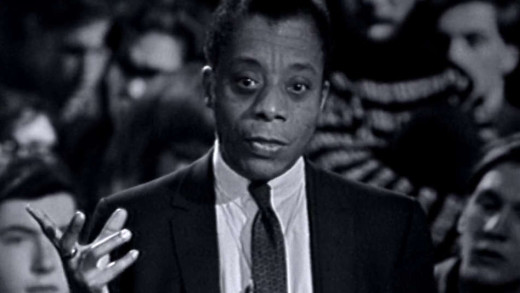
In 1979, author and activist James Baldwin wrote a letter to his literary agent describing his next project, Remember This House, which was to be a revolutionary, personal account of the lives and assassinations of three of his close friends--Medgar Evers, Malcolm X and Martin Luther King, Jr. But eight years later, Baldwin died, leaving behind 30 completed pages. I Am Not Your Negro is a film of the book that was not finished, offering an incendiary snapshot of James Baldwin's crucial observations on race relations in the United States, with a flood of rich archival footage. The film is a journey into black history that connects the past of the Civil Rights movement to the present of #BlackLivesMatter, questioning black representation in the United States and beyond.
 58:24
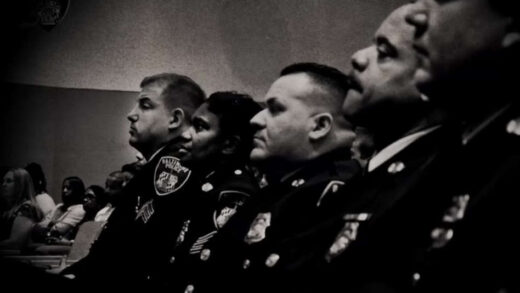
58:24When police sergeant Wayne Jenkins said he had a monster, he meant he had found a big-time drug dealer that he wanted to rob. This documentary covers the story of Jenkins, and one of the most corrupt police units in the United States, the 'Gun Trace Task Force,' which terrorised the citizens of Baltimore planting drugs, lies, faked video evidence, forged letters, false testimony, and death. In the upside-down world of the GTTF, cops were robbers and drug dealers were the perfect victims, because no one believed them. When the federal government finally arrested the GTTF for robbery and racketeering in 2017, the stories of victims began to come out, revealing a vast criminal enterprise operating within the Baltimore Police Department.
 1:25:07
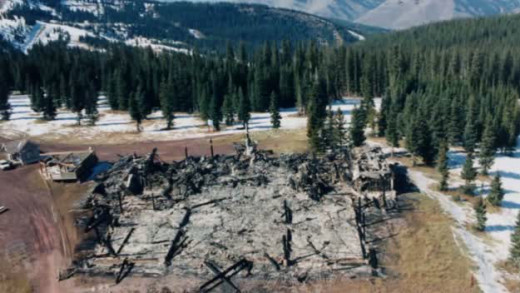
For years, the Earth Liberation Front--autonomous individuals operating in separate anonymous cells without any central leadership--carried out spectacular direct-actions against businesses that destroy the environment. Some of the targets were logging corporations, SUV dealerships, ranger stations, a slaughterhouse and a multi-million dollar ski-lodge at Vail, Colorado that was expanding into national forest. As authorities were not able to crack the case and disbanded many years later, the FBI got lucky when they were led to a former activist who agreed to co-operate with them and become an informant. If A Tree Falls provokes hard questions about environmentalism, activism, and the way 'terrorism' is defined by following the story of the activists who were turned over to the FBI, and their fate...
 19:35
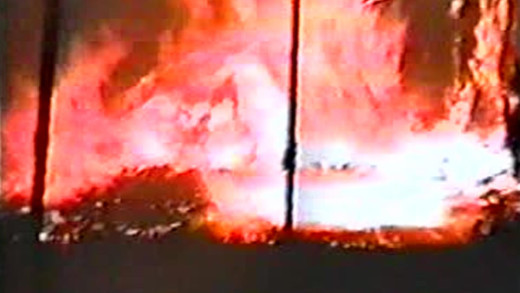
19:35Self published by the press arm of the autonomous activist group called the Earth Liberation Front, Igniting The Revolution is an introductory guide to the activities of the ELF. The film goes through some examples of ELF actions and calls to resist against the forces destroying the natural world by using real direct-action tactics and economic sabotage...
 1:38:25
iHuman
iHuman is about artificial intelligence, social control, and power. It shows how this technology is changing dominant culture. The constant surveillance via phones, Internet devices, and social systems is the crucial foundation for the development of AI, so the question is posed, are we already are governed by algorithms that are created by big tech corporations, governments and the military industry? The result is a profiling of Palantir Technologies, Cambridge Analytica, China's Social Credit System, Google's Project Maven and its close relationship with the United States military, along with Amazon, Microsoft, IBM. All of this together forms the existential risk from 'Artificial General Intelligence.'
 1:10:39
For the past 15 years, the misnomer "War on Terror" has been used by the United States to justify everything from mass surveillance and spying on its own citizens, to the use of secret drone strikes to kill people without trial or sometimes even evidence. Governments have always applied surveillance to those they consider a political threat, but the scale of the clandestine PRISM programme, which collects the data of billions of innocent people all across the globe, is unprecedented. Likewise is the call for the journalists who published the documents revealing the PRISM programme to be prosecuted. In the wake of relations about sustained, systematic abuses of power, it is apparent that in many areas, the United States operates on spurious interpretations of law, often explained in confidential memos, hidden from the public. Other times, the law is disregarded entirely. So what does this mean for resistance? How can citizen rights be reconciled with a rogue state security apparatus?
 3:40:02
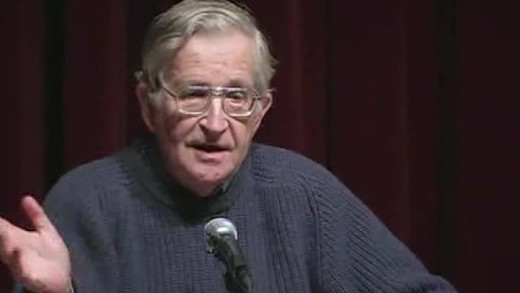
In Imperial Grand Strategy renowned linguist and philosopher Noam Chomsky focuses on the issue of the invasion of Iraq, and cuts through the ideological fog that surrounds the invasion and occupation, laying waste to the US government's justifications for them. In the process, Chomsky uncovers the real motivations behind US military aggression: a global imperial plan put in place long before Iraq and that will extend far into the future, unless we do something about it.
 1:09:08
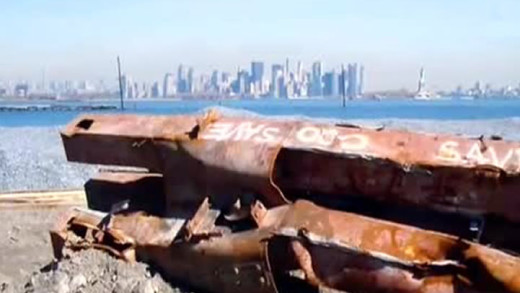
Improbable Collapse focuses on the events of September 11, 2001 from a scientific perspective--testing various hypotheses against gathered evidence such as traces of incendiary particles in dust found after the attacks; the presence of molten-metal being found in all 3 buildings (WTC 1, 2, and 7) and other physical evidence such as the collapse of all 3 buildings at free-fall speed that would suggest that they were destroyed using explosives in a controlled demolition--especially building 7 which was not hit by a plane and collapsed neatly in it's own footprint at 5:21pm. Using photographs, extensive video footage as well as thorough scientific analysis, the film comprehensively scrutinises official reports--showing the many flaws, inaccuracies and omissions, while presenting a more plausible hypothesis. All such findings are still consistently ignored by both government investigations and the mainstream media... Why?
 50:41
50:41In Australia
In Australia takes a candid look at the highs and lows of Australian society, circa 1976. The film ties together the workings of media manipulation in its early days, along with the removal of Prime Minister Gough Whitlam by Governor-General coup d'état—Kerr's Cur—to demonstrate the common apathetic side of popular culture in the 'lucky country.' The film also touches on the subtlety of remnant class structures remaining from English heritage by revealing the workings of the 'Occa'—a prudish stereotype of the common person portrayed and exploited by mainstream media, revealing views on immigration and racism in a country, ironically, colonised by immigrants.
 22:13
22:13The Guantanamo detention camp, "Gitmo", covers forty five square miles of Cuba inside an area under a "permanent lease" to the United States. Since 2002, the base has become synonymous with its detainment of "suspected terrorists". Although Barack Obama has given orders for the detention camp to be closed, the facilities remain open to this day. David Miller's quiet, powerful film is the result of three days the film-maker spent touring the camps in May 2008 as part of a small group of media representatives allowed there. Although the event was presented as a chance to 'see inside' the working of Guantanamo, it was in fact a carefully staged PR exercise designed to yield predictable, stale and controlled media images...
 1:20:15
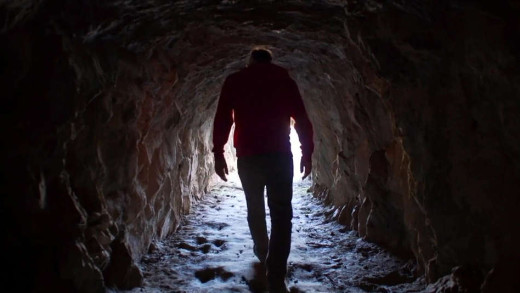
In the race towards modernity, amongst the buzz and jitter of technological innovation and the rapid growth of cities, silence is now quickly passing into legend. Beginning with an ode to John Cage's seminal silent composition 4' 33", the sights and sounds of this film delicately interweave with silence to create a contemplative experience that works its way through frantic minds and into the quiet spaces of hearts. As much a work of devotion as it is documentary, In Pursuit of Silence is a meditative exploration of our relationship with silence, sound, and the impact of noise on our lives.
 1:53:50
AI, or Artificial Intelligence, is spouted as the ability of machines to "think" [sic] at a speed and depth far beyond the capacity of any human. Proponents of these digital technologies claim their systems are used in ways that are beneficial for society. But as we see, the current use of AI isn't necessarily aligned with the goals of building a better society. There still remain escalating concerns about labour, the future of work, privacy, the surveillance society, and social control--all valid criticisms that go back many decades--while the rivalry for technological supremacy between the United States and China mirrors the dynamics of the cold war. In the Age of AI is an investigation that touches on these areas, providing a platform to ask fundamental questions about unrestrained technological escalation.
 26:48
26:48The United States proudly self-identifies as the major purveyor of peace and democracy across the world. But does this perception of self match up to the actual policies and history of military actions throughout recent decades? Are the United States' seemingly constant wars of aggression befitting to achieving peace? These are some of the central dichotomies addressed in this short film In Whose Interest? We see internal documentation of the US involvement in countries like Vietnam or Guatemala which indicate that the main factors motivating American foreign policy are clearly economic concerns. In Guatemala, the United States overthrows a democratically elected government to install a military-backed dictatorship that is suitable to the American United Fruit corporation. A similar pattern emerges in Vietnam, El Salvador and East Timor. Perhaps most oppressive yet is US policy in the Middle East, where the US provides Israel with more than $3 billion per year in military assistance—more aid than they give to the entire continent of Africa. We see how American policy is determined by the corporate sector, tightly linked to the state, which makes decisions in their own self-interest—in stark opposition to the rhetoric of democracy...
 58:32
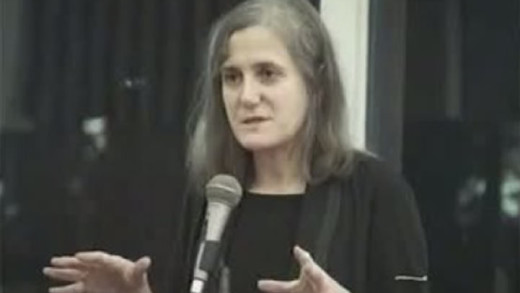
58:32Amy Goodman from Democracy Now! speaks about the mainstream media's coverage of US interventions around the world and demonstrates the link between corporate media and government, and how this plays a major part in selling war at home and abroad...
 1:21:08
Informant
Informant follows the story of Brandon Darby--a radical-left activist turned FBI informant through a series of events starting with community support work in the aftermath of Hurricane Katrina in 2005, to the Republican National Convention in 2008. Brandon ends up turning fellow activists to the FBI for making Molotov cocktails in circumstances described by fellow activists as entrapment. So what happened? Did Brandon manipulate fellow activists into doing things they didn't want to do, or were some activists simply not engaging in a full analysis of the effectiveness of their strategies and tactics? In any event, was turning over activists to the FBI the right thing to do, even when nobody was hurt?
 1:25:06
InRealLife
InRealLife asks: What exactly is the Internet and what is it doing to our children? Taking us on a journey ranging from the bedrooms of British teenagers to the explosive world of Silicon Valley, filmmaker Beeban Kidron suggests that rather than the promise of free and open connectivity, young people are increasingly ensnared in a commercial world. And as this is explained, InRealLife asks if we can afford to stand by while our children, trapped in their 24/7 connectivity, are being outsourced to the web.
 51:06
51:06Inside Burma -- The Land Of Fear exposes the history and brutality of one of the world's most repressive regimes. Nearly the size of Texas, with a population of more than 40 million, Burma has rich natural resources. Yet Burma is also a secret country. Isolated for the past 40 years, since a brutal military dictatorship seized power in Rangoon, Burma has been relegated to one of the world's poorest countries, with the assault on its people all but forgotten by the rest of the world. Award winning film-makers John Pilger and David Munro go undercover to expose how the former British colony is ruled by a harsh, bloody and uncompromising military regime...