 1:48:27
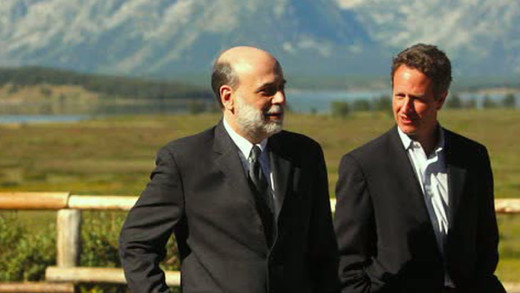
Inside Job provides a comprehensive analysis of the global financial crisis of 2008, which at a cost over $20 trillion, caused millions of people to lose their jobs and homes in the worst recession since the Great Depression, and nearly resulted in a global financial collapse. Through interviews with key financial insiders, politicians, journalists, and academics, Inside Job traces the rise of a rogue industry which has corrupted government and academia...
 46:18
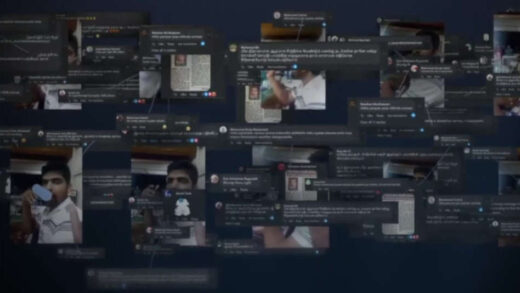
46:18Inside The Rage Machine highlights new whistleblowers, engineers, and managers from inside tech corporations to show how algorithms that spread disinformation, social harms, and contribute to violence erupting in the real world are knowingly deployed by the companies to have these harms and incentives built-in. Through the lived experience and documents obtained from employees such as Matt Motyl from Facebook, Ruofan Ding from TikTok, and Lisa Jennings Young from Twitter, Inside The Rage Machine exposes the system itself that thrives on outrage and division as part of its business model, with radicalisation, real-world violence and fractured societies as just some of the consequences of the system that has been built to manipulate how users think, feel and perceive the world.
 11:56
11:56Instafame is an exploration of a teenager's relationship with the concepts of success and fame through the lens of the screen, exemplified by the popular photo-sharing website 'Instagram.' The short film speaks volumes about this specific aspect of screen culture in that the notions of celebrity are self-reinforced in the closed-loop of the 'social networking' environment which is itself a purpose-built, commercially-mediated experience. So what happens to the notions of identity, friendship, personality and so on; in this space, and in the wider culture?
 1:18:32
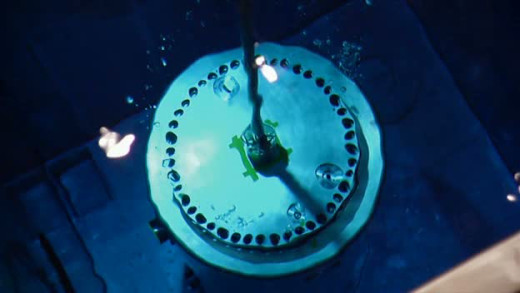
Every day, the world over, large amounts of high-level radioactive waste is placed in interim storages which are vulnerable to natural disasters, human-caused disasters, and societal changes. In Finland, the world's first 'permanent' repository is being hewn out of solid rock--a huge system of underground tunnels that must last hundreds of thousands of years. Once the waste has been dumped and the ground is full of this waste, the land is to be sealed off with concrete and "never be opened again." Or so the builders of this dump can hope. But can they ensure that? How is it possible to warn future generations of the deadly waste that's left behind by this culture? How do we prevent future generations from thinking they have found the 'pyramids' of our time, mystical burial grounds, or hidden treasures? Into Eternity is a film about the insanity of nuclear power and the consequences that have impacts for hundreds of thousands of years.
 1:18:57
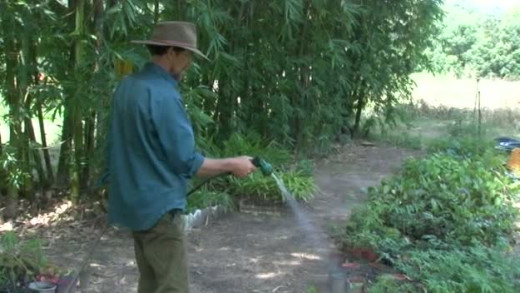
Introduction To Permaculture provides an overview of some practical examples of permaculture design, while following the interwoven themes of ethics, community, planning and ecology. The film follows Geoff Lawton who is a permaculture consultant, designer and teacher in Australia and throughout the world, demonstrating some of the possibilities of permaculture design and how it can transform the way we eat and live...
 18:19
18:19Invasion
Invasion is a short film about the Unist’ot’en camp, where Wetʼsuwetʼen First Nation peoples have been living on their traditional unceded territory since time immemorial, only to face repeated threats in the past decade by the Canadian government and corporations that are relentlessly pushing to install oil pipelines and other extractive industries on their land. Wetʼsuwetʼen feel they have a sacred duty to protect their land from harm and preserve it for future generations, and so formed the Unist’ot’en camp to resist the colonisers and their destructive ways. Located 1,200 km from Vancouver, the camp is on the shores of the Wedzin Kwah and mouth of Gosnell Creek, as a healing space for Indigenous people and settlers alike, and an active example of decolonisation and resistance.
 47:49
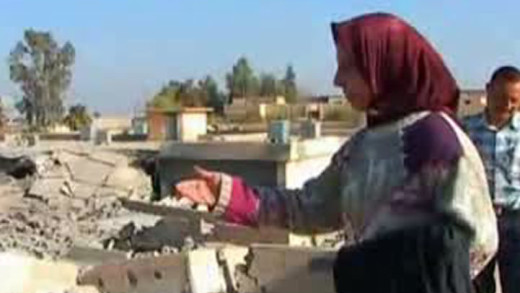
47:49The United States heralded many grandiose promises of freedom and equal rights as they invaded Iraq. But still years on from the invasion, the reality of everyday life for women inside Iraq is of course a different story. To make this film, two Iraqi women risk their lives to spend three months travelling all over the country with a camera to record the lives and experiences of women they meet. Iraq -- The Women's Story provides a compelling account of a life inside Iraq that is never seen on news bulletins...
 1:15:40
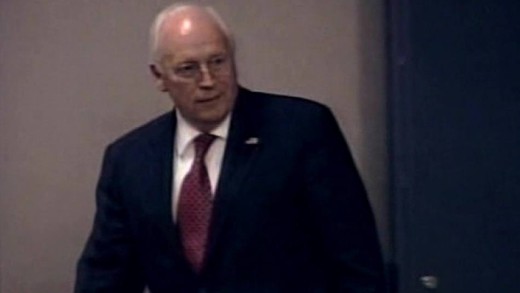
Produced while the invasion was in full swing, Iraq for Sale investigates some the many private contractors and consultants that were brought into to Iraq as part of the United States military machine. Four major contractors are profiled: Blackwater, K.B.R.-Halliburton, CACI and Titan, along with investigations of human rights violations, systemic misconduct, corruption, and profiteering. The film posits what damage is done to the 'average citizen' when corporations decide to wage war. For those in opposition to war and corporate power, the connection between the invasion of Iraq and the private corporations who profit from the fighting is plain to see. For those who still may not be so easily convinced, the film not only explores the questionable motivations of the corporate decision-makers whose wartime profiteering has affected the lives of countless soldiers and their families, not mention the lives of millions of civilians, but also the increasingly negative international reputation of the United States as a result.
 48:15
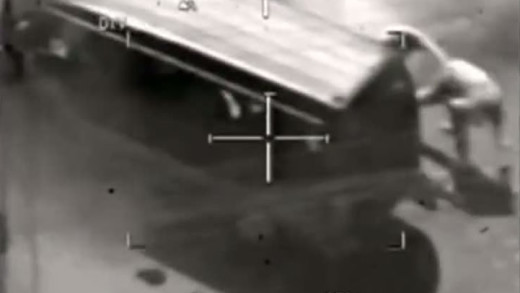
48:15Initially, the Americans claimed that they were not recording casualty figures. George Bush stated that America would do its "utmost to avoid civilian casualties". But now, details of the US Military themselves recording over 109,000 deaths have been released by Wikileaks -- over 66,000 civilian deaths; 176,000 civilians and others wounded. Iraq's Secret War Files reveals the true scale of civilian casualties, and examines evidence that after the "scandal" of Abu Ghraib, American soldiers continued to torture prisoners; and that US forces did not intervene in the torture and murder of detainees by Iraqi security services...
 54:00
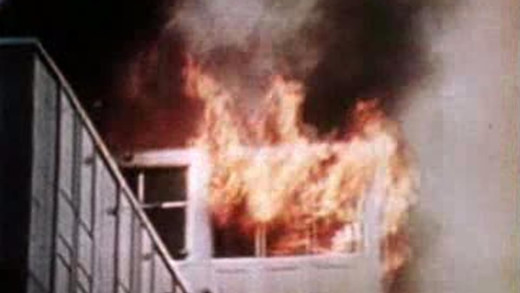
54:00Based on the immersive theatre production and experimental work by Adam Curtis, It Felt Like A Kiss is a visual exploration of the story of an enchanted world that was built by the rise of the United States as supreme power after the Second World War, and how those living in that dream world responded to this. Using extensive archive footage from throughout the 1960s, this experimental film sets out to explore the themes and consequences of how power really works in the world since the beginning of the post-world-war era, and how the perspective of the way society is organised since that time is a political product of the ideas of that time.
 1:03:33
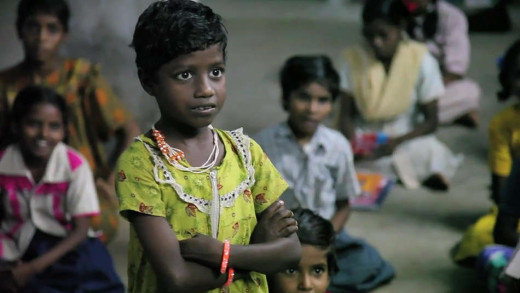
In India, China, and many other parts of the world today, girls are killed, aborted and abandoned simply because they are girls. The United Nations estimates as many as 200 million girls are missing in the world today because of this. Then, girls who survive infancy are often subject to neglect, and many grow up to face extreme violence and even death at the hands of their own husbands or other family members. The war against girls is rooted in centuries-old tradition and sustained by deeply ingrained cultural dynamics which, in combination with government policies, accelerate the oppression of women and girls. Shot on location in India and China, It's a Girl reveals these issues through the stories of abandoned and trafficked girls, of women who suffer extreme dowry-related violence, of brave mothers fighting to save their daughters' lives, and of other mothers who would kill for a son. Global experts and grassroots activists put the stories in context and advocate different paths towards change, while collectively lamenting the lack of any truly effective action against injustice.
Ithaka
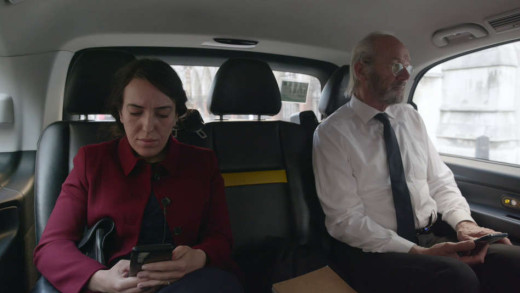
Ithaka depicts the incarceration of WikiLeaks founder Julian Assange through the experience of his wife Stella Assange and his father John Shipton. Julian Assange faces a 175-year sentence if extradited to the United States. His family members are confronting the prospect of losing Julian forever to the abyss of the justice system. This David-and-Goliath struggle is personal, and, with Julian's health declining in a British maximum-security prison, the clock is ticking. Through this behind-the-scenes view of the extradition hearing, the films grasp the personal cost paid by Julian and the true cost of truth.
 51:29
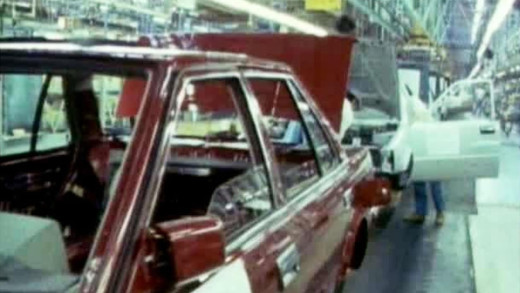
51:29Denied a sense of nationalism since the second World War, Japanese society slowly re-established itself as a 'corporate' society in the eyes of the west, with hi-tech industry and mass manufacturing. Japan, Behind The Mask reports on the contrast between this popular image and the stereotypes of Japanese culture, revealing the reality of the lives of ordinary people who do not fit the image; the extraordinary part played by women; and the subtle, yet forceful way the Japanese establishment is today reclaiming its nationalism...
 1:24:33
Jesus Camp follows several young children as they prepare to attend an event called 'Kids on Fire,' a Christian summer camp run by Becky Fischer. Through interviews with Fisher, the children, and others, Jesus Camp illustrates the unswerving belief of the faithful—a housewife and home-schooling mother tells her son that creationism has all the answers; footage from inside the camp shows young children weeping and wailing as they promise to stop their sinning; child after child is driven to tears. These scenes are contrasted with clips from another Christian radio host who is appalled by such happenings. Are these children being brainwashed?
 56:41
56:41For many years, there has been widespread speculation, but very little consensus, about the relationship between violent video games and violence in the real world. Joystick Warriors draws on the insights of media scholars, military analysts, combat veterans, and gamers themselves, to examine the latest research on the issue. By setting its sights on the wildly popular genre of first-person shooter games, Joystick Warriors exploring how the immersive experience these games offer link up with the larger stories this culture tells about violence, militarism, guns, and manhood. It also examines the gaming industry's longstanding working relationship with the United States military and the arms industry, showing how the games themselves work to sanitise, glamorise, and normalise violence while cultivating regressive attitudes and ideas about masculinity and militarism.
 1:30:17
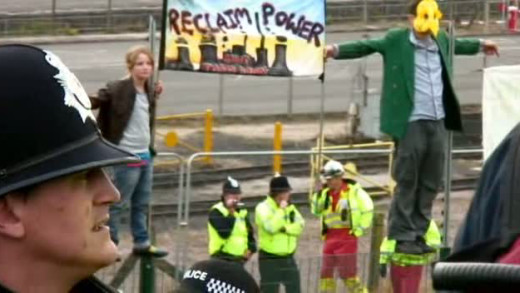
Just Do It -- A Tale of Modern-Day Outlaws follows a group of activists in the UK to document their protests and actions over one year dealing with issues around climate change. Demonstrations at Copenhagen’s 2009 G20 summit and at the Drax coal power station in North Yorkshire, England, are just some of the events documented.
 1:59:21
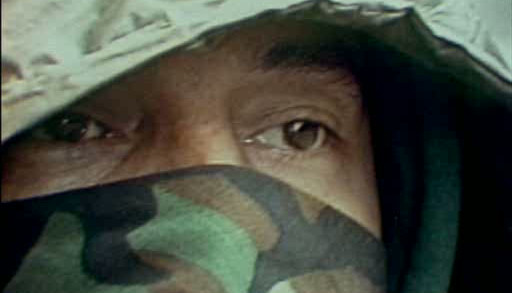
Kanehsatake: 270 Years of Resistance documents the 'Oka Crisis' of 1990 in which the government of Oka, Canada, pushed for plans to develop a private golf course and new luxury housing on sacred indigenous land. The film captures the events as they unfold, from the beginnings as frivolous government 'negotiations' to the resulting siege by the Canadian Army and local police...
 52:04
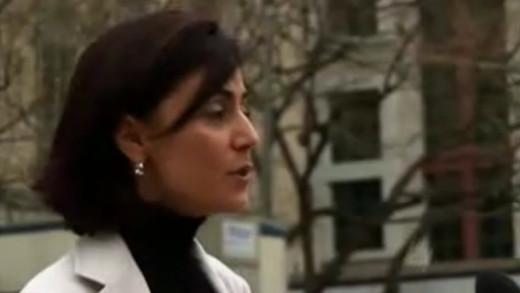
52:04In the wake of September 11, 2001, Sibel Edmonds is approached by the FBI. As an American of Iranian and Turkish origin, Edmonds' linguistic skill-set makes her a valuable asset to the Language Services Unit, where she spends months translating high-security clearance documents. One day shortly after reporting the possible infiltration of her unit by Turkish spies to her supervisors and their supervisors, Edmonds' world is turned upside-down. Instead of seeing her colleague become the target of an investigation, she is interrogated, then unceremoniously fired and warned not to pursue her claims any further as she would be watched and listened to. Kill The Messenger documents both Edmonds' personal struggle to expose the criminality uncovered while at the FBI, and also the September 11 tied 'secret' itself--the network of nuclear black-market, narcotics and illegal arms trafficking activities.
 42:25
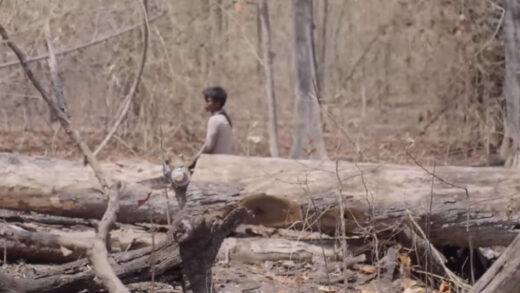
42:25Killing For Wood is a short documentary about the illegal timber trade. High returns and low rates of prosecution attract organised crime. In 2023 alone, 120 million tons of timber in Europe had "no official certificate of origin." At the same time, deforestation is one of the biggest drivers of the climate catastrophe. It's estimated that half of Romania's trees are being cut down illegally, while the organisation Agent Green is battling with this on the front-lines. Founder Gabriel Paun was almost beaten to death in 2015 by members of the timber mafia. At least six forest rangers have been murdered in Romania over the past decade. The European Union warned Romania back in 2020 that it wasn’t taking adequate steps to protect its forests. But thus far, there have been no follow-up measures. Interpol estimates that the illegal timber market is worth up to 152 billion US dollars a year. Environmental crime is the third largest criminal sector in the world, after drugs and counterfeit goods.
 1:34:03
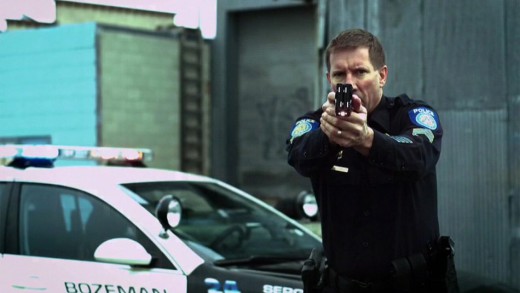
In the early 2000s, two brothers garnered tremendous wealth when they started a company selling so-called "non-lethal" taser weapons, which quickly saturated police agencies and reinforced a culture of trigger-happy police officers. But instead of "saving lives" as was the catch-cry of the taser, and the company, the weapons were instead commonly used for pain compliance, and lead to a spurious string of deaths. The company didn't back down. They insisted, despite mounting evidence to the contrary, that their weapon was safe and not at fault—not even a contributing factor—in the killings. Killing Them Safely delves into this troublesome mindset and that of the company, as well as the social implications of such weapons in a problematic police culture.
 45:44
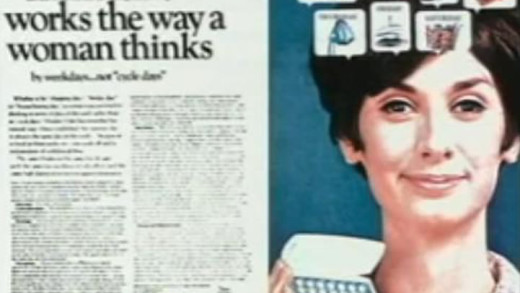
45:44Author and activist Jean Kilbourne analyses the depiction of women in advertising and media by decoding a large array of print and television ads. What is revealed is a torrent of stereotypes; sexist and misogynistic images and messages; laying bare a world of frighteningly thin women in positions of subservience; collectively, the restrictive code of femininity that works to undermine girls and women in the real world. By examining these messages, Killing Us Softly asks us to take advertising seriously, and to think critically about its relationship to sexism, eating disorders, violence against women, popular culture, and contemporary politics.
 1:30:07
King Corn follows two college friends curious about the food system, as they decide to have a shot at farming an acre of corn. In the process, the two examine the role that the increasing production of corn has had across not only on the concepts of industrial food, but the health of the land, the health of the environment, and the health of people. The film spotlights the role of government subsidies which make huge monocrops of corn possible, which itself has—as industrial agriculture—a catastrophic ecological impact, but in-turn drives factory-farming of animals and other atrocities such as the production of high-fructose corn syrup which is saturated throughout industrial food, not least, fast-food. We see how this industrialisation has eliminated the family farm and local food production—things which are increasingly impossible in this brutal arrangement of corporate power.

Kingdom of Plants reveals a whole new dimension in the lives of plants, from the most bizarre to the most beautiful. Using time-lapse and pioneering techniques in macro photography, naturalist David Attenborough traces plants from their beginnings on land to their vital place in nature today. We also move from our time scale to theirs, revealing the true nature of plants as creatures that are every bit as dynamic as animals. Attenborough discovers a microscopic world that's invisible to the naked eye, where insects feed and breed, where flowers fluoresce and where plants communicate with each other and with animals using scent and sound.
 1:54:03
LA ’92
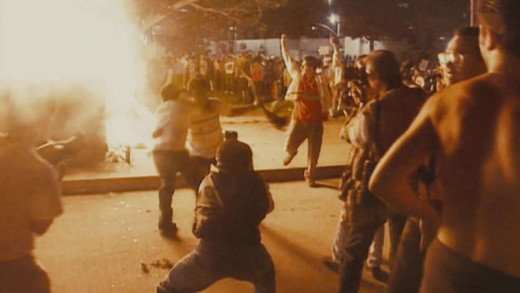
Consisting entirely of archival footage, LA '92 chronicles the 1992 Los Angeles riots, 25 years after they have passed. It includes film and video from the 1965 Watts Riots, the 1973 election of Tom Bradley, the 1978 promotion of Daryl Gates to Chief of LA Police, the shooting of Latasha Harlins, the Rodney King videotape, and the subsequent riots and violence that erupted after the acquittal of the officers involved in King's beating.
 58:22
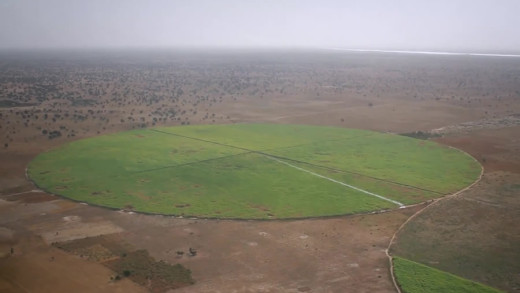
58:22Rich, land-hungry nations like China and Saudi Arabia are rushing to Mali, West Africa, to grab up land for large agribusiness investments. Malian peasants do not welcome these developments however, seeing this as yet another manifestation of imperialism. Indeed local farmers themselves are being forced off the land by their own governments to allow foreign interests in, promising large sums of money. Land titles are denied, lands are cleared and families moved on. Though as Mali experiences a military coup and developers are frightened off, the situation improves for local farmers...
 1:30:13
Last Train Home
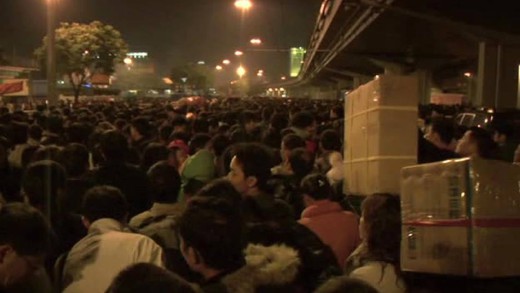
Every spring in China, 130 million migrant workers exit the cities and travel back to their home villages for the New Year's holiday. This exodus is the world's largest human migration, a spectacle that demonstrates the world of a rapacious acculturating industrialism against the life of a rural past. Last Train Home follows the lives of one family who have embarked on the journey of hard labour and home again for almost two decades. One story of many of the human cost of China's ascendence as an economic superpower.
 1:36:49
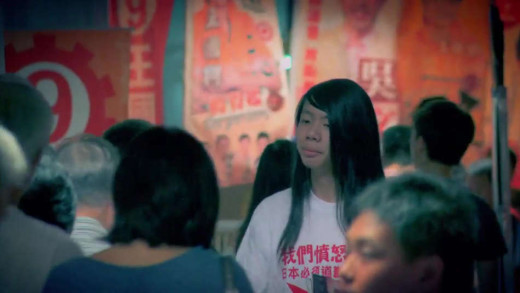
Filmed over 18 months, Lessons in Dissent is a kaleidoscopic portrait of a new generation of Hong Kong democracy activists. 18-year-old Joshua Wong dedicates himself to stopping the introduction of National Education. His campaign begins to snowball when an interview goes viral on social media. With the new school year fast approaching, a showdown with the government seems inevitable. So with a microphone in hand, and still in his school uniform, he takes to the streets to protest, along with 120,000 people in support. Meanwhile, former classmate Ma Jai fights against political oppression on the streets and in the courts. Having dropped out of school and dedicated himself to the movement, he endures the persecution suffered by those not lucky enough to be protected by the glare of the media. Lessons in Dissent catapults the viewer on to the streets of Hong Kong, confronting the viewer with the country's rising energy of dissent.
 2:23:49
Let It Fall
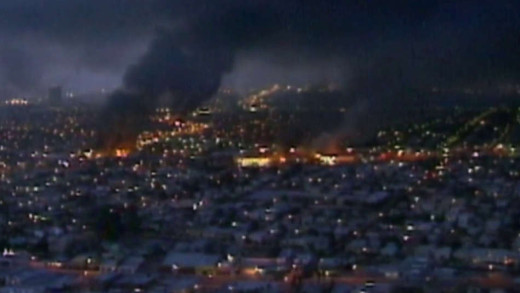
Let It Fall: Los Angeles 1982–1992 is a deep examination of a tumultuous decade in the city of Los Angeles, United States, leading up to the events of April 29, 1992, when the verdict was announced in the Rodney King case. The film traverses the conflicts between law enforcement and the black community to look at tensions across the city as a whole, and traces the roots of civil unrest to a decade before uprisings, as told through interviews with eyewitnesses and people directly involved in the events from diverse neighbourhoods across the city, including black, white, Hispanic, Korean, and Japanese Americans.