 1:49:01
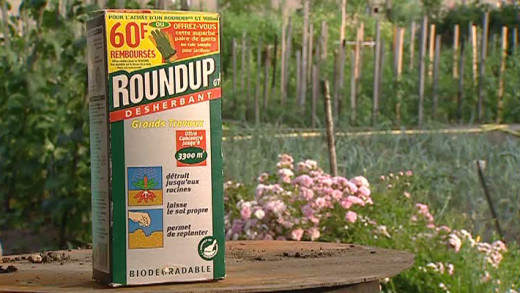
Monsanto corporation seems to be stopping at nothing: Controlling corn, wheat, soy beans, canola, mustard, okra, bringe oil, rice, cauliflower... Once they have established the norm, they aim to claim all these seeds as their intellectual property, royalties will be collected and enforced by patent law. If Monsanto controls seed, they control food and they know it. It's strategic. It can be more devastating than bombs, it can be more powerful than guns. This is their way to control the populations of the world, and as The World According to Monsanto reveals, it's governments in the cross-hairs also.
 1:34:00
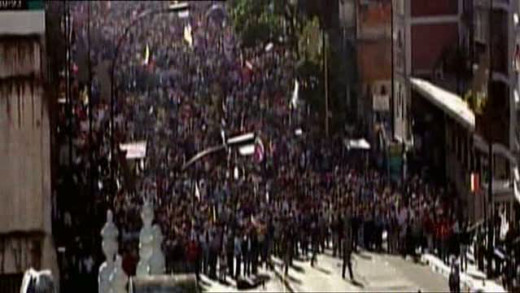
Set in Latin America and the US, War on Democracy explores the historic and current relationship of Washington with countries such as Venezuela, Bolivia and Chile. John Pilger examines the role of Washington in America's manipulation of Latin America during the last 50 years leading up to the struggle by ordinary people to free themselves from poverty and racism...
 26:51
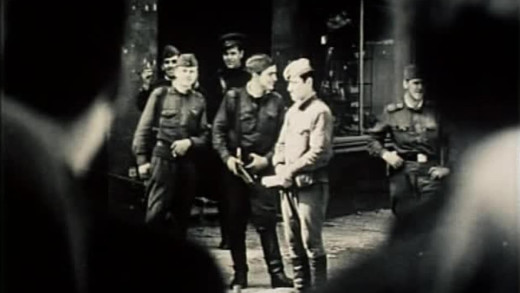
26:51A Faraway Country is an examination of the Czech underground movement known as the Charter 77--an informal civic initiative in communist Czechoslovakia from 1976 to 1992, part of the Communist Soviet bloc. The film shows interviews with members of Charter 77, and others, describing first-hand the totalitarian communist regime, and their response to it.
 1:34:02
In Mediastan, an undercover team of journalists drive across central Asia interviewing editors of local media outlets to publish secret US diplomatic cables that were provided to WikiLeaks in 2010. Success is varied. And so, after regrouping with Julian Assange in England, questioning the editor of the Guardian, and obtaining candid footage of the New York Times editor and its publisher Arthur Sulzberger, Mediastan closes by leaving the viewer with an informative first-hand overview of the machinations of mainstream media. By venturing into the minds—and actions—of the people and institutions who shape the news, Mediastan shows the system for what it's worth, and reveals its true motivations...
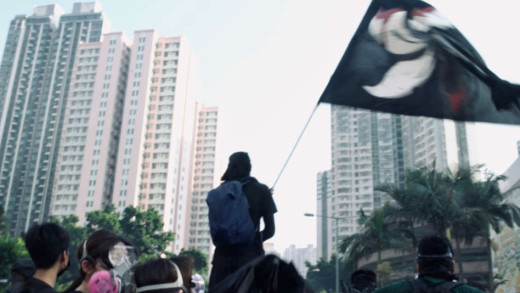 1:35:29
When Hong Kongers took to the streets to protest a controversial extradition bill proposed by China in 2019, it exposed the tensions long brewing in the city. Over two days of conflict, Hong Kong Moments follows a pro-democracy protester, a tea-shop owner, a paramedic, a cab driver, a police officer, and two politicians with conflicting politics as the demonstrations shoehorn the political into the personal. On September 21, 2019, protestors from three districts join forces, resulting in unprecedented violence. Just 10 days later on October 1, the National Day of the People’s Republic of China, previously undecided onlookers show their stripes. Thoughts transform into action in this demonstration of how mercurial and personal Hong Kong's politics have become.
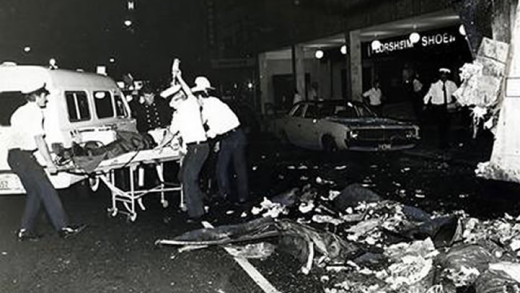 58:37
58:37In 1978, Australia was shocked by the explosion of a massive bomb placed in a rubbish bin outside the Sydney Hilton Hotel in NSW. The perpetrators were never found. However, evidence that the Australian security and intelligence forces may have been responsible resulted in the NSW State Parliament unanimously calling for an inquiry in 1991 and then again in 1995. The Federal Government vetoed any inquiry. No investigation was held. The government then set-up the Australian Federal Police and increased support for "anti-terrorist measures"...
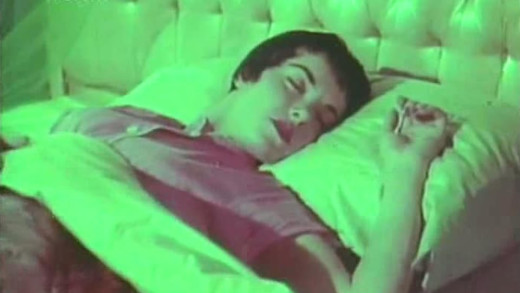
Pandora’s Box
Pandora's Box -- A fable from the age of science, is a six part series examining the consequences of political and technocratic rationalism, tying together communism in the Soviet Union, systems analysis and game theory during the Cold War, economy in the United Kingdom during the 1970s, the insecticide DDT, Kwame Nkrumah's leadership in Ghana during the 1950s and 1960s and the history of nuclear power.
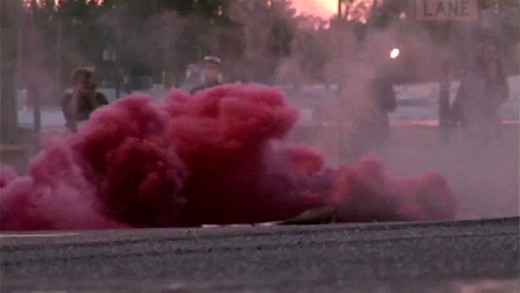 1:12:45
Resist -- The Aftermath Of The RNC8 follows activists Rob Czernik, Garrett Fitzgerald and Luce Guillen-Givins; attorney Robert Kolstad, volunteers/arrestees from the community, and others impacted by the actions against the Republican National Convention in 2008. Taking a look back over the last year, the video shares some helpful advice for activists organising under state repression...
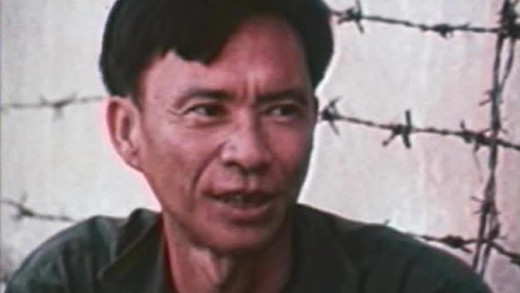 51:13
51:13Cambodia -- Year One investigates the effect of aid to Cambodia and the extent of the country's so-called new found stability as in 1980. The film portrays Cambodia on a brink of famine and cultural annihilation, but in the process of recovery, also showing the continued support for the Khmer Rouge regime by China and the United Nations.
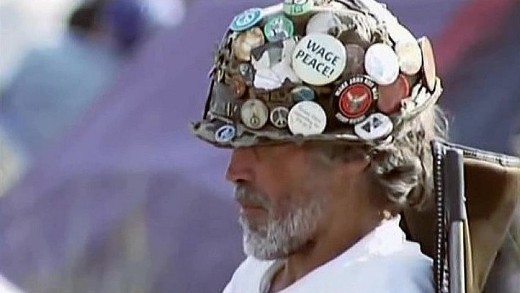 49:54
49:54War Matters
War Matters chronicles a decade of anti-war protest in Britain through the story of veteran peace campaigner Brian Haw, who camped in Parliament Square for over 10 years in protest against the UK government's policies in the Middle East. Brian began his campaign against war on 2nd June 2001, initially in protest of the sanctions against Iraq. After the September 11 attacks in the United States later on that year, Brian's campaign took on a whole new level of importance. War Matters documents this shift by examining the larger issue of the British arms trade and the repercussions of the Iraq and Afghanistan wars around the world, as civil rights are being curtailed in so-called democracies. Where does democracy end and tyranny begin?
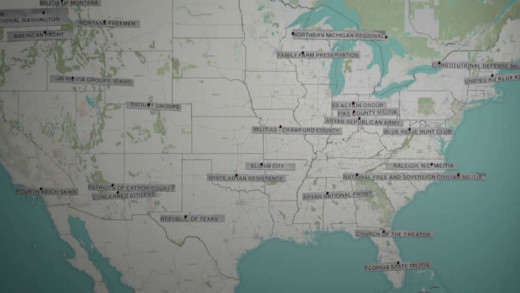
On April 19, 1995, Timothy McVeigh, a former soldier deeply influenced by the literature and ideas of the radical right, parked a truck with a five-ton fertiliser bomb in front of the Alfred P. Murrah Federal building in Oklahoma City. Moments later, 168 people were killed and 675 were injured in the blast. Oklahoma City traces the events that led McVeigh to that day from the perspective of the survivors, first-responders, investigators, and journalists who covered the events. The film provides an exploration of the convergence of various conservative religious movements and white supremacist militias that rose to prominence in the early 1990s, and were catalysed by the actions of government during that time.
 1:32:27
Why was the the electric vehicle made by General Motors destroyed in the late 1990s? Why did it receive only limited commercialisation despite being hugely popular? It was among the fastest, most efficient production cars ever built. It ran on electricity, produced no exhaust and catapulted American technology to the forefront of the automotive industry. The lucky few who drove it never wanted to give it up. So why did General Motors suddenly crush its fleet of EV-1 electric vehicles in the Arizona desert? Was it because of a lack of consumer confidence or conspiracy?
 52:54
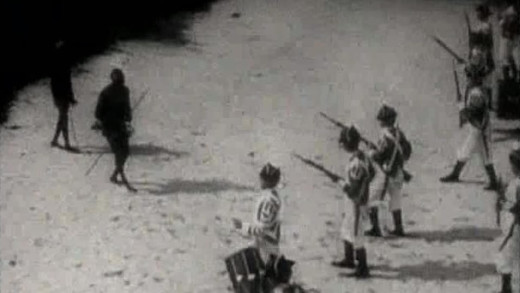
52:54The secret history of Australia is a historical conspiracy of silence. Written history has long applied selectivity to what it records, largely ignoring the shameful way that the Indigenous people were, and continue to be, treated...
 1:19:45
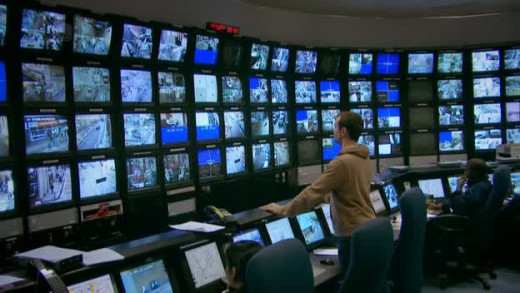
Film maker David Bond lives in one of the most intrusive surveillance states in the world -- Britain. When David receives a letter stating that both he and his daughter are amongst the 25 million residents whose details have been lost by the government in a massive data breach, David sets out to investigate some potential impacts of such data being lost in a society of mass surveillance. Erasing David documents the test where David hires two private detectives to track him down as he chooses to 'disappear' for 30 days to see if he can avoid being caught amongst the vast data trails generated by modern society...
 52:04
52:04In the wake of September 11, 2001, Sibel Edmonds is approached by the FBI. As an American of Iranian and Turkish origin, Edmonds' linguistic skill-set makes her a valuable asset to the Language Services Unit, where she spends months translating high-security clearance documents. One day shortly after reporting the possible infiltration of her unit by Turkish spies to her supervisors and their supervisors, Edmonds' world is turned upside-down. Instead of seeing her colleague become the target of an investigation, she is interrogated, then unceremoniously fired and warned not to pursue her claims any further as she would be watched and listened to. Kill The Messenger documents both Edmonds' personal struggle to expose the criminality uncovered while at the FBI, and also the September 11 tied 'secret' itself--the network of nuclear black-market, narcotics and illegal arms trafficking activities.
 1:32:33
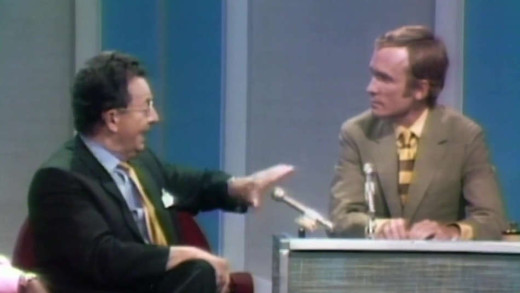
All Governments Lie: Truth, Deception, and the Legacy of I.F. Stone looks at an array of award-winning filmmakers who subscribed to I. F. Stone's newsletter in their teens, revealing a new wave of independent, investigative, adversarial journalists following in Stone's footsteps. Reflecting on his work during the era of McCarthyism, a chorus of independent journalists also reflect on today where giant media conglomerates are reluctant to investigate or criticise government policies--particularly on defence, security and intelligence issues. With government deception rampant, and intrusion of state surveillance into our private lives never before more egregious, independent journalists tell their story of being inspired by the iconoclastic Stone, whose fearless, independent reporting from 1953 to 1971 filled a tiny 4-page newsletter. Stone is little known today, but All Governments Lie reveals the profound influence he had on contemporary independent journalism.
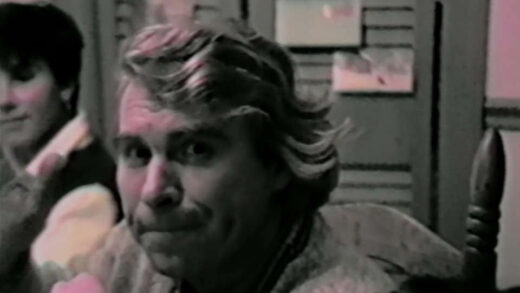
A documentary series that explores an investigation led by freelance writer Danny Casolaro on what he called "The Octopus," an elaborate conspiracy network involving the United States government and its covert operations. The series stems from the circumstances around Casolaro eventually being found dead in a hotel room. Researcher Christian Hansen revisits Casolaro's work and questions whether Casolaro actually died by suicide. The series tracks Casolaro investigating the circumstances around Inslaw's PROMIS software, a database system built to to aid law enforcement and legal prosecutors in tracking court cases, which the Department of Justice began using, stopped paying for, and then was later accused of stealing. The Iran-Contra affair also features, and the 1980 'October Surprise', where Ronald Reagan's presidential campaign covertly negotiated with Iran to delay the release of American hostages until after the election to influence its outcome. Through a cast of shady characters, the corporate world, spies, and interesting real and theorised information, The Octopus Murders is a murder mystery wrapped in major 20th-century scandals.
 1:39:04
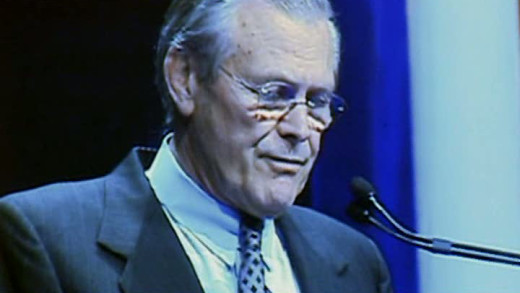
Is American foreign policy dominated by the idea of military supremacy? Why We Fight examines America's policies regarding making war, most recently the Iraq invasion and what is termed "the Bush doctrine" that includes pre-emptive strikes. This policy has been in the works for many years on reflection of the past wars of the 20th century alone. In this film, a variety of people are asked "Why We Fight?" with a variety of answers, followed by a look at today's U.S. military industrial complex via interviews with individuals involved with it...
 56:40
56:40In the 1960s and 70s, British governments conspiring with American officials, secretly tricked into leaving and then expelled, the entire population of the Chagos islands in the Indian Ocean as to make way for a major American military base. Indeed from Diego Garcia, American military planes have since bombed Afghanistan and Iraq. Stealing A Nation documents the story of the islanders who were dumped in the slums of Mauritius and in the words of the British officials who left a 'paper trail' of what the International Criminal Court now describes as 'a crime against humanity'...
 26:37
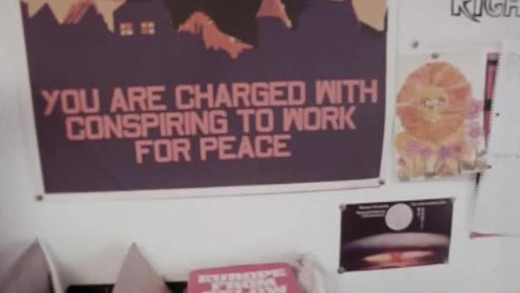
26:37A Nod And A Wink reviews the use of vague Conspiracy laws in Britain from 1975, laws which are much in the same as those used in police states such as Brazil and the Soviet Union to suppress political and moral dissent. This film raises and addresses the serious questions about the way the legal system works in Britain--and indeed elsewhere...
 1:30:07
King Corn follows two college friends curious about the food system, as they decide to have a shot at farming an acre of corn. In the process, the two examine the role that the increasing production of corn has had across not only on the concepts of industrial food, but the health of the land, the health of the environment, and the health of people. The film spotlights the role of government subsidies which make huge monocrops of corn possible, which itself has—as industrial agriculture—a catastrophic ecological impact, but in-turn drives factory-farming of animals and other atrocities such as the production of high-fructose corn syrup which is saturated throughout industrial food, not least, fast-food. We see how this industrialisation has eliminated the family farm and local food production—things which are increasingly impossible in this brutal arrangement of corporate power.
 1:50:13
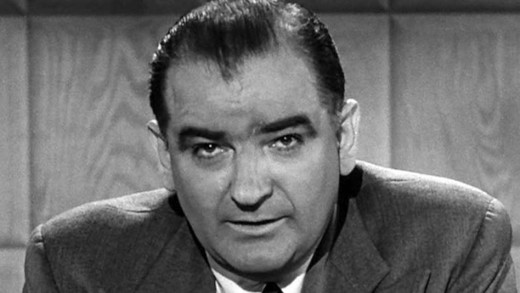
McCarthy chronicles the rise and fall of Joseph McCarthy, the United States senator who came to power after a stunning victory in an election that no one thought he could win. Once in office, he declared that there was a vast conspiracy threatening the United States--not emanating from a rival superpower, but from within. Then, without restraint or oversight, he conducted a vast crusade against those he accused of being "enemies of the state," a chilling campaign marked by groundless accusations, bullying, intimidation, grandiose showmanship, and cruel victimisation. With lawyer Roy Cohn at his side, McCarthy belittled critics, spinning a web of lies and distortions while spreading fear and confusion. After years in the headlines, he was brought down by his own excesses and overreach.
 1:27:44
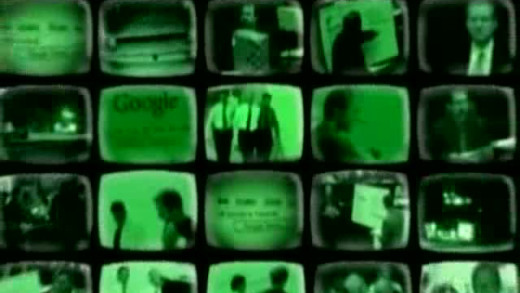
Every day, escalating technologies are being used to monitor all of us as populations with unprecedented scrutiny—from driving habits to workplace surveillance, as shoppers, as consumers, as citizens. We are all increasingly being observed and analysed. Internet searches are monitored and used as evidence in court, the police track our movements on the road, governments collect our DNA, fingerprints and iris scans, corporations assemble huge databases for profiling and selling data, while governments collude with such lucrative businesses—for example, Acxiom, Lexis Nexis and ChoicePoint—to gain access to vast volumes of information about people and the machinations of modern society. What will it take for us to stop this system before it boils over into a full-blown technocratic authoritarian regime?

The Living Dead: Three Films About the Power of the Past is a series of films that investigate the way that history and memory (both national and individual) have been manipulated and distorted by politicians and others for various means of control...
 50:30
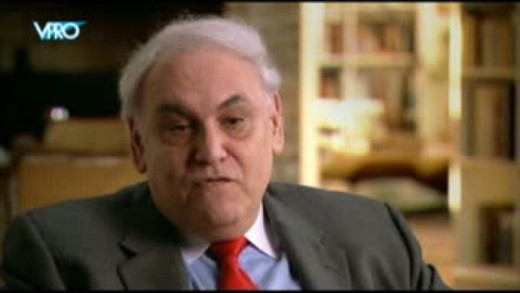
50:30For many years now the American foreign policy has been characterized by the strong tie between the United States and Israel. Does the United States in fact keep Israel on its feet? And how long will it continue to do so?
 52:01
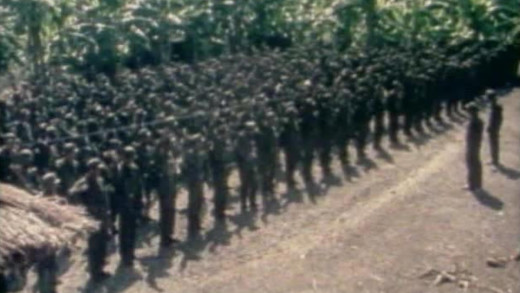
52:01John Pilger once again travels to Cambodia to report on the brutality and murderous political ambitions of the Pol Pot and Khmer Rouge totalitarian regime which brought genocide and despair to the people of Cambodia; while neighbouring countries, including Australia and the United Nations shamefully ignored the immense human suffering and unspeakable crimes that bloodied the country...
 26:48
26:48The United States proudly self-identifies as the major purveyor of peace and democracy across the world. But does this perception of self match up to the actual policies and history of military actions throughout recent decades? Are the United States' seemingly constant wars of aggression befitting to achieving peace? These are some of the central dichotomies addressed in this short film In Whose Interest? We see internal documentation of the US involvement in countries like Vietnam or Guatemala which indicate that the main factors motivating American foreign policy are clearly economic concerns. In Guatemala, the United States overthrows a democratically elected government to install a military-backed dictatorship that is suitable to the American United Fruit corporation. A similar pattern emerges in Vietnam, El Salvador and East Timor. Perhaps most oppressive yet is US policy in the Middle East, where the US provides Israel with more than $3 billion per year in military assistance—more aid than they give to the entire continent of Africa. We see how American policy is determined by the corporate sector, tightly linked to the state, which makes decisions in their own self-interest—in stark opposition to the rhetoric of democracy...
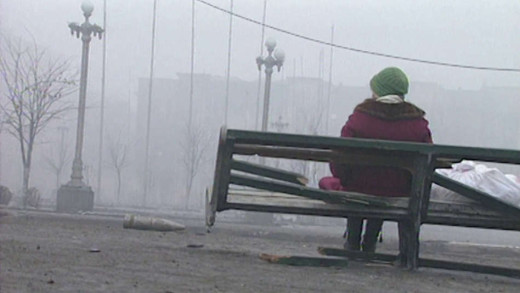
Since the late 1980s, BBC news crews have filmed all across the Soviet Union and Russia, but only a tiny portion of their footage was ever used for news reports. The rest was left unseen on tapes in Moscow. Filmmaker Adam Curtis obtains these tapes and uses them to chronicle the collapse of the Soviet Union, the rise of capitalist Russia and its oligarchs, and the effects of this on Russian people of all levels of society, leading to the rise to power of Vladimir Putin, and today's invasions of Ukraine. The films take you from inside the Kremlin, to the frozen mining cities in the Arctic circle, to tiny villages of the vast steppes of Russia, and the strange wars fought in the mountains and forests of the Caucasus.