 25:03
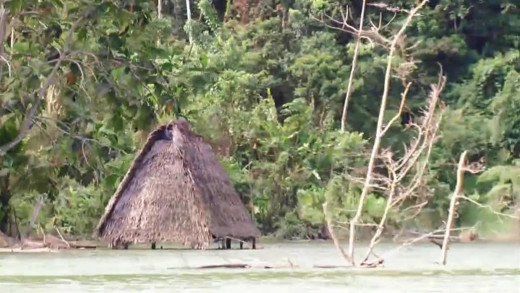
Away from its busy capital city and famous canal, Panama is one of the world's most ecologically diverse nations. Yet huge new hydroelectric dam projects now underway are seeing pristine rivers damned and virgin rainforest flooded. The government says it is vital for 'economic growth', with international corporate interests rushing into the country, and even the United Nations awarding 'carbon credits' on the basis that the resultant energy will be "sustainably produced". But for the indigenous Ngabe people--whose homes are vanishing under water--it is a catastrophe, and they are fighting back...
 49:54
War Matters
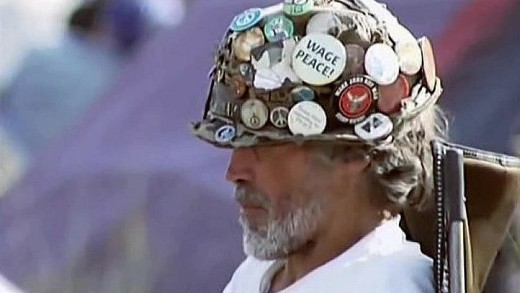
War Matters chronicles a decade of anti-war protest in Britain through the story of veteran peace campaigner Brian Haw, who camped in Parliament Square for over 10 years in protest against the UK government's policies in the Middle East. Brian began his campaign against war on 2nd June 2001, initially in protest of the sanctions against Iraq. After the September 11 attacks in the United States later on that year, Brian's campaign took on a whole new level of importance. War Matters documents this shift by examining the larger issue of the British arms trade and the repercussions of the Iraq and Afghanistan wars around the world, as civil rights are being curtailed in so-called democracies. Where does democracy end and tyranny begin?
 57:45
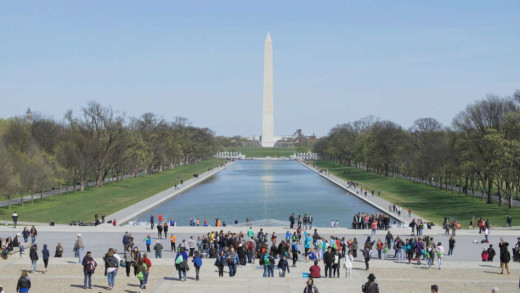
How can we make political change if peaceful demonstration is not effective and violence only brings more violence? War/Peace posits this question by reintroducing two surviving figures from the Weather Underground movement of the late 1960s, Bernardine Dohrn and Bill Ayers. Coming from the hippy counterculture, the Weather Underground was a radical militant organisation, with revolutionary positions characterised by the Black Power and civil rights movements, as well as opposition to the Vietnam War. In 1970, the group issued a "Declaration of a State of War" against the United States government, with the goal to overthrow the government and end United States' imperialism, culminating in a bombing campaign targeting government buildings along with several banks. War/Peace rewinds to the past to draw out the complexity of these political struggles, and what went wrong, while drawing parallels to the struggles of today, where a lot has changed, but a lot has also remained the same.
 49:51
We Are Traffic
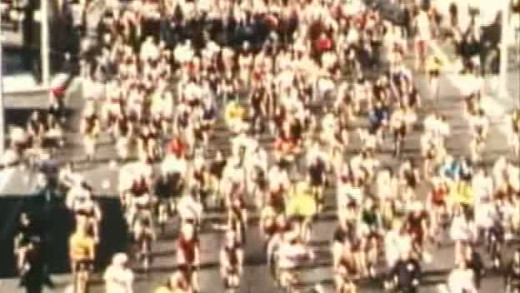
We Are Traffic chronicles the history and development of the "Critical Mass" bicycle movement -- one of the most dynamic social political movements of the apathetic 90s. In over 200 cities in 14 different countries, Critical Mass has now become a monthly ritual of reclaiming the streets by bicycle activists riding en masse...
 1:41:20
Told by the activists and leaders who live and breathe for justice, Whose Streets? is an unflinching look at the uprising in Ferguson in the United States after unarmed teenager Michael Brown is killed by police and left lying in the street. Grief, long-standing racial tensions, and renewed anger bring residents together to hold vigil, and protest the latest tragedy in a long history of police brutality. Empowered parents, artists, and teachers from around the country come together to act and support. As the national guard descends on Ferguson with military grade weaponry, young community members become the torch-bearers of a new generation of resistance. Whose Streets? is a powerful battle cry from a generation fighting, not only for their civil rights, but for the right to live.
 27:01
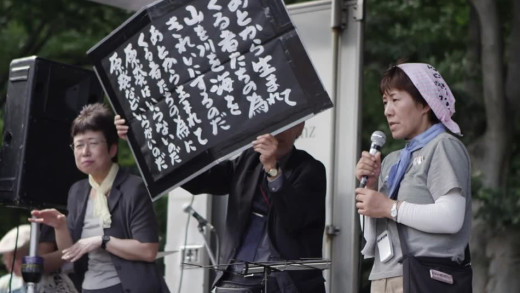
Ever since three reactors went into meltdown at the Fukushima Daiichi Nuclear Power Plant in 2011; a broad, disparate, anti-nuclear movement is growing in Japan. Nowhere is that more apparent, perhaps, than in Fukushima prefecture, where a group of local women boldly protest the deafening silence of the Japanese government over the worst nuclear accident of this century. Largely ignored by their own media, these brave women brush aside cultural shyness and share their honest views on the state of the cleanup, the cover-ups, the untruths and the stagnant political climate in today’s Japan...
 1:27:20
Yintah documents the Wet'suwet'en resistance to Canadian colonialism and the Coastal GasLink pipeline pushed by TC Energy. The film follows Howilhkat Freda Huson and Sleydo' Molly Wickham as the Wet'suwet'en people occupy and protect their unceded lands from fossil fuel companies.
 1:17:28
This film profiles Howard Zinn, historian, political scientist and author, who tells us the personal stories about more than thirty years of fighting for social change, from teaching through to recent protests against war. A former bombardier in World War II, Zinn emerged in the civil rights movement in the United States as a powerful voice for justice. Although a fierce critic, Zinn gives the viewer inspiration in that by learning from history and engaging politically, we can each do our part to make a difference in the world.
 54:40
The day the North American Free Trade Agreement (NAFTA) comes into effect, several thousand soldiers take over half the state of Chiapas, declaring a war against the global corporate power they say rules Mexico. They call themselves the Zapatista National Liberation Army. Zapatista shows this uprising, the story of a peasant rebellion, armed and up against the first world military. It is the story of a movement that transformed Mexican and international political culture.