Films about social control
 1:25:32
What does it mean when so-called Artificial Intelligence systems increasingly govern all of our civil rights and social interactions? What are the consequences for the people AI systems are biased against? When MIT Media Lab researcher Joy Buolamwini discovers that many facial recognition technologies do not accurately detect dark-skinned faces nor properly detect the faces of women, she delves into an investigation which reveals widespread bias in the algorithms that already drive much of the modern world. As she uncovers, these systems are not neutral, and are already having severe social and political impacts. Coded Bias documents this investigation, and the women who are leading the charge to ensure civil rights are protected from the relentless inertia of technology.
 1:33:21
The Social Dilemma brings together former product directors and designers of Facebook, Google, Instagram, Pintrest, Twitter, and so on, to reflect on their creations and face questions about the age of addiction, information manipulation, and algorithmic social control they’ve ushered in. The creators speak openly about how they themselves took part in this co-optation of society, either naively or with malignant indifference, by designing websites in such a way to influence and manipulate billions of people for corporate interests by using deep psychological and addictive triggers in the human mind. Detailed explanations about how this can play out in the real world are illustrated through dramatisations, which are also expanded upon by experts in psychology, technology, and social studies. The result is a sobering call for emergency damage control, to undo the massive harm that technology companies have unleashed on society unrestrained for the past several decades, at a time of rapid social unravelling.
 1:39:18
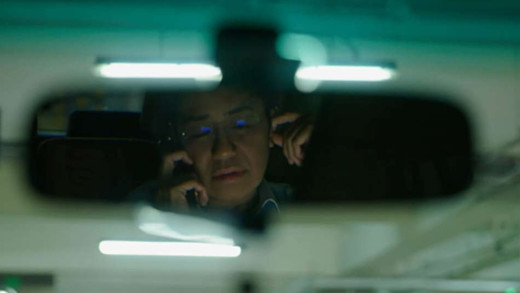
A Thousand Cuts is a timely film about modern-day journalism and freedom of the press inside the Philippines where the political space has been usurped by social media disinformation campaigns, celebrity propaganda spectacle, and direct organised political violence. The film comes as the world awaits the verdict of the case against of Maria Ressa, the CEO and founder of the news network Rappler, who has been vocal about holding president Rodrigo Duterte accountable for his government’s much-criticised and violent “war on drugs.” In what is a salient trend of our time, A Thousand Cuts examines the disinformation campaigns and the crackdown on the media, while journalists Maria Ressa and her team place the tools of their trade—and their freedom—on the line in defence of truth and democracy.
 49:39
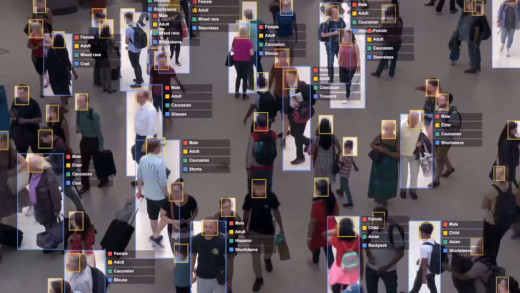
49:39In 2018, Professor Shoshana Zuboff published The Age of Surveillance Capitalism, a monumental book about the new global economy, where the biggest technology corporations extract, manipulate, and trade our personal information, data about our lives, and data about our personalities, on a scale never before possible. How did this happen? In The Big Data Robbery, Zuboff starts with the volatile dot-com boom and bust of the late 1990s and 2000s. How did Google, a company created during that time, survive the bursting of the Internet bubble? Founders Larry Page and Sergey Brin discover that the “residual data” that people leave behind in their searches on the Internet is very precious and tradable, and begin as one corporation of many, the Big Data Robbery, extracting and building huge datasets about people. Zuboff takes the lid off Google and Facebook to reveal a merciless form of capitalism in which the citizen itself now serves as a raw material.
 1:53:50
AI, or Artificial Intelligence, is spouted as the ability of machines to “think” [sic] at a speed and depth far beyond the capacity of any human. Proponents of these digital technologies claim their systems are used in ways that are beneficial for society. But as we see, the current use of AI isn’t necessarily aligned with the goals of building a better society. There still remain escalating concerns about labour, the future of work, privacy, the surveillance society, and social control—all valid criticisms that go back many decades—while the rivalry for technological supremacy between the United States and China mirrors the dynamics of the cold war. In the Age of AI is an investigation that touches on these areas, providing a platform to ask fundamental questions about unrestrained technological escalation.
 1:53:07
The Great Hack is an inside account of the company Cambridge Analytica, which used vast amounts of personal data scraped from portals such as Facebook to manipulate elections throughout India, Kenya, Malta, Mexico, the United Kingdom and United States over the past decade. The company, owned by SCL Group—a British firm that has a background in military disinformation campaigns and psychological warfare—came to public attention after the Brexit campaign in the UK, and soon after, the election of Donald Trump in the United States, both closely worked on by Cambridge Analytica and its billionaire backer, Robert Mercer. This resulted in inquires and investigations into both Facebook and Cambridge Analytica, but the company liquidated, along with its internal documents. Two former employees instead step forward to offer an inside account into the dark world of data mining and personalised propagandising, having some regret for what they have done. The film tracks these characters, as Cambridge Analytica lives on as Emerdata Limited, in the same London office. The Great Hack exemplifies big questions about democracy in the age of targeted information manipulation via the screen, and just how much power over our awareness has been ceded to giant corporations.

The Facebook Dilemma aims to open an in-depth investigation into the impact Facebook has had on privacy and democracy in the United States and throughout the world, by revealing how the decisions made by the company as it sought increased wealth and new users, transformed it into a vast surveillance machine, a media company, and a ‘hidden hand’ in elections and political discourse. Drawing on original interviews from those inside the company, this two part series catalogues some of the ignored warning signs, both inside and outside the company, of Facebook’s negative impact, growing from Zuckerberg’s dorm-room project and into a powerful global empire.
 1:03:59
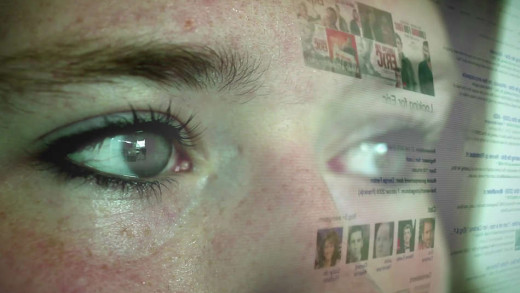
Tracing the Internet’s history as a publicly-funded government project in the 1960s, to its full-scale commercialisation today, Digital Disconnect shows how the Internet’s so-called “democratising potential” has been radically compromised by the logic of capitalism, and the unaccountable power of a handful of telecom and tech monopolies. Based on the acclaimed book by media scholar Robert McChesney, the film examines the ongoing attack on the concept of net neutrality by telecom monopolies such as Comcast and Verizon, explores how internet giants like Facebook and Google have amassed huge profits by surreptitiously collecting our personal data and selling it to advertisers, and shows how these monopolies have routinely colluded with the national security state to advance covert mass surveillance programs. We also see how the rise of social media as a leading information source is working to isolate people into ideological information bubbles and elevate propaganda at the expense of real journalism. But while most debates about the Internet focus on issues like the personal impact of Internet-addiction or the rampant data-mining practices of companies like Facebook, Digital Disconnect digs deeper to show how capitalism itself turns the Internet against democracy. The result is an indispensable resource for helping viewers make sense of a technological revolution that has radically transformed virtually aspect of human communication.
 45:25
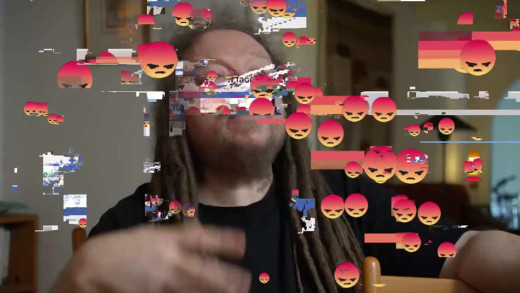
45:25This culture runs on algorithms on a scale never before realised. Whether you get a job or a mortgage or insurance or healthcare, how you get from A to B, how huge fortunes are made or whom is driven into poverty, decisions on whom is sent to or released from prison, whom is voted for in manipulated elections—the reach of algorithms has captured so much of the major decisions of our lives, all in complete obscurity, inscrutable. So what are the implications of this? What sort of ‘decisions’ do machines make, to which we’ve come to regard as infallible and impartial, accurate and precise? Algorithms Rule Us All speaks to data scientists and programmers themselves to answer the question of what they think is unfolding with the so-called Big-Data society and how we’re continuing to hand over our lives and societies to the whim of machines that are driven by rapacious profit-driven companies, for the goal of commodification of everything. What are the implications for human autonomy, society, democracy?
 2:08:21
We live in a world of screens. The average adult spends the majority of their waking hours in front of some sort of screen or device. We’re enthralled, we’re addicted to these machines. How did we get here? Who benefits? What are the cumulative impacts on people, society and the environment? What may come next if this culture is left unchecked, to its end trajectory, and is that what we want? Stare Into The Lights My Pretties investigates these questions with an urge to return to the real physical world, to form a critical view of technological escalation driven rapacious and pervasive corporate interest. Covering themes of addiction, privacy, surveillance, information manipulation, behaviour modification and social control, the film lays the foundations as to why we may feel like we’re sleeprunning into some dystopian nightmare with the machines at the helm. Because we are, if we don’t seriously avert our eyes to stop this culture from destroying what is left of the real world.
 1:11:57
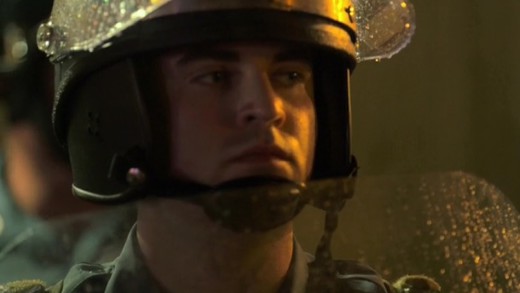
Do Not Resist documents, from the perspective of the police, their view of the social unrest following the shooting and killing of Michael Brown by police in Ferguson, 2014, against a backdrop of the routine and escalating use of military tactics and high-powered weaponry by local police forces throughout the United States in the past two decades. Military equipment deployed throughout the Middle East returns home to be used against the citizenry. Local police recruitment and training is awash in military commandments backed by views of escalating ‘righteous’ violence and sadism. Meanwhile curfews are imposed, along with frivolous drug raids and incessant racial profiling. The voices of concerned citizens ignored. What is the cultural and technological trajectory here?
 41:57
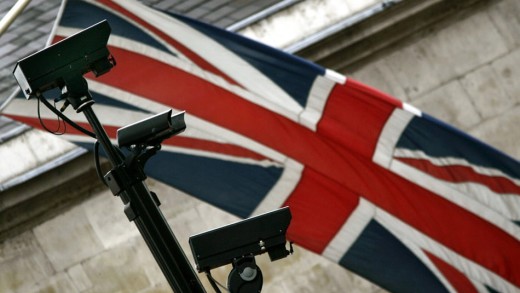
41:57Governments all around the world are using high-tech mass surveillance tools to monitor their citizens. Western corporations, including Britain’s largest weapons manufacturer, BAE, are among those which are creating and selling mass surveillance infrastructures all across the globe, but especially to particularly repressive regimes. Weapons of Mass Surveillance makes example of what is happening throughout the Middle East where journalists, human rights advocates and activists are being targeted with surveillance tools developed by western corporations with extreme real-world consequences. Political opponents to tyrannical power are targeted, jailed, and in some cases, tortured or “disappeared.” This shows the power of mass surveillance tools for great harm, and how the west is culpable in perpetuating systemic repression both at home and abroad.
 41:30
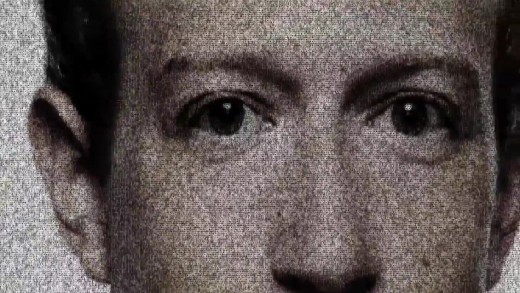
41:30Facebook is an enormously powerful corporation, harnessing both the self-disclosed and gleaned personal data of over 2 billion people. Its user-base is larger than the population of any country. The company is all pervasive online, tracking and profiling users and non-users alike. Cracking the Code looks at the insides of this giant machine and how Facebook turns your thoughts and behaviours into profits—whether you like it or not. And it’s not just a one-way transaction either. Cracking the Code also explains how Facebook uses vast troves of web data to manipulate the way you think and feel, as well as act—all in the sole interests of Facebook, masquerading as “community.” What are the social implications of this—when one company basically controls the insights and experiences of the entire online world, with extremely personalised and targeted social and behavioural engineering on a scale never before seen?
 2:46:31
HyperNormalisation wades through the culmination of forces that have driven this culture into mass uncertainty, confusion, spectacle and simulation. Where events keep happening that seem crazy, inexplicable and out of control—from Donald Trump to Brexit, to the War in Syria, mass immigration, extreme disparity in wealth, and increasing bomb attacks in the West—this film shows a basis to not only why these chaotic events are happening, but also why we, as well as those in power, may not understand them. We have retreated into a simplified, and often completely fake version of the world. And because it is reflected all around us, ubiquitous, we accept it as normal. This epic narrative of how we got here spans over 40 years, with an extraordinary cast of characters—the Assad dynasty, Donald Trump, Henry Kissinger, Patti Smith, early performance artists in New York, President Putin, Japanese gangsters, suicide bombers, Colonel Gaddafi and the Internet. HyperNormalisation weaves these historical narratives back together to show how today’s fake and hollow world was created and is sustained. This shows that a new kind of resistance must be imagined and actioned, as well as an unprecedented reawakening in a time where it matters like never before.
 46:36
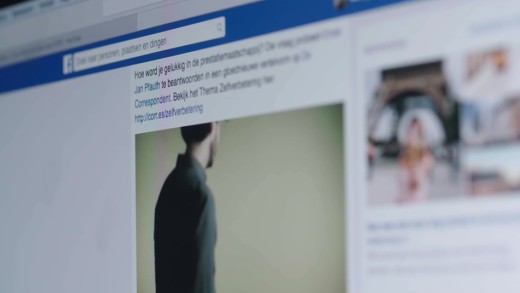
46:36Every day, billions of people are unwittingly taking part in what is the largest most comprehensive psychological experiment ever conducted. The old marketing and advertising world using billboards, advertisements and TV commercials to persuade us, has been comprehensively augmented by an entirely new field of “user experience architects” and “online persuasion agents.” These forces are given tremendous power from the proliferation of digital technologies. So how do these powerful forces ensure that we fill our online shopping carts to the brim, or stay on websites as long as possible? Or vote for a particular candidate? What Makes You Click examines how these prolific entities collectively and individually use, shape, and manipulate our experiences via an online world, not just when it comes to buying things, but also with regards to our free time and political perspectives. The manipulation has become so good that these powerful controllers, former Google employees among them, are themselves arguing for the introduction of an ethical code. What does it mean when the grand conductors of these huge experiments themselves are asking for their power, influence and possibilities to be restricted?
 1:34:03
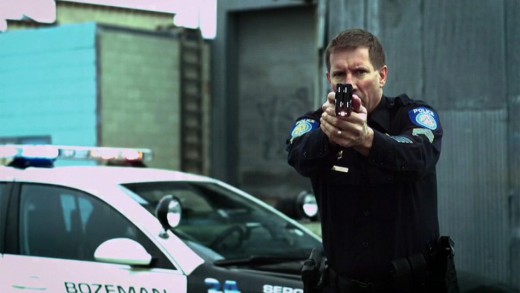
In the early 2000s, two brothers garnered tremendous wealth when they started a company selling so-called “non-lethal” taser weapons, which quickly saturated police agencies and reinforced a culture of trigger-happy police officers. But instead of “saving lives” as was the catch-cry of the taser, and the company, the weapons were instead commonly used for pain compliance, and lead to a spurious string of deaths. The company didn’t back down. They insisted, despite mounting evidence to the contrary, that their weapon was safe and not at fault—not even a contributing factor—in the killings. Killing Them Safely delves into this troublesome mindset and that of the company, as well as the social implications of such weapons in a problematic police culture.
 1:12:39
In Requiem for the American Dream, renowned intellectual figure Noam Chomsky deliberates on the defining characteristics of our time—the colossal concentration of wealth and power in the hands of the few and fewer, with the rise of a rapacious individualism and complete collapse of class consciousness. Chomsky does this by discussing some of the key principles that have brought this culture to the pinnacle of historically unprecedented inequality by tracing a half century of policies designed to favour the most wealthy at the expense of the majority, while also looking back on his own life of activism and political participation. The film serves to provide insights into how we got here, and culminates as a reminder that these problems are not inevitable. Once we remember those who came before and those who will come after, we see that we can, and should, fight back.
 1:33:01
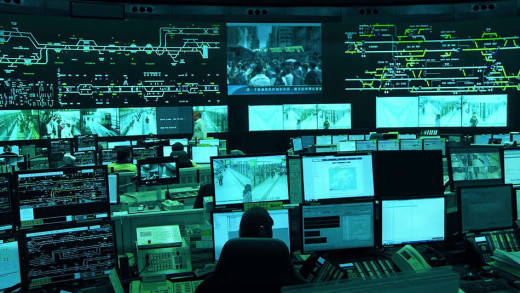
Filmmaker Werner Boote travels across the globe to investigate the era of so-called Big Data, where huge amounts of detail about our lives are gleaned for use in decision making, automation, and consumerism, but ultimately, to generate huge profits for corporations that harvest and control our data. Everything’s Under Control investigates these modern times through many lenses: People who have studied surveillance culture, to democracy activists in Hong Kong; from educators, advertisers, and traders, to privacy advocates, and security experts; from digital IDs, fingerprinting, iris scans and online profiling, to hacking, data leaks, and invigorating recent historical memory of atrocities based on data and personal information. We hear distorted perspectives on privacy from many voices, challenging the viewer to reflect on what it means to live through the largest social experiment with data ever before conducted on a global scale.
 2:16:43
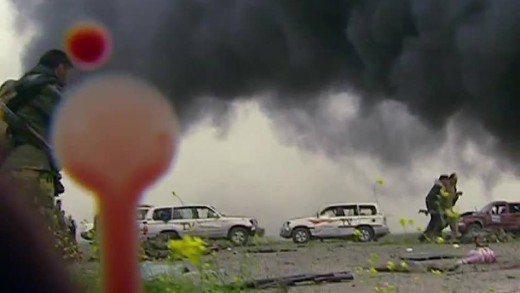
Bitter Lake explores how the realpolitik of the West has converged on a mirror image of itself throughout the Middle-East over the past decades, and how the story of this has become so obfuscating and simplified that we, the public, have been left in a bewildered and confused state. The narrative traverses the United States, Britain, Russia and Saudi Arabia—but the country at the centre of reflection is Afghanistan. Because Afghanistan is the place that has confronted political figureheads across the West with the truth of their delusions—that they cannot understand what is going on any longer inside the systems they have built which do not account for the real world. Bitter Lake sets out to reveal the forces that over the past thirty years, rose up and commandeered those political systems into subservience, to which, as we see now, the highly destructive stories told by those in power, are inexorably bound to. The stories are not only half-truths, but they have monumental consequences in the real world.
 1:19:51
By examining the people and practices of the media and entertainment industries, The Fourth Estate illuminates not only specific incidences of corruption by press groups, but how the wider model of mainstream journalism itself as a for-profit entity has a huge amount to answer for in terms of democracy and the state of politics throughout the world. Filmed over two years throughout the UK on no budget, the filmmakers profile journalists, organisers and critics of industrial media practices, stemming from the Leveson Inquiry in 2011 which was set up to examine the culture, practices and ethics of the British press following the News International phone hacking scandals of the Murdoch media empire. While the phone hacking scandal illuminated the depth and breadth of the culture of British journalism, the media’s focus at the time quickly diverted from a brief period of self-examination, back to business as usual. This film instead continues the analysis by looking at the larger implications of a for-profit media model and its connections to ideology, entertainment, and hence the resulting political framework that’s in crisis.
 53:04
53:04Social media networks purport the ability to interact with culture—talking directly to artists, celebrities, movies, brands, and even one another—in ways never before possible. But is this real empowerment? Or do marketing companies still hold the upper hand, as before? Generation Like explores how the perennial quest for identity and connection is usurped in the pervasive game of cat-and-mouse by vast corporate power in the extensive machine for consumerism that is now the online environment. The audience becomes the marketer; buzz is subtly controlled and manipulated by and from real-time behavioural insights; and the content generated is sold back to the audience in the name of participation. But does the audience even think they’re being used? Do they care? Or does the perceived chance to be the ‘next big star’ make it all worth it?
 1:24:30
In March 1971, eight ordinary citizens broke into an FBI office in Pennsylvania, took hundreds of secret documents out, and mailed them to newspapers across the country to share them with the public. The group, calling themselves The Citizens’ Commission to Investigate the FBI, undertook the actions at a time where suspicions about systemic abuse and manipulation of social and political movements by intelligence agencies were running high in the context of the Vietnam war and 1960s counter-culture. In doing so, these citizens uncovered the FBI’s vast and illegal regimes, leading to insights about mass surveillance, intimidation, entrapment, and the use of provocateurs and informers for manipulation, and sabotage. Much of this would later go on to be known as part of a covert program called COINTELPRO that was run directly by J. Edgar Hoover to destroy social change movements—a history that is imperative to understand in the context of today, where state repression of social change movements continues.
 1:53:12
In January 2013, film-maker Laura Poitras received an encrypted e-mail from a stranger who called himself Citizen Four. In it, he offered her inside information about illegal wiretapping practices of the NSA and other intelligence agencies. Poitras had already been working for several years on a film about mass surveillance programs in the United States, and so in June 2013, she went to Hong Kong with her camera for the first meeting with the stranger, who identified himself as Edward Snowden. She was met there by investigative journalist Glenn Greenwald and The Guardian intelligence reporter Ewen MacAskill. Several other meetings followed. Citizenfour is based on the recordings from these meetings. What follows is the largest confirmations of mass surveillance using official documents themselves, the world has never seen…
 5:08
5:08A look back on the news events from 2014 reveals a confusing, muddled mess. Things are increasingly chaotic, along with the reporting of the events in the culture of 24-7 rolling news, sound-byte feeds and the Internet. The result, as we see, is not a coherent public understanding of these complex events, but more a profound mass-confusion, with discourse destroyed, which in-turn broods disengagement from the world and further atomises an already divided-and-conquered public. It is this response that is a powerful form of social control, and is by design…
 1:01:16
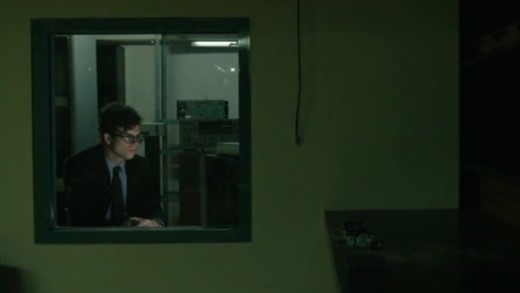
In groups we are told what to do, but do we always do so? Do groups give us courage to obey, or do they inhibit us? How do protest and change emerge? In Random 8, a randomly selected group of eight people from all walks of life are brought together in a bare room, mobile phones are confiscated, and cameras record their reaction to a series of simple instructions that escalate in intensity and in degree of challenge. The film cites the issues raised by several famous psychological experiments, including the work of Stanley Milgram in the 1960s who studied human obedience to orders, even when the orders were immoral or caused pain to others; and the work of sociologist Bill Gamson et al, in which groups were asked to carry out unjust requests made by an authority figure. What can happen when we’re asked to do something that goes against our beliefs?
 1:34:02
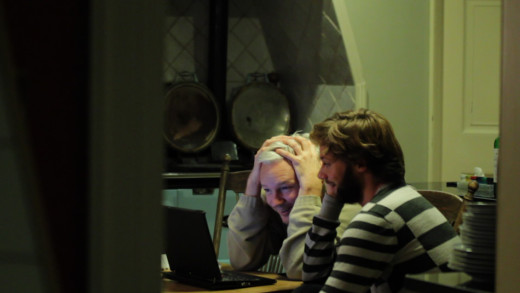
In Mediastan, an undercover team of journalists drive across central Asia interviewing editors of local media outlets to publish secret US diplomatic cables that were provided to WikiLeaks in 2010. Success is varied. And so, after regrouping with Julian Assange in England, questioning the editor of the Guardian, and obtaining candid footage of the New York Times editor and its publisher Arthur Sulzberger, Mediastan closes by leaving the viewer with an informative first-hand overview of the machinations of mainstream media. By venturing into the minds—and actions—of the people and institutions who shape the news, Mediastan shows the system for what it’s worth, and reveals its true motivations…
 1:25:06
InRealLife asks: What exactly is the Internet and what is it doing to our children? Taking us on a journey ranging from the bedrooms of British teenagers to the explosive world of Silicon Valley, filmmaker Beeban Kidron suggests that rather than the promise of free and open connectivity, young people are increasingly ensnared in a commercial world. And as this is explained, InRealLife asks if we can afford to stand by while our children, trapped in their 24/7 connectivity, are being outsourced to the web.
 51:47
51:47Obey is a video essay based on the book “Death of the Liberal Class” by author and journalist Chris Hedges. The film charts the rise of corporatocracy and examines the trending possible futures of obedience in a world of unfettered capitalism, globalisation, staggering inequality and environmental crisis — posing the question, do we resist or obey?

Esc & Ctrl is an online series of short documentary films where journalist and filmmaker Jon Ronson explores some aspects of screen culture and the Internet. By exemplifying the concepts of control of information and the screen culture’s reactions to publishing, censorship, viral videos, media attention and manipulation; a small set of stories weave together to pose bigger questions around democracy and open communication in the age of the computers and a corporately mediated virtual world.
 1:21:05
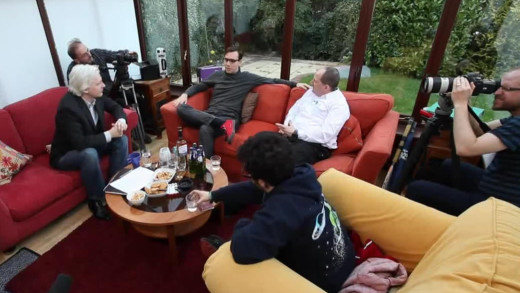
Cypherpunks is a movement originating from the 1980s aiming to improve Internet privacy and security through proactive use of cryptography. With WikiLeaks being a recent offshoot of the many projects derived from the Cypherpunk movement, WikiLeaks editor Julian Assange talks with three activists from the Cyberpunk world to cover the topics of mass surveillance and social control being tied directly into technology as modern society progressively intertwines with technological progress…

The Power Principle is a series of films examining the history of the United States and the building of its empire with particular emphasis on the last seventy years of United States foreign policy. The methods that make empire possible are also examined—the politics of fear, the rise of public relations, the ‘Mafia Principle’ and the reoccurring use of fabled enemies, contrasting the Soviet Union and the Cold War alongside the parallels of today with the “War On Terror”. Not only does The Power Principle tie together historical events to revive a common thread, the series may also encourage viewers to reconsider their understanding of historical events and the portrayal of them, showing how those in power play a role in manipulating the collective memory through generations.
 57:14
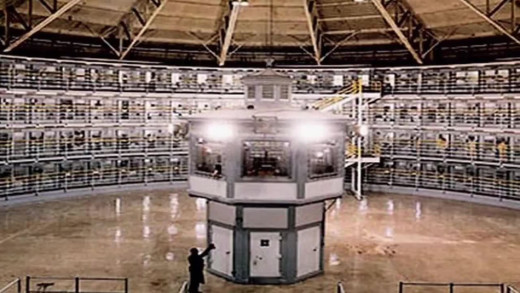
57:14Using the analogy of a Panopticon, this film looks at how technology and the convergence of vast data stores together are fuelling one of the most comprehensive attacks on privacy ever before seen. How is modern society being defined by such rapid changes? Where are we heading? By travelling to Germany to show how such attacks have been the basis for past dictatorships, Panopticon asks: Even if you have nothing to hide, do you have nothing to fear? What does privacy mean for you? When precisely does the surveillance state begin? What is your threshold? With a focus on the Netherlands, Panopticon offers a comprehensive analysis challenging the current herd-mentality and apathy about privacy in the modern world.
 1:28:52
Ninety percent of American media is controlled by five big, for-profit-conglomerates, creating a media monopoly of informational and social control never before possible. The overwhelming collective power of these firms raises troubling questions about democracy. Using a handful of in-depth cases out of a vast array of examples, speaking with renowned journalists, activists, and others, Shadows of Liberty reveals the hidden machinations of the news media, drawing into focus the vast mechanisms of censorship, cover-ups, and corporate control that have been built up over many decades. Journalists are prevented from pursuing controversial news stories, people are censored for speaking out against abuses of government power, and individual lives are shattered as the arena for public expression has been turned into a vessel for advertising, warmongering and distraction. Will the Internet remain ‘free’, or succumb to the same control by the same handful of powerful, monopolistic corporations—as we see?
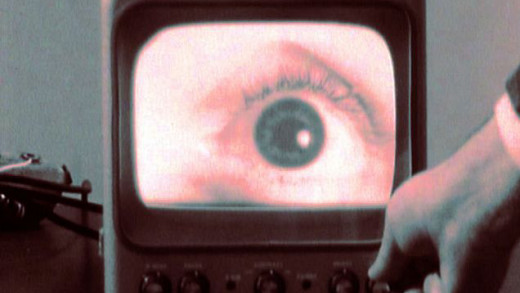
All Watched Over By Machines Of Loving Grace is a series of films about how this culture itself has been colonised by the machines it has has built. The series explores and connects together some of the myriad ways in which the emergence of cybernetics—a mechanistic perspective of the natural world that particularly emerged in the 1970s along with emerging computer technologies—intersects with various historical events and visa-versa. The series variously details the interplay between the mechanistic perspective and the catastrophic consequences it has in the real world.
 27:36
27:36The Revolution Business examines the role of United States intelligence agencies in the recent revolutionary movements such as the Arab Spring and others by the use of “Revolution Consultants.” Of particular interest is a Serbian man Srđa Popović, who formed an organisation called Отпор! (Otpor) which tought “non-violent struggle” in the overthrow of Slobodan Milošević in Serbia during the 1990s, and which has now gone on to inspire a new generation of activists. However, some political commentators like William Engdahl are convinced that Otpor is financed by the United States and has ties to intelligence agenices, also having dubious funding from sources such as the Rand Corporation, the Department of Defence, as well as various fronts such as the National Endowment for Democracy (NED), the International Republican Institute (IRI), the US Institute of Peace and the Ford Foundation—all of which have a long history of collaborating with the Pentagon, the State Department and the CIA in destabilising movements and usurping popular uprisings, removing their teeth.
 1:08:16
While corporations and governments continue to disseminate globalisation and the rapacious drive for consolidation of corporate power, people around the world are pushing back to reinstate local communities. Groups are coming together to rebuild human scale, local and ecological economies based on a new paradigm of localisation and sustainability. The Economics Of Happiness documents these shifts and shows how these communities have reclaimed their autonomy…
 1:39:02
Psywar explores the history and evolution of propaganda along with the rise of ‘public relations’ with an emphasis on the relationship between war, propaganda and privilege…
 28:57
28:57Subconscious War is a video essay exploring the influences of media and the culture of violence on reality, and the cultivation of collective values in society. The film contrasts the writings of Aldous Huxley and Neil Postman’s grim assessments; relating the concepts of works such as ‘Brave New World’ and ‘Amusing Ourselves to Death’ to the current cultural influences that foster today—corporate media and indeed media saturation, video games, television, and a pervasive technoculture, for example. What is being created? And what sort of people are being cultivated by this culture? Who benefits?
 1:59:23
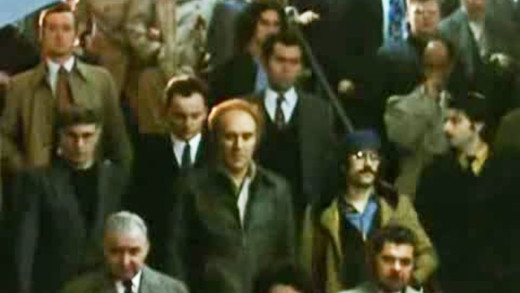
Human Resources — Social Engineering in the 20th Century is about the rise of mechanistic philosophy and the exploitation of human beings under modern hierarchical systems. The film captures how humans are regarded as a resource by corporations—something to be exploited for pecuniary gain—by following the history of psychological experiments in behaviour modification, conditioning and mind control; applying the outcomes to modern day establishment experiments such as institutionalised education, and social engineering by way of things like television…
 1:01:15
We’ve been told again and again that sports and politics don’t mix, that games are just games and athletes should just “shut up and play.” But Not Just a Game argues that far from providing merely escapist entertainment, American sports have long been at the centre of some of the major political debates and struggles of our time. By tracing the good, the bad, and the ugly of American sports culture, Not Just a Game shows how American sports have glamorised militarism, racism, sexism, and homophobia; but also traces a largely forgotten history of rebel athletes who stood up to power and fought for social justice beyond the field of play.