Films about war
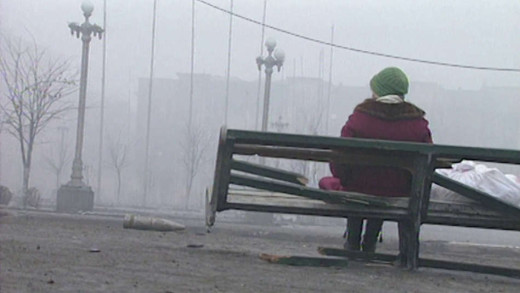
Since the late 1980s, BBC news crews have filmed all across the Soviet Union and Russia, but only a tiny portion of their footage was ever used for news reports. The rest was left unseen on tapes in Moscow. Filmmaker Adam Curtis obtains these tapes and uses them to chronicle the collapse of the Soviet Union, the rise of capitalist Russia and its oligarchs, and the effects of this on Russian people of all levels of society, leading to the rise to power of Vladimir Putin, and today’s invasions of Ukraine. The films take you from inside the Kremlin, to the frozen mining cities in the Arctic circle, to tiny villages of the vast steppes of Russia, and the strange wars fought in the mountains and forests of the Caucasus.

Can’t Get You Out of My Head: An Emotional History of the Modern World is a six-part series that explores how modern society has arrived to the strange place it is today. The series traverses themes of love, power, money, corruption, the ghosts of empire, the history of China, opium and opioids, the strange roots of modern conspiracy theories, and the history of Artificial Intelligence and surveillance. The series deals with the rise of individualism and populism throughout history, and the failures of a wide range of resistance movements throughout time and various countries, pointing to how revolution has been subsumed in various ways by spectacle and culture, because of the way power has been forgotten or given away.
 1:10:19
The Viewing Booth recounts a unique encounter between a filmmaker and a viewer—exploring the way meaning is attributed to images in today’s culture of the screen. In a lab-like location, Maia Levy, a young Jewish American woman, watches videos portraying life in the occupied West Bank, while verbalising her thoughts and feelings in real time. Maia is an enthusiastic supporter of Israel, and the images in the videos, depicting Palestinian life under Israeli military rule, contradict some of her most deep-seated beliefs. Empathy, anger, embarrassment, innate biases, and healthy curiosity all play out before our eyes, as we watch her watch the images created by the occupation. As Maia navigates and negotiates the images, which threaten her worldview, she also reflects on the way she sees them. Her candid and immediate reactions form a one-of-a-kind cinematic testimony to the psychology of the viewer, most especially in the digital era.
 1:47:27
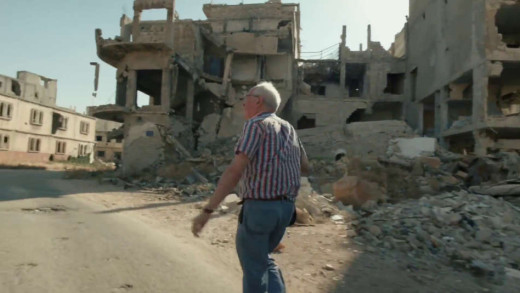
This Is Not a Movie is a profile of the career of Robert Fisk, an influential British war correspondent whose groundbreaking and often game-changing journalism during some of the most violent and divisive conflicts in the world, has been imperative to reporting the reality of war. The film captures Fisk in action, notebook in hand, as he travels into landscapes devastated by war, seeking out the facts on the ground, and firing reports back home to reach an audience of millions. Fisk talks passionately about his process of translating raw experience into incisive and passionate dispatches, while showing his determination to see things first-hand and the tenacity to say what others won’t. In his pursuits of the truth, Fisk has attracted criticism, but in spite of the system stacked against him, and the huge personal risks and dangers, he continues to cover stories as they unfold, talking directly to the people involved. This Is Not a Movie is a homage to Fisk’s legacy to speak truth to power, in an era of fake news, and where journalists are dubbed “the enemies of the people.”
 57:45
57:45How can we make political change if peaceful demonstration is not effective and violence only brings more violence? War/Peace posits this question by reintroducing two surviving figures from the Weather Underground movement of the late 1960s, Bernardine Dohrn and Bill Ayers. Coming from the hippy counterculture, the Weather Underground was a radical militant organisation, with revolutionary positions characterised by the Black Power and civil rights movements, as well as opposition to the Vietnam War. In 1970, the group issued a “Declaration of a State of War” against the United States government, with the goal to overthrow the government and end United States’ imperialism, culminating in a bombing campaign targeting government buildings along with several banks. War/Peace rewinds to the past to draw out the complexity of these political struggles, and what went wrong, while drawing parallels to the struggles of today, where a lot has changed, but a lot has also remained the same.
 1:32:22
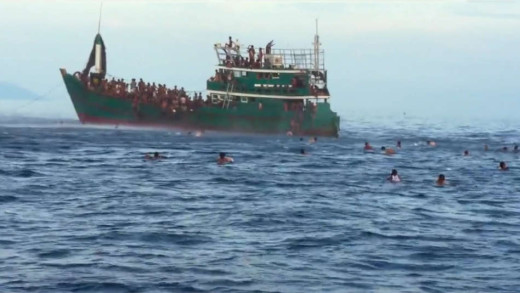
Chasing Asylum explores the human, political, financial and moral consequences of the Australian Government’s “off-shore processing” immigration policy, which is the only country in the world to mandate indefinite detention for adults and children seeking asylum. Since this policy was restarted in 2001, it has grown into an internationally condemned, secretive regime. Inside the detention centres there have been violent deaths, suicides, horrific acts of self-harm, sexual abuse, and mass protests. Composed of footage secretly recorded inside Australia’s offshore detention camps, and explored through the eye-witness accounts of social workers and support workers, Chasing Asylum presents the hidden offshore world, where governments choose detention over compassion, a system of depriving vulnerable people of their basic human rights, and spending huge amounts of money keeping it secret and out of the public eye. The result is a sobering overall picture of a system that asks its citizens to abide by rule of law, but shows little regard to do so itself.
 2:46:31
HyperNormalisation wades through the culmination of forces that have driven this culture into mass uncertainty, confusion, spectacle and simulation. Where events keep happening that seem crazy, inexplicable and out of control—from Donald Trump to Brexit, to the War in Syria, mass immigration, extreme disparity in wealth, and increasing bomb attacks in the West—this film shows a basis to not only why these chaotic events are happening, but also why we, as well as those in power, may not understand them. We have retreated into a simplified, and often completely fake version of the world. And because it is reflected all around us, ubiquitous, we accept it as normal. This epic narrative of how we got here spans over 40 years, with an extraordinary cast of characters—the Assad dynasty, Donald Trump, Henry Kissinger, Patti Smith, early performance artists in New York, President Putin, Japanese gangsters, suicide bombers, Colonel Gaddafi and the Internet. HyperNormalisation weaves these historical narratives back together to show how today’s fake and hollow world was created and is sustained. This shows that a new kind of resistance must be imagined and actioned, as well as an unprecedented reawakening in a time where it matters like never before.
 1:31:35
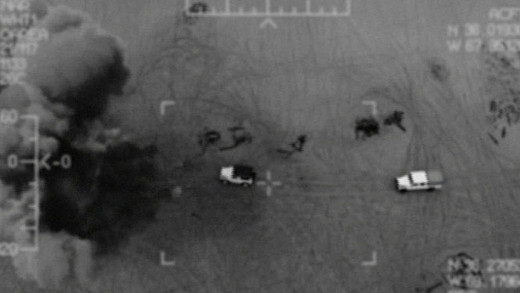
National Bird: Drone Wars is the story of the United States’ secret program for drone strikes, conducted all around the world, told through three military whistle-blowers plagued by guilt over participating in the killing of faceless people in foreign countries. They decide to speak out publicly, despite the possible consequences. Their stories take dramatic turns, leading one of the protagonists to Afghanistan where she learns about a horrendous incident, but her journey also provides for peace and redemption. National Bird provides an insight into the United States’ secret drone program through the eyes of participants, veterans, and survivors, connecting their stories to images.
 1:30:37
The Killing$ of Tony Blair documents former UK Prime Minister Tony Blair’s well-remunerated business interests since leaving government, and his complicity in the thousands of innocent people who have died following his decision to invade Iraq.
 52:29
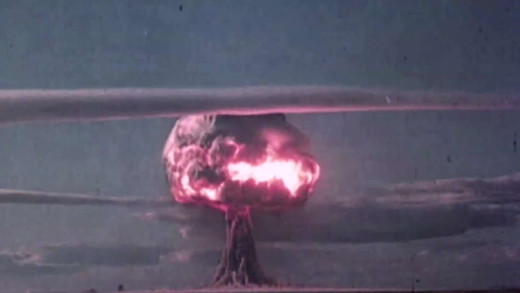
52:29As the United States developed the world’s first nuclear weapons in secret, it was surprised at the speed in which the USSR was able to also develop such weapons, and that such developments would lead to an unprecedented arms race. The USSR was able to obtain all the nuclear discoveries made by scientists who worked on the top-secret Manhattan Project through a very unusual spy, Elizabeth Zaroubin. She managed to gain the trust of great researchers, such as Einstein, in a story comparable to some of the best spy novels ever written.
 2:16:43
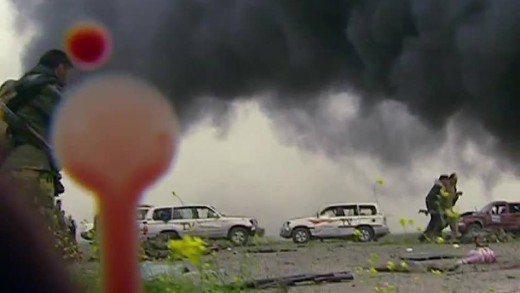
Bitter Lake explores how the realpolitik of the West has converged on a mirror image of itself throughout the Middle-East over the past decades, and how the story of this has become so obfuscating and simplified that we, the public, have been left in a bewildered and confused state. The narrative traverses the United States, Britain, Russia and Saudi Arabia—but the country at the centre of reflection is Afghanistan. Because Afghanistan is the place that has confronted political figureheads across the West with the truth of their delusions—that they cannot understand what is going on any longer inside the systems they have built which do not account for the real world. Bitter Lake sets out to reveal the forces that over the past thirty years, rose up and commandeered those political systems into subservience, to which, as we see now, the highly destructive stories told by those in power, are inexorably bound to. The stories are not only half-truths, but they have monumental consequences in the real world.
 1:23:16
This film makes use of court documents, diplomatic cables and testimony by business figures themselves, as one case of many, in which corporations and indeed governments side with warlords, as good for business, in the endless pursuit of profit. The story revolves around the civil war of Liberia in the 1990s, with the seeds for exploitation and destruction having been planted a century before by the United States, when formally enslaved peoples in Liberia in-turn set up a society of racism, greed and exploitation, exacerbated by western economic powers. Years later, with the presence of Firestone corporation coming to Liberia to exploit vast plantations of rubber for control over the ‘market,’ the company unfolds as a considerable catalyst for systemic terror, being the forefront for pushing for profits at all costs amongst a brutal civil war; colluding with warlords and corrupt governments in pursuit of this ruthless end. Unfurling as a case study in these methods, this film documents the case that is not so unique but a story amongst many—particularly throughout the so-called third-world—where corporate might and globalisation have extreme consequences…
 49:54
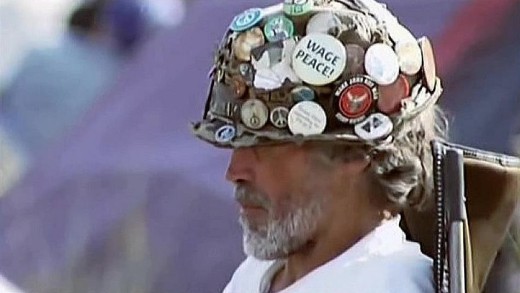
49:54War Matters chronicles a decade of anti-war protest in Britain through the story of veteran peace campaigner Brian Haw, who camped in Parliament Square for over 10 years in protest against the UK government’s policies in the Middle East. Brian began his campaign against war on 2nd June 2001, initially in protest of the sanctions against Iraq. After the September 11 attacks in the United States later on that year, Brian’s campaign took on a whole new level of importance. War Matters documents this shift by examining the larger issue of the British arms trade and the repercussions of the Iraq and Afghanistan wars around the world, as civil rights are being curtailed in so-called democracies. Where does democracy end and tyranny begin?
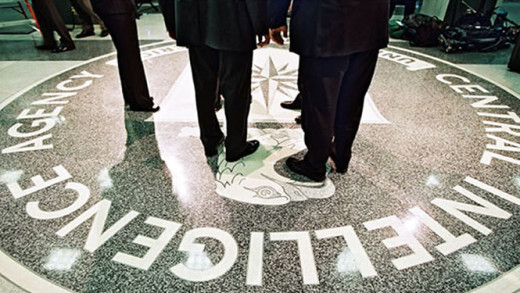
Counter-Intelligence is a 5 part series that explores in-depth, the vast, sprawling and secret National Security State that operates throughout the United States—and indeed the world. The series examines the foundations of the Military-Industrial-Intelligence Complex, charting through to the myriad consequences in today’s world where secret intelligence organisations continue to hijack governments, manipulate elections and commit heinous crimes against humanity—all under the cloak of “National Security”. In the wake of the continued revelations of the NSA PRISM program, this series is now more important than ever to provide a solid historical context to the workings of the rapacious and ever-expanding National Security State…
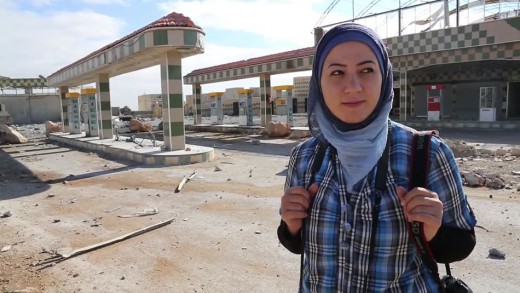 14:29
14:29Not Anymore: A Story of Revolution is a short film about the Syrian struggle for freedom as experienced by a 32 year old rebel commander, Mowya; and a 24 year old female journalist, Nour; in Aleppo, Syria. The film shows why Syrians are fighting for their freedom, told through the emotional words of two powerful characters whose lives have been torn apart by war.
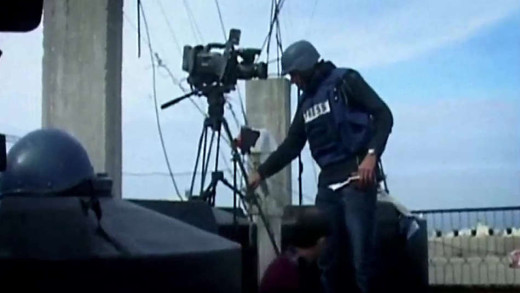 1:16:27
The War Around Us tells the story of the only two international journalists on the ground in Gaza during Israel’s bombardment and invasion of the troubled Palestinian territory over a three-week period in 2008. With never-before-seen footage and gripping personal testimonies, the film bears witness to Israel’s ongoing siege of Gaza in the wake of its withdrawal in 2005, and pays tribute to the power of journalism and friendship under conditions of enormous conflict and stress. The result is a human glimpse into wartime reporting and life in one of the most besieged places on Earth.
 51:47
51:47Obey is a video essay based on the book “Death of the Liberal Class” by author and journalist Chris Hedges. The film charts the rise of corporatocracy and examines the trending possible futures of obedience in a world of unfettered capitalism, globalisation, staggering inequality and environmental crisis — posing the question, do we resist or obey?
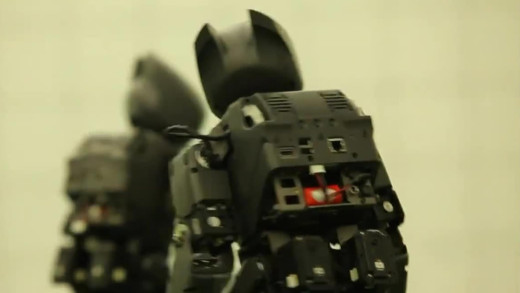 24:26
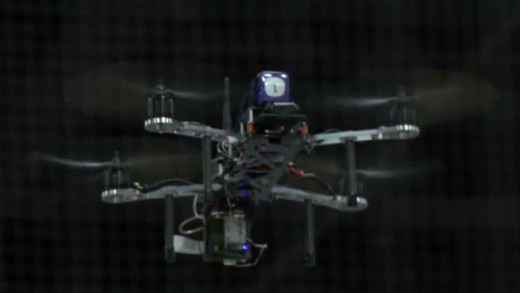
24:26Over the past decade, the United States military has shifted the way it fights its wars, deploying more technological systems in the battlefield than human forces. Today there are more than 7,000 drones and 12,000 ground robots in use by all branches of the military. These systems mean less deaths for US troops, but increased killings and precision elsewhere for the United States war machine. With lethal drone strikes being carried out in secret by the CIA and occurring outside of officially declared war zones such as Pakistan, Yemen and Somalia, the secret use of robots and drones in this way evokes serious questions about the operations of the United States and what this means for the rest of the world as more and more autonomy is developed for these technologies.
 27:33
27:33Just as mobile phones and wireless capability dramatically changed the way technology interacts with modern society, drones—or ‘Unmanned Aerial Vehicles’—are set to become the next major influence in technocratic life, directly impacting and seriously expanding the already extensive capabilities of surveillance. Rise Of The Machines takes a look at already developed drone technology and how governments, military and even civilians are rushing to adopt the gadgets which can be purchased off the shelf for just a few hundred dollars and controlled by already existing smart phones. So what will a world of drones look like? And what of the many, serious, unexplored implications on how society will function in a world of drones?

The Power Principle is a series of films examining the history of the United States and the building of its empire with particular emphasis on the last seventy years of United States foreign policy. The methods that make empire possible are also examined—the politics of fear, the rise of public relations, the ‘Mafia Principle’ and the reoccurring use of fabled enemies, contrasting the Soviet Union and the Cold War alongside the parallels of today with the “War On Terror”. Not only does The Power Principle tie together historical events to revive a common thread, the series may also encourage viewers to reconsider their understanding of historical events and the portrayal of them, showing how those in power play a role in manipulating the collective memory through generations.
 16:14
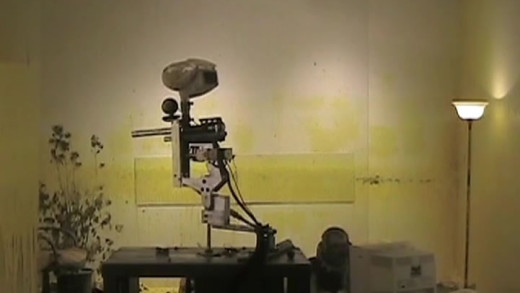
16:14Robot Wars visits companies in the United States that are producing robots for the military to disarm bombs, fly unmanned aircraft (drones), withstand repeated attacks and even choose targets and fire without any human intervention. The rapid development of autonomous robots and the use of them right now is surging ahead at a crazy rate, all with little regard to ethical and psychological questions, concerns about technological privilege and other obvious impacts. With military robots currently being operated using video game controllers, is the line being blurred between fantasy and reality?
 44:30
44:30How does the military train the solider of tomorrow? Video games. The most popular games are those that replicate as close as possible the war events as seen on the news. Such games now far outpace the biggest Hollywood blockbuster movies, popular music, and best-selling books, combined. What does this complete immersion in high-tech war mean for our political culture? As well as those directly affected by state violence? What does it mean when the technological sophistication of modern militarism become forms of mass entertainment? Returning Fire profiles three artists and activists that decided these questions needed to be answered. We see how Anne-Marie Schleiner, Wafaa Bilal, and Joseph Delappe moved dissent from the streets to the screens, infiltrating war games in an attempt to break their hypnotic spell. The results ask all of us—gamers and non-gamers alike—to think critically about what it means when drones and remote warfare become computer games and visa versa. Can we reflect on our capacity to empathise with people directly affected by the trauma of real war?
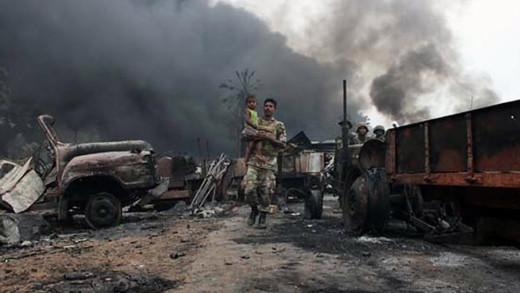
Sri Lanka’s Killing Fields is an investigative two part series about the final weeks of the quarter-century-long civil war in Sri Lanka. The films are made and broadcast as UN Secretary-General Ban Ki-moon faces growing criticism for refusing to launch an investigation into ‘credible allegations’ that Sri Lankan forces committed war crimes during the the bloody conflict with the rebel group, the Tamil Tigers. With disturbing and distressing descriptions and film of executions, atrocities and the shelling of civilians; the programmes show and investigate devastating video evidence of war crimes—some of the most horrific footage of war ever captured.
 28:57
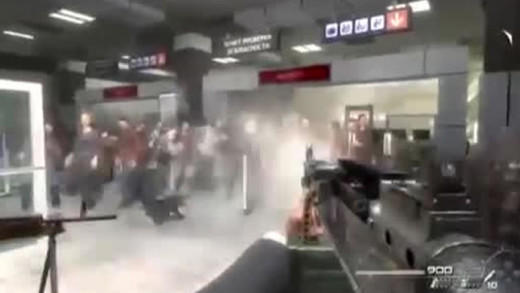
28:57Subconscious War is a video essay exploring the influences of media and the culture of violence on reality, and the cultivation of collective values in society. The film contrasts the writings of Aldous Huxley and Neil Postman’s grim assessments; relating the concepts of works such as ‘Brave New World’ and ‘Amusing Ourselves to Death’ to the current cultural influences that foster today—corporate media and indeed media saturation, video games, television, and a pervasive technoculture, for example. What is being created? And what sort of people are being cultivated by this culture? Who benefits?
 1:15:01
Filmed over three years in the war-zone of northern Uganda, Children of War follows a group of former child soldiers as they escape the battlefield, enter a rehabilitation centre, and undergo a process of trauma recovery and emotional healing. Having been abducted from their homes and schools, and forced to become fighters by the Lord’s Resistance Army—a militia led by self-proclaimed prophet and warlord Joseph Kony—the children struggle to confront and break through years of captivity, extreme religious indoctrination, and participation in war crimes with the help of a team of trauma counsellors. As fearless allies guide the children into new lives, Children of War illuminates a powerful and cathartic story of forgiveness and hope in the aftermath of horrific war.
 56:33
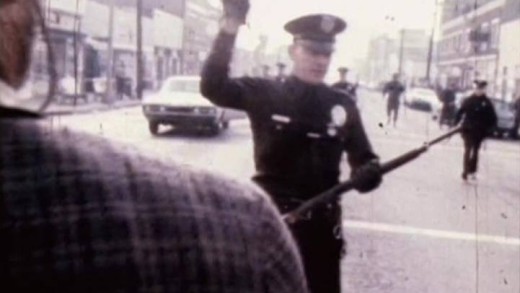
56:33A secret illegal project from the 1950s, 60s and 70s called COINTELPRO, represents the state’s strategy to prevent resistance movements and communities from achieving their ends of racial justice, social equality and human rights. The program was mandated by the United States’ FBI, formally inscribing a conspiracy to destroy social movements, as well as mount institutionalised attacks against allies of such movements and other key organisations. Some of the goals were to disrupt, divide, and destroy movements, as well as instilling paranoia, manipulation by surveillance, imprisonment, and even outright murder of key figures of movements and other people. Many of the government’s crimes are still unknown. Through interviews with activists who experienced these abuses first-hand, COINTELPRO 101 opens the door to understanding this history, with the intended audience being the generations that did not experience the social justice movements of the 60s and 70s; where illegal surveillance, disruption, and outright murder committed by the government was rampant and rapacious. This film stands to provide an educational introduction to a period of intense repression, to draw many relevant and important lessons for the present and the future of social justice.
 1:11:19
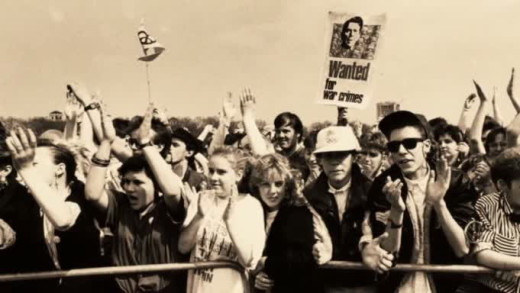
By charting the history of the anti-war movement against the political backdrop of the atomic age, Beating The Bomb examines the current state of ‘nuclear deterrence’ brought about by the nuclear age stemming from the end of World War II, when the United States nuked Hiroshima and Nagasaki. Specifically, the anti-nuclear movement and the founding of the Campaign for Nuclear Disarmament in 1958 amongst others, fight for and end to the British Nuclear Weapons program, which from its inception, was closely tied to The Manhattan Project and still is to this day…
 1:22:22
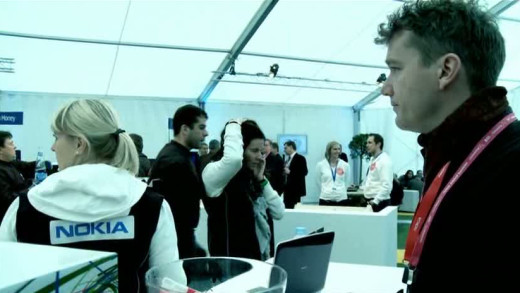
Modern society loves mobile phones — the selection between different models and gadgets has never been bigger. But the production of this technology has a hidden, dark, bloody side. The main minerals used to produce mobile phones are coming from the mines in the Eastern DR Congo. The Western World is buying these minerals up at a furious rate, financing a bloody civil war which, during the last 15 years, has cost the lives of more than 5 million people. Blood In The Mobile explains the connections between mobile phones and the civil war in the Congo, while technology corporations whitewash the issue to “supply and demand” and claim ignorance…
 46:57
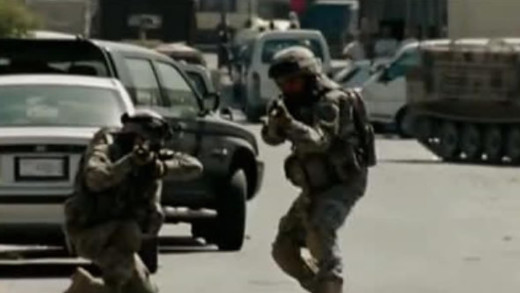
46:57War is hell, but for Hollywood it has been a god-send, providing the perfect dramatic setting against which courageous heroes win the hearts and minds of the movie going public. The Pentagon recognises the power of these celluloid dreams and encourages Hollywood to create heroic myths; to rewrite history to suit its own strategy and as a recruiting tool to provide a steady flow of willing young patriots for its wars…
 1:33:45
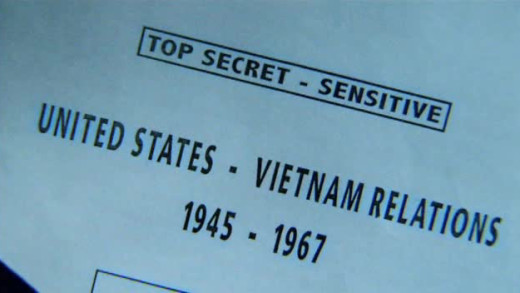
In 1971, Daniel Ellsberg shook the United States to its foundations when he leaked top-secret Pentagon documents to the New York Times that showed how five Presidents consistently lied about the Vietnam War. Consequently, National Security Advisor Henry Kissinger called Ellsberg “the most dangerous man in America,” who “had to be stopped at all costs.” But Ellsberg wasn’t stopped. Facing 115 years in prison on espionage and conspiracy charges, he fought back…
 1:25:13
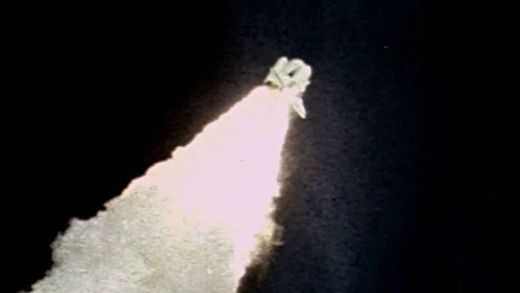
Pax Americana and the Weaponization of Space takes us to the Cold War and beyond, where an arms race of weapons technology plays out by the world’s superpowers in space. Satellites, nuclear weapons, tracking technologies, rockets—the weaponisation of space was and is more of the same colonialism in the tradition of empire, much like the sea battles of the 18th and 19th centuries. Indeed, as we learn through Operation Paperclip, the United States recruited than 1,600 scientists from Nazi Germany for work in the Space Race after the end of World War II. Fast forward to today, in the name of protecting commercial investment, the United States has crowned itself with being the so-called “arbiter of peace” in space. But with their weapons industry replacing almost all other manufacturing in America, this claim is ludicrous. More than fifty cents of every US tax dollar is spent on the military. The dream of the original Dr. Strangelove, Wernher von Braun—the Nazi rocket-scientist turned NASA director—has survived every US administration since World War II and is coming to life ever more rapidly. Today, space is largely weaponised, a massive military-industrial-complex thrives, and many nations are manoeuvring for advantage with yet more weapons of war, surveillance, and control.
 1:28:52
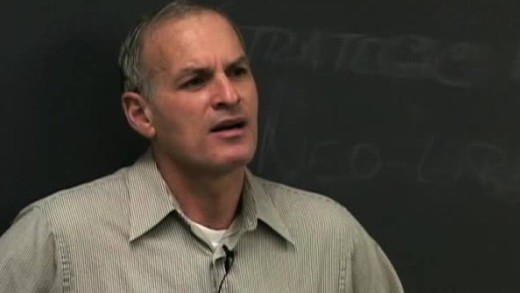
American Radical is a film about the life of academic Norman Finkelstein, a son of Holocaust survivors and ardent critic of Israel. Called a lunatic and self-hating Jew by some, and an inspirational figure by others, American Radical also serves to explore the issues at the centre of Palestine and Israel as Finkelstein travels around the world negotiating a voice of realism among impassioned critics and Israeli supporters. Uncompromising, even in the face of a denial of tenure at DePaul University, Finkelstein is revealed as a rare academic figure who puts the pursuit of justice above the security of his career, to expose the brutal reality of the occupation of Palestine.
 1:09:45
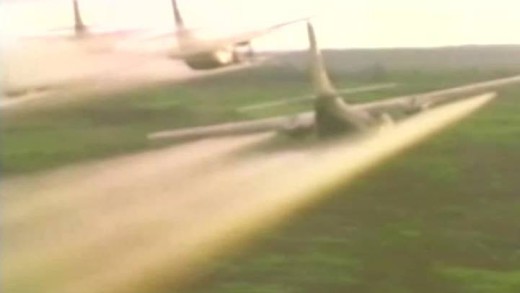
More than three million Vietnamese people still suffer the gruelling effects of chemical weapons used by the United States during the Vietnam War. American militaries doused forests, lands and waterways of Vietnam with the deadly chemicals Agent Orange, White, Blue, Pink, Green and Purple. Agent Orange in particular, which contains dioxin—the most toxic chemical ever known—has disabled countless people and generations of their offspring. This film weaves personal stories together with the stories of American GIs to lead to a great unravelling of the first-hand devastating and lethal effects of Agent Orange and war, generations later.
 51:15
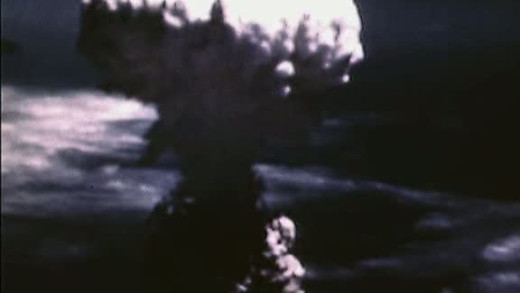
51:15On 8th August 1945, the United States dropped its second atomic bomb on Nagasaki, Japan, three days after the bombing of Hiroshima. The city was a veritable apocalyptic vision, devastated by this new type of weapon. Nagasaki — The Horror Of Fat Man documents the memories of survivors, both Japanese civilians and Western Prisoners Of War, as they relate the morbid aftermath of the bombings, the United States occupation, and the segregation that still effects fallout victims to this day.
 2:04:16
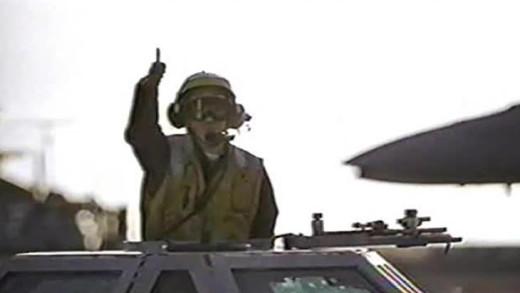
Militainment Inc. examines how news coverage of war in the United States has come to resemble Hollywood film, video games, and reality television in its portrayal of war as entertainment. Using a range of media examples—from news anchors’ idolatry of military machinery to the impact of government propaganda on war reporting—Militainment Inc. asks: How has war taken its place as a spectacle of entertainment? And how does presenting war as entertainment affect the ability of the population to evaluate the real human costs of this culture’s military-industrial-complex?
 1:10:15
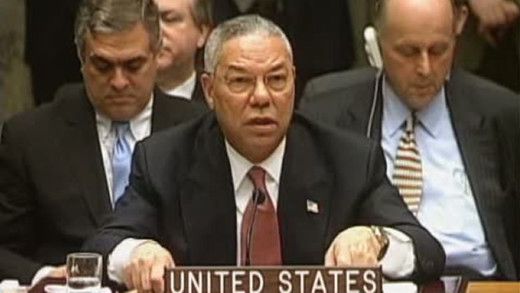
Reaching into the Orwellian memory hole, War Made Easy exposes the some 50-year pattern of government deception and media spin that has dragged the United States into one war after another from Vietnam to Iraq. Using archival footage of official distortion and exaggeration from LBJ to George Bush, this film reveals how the American news media have uncritically disseminated the pro-war messages of successive governments — paying special attention to the parallels between the Vietnam war and the war in Iraq…
 1:25:20
60 years after the United States dropped nuclear weapons on Hiroshima and Nagasaki in Japan, the events are still espoused with denial and myth in histories taught by the west. White Light, Black Rain breaks this acquiescence and accounts the bombings from the point of view of the people who were there, speaking with survivors of the attacks and four American military men that were intimately involved in dropping the bombs. The film intimately details the human costs of warfare and stands as a powerful warning that with enough present-day nuclear weapons worldwide to equal 400,000 Hiroshimas, we cannot afford to forget what really happened with these events.
 50:30
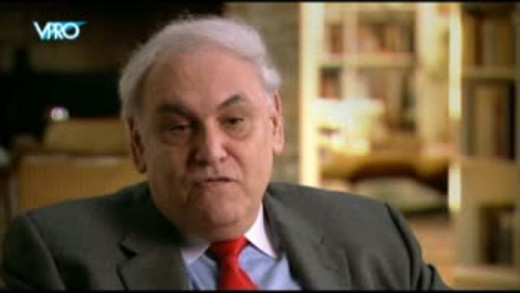
50:30For many years now the American foreign policy has been characterized by the strong tie between the United States and Israel. Does the United States in fact keep Israel on its feet? And how long will it continue to do so?
 1:03:49
We
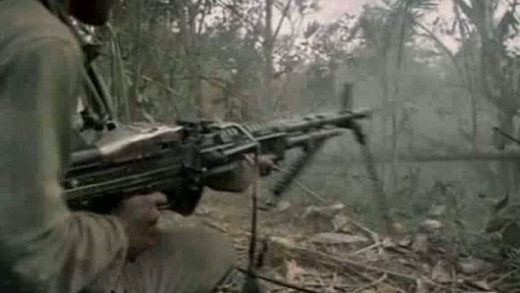
We is a visual essay exploring the politics of empire, war, corporate globalisation, imperialism and history; using the words of Indian author and political activist Arundhati Roy, from her speech Come September given in Santa Fe, New Mexico one year after the September 11th attacks—not long after the invasion of Afghanistan. The result is a mix of archive footage illustrating specific historical events throughout South America, the Middle East and elsewhere, in context with the September 11th attacks; placed alongside the themes of empire, global economics and a short history of neo-collonialism…
 1:27:33
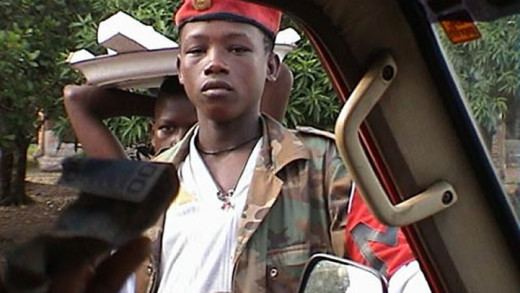
Located in Western Africa, Sierra Leone is a nation caught in a struggle between extreme poverty and extreme wealth. While diamond mining provides the bulk of the country’s income, most of its people struggle to survive by raising their own crops. In 1991, a rebel group called the Revolutionary United Front formed to take on government and corporate interests in a bid for a more just economy and an end to hunger. At first, the RUF was popular with Sierra Leoneans, many of whom resented the elite seen as corrupt and looked forward to the promises of free education, health care and equitable sharing of diamond revenues. However, as civil broke out, the RUF was brutal and developed a reputation internationally for its terrible cruelty towards civilians, and its widespread use of child soldiers. What ensued was bloody mayhem. Around 70,000 people lost their lives in the nearly 15 years of fighting, while millions lost their homes and many thousands were maimed. The Empire In Africa tells the story behind the brutality, and shines a light on the terrible bloodshed, with the view that future horrors may then end.