Films about advertising
 44:41
44:41Facing Beauty examines the explosive growth of the plastic surgery industry, by looking through China’s beauty obsession and the social media influencers that are driving its mindset. A mobile app has captured the population by promoting an “ideal ratio in human facial features,” where users’ faces are assessed and given a score. The app then draws up plans for surgeries to lower that score, referring users to endorsed clinics, driving both non-invasive and invasive surgeries and procedures. Now, demand for those procedures is so widespread among the country’s youth population, it’s estimated the industry will be worth US$200 billion by 2030. This growth in the industry has led to an expansion of ‘beauty’ institutions that employ staff without adequate medical qualifications or protections, and even though some procedures have been banned and the negative health impacts shown, demand continues to increase at fever pitch.
 42;26
42;26Mega-corporations like Apple, Amazon, Google and Facebook are incredibly powerful, and their growth shows no signs of slowing down. The pandemic has only them more influential. Experts have long watched as they breach antitrust laws, while also receiving special treatment when it comes to paying low wages, avoiding taxes, flouting laws, and even making their […]
 1:33:21
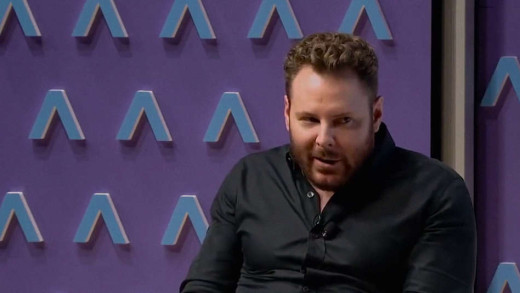
The Social Dilemma brings together former product directors and designers of Facebook, Google, Instagram, Pintrest, Twitter, and so on, to reflect on their creations and face questions about the age of addiction, information manipulation, and algorithmic social control they’ve ushered in. The creators speak openly about how they themselves took part in this co-optation of society, either naively or with malignant indifference, by designing websites in such a way to influence and manipulate billions of people for corporate interests by using deep psychological and addictive triggers in the human mind. Detailed explanations about how this can play out in the real world are illustrated through dramatisations, which are also expanded upon by experts in psychology, technology, and social studies. The result is a sobering call for emergency damage control, to undo the massive harm that technology companies have unleashed on society unrestrained for the past several decades, at a time of rapid social unravelling.
 1:28:35
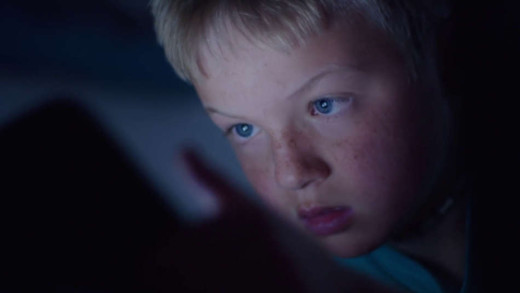
Mental illness and suicide have become the greatest threats to school-aged children. Many parents still view dangers to children and teens as primarily physical and external, but they’re missing the real danger: young people spending more time online and less time engaging in real life, free play, and autonomy. While older generations might have learned the value of being outside, household chores, and in-person playtime with friends, the youth of today have fallen prey to smartphones and video games. Childhood 2.0 is an exploration of this dramatic technological and cultural shift, where children and parents face the rise of social networks, mobile devices, and the screen culture, along with addiction, withdrawal, anxiety, depression, online abuse, bullying, the pervasiveness of pornography, sexting, the rise of online pedophilia and sexual predators, the loss of playtime, imagination and autonomy, and the rapid growth of suicide among children and teens. In addition to mental health professionals, the filmmakers speak with a series of concerned parents who have witnessed a profound transformation in their children, especially when placed in contrast to their own beginnings. Then there are the children themselves who speak to the overpowering allure of their devices, the pressures these devices place on them in their daily lives, and the challenge they face when they try to turn away from the screen.
 49:39
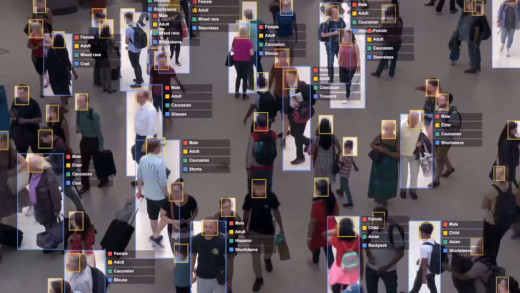
49:39In 2018, Professor Shoshana Zuboff published The Age of Surveillance Capitalism, a monumental book about the new global economy, where the biggest technology corporations extract, manipulate, and trade our personal information, data about our lives, and data about our personalities, on a scale never before possible. How did this happen? In The Big Data Robbery, Zuboff starts with the volatile dot-com boom and bust of the late 1990s and 2000s. How did Google, a company created during that time, survive the bursting of the Internet bubble? Founders Larry Page and Sergey Brin discover that the “residual data” that people leave behind in their searches on the Internet is very precious and tradable, and begin as one corporation of many, the Big Data Robbery, extracting and building huge datasets about people. Zuboff takes the lid off Google and Facebook to reveal a merciless form of capitalism in which the citizen itself now serves as a raw material.
 1:06:34
Public Figure is a measured exploration of this culture’s obsession with social media, exemplified through the lives of several Instagram “influencers.” The film invites the viewer to question how much of what we see online is real or delusion, while slowly, the “influencers” themselves reveal the extent to which they’ve completely commodified their lives into enterprises, as giant advertising engines, while also touching on the personal impacts of screen culture addiction. These commentaries are contrasted by views from clinical psychologists and counsellors, whom also question the long term effects of social media culture. While some figures use their commodified lives to inspire, promote a cause, or market their business, all in all, each and every “influencer” is wittingly or unwittingly part of a multi-billion dollar advertising engine that spends more money on marketing than education in the United States. Instagram advertisers will spend $2.38 billion on “influencers” in 2019. Public Figure asks us to reflect on our personal social media use, while questioning how society perceives reality.
 1:53:07
The Great Hack is an inside account of the company Cambridge Analytica, which used vast amounts of personal data scraped from portals such as Facebook to manipulate elections throughout India, Kenya, Malta, Mexico, the United Kingdom and United States over the past decade. The company, owned by SCL Group—a British firm that has a background in military disinformation campaigns and psychological warfare—came to public attention after the Brexit campaign in the UK, and soon after, the election of Donald Trump in the United States, both closely worked on by Cambridge Analytica and its billionaire backer, Robert Mercer. This resulted in inquires and investigations into both Facebook and Cambridge Analytica, but the company liquidated, along with its internal documents. Two former employees instead step forward to offer an inside account into the dark world of data mining and personalised propagandising, having some regret for what they have done. The film tracks these characters, as Cambridge Analytica lives on as Emerdata Limited, in the same London office. The Great Hack exemplifies big questions about democracy in the age of targeted information manipulation via the screen, and just how much power over our awareness has been ceded to giant corporations.
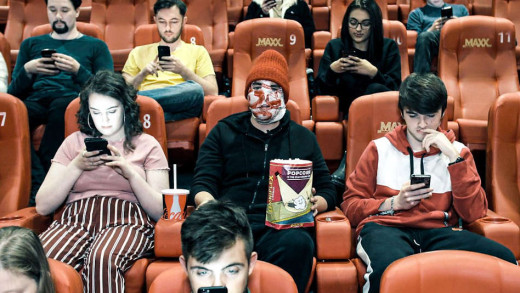
As one half of the satirical duo, The Rubber Bandits, Blindboy is renown for wearing a plastic bag on his head while dishing out sharp social commentary. In this series, using his unique mix of irreverent commentary, a band of undercover reporters, and playful humour, Blindboy sets out to investigate some of the most important issues of our time.
 1:03:59
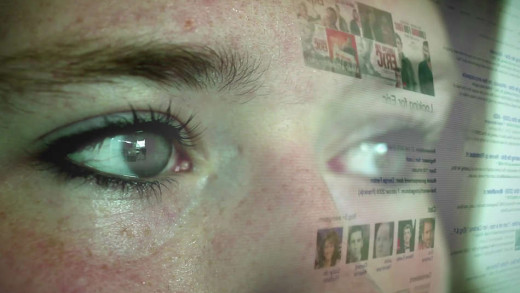
Tracing the Internet’s history as a publicly-funded government project in the 1960s, to its full-scale commercialisation today, Digital Disconnect shows how the Internet’s so-called “democratising potential” has been radically compromised by the logic of capitalism, and the unaccountable power of a handful of telecom and tech monopolies. Based on the acclaimed book by media scholar Robert McChesney, the film examines the ongoing attack on the concept of net neutrality by telecom monopolies such as Comcast and Verizon, explores how internet giants like Facebook and Google have amassed huge profits by surreptitiously collecting our personal data and selling it to advertisers, and shows how these monopolies have routinely colluded with the national security state to advance covert mass surveillance programs. We also see how the rise of social media as a leading information source is working to isolate people into ideological information bubbles and elevate propaganda at the expense of real journalism. But while most debates about the Internet focus on issues like the personal impact of Internet-addiction or the rampant data-mining practices of companies like Facebook, Digital Disconnect digs deeper to show how capitalism itself turns the Internet against democracy. The result is an indispensable resource for helping viewers make sense of a technological revolution that has radically transformed virtually aspect of human communication.
 41:53
41:53Fuelled by popular personalities on Instagram, YouTube and Snapchat, cosmetic surgery is pushing further into the mainstream. Huge numbers of people, predominantly young women, are choosing to alter their appearance forever as though it’s as simple as buying a new set of clothes. Social-media “influencers” get free procedures in exchange for promoting certain doctors or agencies or products to their audiences. Going on the numbers alone, audiences seem to respond to this blatantly cacophonous advertising, following their social media stars closely, and taking out huge personal loans to get surgery and “keep up with the Kardashians.” Doctors offering the surgery are even becoming media stars themselves, and it’s redefining the meaning of doctor/patient relations. Underpinning this entire industry, is a business model of targeting women who can barely afford procedures by selling the dream of a “new you.” Social-media laps it up, and the cycle repeats. But as this investigation shows, when things go wrong, the physical and financial costs are devastating. Real doctors who are left to pick up the pieces, are warning that the booming industry is creating a dangerous legacy, and not just to the concept of beauty.
 1:45:45
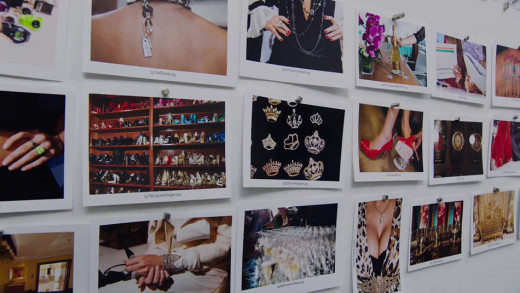
Generation Wealth is a visual history of the materialistic, image, and celebrity-obsessed culture, explored through the work of photographer and filmmaker Lauren Greenfield. Part historical essay, part autobiographical, Greenfield puts the pieces of her life’s work together to reveal the pathologies that have created the richest and most unequal society the world has ever seen. Spanning consumerism, beauty, gender, body commodification, aging, and sex, Generation Wealth unpacks the global boom-bust economy, the corrupt American Dream and the human costs of capitalism, narcissism and greed.
 44:57
44:57YouTube, owned by Google, has become one of the most powerful online media platforms in the world, fast to be replacing the viewership of television with over 30 billion hours watched per month in 2017. Young people flock to the platform in the hopes of fame and fortune, which comes for a select few, but not all, hence the allure to ‘make it.’ YouTube celebrities are now mainstream celebrities. The result is troves competing to live their lives as monetised open-wounds for the corporate platform, constantly pleading for subscribers, attention and engagement, all at the hands of Google, its secret algorithms, and the screen culture of spectacle, pornography, and targeted advertising. On both sides of the screen, the treadmill is all about keeping the ad dollars constantly rolling. YouTube, YouTubers and You offers a glimpse into this new media and advertising world, pondering how this culture may continue to undermine our future media and informational landscape. What sort of people and world is this culture creating and perpetuating?
 2:08:21
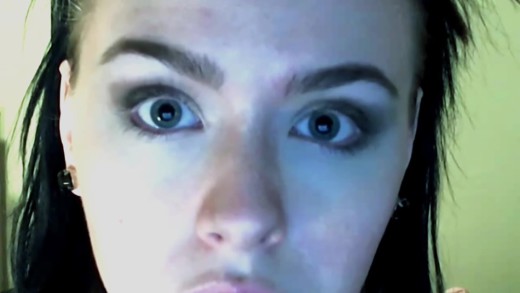
We live in a world of screens. The average adult spends the majority of their waking hours in front of some sort of screen or device. We’re enthralled, we’re addicted to these machines. How did we get here? Who benefits? What are the cumulative impacts on people, society and the environment? What may come next if this culture is left unchecked, to its end trajectory, and is that what we want? Stare Into The Lights My Pretties investigates these questions with an urge to return to the real physical world, to form a critical view of technological escalation driven rapacious and pervasive corporate interest. Covering themes of addiction, privacy, surveillance, information manipulation, behaviour modification and social control, the film lays the foundations as to why we may feel like we’re sleeprunning into some dystopian nightmare with the machines at the helm. Because we are, if we don’t seriously avert our eyes to stop this culture from destroying what is left of the real world.
 41:30
41:30Facebook is an enormously powerful corporation, harnessing both the self-disclosed and gleaned personal data of over 2 billion people. Its user-base is larger than the population of any country. The company is all pervasive online, tracking and profiling users and non-users alike. Cracking the Code looks at the insides of this giant machine and how Facebook turns your thoughts and behaviours into profits—whether you like it or not. And it’s not just a one-way transaction either. Cracking the Code also explains how Facebook uses vast troves of web data to manipulate the way you think and feel, as well as act—all in the sole interests of Facebook, masquerading as “community.” What are the social implications of this—when one company basically controls the insights and experiences of the entire online world, with extremely personalised and targeted social and behavioural engineering on a scale never before seen?
 1:00:58
Ten years on from his previous film, Advertising & the End of the World, renowned media scholar Sut Jhally follows up by exploring the since-escalating devastating personal and environmental fallouts of advertising and the near-totalising commercial culture. The film tracks the emergence of the advertising industry in the early 20th century to the full-scale commercialisation of the culture today, identifying the myth running throughout all of advertising: the idea that corporate brands and consumer goods are the keys to human happiness and fulfilment. We see how this powerful narrative, backed by billions of dollars a year and propagated by clever manipulative minds, has blinded us to the catastrophic costs of ever-accelerating rates of consumption. The result is a powerful film that unpacks fundamental issues surrounding commercialism, media culture, social well-being, environmental degradation, and the dichotomy between capitalism and democracy.
 46:36
46:36Every day, billions of people are unwittingly taking part in what is the largest most comprehensive psychological experiment ever conducted. The old marketing and advertising world using billboards, advertisements and TV commercials to persuade us, has been comprehensively augmented by an entirely new field of “user experience architects” and “online persuasion agents.” These forces are given tremendous power from the proliferation of digital technologies. So how do these powerful forces ensure that we fill our online shopping carts to the brim, or stay on websites as long as possible? Or vote for a particular candidate? What Makes You Click examines how these prolific entities collectively and individually use, shape, and manipulate our experiences via an online world, not just when it comes to buying things, but also with regards to our free time and political perspectives. The manipulation has become so good that these powerful controllers, former Google employees among them, are themselves arguing for the introduction of an ethical code. What does it mean when the grand conductors of these huge experiments themselves are asking for their power, influence and possibilities to be restricted?
 53:50
53:50The Illusionists examines how global advertising firms, mass media, and the beauty, fashion, and cosmetic-surgery industries have together colonised the way people all around the world define beauty and see themselves. Taking us from Harvard to the halls of the Louvre, from a cosmetic surgeon’s office in Beirut to the heart of Tokyo’s Electric Town, The Illusionists shows how these industries saturate our lives with narrow, Westernised, consumer-driven images of so-called beauty that show little to no respect for biological realities or cultural differences. Featuring voices from prominent sociologists, magazine editors, scientists, artists, and activists, The Illusionists documents a truly global phenomenon, with hegemonic results.
 1:10:02
The Empathy Gap investigates how dominant culture bombards young men with sexist and misogynistic messages and argues that these messages not only devalue women but also undercut men’s innate capacity for caring and empathy. The film looks closely at the ways these messages short-circuit men’s ability to empathize with women, respect them as equals, and take feminism seriously, drawing parallels between sexism and racism, spelling out how each is rooted in cultural norms that discourage empathy, and shows how men who break with these norms live happier and healthier lives.
 55:31
55:31In 1960, NBC aired what is widely considered to be the first reality television show in American broadcast history. Billing itself as a new kind of visual reporting, the show was called Story of a Family, and it purported to document the day-to-day lives of the 10-member Robertson family of Amarillo, Texas. While the show has long since faded from public memory, media scholars and television historians have long recognised its significance as a precursor to the “unscripted programming” that dominates television today. TV Family draws on this history by interviewing several of the children featured in Story of a Family, to offer a fascinating behind-the-scenes account of how the show was made, and what it means to shape culture. Weaving personal anecdotes with commentary from historians and scholars, TV Family reveals the story of how the show’s producers carefully choreographed the way they wanted the family to appear to the American public—all in the name of “authenticity.” The result is an eye-opening look at one of television’s earliest successes in shaping the reality of family life in commercially viable ways.
 1:31:46
The Mask You Live In unpacks how this culture’s narrow and harmful definition of masculinity effects boys, young men; girls and women; and society in general in myriad ways, as our children struggle to stay true to themselves when confronted by this culture. Pressured by their peer group, heavily influenced by a barrage of media messages, and even their very own parents and other adults in their lives, our protagonists confront messages encouraging them to disconnect from and suppress their emotions, devalue authentic friendships, objectify and degrade women, and resolve conflicts through violence, control and manipulation. These traits and stereotypes closely interconnect with problems of race, class, and circumstance, creating a maze of identity issues boys and young men must navigate to become “real” men as the culture expects and perpetuates. Experts in neuroscience, psychology, sociology, sports, education, and media also weigh in, offering empirical evidence of how these issues intersect, and what we can do about it.
 1:12:39
In Requiem for the American Dream, renowned intellectual figure Noam Chomsky deliberates on the defining characteristics of our time—the colossal concentration of wealth and power in the hands of the few and fewer, with the rise of a rapacious individualism and complete collapse of class consciousness. Chomsky does this by discussing some of the key principles that have brought this culture to the pinnacle of historically unprecedented inequality by tracing a half century of policies designed to favour the most wealthy at the expense of the majority, while also looking back on his own life of activism and political participation. The film serves to provide insights into how we got here, and culminates as a reminder that these problems are not inevitable. Once we remember those who came before and those who will come after, we see that we can, and should, fight back.
 1:19:51
By examining the people and practices of the media and entertainment industries, The Fourth Estate illuminates not only specific incidences of corruption by press groups, but how the wider model of mainstream journalism itself as a for-profit entity has a huge amount to answer for in terms of democracy and the state of politics throughout the world. Filmed over two years throughout the UK on no budget, the filmmakers profile journalists, organisers and critics of industrial media practices, stemming from the Leveson Inquiry in 2011 which was set up to examine the culture, practices and ethics of the British press following the News International phone hacking scandals of the Murdoch media empire. While the phone hacking scandal illuminated the depth and breadth of the culture of British journalism, the media’s focus at the time quickly diverted from a brief period of self-examination, back to business as usual. This film instead continues the analysis by looking at the larger implications of a for-profit media model and its connections to ideology, entertainment, and hence the resulting political framework that’s in crisis.
 41:56
41:56Consumer capitalism dominates the economy, politics, and culture of our age, despite a growing trove of research showing that it is a failed system. In this illustrated presentation, media scholar Justin Lewis makes a compelling case that capitalism can no longer deliver on its myth of the dream and its promise to enhance the quality of life. He argues that changing direction will require changing our media system and our cultural environment, as capitalism has become economically and environmentally unsustainable. This presentation explores how the media and information industries make it difficult to envision other forms of life by limiting critical thinking and keeping us locked in a cycle of consumption, and shows us that change will only be possible if we take culture seriously and transform the very way we organise our media and communications systems.
 1:32:49
Merchants of Doubt looks at the well established Public Relations tactic of saturating the media with shills who present themselves as independent scientific authorities on issues in order to cast doubt in the public mind. The film looks at how this tactic, that was originally developed by the tobacco industry to obfuscate the health risks of smoking, has since come to cloud other issues such as the pervasiveness of toxic chemicals, flame retardants, asbestos, certain pharmaceutical drugs and now, climate change. Using the icon of a magician, Merchants of Doubt explores the analogy between these tactics and the methods used by magicians to distract their audiences from observing how illusions are performed. For example, with the tobacco industry, the shills successfully delayed government regulation until long after the health risks from smoking was unequivocally proven. Likewise with manufacturers of flame retardants, who worked to protect their sales after the toxic effects and pervasiveness of the chemicals were discovered. This is all made analogous to the ongoing use of these very same tactics to stall governmental action in regards to global climate change today.
 51:47
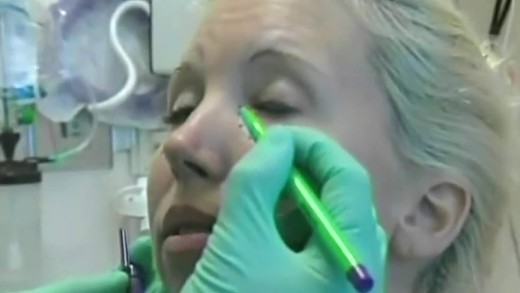
51:47What do popular television programs like What Not to Wear, The Biggest Loser, Queer Eye for the Straight Guy, and The Swan tell us about how to look and feel? What do they tell us about what a good life is supposed to look like? Brand New You explores these questions, and also asks what it means to be an authentic self in an extensively mediated world. It shows how the interventions featured in makeover shows—from weight loss to cosmetic surgery to rearing competitiveness—create, perpetuate and reproduce conventional norms of physical attractiveness and success. By taking a wider social and cultural view, Brand New You also shows how these programs have become tools of rampant individualism, consumerism and inner self-transformation at precisely the same time that collective awareness of social issues has dissipated.
 11:56
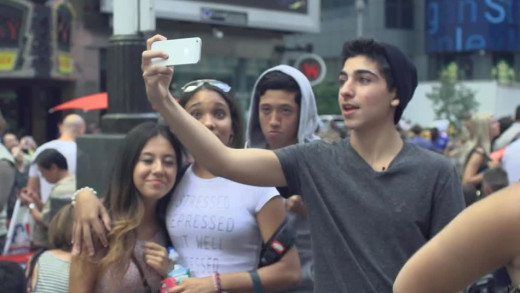
11:56Instafame is an exploration of a teenager’s relationship with the concepts of success and fame through the lens of the screen, exemplified by the popular photo-sharing website ‘Instagram.’ The short film speaks volumes about this specific aspect of screen culture in that the notions of celebrity are self-reinforced in the closed-loop of the ‘social networking’ environment which is itself a purpose-built, commercially-mediated experience. So what happens to the notions of identity, friendship, personality and so on; in this space, and in the wider culture?
 53:04
53:04Social media networks purport the ability to interact with culture—talking directly to artists, celebrities, movies, brands, and even one another—in ways never before possible. But is this real empowerment? Or do marketing companies still hold the upper hand, as before? Generation Like explores how the perennial quest for identity and connection is usurped in the pervasive game of cat-and-mouse by vast corporate power in the extensive machine for consumerism that is now the online environment. The audience becomes the marketer; buzz is subtly controlled and manipulated by and from real-time behavioural insights; and the content generated is sold back to the audience in the name of participation. But does the audience even think they’re being used? Do they care? Or does the perceived chance to be the ‘next big star’ make it all worth it?
 11:23
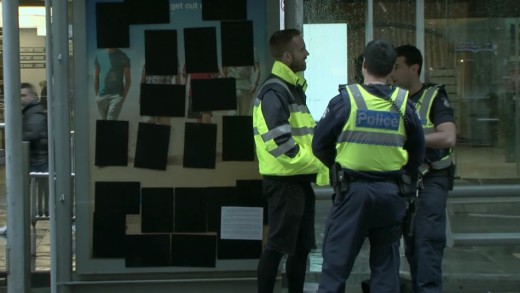
11:23No Measure of Health profiles Kyle Magee, an anti-advertising activist from Melbourne, Australia, who for the past 10 years has been going out into public spaces and covering over for-profit advertising in various ways. The film is a snapshot of his latest approach, which is to black-out advertising panels in protest of the way the media system, which is funded by advertising, is dominated by for-profit interests that have taken over public spaces and discourse. Kyle’s view is that real democracy requires a democratic media system, not one funded and controlled by the rich. As this film follows Kyle on a regular day of action, he reflects on fatherhood, democracy, what drives the protest, and his struggle with depression, as we learn that “it is no measure of health to be well adjusted to a profoundly sick society.”
 1:14:40
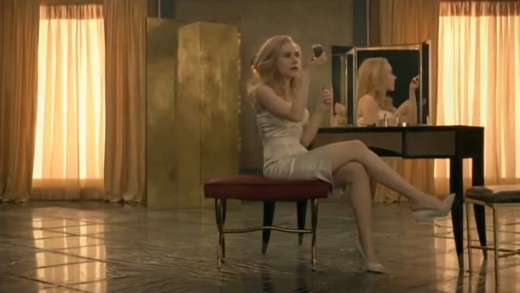
The Society of the Spectacle is a film based on the 1967 book of the same name by French political theorist and philosopher, Guy Debord. The work traces the development of modern society, in which Debord argues that authentic social life has been replaced with representations, and that the history of social life can be understood as “the decline of being into having, and having into merely appearing.” This emerges from and gives rise to a pervasive and all encompassing spectacle in which relations between commodities have supplanted relations between people, in which “passive identification with the spectacle supplants genuine activity.” The film weaves the text of the original book with modern-day imagery, illustrating many elements of the spectacle, including that “the spectacle is not a collection of images, rather, it is a social relation among people, mediated by images.” This makes the material hard to decipher at times, especially with conflicting subtitles between languages: but this is part of Debord’s goal, to “problematise reception” and force the viewer to be active rather than passive. In addition, the words of some of the authors are “détourned” (hijacked) through deliberate misquoting. The result is a foundational work on the concept of the spectacle and its characteristics, to encourage critical thinking, to build and extrapolate critiques to apply to the wider social scale.
 51:47
51:47Obey is a video essay based on the book “Death of the Liberal Class” by author and journalist Chris Hedges. The film charts the rise of corporatocracy and examines the trending possible futures of obedience in a world of unfettered capitalism, globalisation, staggering inequality and environmental crisis — posing the question, do we resist or obey?

Esc & Ctrl is an online series of short documentary films where journalist and filmmaker Jon Ronson explores some aspects of screen culture and the Internet. By exemplifying the concepts of control of information and the screen culture’s reactions to publishing, censorship, viral videos, media attention and manipulation; a small set of stories weave together to pose bigger questions around democracy and open communication in the age of the computers and a corporately mediated virtual world.
 1:03:16
Over the past three decades, obesity rates in the United States have more than doubled for children and tripled for adolescents, and a startling 70% of adults are now obese or overweight. The result has been a widening epidemic of obesity-related health problems. But while discussions about this crisis tend to focus solely on the need for individual responsibility and more exercise, Feeding Frenzy turns its focus squarely on the responsibility of the processed food industry and the outmoded government policies it benefits from. It lays bare how government subsidies designed to feed the hungry during the Great Depression have enabled the food industry to flood the market with a rising tide of cheap, addictive, high calorie food products, and offers an engrossing look at the tactics of the multi billion-dollar advertising industry that makes sure that everyone keeps consuming.
 1:20:02
Admit it—you don’t really read the endless pages of terms and conditions connected to every website you visit or phone call that you make do you? Of course not. But every day billion-dollar corporations are learning more about your interests, your friends and family, your finances, and your secrets—precisely because of this; and are not only selling the information to the highest bidder, but freely sharing it with the government. And you agreed to all of it. With plenty of recent real-world examples, Terms And Conditions May Apply covers just a little of what governments and corporations are legally taking from Internet users every day—turning the future of both privacy and civil liberties into serious question. From whistleblowers and investigative journalists to zombie fan clubs and Egyptian dissidents, this film demonstrates how all of us online have incrementally opted-in to a real-time surveillance state, click by click.
 1:18:39
The huge and complex problems of today often instil doubt and fear that everything is futile. Yet by analysing how the power of media, schooling and parenting have moulded us, #ReGENERATION helps us start to comprehend what we must change—both as a generation and as a culture. We see how the average family spends at least four hours a day in front of the TV. Internet and video games are not included in this figure. So guess what is shaping us? This film examines the corporate forces that deeply influence all of us, but particularly the young, providing insights into how the politics of apathy is perpetuated, and how we can turn this around into activism, if and when we are willing.
 1:17:19
Girl Model offers a glimpse into the hall of mirrors that is the modelling world as it interfaces with other industries and other countries. The film follows Ashley—a deeply ambivalent former-model who is now a scout and scours the Siberian countryside looking for ‘fresh faces’ to send to the Japanese market; and one of her ‘discoveries,’ Nadya, a thirteen year-old plucked from the Siberian countryside and dropped into the centre of Tokyo with promises of a profitable career. What entails is the opening of a can of worms that isn’t easily solved in one sitting—a thriving and curiously sinister modelling industry that spans the globe, luring everywhere with pretences of wonder, success and riches. But the realities are harsh. The fashion industry can look glamorous from the outside, but its insides are, at the very least, deceptive and sinister; and the myths run deeply entrenched in the culture, constantly promulgating new, young recruits. This ‘meat market,’ a prelude to sex trafficking, is creepy, ugly, and preys on the young and vulnerable. Can the spell be broken?
 11:00
11:00My Public Space is a short film following a local artist in New York City, documenting the effort to reformat the visual pollution of advertising into public artwork spaces…
 55:41
55:41The Bro Code unpacks and takes aim at the forces of masculinity that condition boys and men to fundamentally dehumanise and disrespect women. The film breaks down a range of contemporary media forms that are saturated with sexism—movies and music videos that glamorise misogyny, pornography that trades in the brutalisation and commodification of women, comedy routines that make light of sexual assault, and a slate of men’s magazines and TV shows that propagate myths of what it means to be a man in this culture: that it’s not only normal, but “cool” for boys and men to control and humiliate women. There’s nothing natural or inevitable about this mentality. And it’s extremely harmful in the real world. By setting the myths against reality, The Bro Code challenges young people to step up and fight back against this culture, to reject the fundamental idea that being a ‘real man’ means disrespecting women.
 1:39:02
Psywar explores the history and evolution of propaganda along with the rise of ‘public relations’ with an emphasis on the relationship between war, propaganda and privilege…
 45:11
45:11The infertility industry in the United States has grown to a multi-billion dollar business, and its main commodity is human eggs. Young women all over the world are bombarded by advertising—on college campus bulletin boards, social media, online classifieds—offering up to $100,000 for their donated eggs, to “help make someone’s dream come true.” But who is this egg donor? Is she treated justly? What are the implications to her health? Eggsploitation spotlights the booming business of human-egg extraction told through the stories of women who became involved and whose lives have changed forever after undergoing the procedure. Their accounts provide a cautionary tale to all women who are considering egg donation for the purpose of in-vitro fertilisation or embryonic stem cell research.
 51:35
51:35Are we willfully trashing the planet in the pursuit of endless things? What’s the source of the frenetic consumer energy and desire? In a fast-paced tour of the ecological and psychological terrain of consumer culture, Shop ‘Til You Drop challenges the viewer to confront these questions head-on. Taking aim at the high-stress, high-octane pace of materialism, the film moves beneath the seductive surfaces of the commercial world to show how the other side of consumerism is depletion—the slow, steady erosion of not only the natural world, but basic human and community values. Shop ‘Til You Drop contextualises the turbulence of this moment, providing an unflinching critique of the limits of consumerism and the so-called “pursuit of happiness.”